
The Daikin U0 error code signals low refrigerant in the cooling system. Technicians resolve it by locating leaks then recharging with the correct amount of refrigerant after vacuuming the lines.
This process requires a manifold gauge set and recovery equipment to avoid further damage to the compressor. Owners should confirm the exact model specifications before starting any work to match pressure ratings accurately.
Daikin U0 Refrigerant Tool Requirements
Daikin units with the U0 code need precise tools to measure and restore refrigerant levels without introducing air or moisture. The right equipment prevents repeated errors and protects the sealed system from contamination during the recharge. Technicians rely on durable items that handle R410A or R32 refrigerants common in these models. Selection focuses on accuracy and compatibility with residential split systems.
Manifold gauge set for pressure monitoring
Vacuum pump rated at 5 CFM minimum
Refrigerant recovery tank approved for the gas type
Electronic leak detector sensitive to 0.1 ounce per year
Torque wrench set for flare fittings
| Item | Purpose | Typical Cost Range |
|---|---|---|
| Manifold gauge set | Reads suction and discharge pressures | 80 to 150 |
| Vacuum pump | Removes air and moisture | 100 to 200 |
| Recovery tank | Stores extracted refrigerant safely | 50 to 90 |
Daikin U0 Breaker Isolation and Ventilation
Preparation starts with powering down the Daikin outdoor unit at the breaker to eliminate electrical hazards. Technicians then verify the indoor unit is also isolated before opening any service ports. Proper ventilation in the work area reduces exposure risks from refrigerant gases. All connections must be inspected for existing wear that could worsen during the process.
A critical warning applies here. Never skip pressure testing before adding refrigerant.
Daikin U0 Refrigerant Leak Detection Process
Leak detection begins after attaching the manifold gauge set to the service ports on the Daikin unit. Low side pressure below 100 psi on R410A systems at 70 degrees ambient temperature confirms the U0 condition. Technicians then sweep the coil fins and line set joints with the electronic leak detector. Soap solution applied to suspect areas produces bubbles at active leak points.
Isolate power at main breaker
Attach gauges and record baseline pressures
Scan coils and flare nuts thoroughly
Mark locations of confirmed leaks for repair
Daikin U0 Vacuum and Weight-Based Recharge
Recharge follows leak repair and requires a full vacuum to 500 microns or lower. The vacuum pump runs for at least 30 minutes while monitoring the gauge for stability. Refrigerant is then added by weight according to the Daikin nameplate specification rather than pressure alone. This method ensures correct superheat and subcooling values after startup.
Daikin U0 Flare Leak and Wiring Checks
Older Daikin ductless systems often develop leaks at flare connections due to vibration over time. Newer inverter models add sensor faults that mimic the U0 code if wiring degrades near the outdoor board. Checking both mechanical joints and electrical continuity prevents misdiagnosis during the recharge. Seasonal temperature swings accelerate wear on rubber seals in these units.
Daikin U0 Superheat Stabilization Test
Final verification includes running the system in cooling mode for 15 minutes while logging pressures and temperatures. Superheat should stabilize between 8 and 12 degrees for most Daikin residential units. Any deviation requires adjustment of the charge amount. Record all readings for future reference during maintenance visits.
Daikin U0 Buried Line Set Leaks
Buried line sets in Daikin systems often develop leaks from corrosion or soil movement that trigger the U0 error by dropping refrigerant charge. These hidden faults demand targeted detection methods such as pressure testing or electronic sniffers to confirm the source before any repairs begin. Addressing them restores system pressure and prevents repeated low refrigerant warnings.
Persistent U0 codes after recharge indicate hidden leaks in buried line sets. Contact a certified technician for nitrogen pressure testing and possible component replacement.
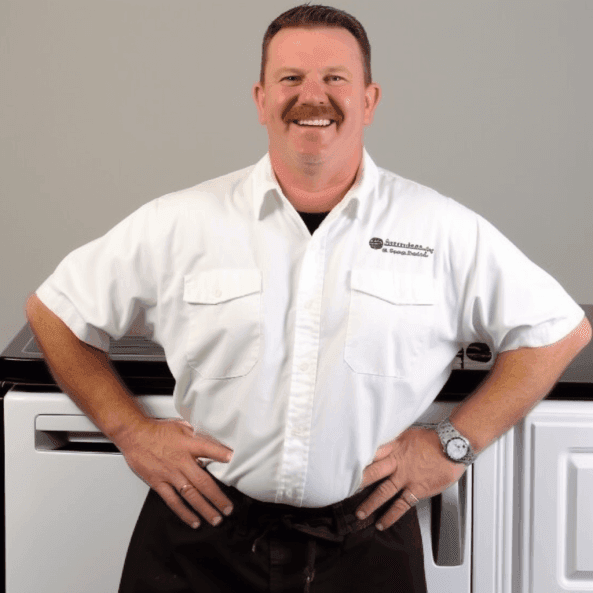
Hey, I’m Jake. I focus on cooling systems at Appliance Mastery, like fridges, freezers, and air conditioners.
I’ve worked in appliance repair for more than ten years and I’m certified through NASTeC. I’ve seen just about every fridge issue you can imagine.
My goal is to help you fix problems without stress. Whether it’s a freezer that won’t cool or an AC that keeps beeping, I’m here to walk you through it.