
GE water filter error codes for flow obstructions point to physical blockages in the cartridge or supply lines rather than electronic faults. Clearing debris from the inlet screen or replacing the filter cartridge assembly fixes the issue in most cases.
Owners should verify water pressure first to rule out supply problems before deeper disassembly. This approach avoids unnecessary part replacements and restores normal operation quickly.
GE Water Filter Error Symptoms
GE water filter systems display specific codes when flow drops below set thresholds. These alerts trigger from sensors that detect resistance in the water path. Common triggers include sediment buildup or a clogged cartridge that restricts volume. Technicians start diagnostics by matching the displayed code to known patterns. The table below lists frequent symptoms with their primary causes and repair difficulty.
| Symptom | Primary Suspect | Difficulty 1-5 |
|---|---|---|
| E1 or Low Flow | Clogged inlet screen | 2 |
| E2 or No Water | Blocked cartridge housing | 3 |
| E3 or Reduced Pressure | Sediment in supply line | 2 |
| E4 or Intermittent Flow | Faulty bypass valve | 4 |
Identify Root Cause Blockages
Flow obstructions in GE units originate from mineral deposits or debris that accumulate over months of use. The inlet screen captures particles first and becomes the initial restriction point. Cartridge media then loads with sediment until water cannot pass at the required rate. Supply lines add another layer when hard water scale forms inside the tubing. Pressure tests confirm whether the problem sits inside the filter assembly or upstream in the home plumbing.
GE Filter Housing Flush and Replacement
Shut off the main water supply valve before any work begins. Remove the filter housing cap with a wrench and extract the old cartridge. Flush the housing under running water to dislodge loose particles. Inspect the inlet screen and clean it with a soft brush if debris remains visible. Reinstall a new cartridge and restore water flow while monitoring the display for code clearance.
GE Inlet Valve Scale Buildup Causes
The inlet valve regulates water entry into the GE filter unit and often collects scale that narrows the opening. Technicians remove the valve cover and examine the internal diaphragm for stiffness or debris. Soak the valve body in vinegar solution for thirty minutes to dissolve mineral buildup. Rinse thoroughly and test valve movement before reassembly. Persistent codes after this step indicate the valve diaphragm requires replacement with an OEM part.
GE Filter Sediment Buildup Clearance
Sediment travels from municipal lines or well sources and settles in the lower portion of the filter housing. Owners drain the system completely and remove the bottom cap to access this area. Scrub the interior walls with a nylon brush to dislodge packed material. Flush the housing multiple times until water runs clear. Reconnect lines and run a full cycle to verify flow returns to normal levels.
GE Flow Rate Sensor Continuity Tests
Sensors inside the GE unit measure gallons per minute and trigger codes when readings fall outside range. Disconnect power to the control board and locate the sensor wires near the outlet port. Use a multimeter to check continuity across the sensor terminals. Clean sensor faces with a cotton swab and isopropyl alcohol if readings appear erratic. Reconnect and cycle the unit to confirm the sensor now reports accurate flow data.
Install Replacement GE Filter Cartridge
Select a compatible GE filter cartridge rated for the specific model capacity. Align the new cartridge tabs with the housing slots and press until it seats fully. Tighten the cap to the manufacturer torque specification. Open the supply valve slowly and check all connections for leaks. Monitor the display panel for fifteen minutes to ensure no error codes reappear.
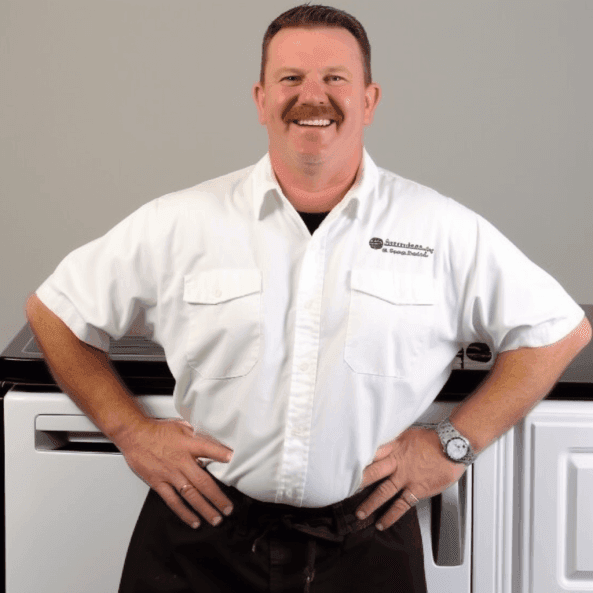
Hey, I’m Jake. I focus on cooling systems at Appliance Mastery, like fridges, freezers, and air conditioners.
I’ve worked in appliance repair for more than ten years and I’m certified through NASTeC. I’ve seen just about every fridge issue you can imagine.
My goal is to help you fix problems without stress. Whether it’s a freezer that won’t cool or an AC that keeps beeping, I’m here to walk you through it.