
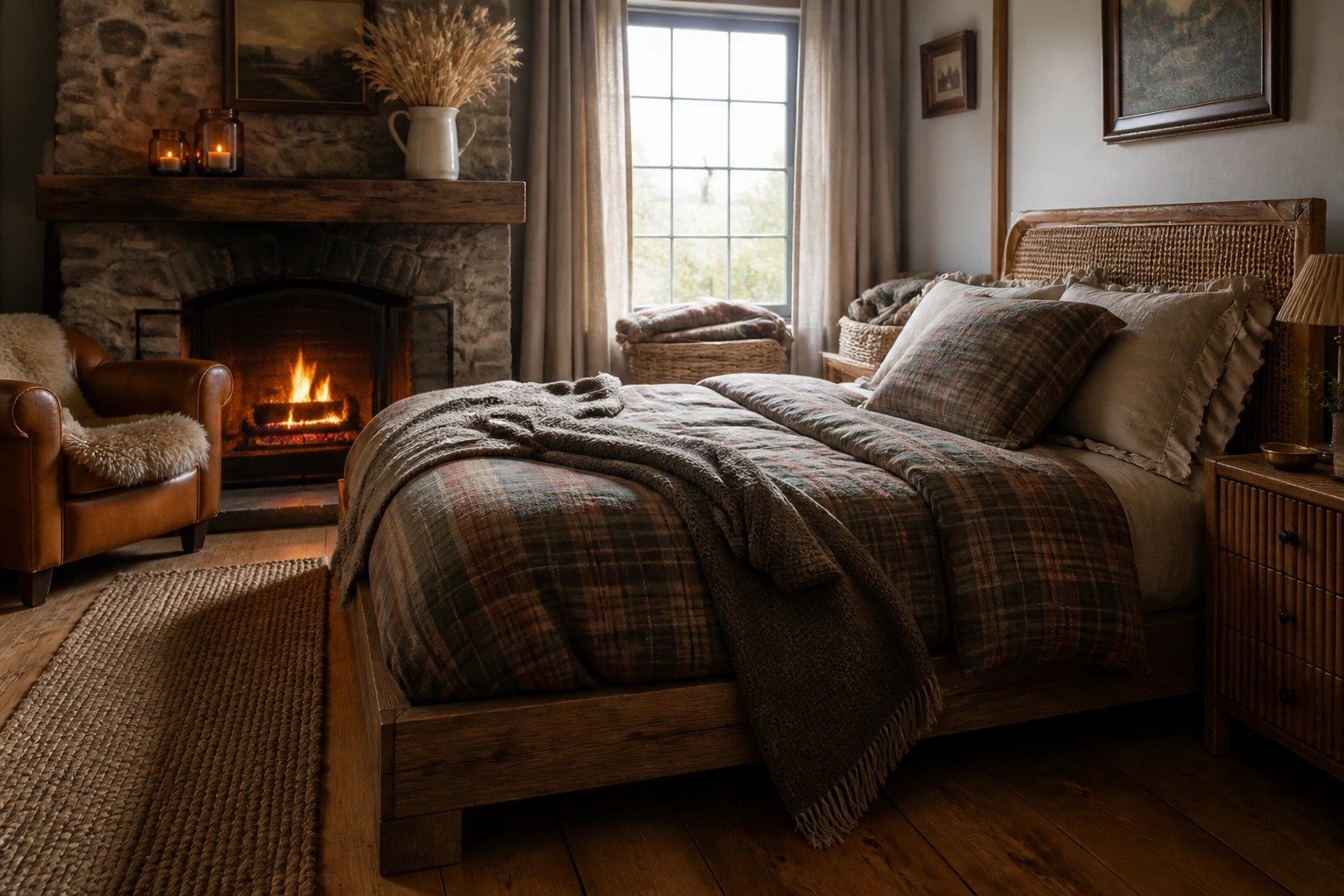
I have noticed that bedrooms tend to feel colder and less settled once the days shorten, even if the rest of the house still feels fine.
When the light changes it becomes clearer which fabrics and colors actually hold warmth instead of just suggesting it on a screen.
One thing I test first is how the bed itself feels at the end of the day, because that single surface ends up carrying most of the comfort load.
Ideas that layer texture over what is already there usually hold up better than full overhauls that ignore the existing furniture layout.
Small swaps add up.
Add a Fireplace for Extra Warmth
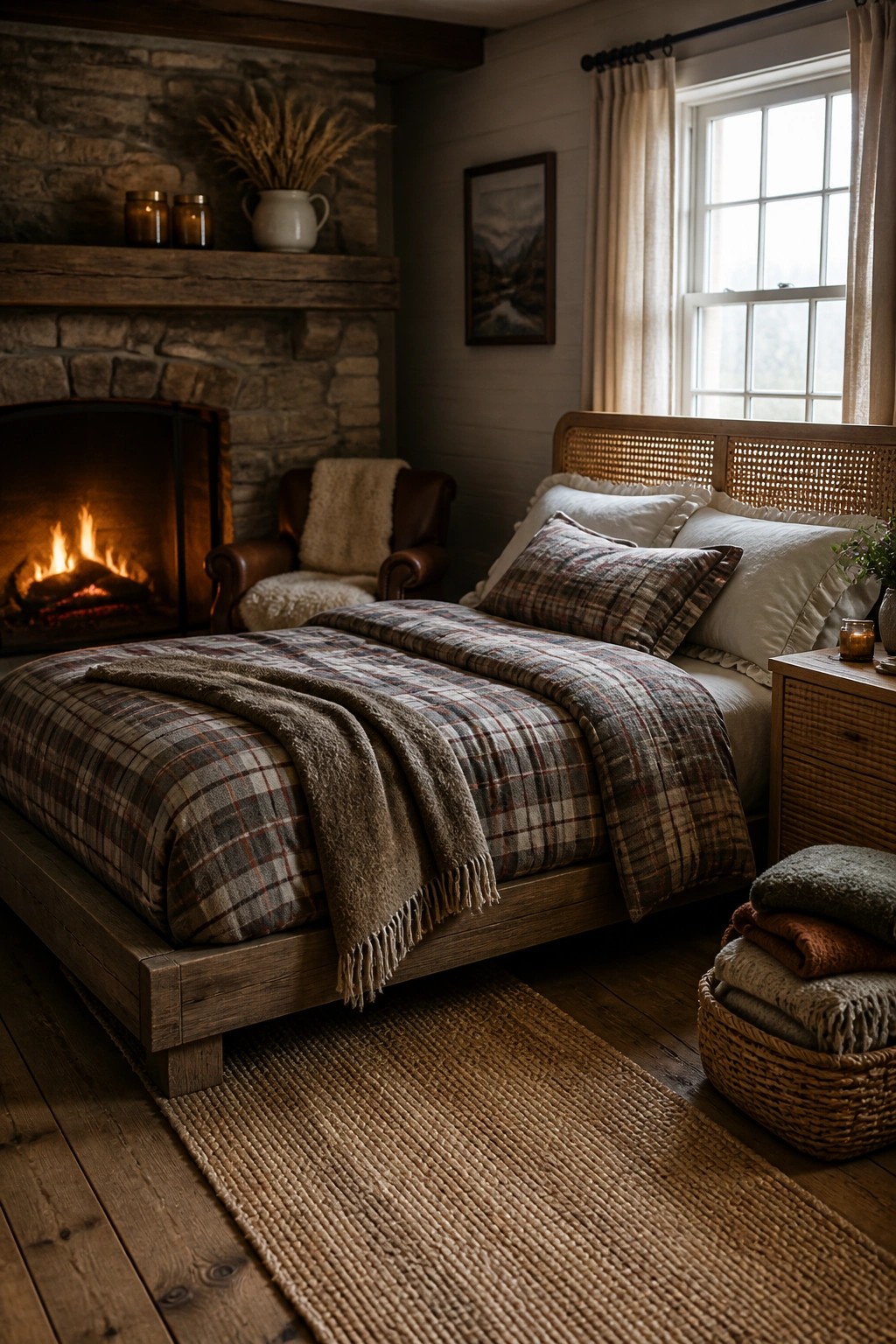
A fireplace changes how a bedroom feels on fall nights. The heat and the soft light make the space feel more settled and comfortable than any amount of extra blankets can manage on their own.
This works best in rooms where the bed can sit a safe distance away from the fire. Older homes often have the chimney already in place, but even newer builds can add a smaller gas version if the layout allows it.
Layer Neutral Textiles For Extra Warmth

Many bedrooms feel more inviting once you add a few layers of neutral bedding. The mix of linen and heavier throws keeps things simple while making the bed feel softer and more comfortable as temperatures drop.
Start with light sheets and build from there with one or two textured blankets in similar tones. This approach works well in rooms with wood furniture and works best when you keep patterns to a minimum.
Use A Macrame Wall Hanging As A Headboard

A large macrame panel behind the bed gives the room texture and warmth without a bulky frame. It feels especially right in fall when you want layers that look soft and inviting.
Hang it on a simple rod and keep the bedding in similar earthy tones. This works well in smaller rooms or rentals since it adds interest without any construction.
Layer Soft Neutrals on the Bed

Many bedrooms feel more inviting when the bedding stays in one soft color range. Layering smooth linen with a heavier knit throw gives the bed depth without adding bright colors or patterns that can feel busy.
This approach works best in rooms that already have some age or texture in the walls and floors. Start with a ruffled base layer and add just one chunky blanket on top so the bed stays the main focus without looking overdone.
A Tufted Velvet Headboard Brings Warmth

A tufted velvet headboard in a deep jewel tone gives the bed real presence and helps a bedroom feel enclosed and restful. The rich texture catches the light from nearby sconces and pairs easily with darker walls, which makes the whole space feel softer without extra layers.
Use one in green or a similar saturated color, then add pillows in rust and brown to keep the palette warm. This works best in smaller rooms or any bedroom where you want the bed to anchor the look for fall without crowding the space with more furniture.
Gingham Shades For A Gentle Pattern
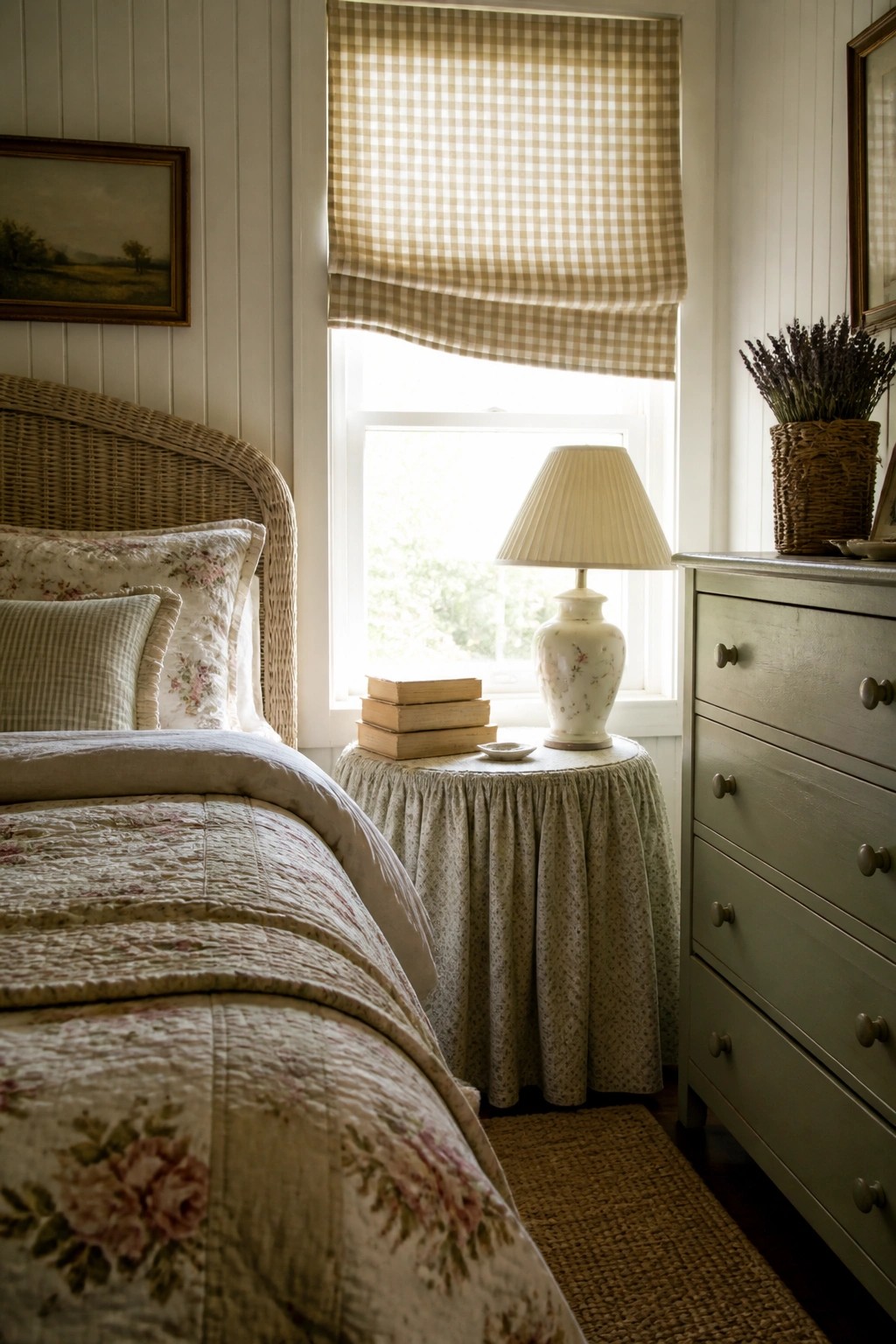
Gingham shades on the windows bring a quiet pattern into the bedroom that feels right for fall. The check adds a bit of warmth and texture while still letting in plenty of soft light.
This works best in rooms with white walls or simple wood trim where you want something seasonal but not overpowering. Swap the shade out in spring if you want a lighter look, and keep the rest of the bedding simple so the pattern stays the focus.
Low Beds With Woven Mats

A low bed on a woven mat gives the room a settled, quiet feel that works especially well when the weather cools. The simple base keeps the space from feeling crowded and lets the soft layers of bedding stand out more.
This setup suits smaller rooms or anyone who wants a calm, unfussy bedroom. Stick with natural fabrics and keep extra pieces to a minimum so the look stays warm without turning heavy.
Layer Textiles For Extra Warmth

Layering different fabrics is one of the easiest ways to make a bedroom feel ready for fall. A few blankets in varied weights and textures can turn an ordinary seating area into something that actually invites you to sit down and stay awhile.
Start with a base layer like a rug, then build up with throws and pillows in wool, knit, or fleece. This approach works in smaller rooms or attic spaces where you want comfort without adding heavy furniture. Just keep the layers from getting too thick in one spot so the room still feels open.
Add a Wall Sconce for Gentle Bedside Light
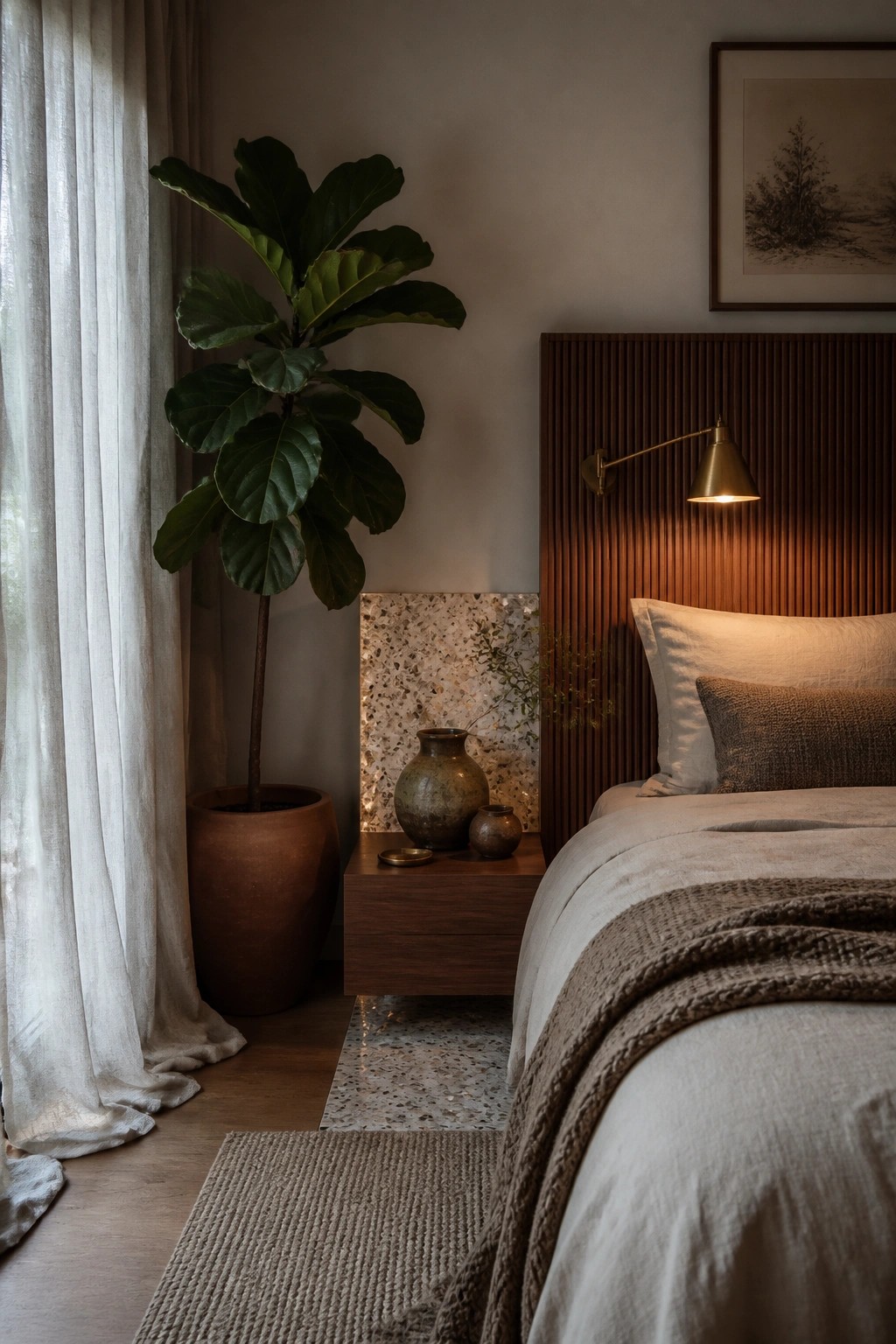
A wall sconce gives soft, directed light right where you need it without filling the room with overhead glare. It works especially well in fall when you want the space to feel warmer and easier to settle into at night. The simple brass fixture in this setup shows how a small light can change the whole mood near the bed.
Mount the sconce at a comfortable height above the mattress and pair it with a warm bulb. This works in most bedrooms that already have a headboard or nightstand, and it saves surface space if your room feels tight. Just make sure the arm swings out enough for reading.
Layer a Plaid Throw Over the Bed
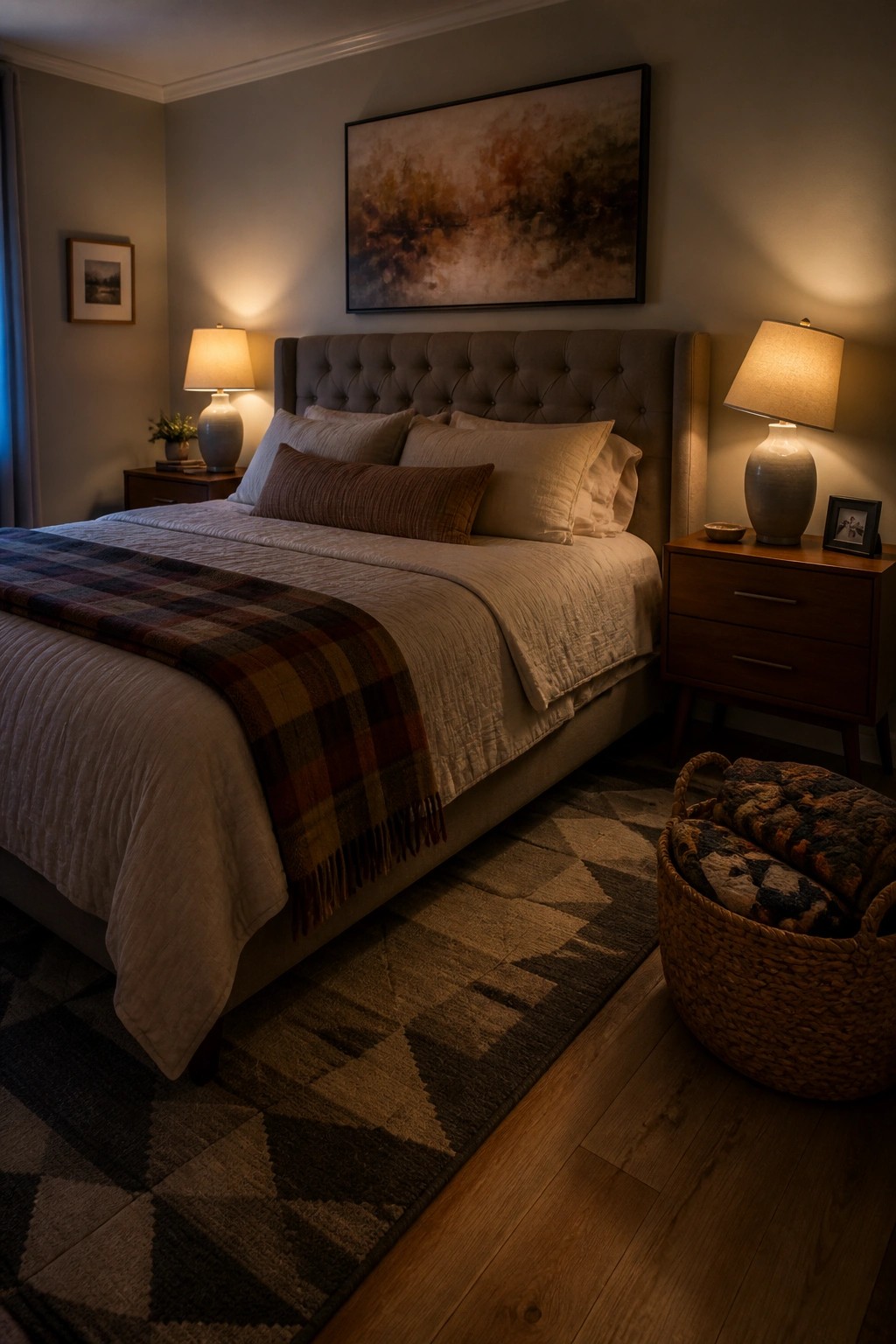
A plaid throw gives the bed that extra layer of warmth without making the whole room feel heavy. It works especially well when the rest of the bedding stays light and neutral, so the pattern can stand out just enough to feel seasonal.
Fold it across the middle or drape it at the foot of the bed so it is easy to pull up on cooler nights. This idea fits almost any bedroom that already has simple linens, and it lets you change the look each fall without buying new sheets or a comforter.
Layer Plaid and Fur for Extra Warmth

Plaid bedding pairs well with a soft fur throw because the pattern brings some structure while the fur adds a layer that feels good to touch. This mix works especially well once the weather cools and you want the room to feel a bit more enclosed.
Try placing the fur piece on a bench or across the foot of the bed rather than just on top of the covers. It suits rooms with wood beams or stone walls, and it keeps things simple without needing lots of extra pieces.
Layer Warm Tones In Your Bedding

Many bedrooms feel more inviting in fall once the bedding shifts to deeper shades. Rust orange paired with navy and a few neutral layers can change the mood without needing new furniture or paint.
This approach works best in rooms that already have simple walls and wood tones. Keep the layers a bit uneven so the bed does not look too flat, and add one small lamp nearby to keep the colors from feeling heavy once the sun goes down.
Layer Warm Textiles Over the Bed
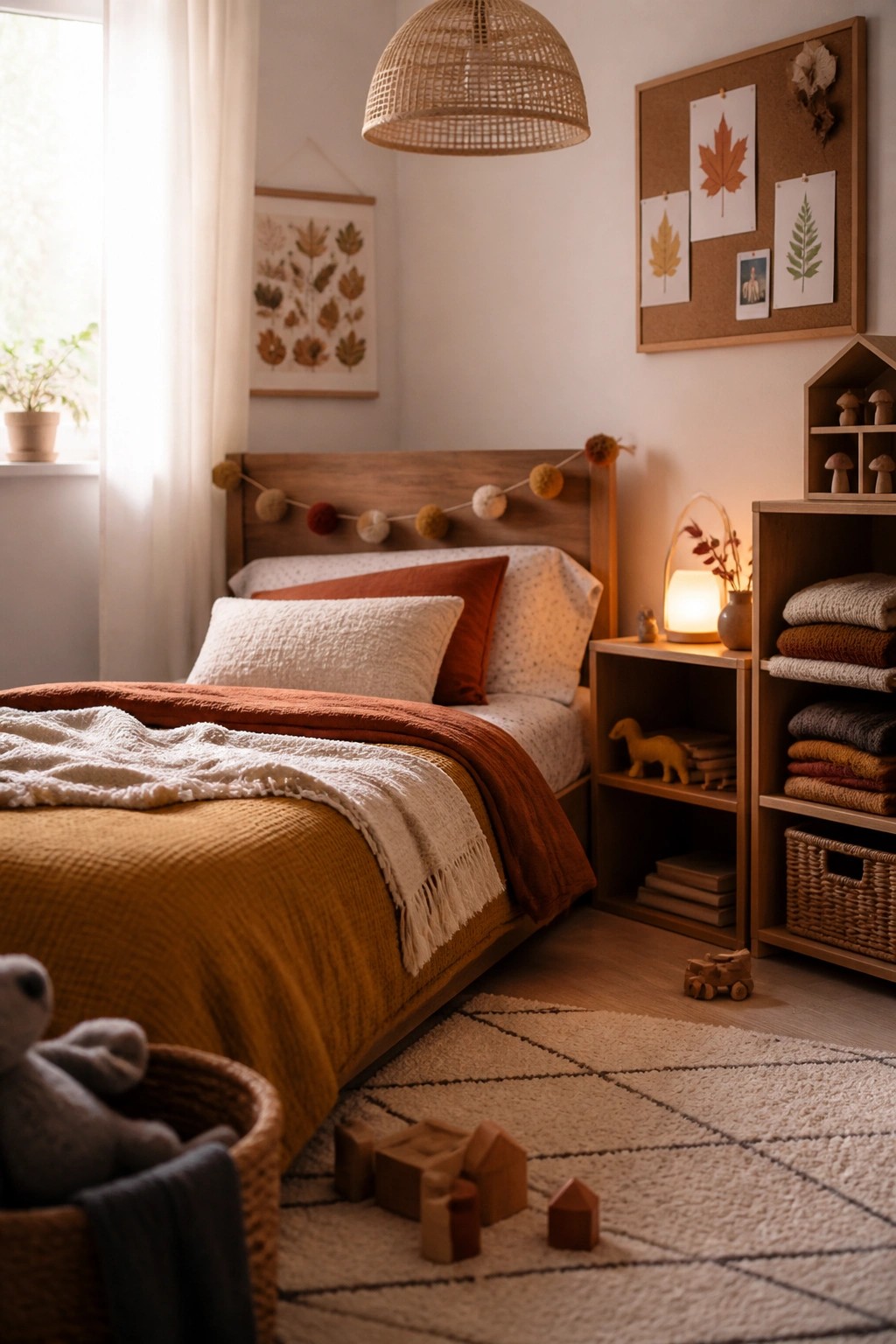
Layering a few different fabrics in earthy tones turns a basic bed into the warmest spot in the room. The mix of a chunky knit, a smoother throw, and some linen or cotton underneath creates depth and makes the space feel ready for cooler nights without needing a lot of extra pieces.
Start with a solid base color, then add one or two bolder shades like mustard or rust on top. This works especially well in smaller bedrooms where the bed takes up most of the wall. Keep the layers loose so they look lived in rather than perfectly arranged.
Layer Warm Textiles on the Bed

A simple way to make a bedroom feel ready for fall is to pile on textiles in soft, warm colors. The mix of a floral quilt, solid throws, and a few pillows in rust and deep green gives the bed depth without looking busy. It works because the layers trap a bit of warmth and make the whole space feel softer.
This approach suits smaller bedrooms or guest rooms where you want comfort without adding much furniture. Start with a quilt or coverlet you already like, then add two or three pillows and a folded throw at the foot. Keep the rest of the room light so the bed stays the focus.
Use A Warm Accent Wall
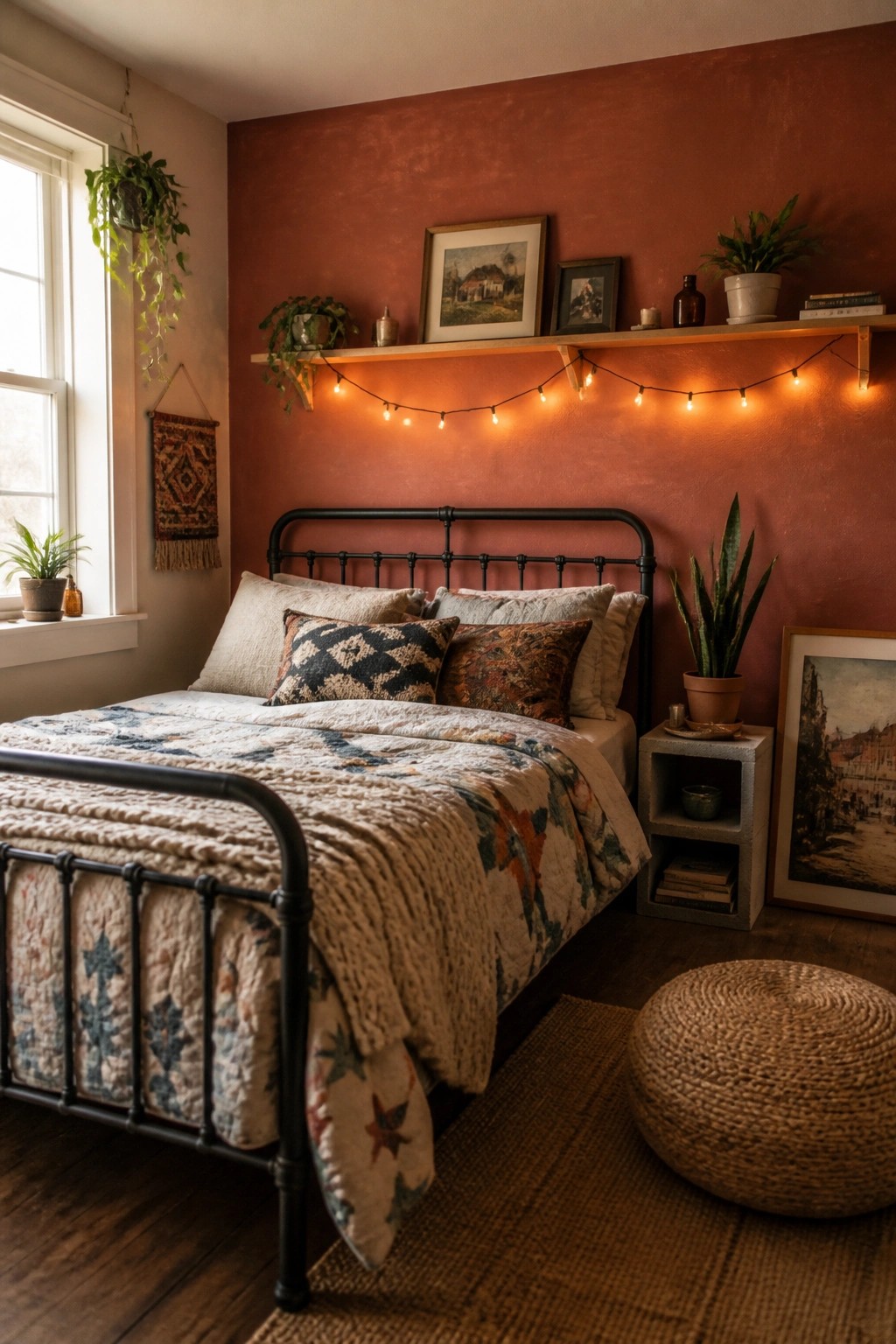
A warm wall color like this terracotta shade makes a bedroom feel instantly cozier without much extra effort. It works especially well in fall when the light gets softer and you want the space to feel a bit more enclosed and restful.
This approach suits smaller bedrooms or any room where you want one strong color without committing to all four walls. Keep the other walls light and add simple bedding so the color stays the focus instead of feeling heavy.
Ground the Bed With a Warm Colored Rug

A large rug in earthy tones can pull a bedroom together fast. It adds softness underfoot and brings in that cozy fall feeling without much effort. The pattern and color keep the space from feeling too bare when the light changes.
This works best in rooms where the bed sits on a hard floor. Keep the rug big enough to extend past the sides and foot of the bed. Stick to similar warm shades in the bedding so nothing fights for attention.
Add A Gallery Wall Above The Bed

A gallery wall filled with botanical prints gives a bedroom extra warmth without needing a lot of color or pattern elsewhere. The frames sit close together and fill the space over the headboard, which helps the room feel settled and lived in. This approach works especially well in fall when you want the space to feel a bit softer and more enclosed.
Place the wall where it can be seen from the doorway or from the bed itself. Keep the frames in similar tones and sizes so the arrangement stays calm instead of busy. It suits older homes or rooms with plain walls that need a bit more personality.
Dark Walls With Warm Lighting

Dark walls can make a bedroom feel quieter and more restful once the days get shorter. The key is keeping the light low and warm so the room does not feel cold or closed in.
Try this in a smaller bedroom or a guest room where you want a calm mood at night. Use a few candles on a tray and one or two wall scones rather than a bright ceiling light, and keep the bedding in soft natural fabrics so the space still feels comfortable.
Use Light Curtains To Let In More Sun

Light curtains on doors or windows can change how a bedroom feels in fall. Tying them back keeps the space from getting too closed in while still letting that soft golden light move across the floors and walls.
This approach works best in rooms that already get decent daylight. Pick a simple linen or cotton and avoid heavy rods or layers so the light stays the main feature.
Layer Quilts And Lace On The Bed

Many bedrooms feel more inviting once the bed gets a few layers of soft fabric. A patchwork quilt adds pattern and weight while lace brings a light touch that keeps the look from feeling heavy.
This works especially well in rooms with older floors or simple walls. Start with one main quilt, add a smaller throw at the foot, and let a bit of lace drape from the frame or headboard. Keep other pieces to a minimum so the bed stays the focus.
Frequently Asked Questions
Q: How can I make my existing bedding feel more fall-like without replacing it all?
A: Layer a soft throw blanket in a warm tone at the foot of your bed. Swap out just one pillow for something with texture like knit or faux fur. That small change pulls the whole look together quickly.
Q: What if my room doesn’t get much natural light in the fall months?
A: Add a couple of warm-toned lamps with soft bulbs around the space. Place them on nightstands or a dresser to create gentle pools of light.
Q: Are these ideas easy to swap out once winter hits?
A: Most of them are. You can store the lighter throws and pillows away and bring in heavier ones. Keep the base layers like rugs or curtains if they still work for you.
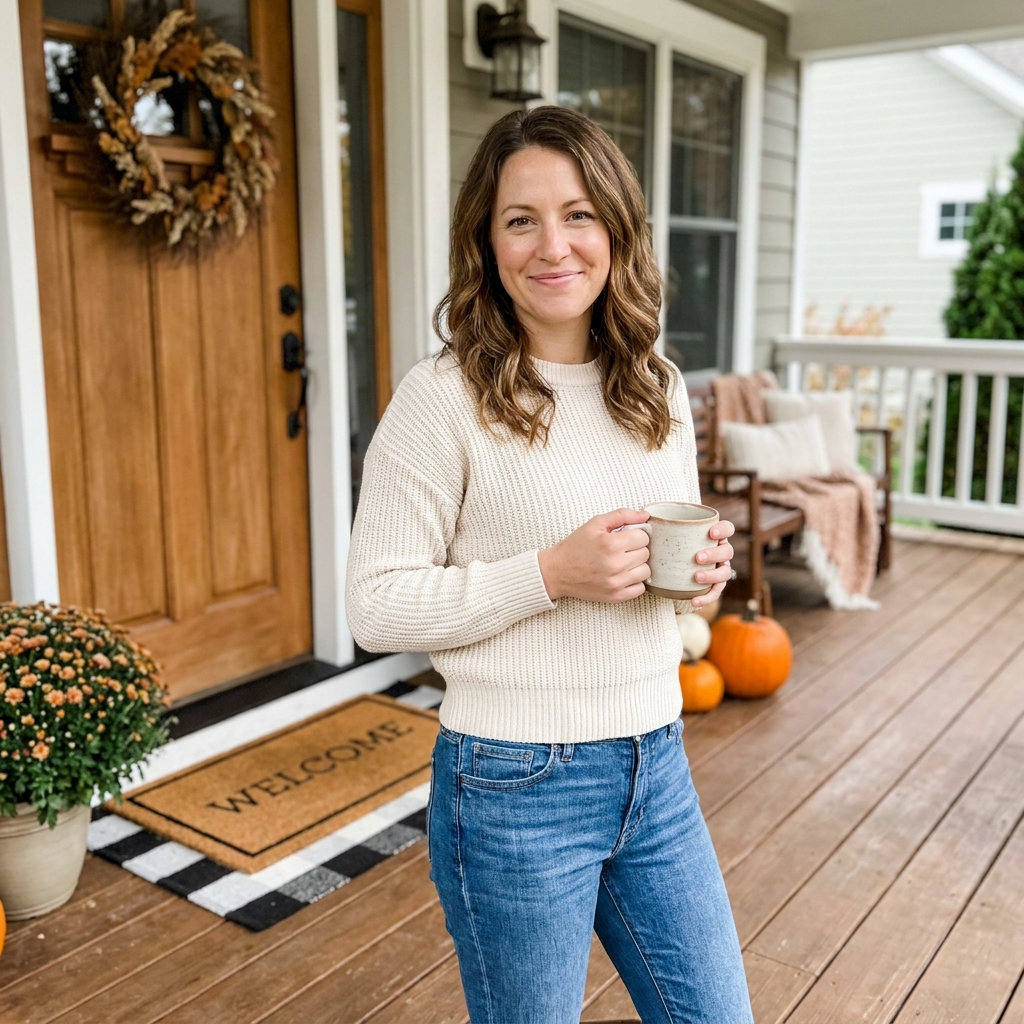
I’m Claire, the voice behind The Seasoned Home. I’ve always loved the way a home can shift with the seasons and feel fresh, cozy, and welcoming all over again. I share seasonal home decor ideas that feel beautiful but still realistic for everyday life, from porch styling and wreaths to cozy bedrooms, living rooms, kitchen touches, and simple table decor. My favorite ideas are the ones that make a home feel special without making decorating feel complicated.