

I have always noticed how a kitchen changes once wood tones and simple harvest pieces enter the space.
The counters and open shelves become the first places these additions show up, so their placement matters more than the number of items.
I usually try one small swap at a time in my own kitchen before deciding what stays.
This keeps the workspace clear while the new details start to feel like they belong.
After a week or two the room itself shows which elements work best.
Displaying Fall Harvests On A Kitchen Island

Many kitchens feel more welcoming in fall when the island gets a simple seasonal layer. A wooden runner down the center and a couple of baskets or bowls holding pumpkins and wheat give the space an easy, gathered look without much fuss.
This idea works best in rooms that already have wood tones and open surfaces. Keep the items low and grouped so the island stays usable for daily tasks. Too many pieces can start to crowd the workspace.
Vintage Scales For Simple Fall Displays
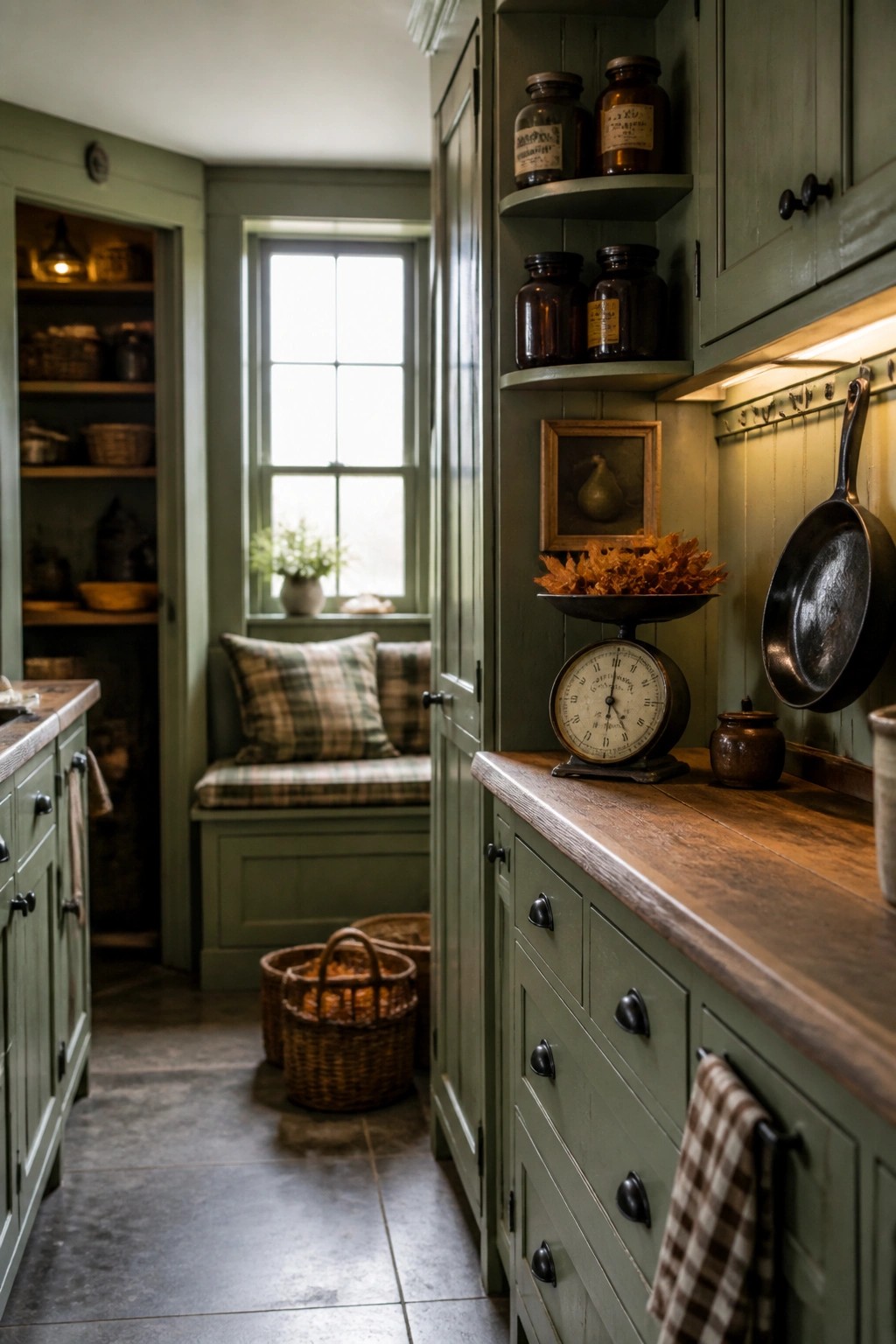
A vintage kitchen scale gives you an easy way to add a few harvest touches without rearranging the whole room. The flat top holds dried leaves or small produce nicely, and the old metal or painted finish fits right in with wood counters and painted cabinets.
Place it on a counter or lower shelf where it stays in view but does not block daily use. It suits smaller kitchens or pantry areas that already have a mix of open storage and simple wood surfaces. Keep other items minimal so the leaves remain the main focus.
A Reclaimed Wood Table for Fall Gatherings
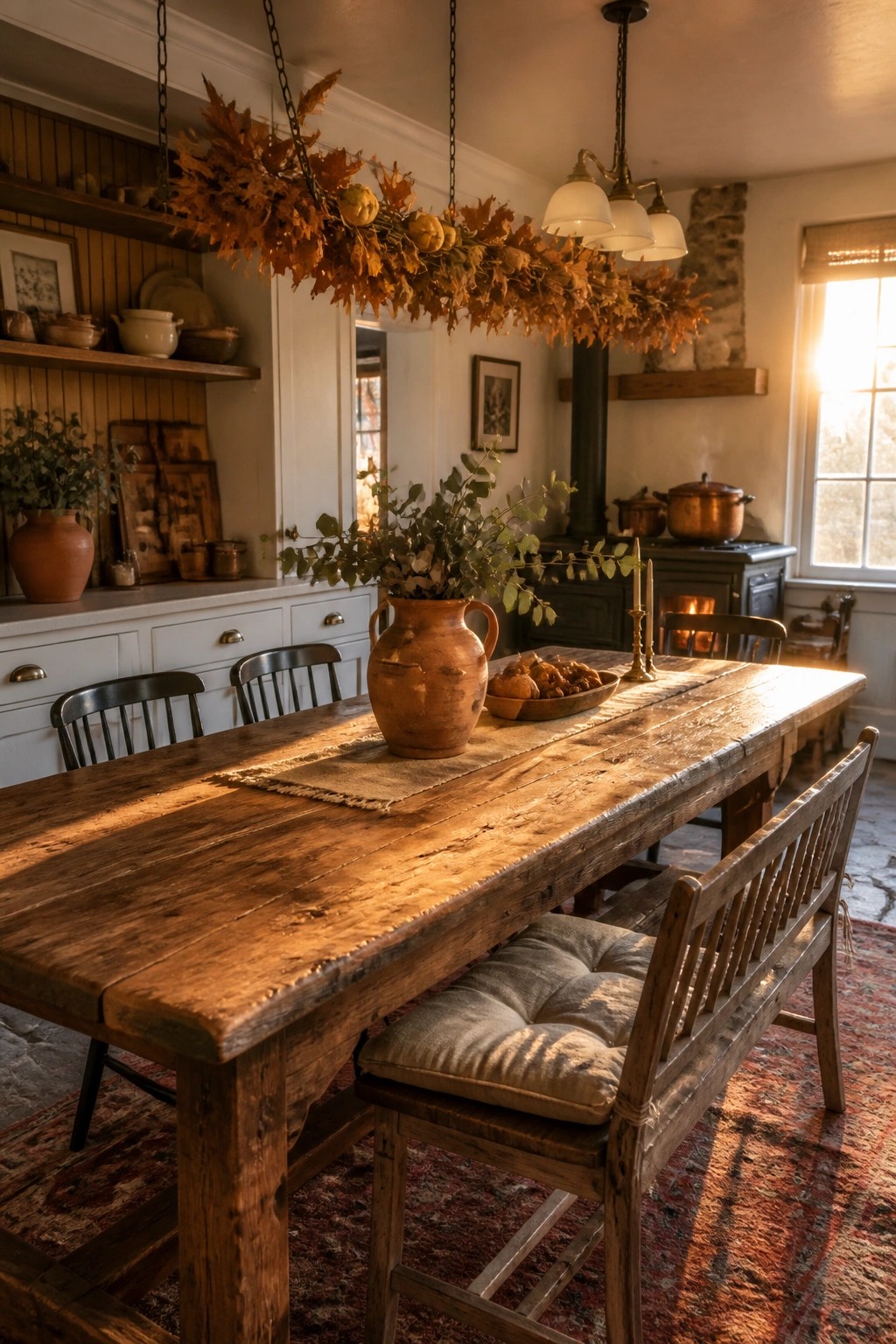
A long wood table gives the kitchen a natural spot to slow down during fall. It handles layers of leaves, small pumpkins, and greenery without looking busy, and the surface itself adds the right amount of warmth.
This setup works best in kitchens that already have some wood tones or simple cabinetry. Keep other surfaces fairly clear so the table can carry the seasonal touches.
Open Wood Shelves for Seasonal Displays

Open wood shelves give a kitchen an easy way to show off fall pieces without crowding the counters. They work because the wood itself adds warmth, and the open space makes it simple to swap in leaves, nuts, or a few extra bowls when the season changes.
This setup suits older homes or kitchens already using wood tones and basic cabinetry. Keep the items on the shelves fairly loose so the look stays relaxed rather than styled.
Wood Islands That Hold Fall Displays Well

A wooden island works nicely for fall because it gives you a durable spot to set out baskets or trays of dried leaves and harvest bits. The wood grain pairs naturally with those textures and keeps the whole look grounded without extra effort.
This setup suits older homes or kitchens already using mixed metals and dark finishes. Place the display near the edge so it stays out of the main work area, and swap the contents every few weeks to keep things from looking tired.
Fresh Pears And Leaves On The Table
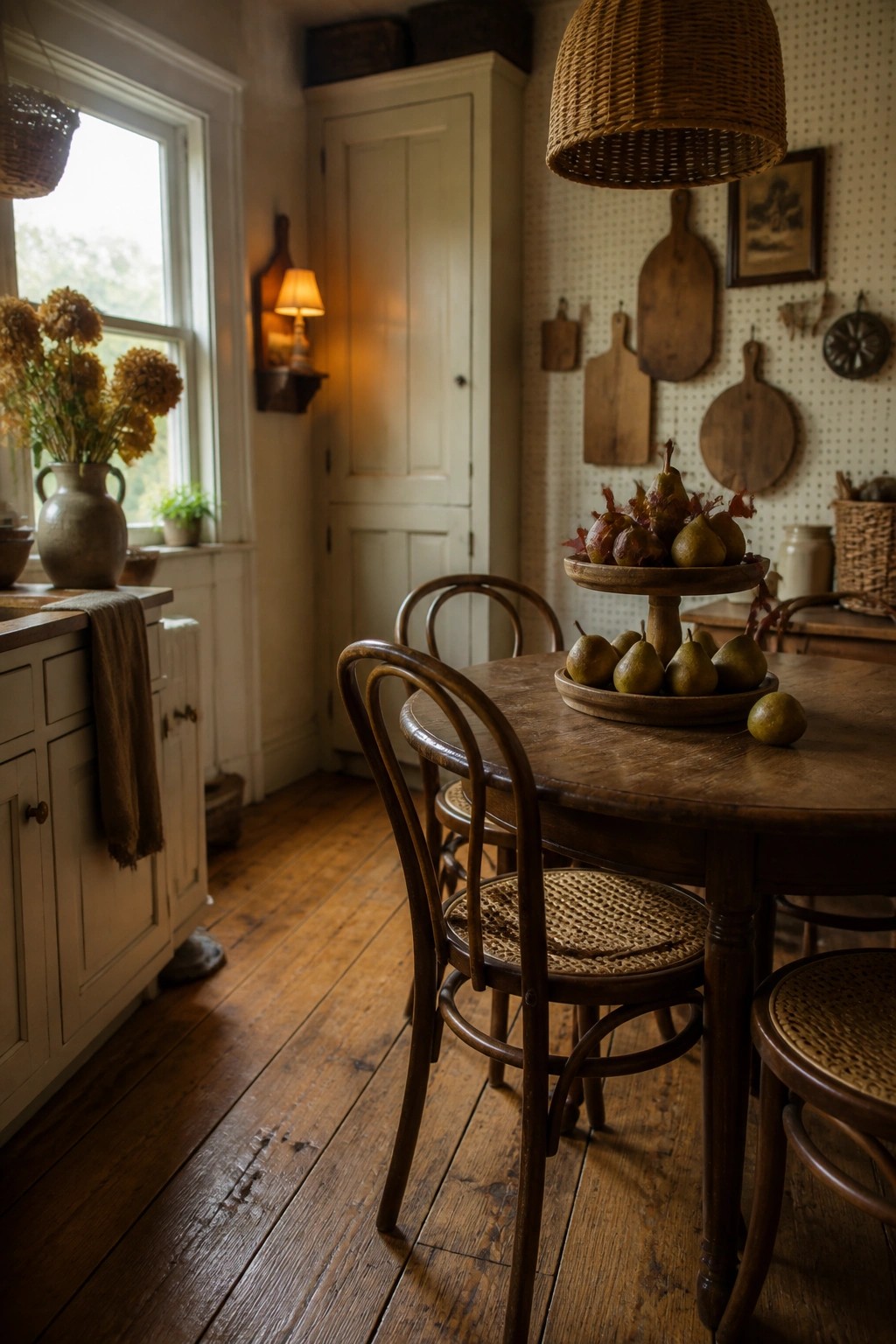
A few pears and some dried leaves can turn an ordinary wooden table into a quiet fall accent. The fruit adds color and shape while the leaves bring in that soft seasonal touch without needing much else.
This works best in kitchens that already lean rustic or have warm wood tones. Keep the arrangement low so it does not block conversation, and use fruit you actually plan to eat later.
Line Up Harvest Jars on the Kitchen Island

A long wooden island gives you a natural place to set out jars of preserved fruit without taking over the counters. The wood tone pairs well with glass and the warm colors inside the jars, so the display feels like part of the kitchen rather than something added on.
This works best when the island has a wide top and you keep the jars in one straight row. Leave room at each end for daily use, and add only a few extra touches like dried leaves or bundled spices so the jars stay the main focus.
Display Harvest Gourds on an Open Shelf

A simple shelf above a kitchen seating spot gives you an easy place to set out gourds and dried stems. The wood surface keeps the display grounded and lets the shapes and colors of the harvest stand out without extra effort.
This works best in a breakfast nook or corner where people sit often. Use a narrow ledge so the gourds stay in view but do not crowd the space below, and swap them out once the season passes.
Glass Doors On A Kitchen Island
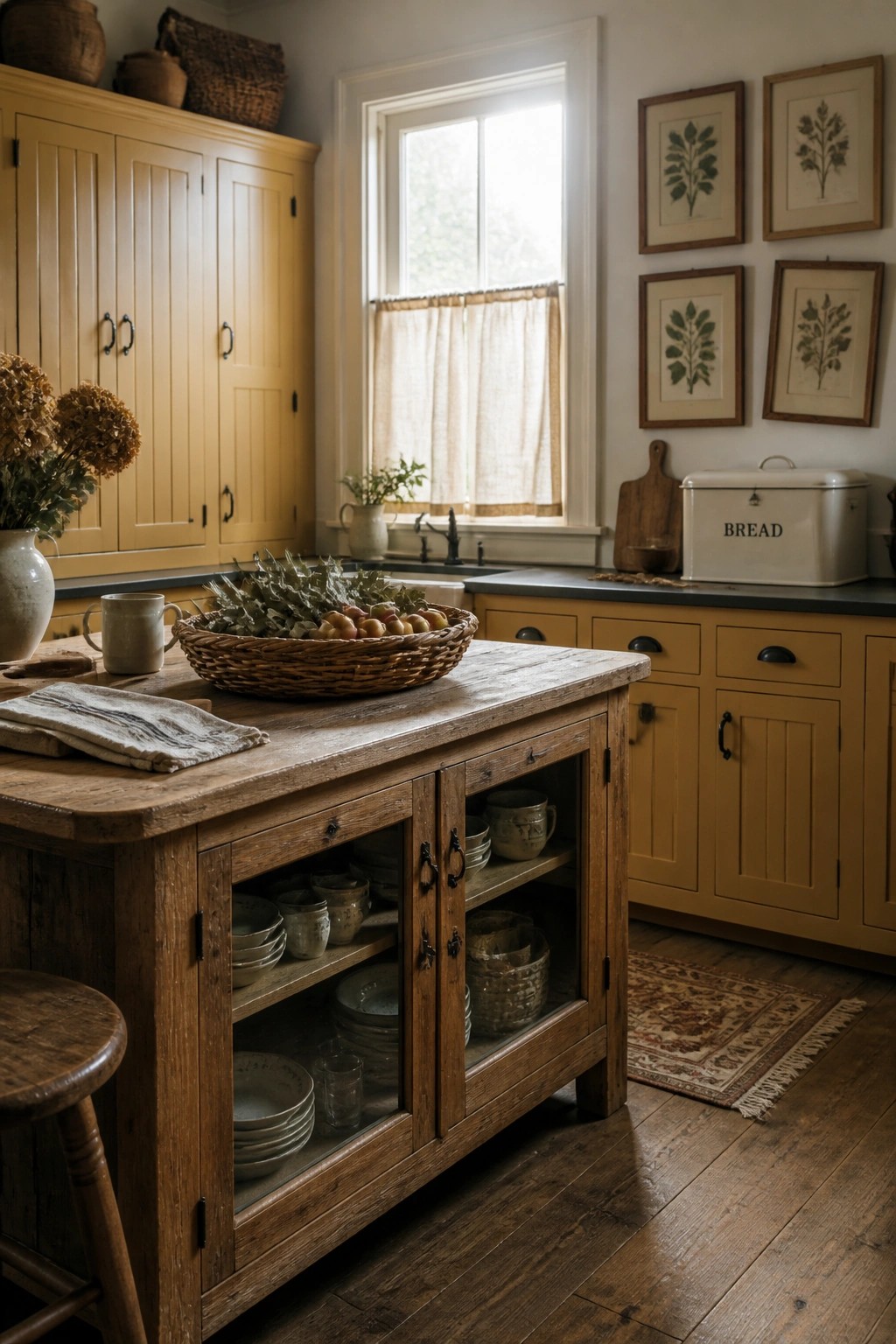
A wooden island with glass cabinet doors gives you a place to keep dishes and bowls in view while still protecting them from dust. It turns everyday storage into part of the room instead of hiding it behind solid panels. The open look also makes it easy to add a basket of apples or greens on top without the whole surface feeling crowded.
This setup works best in kitchens that already lean rustic or simple. It suits homes where you cook often and want quick access to plates and mugs. Keep the shelves from getting too full so the glass stays useful rather than just another surface to clean.
Mix Wood Into Your Concrete Countertop

A wood section set into a concrete island gives the surface a warmer, more practical feel. It creates a natural spot for cutting or setting things down without the coldness that stone alone can bring.
This approach works best in kitchens that already have wood cabinetry or other natural tones. Match the wood closely to your cabinets and keep the rest of the counters simple so the wood stands out as the main detail.
Rolling Wood Islands For Flexible Workspace
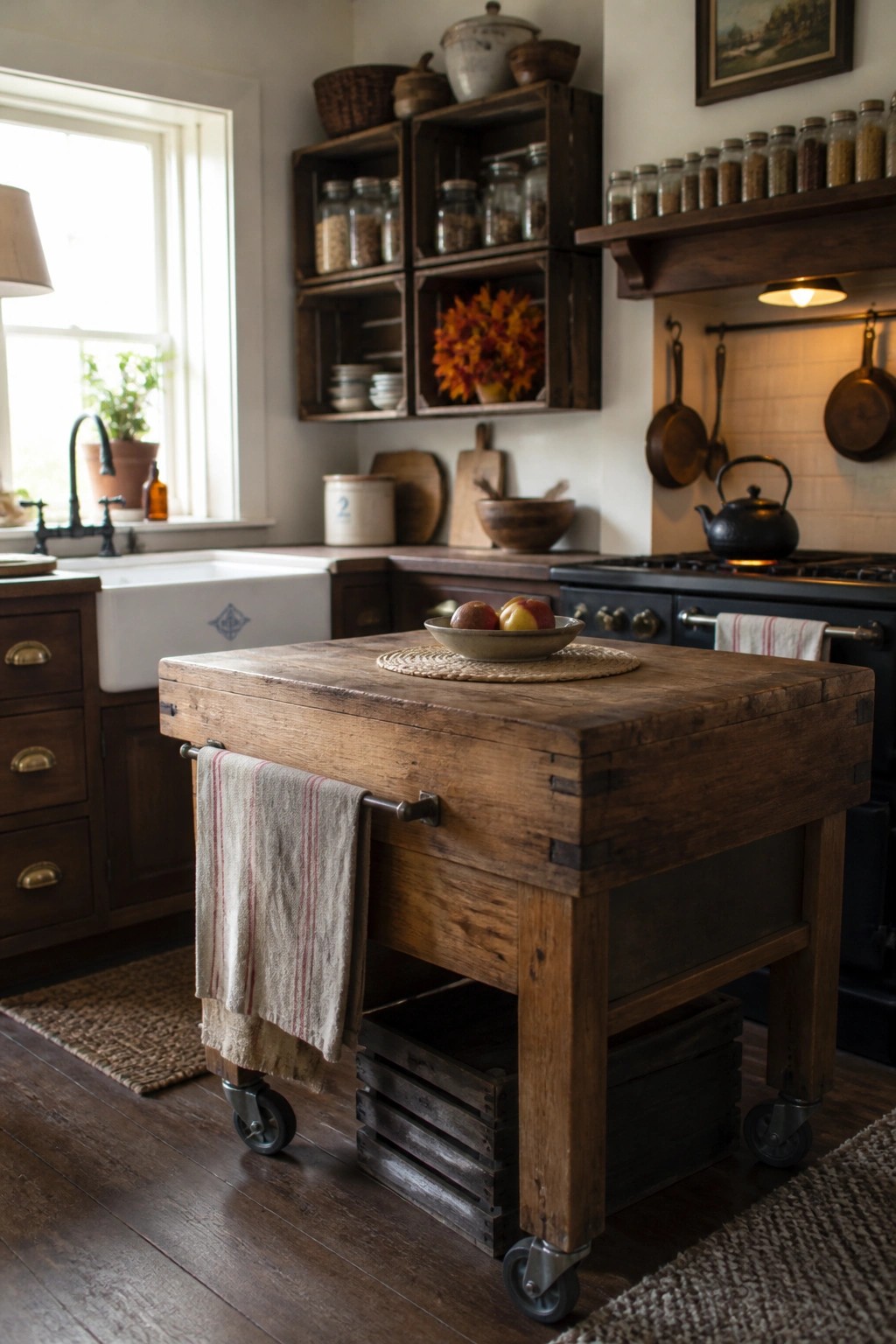
A rolling island built from solid wood gives a rustic kitchen room to breathe. It adds a sturdy work surface without locking the layout into place, and the natural grain pairs easily with harvest elements like bowls of apples or dried leaves on the counter.
Position it where you need it most during cooking, then roll it toward a wall or corner when extra floor space matters. Crates tucked underneath hold potatoes, onions, or extra towels, making the island practical for fall cooking in older homes that often lack built-in storage.
Wooden Islands For Fall Displays
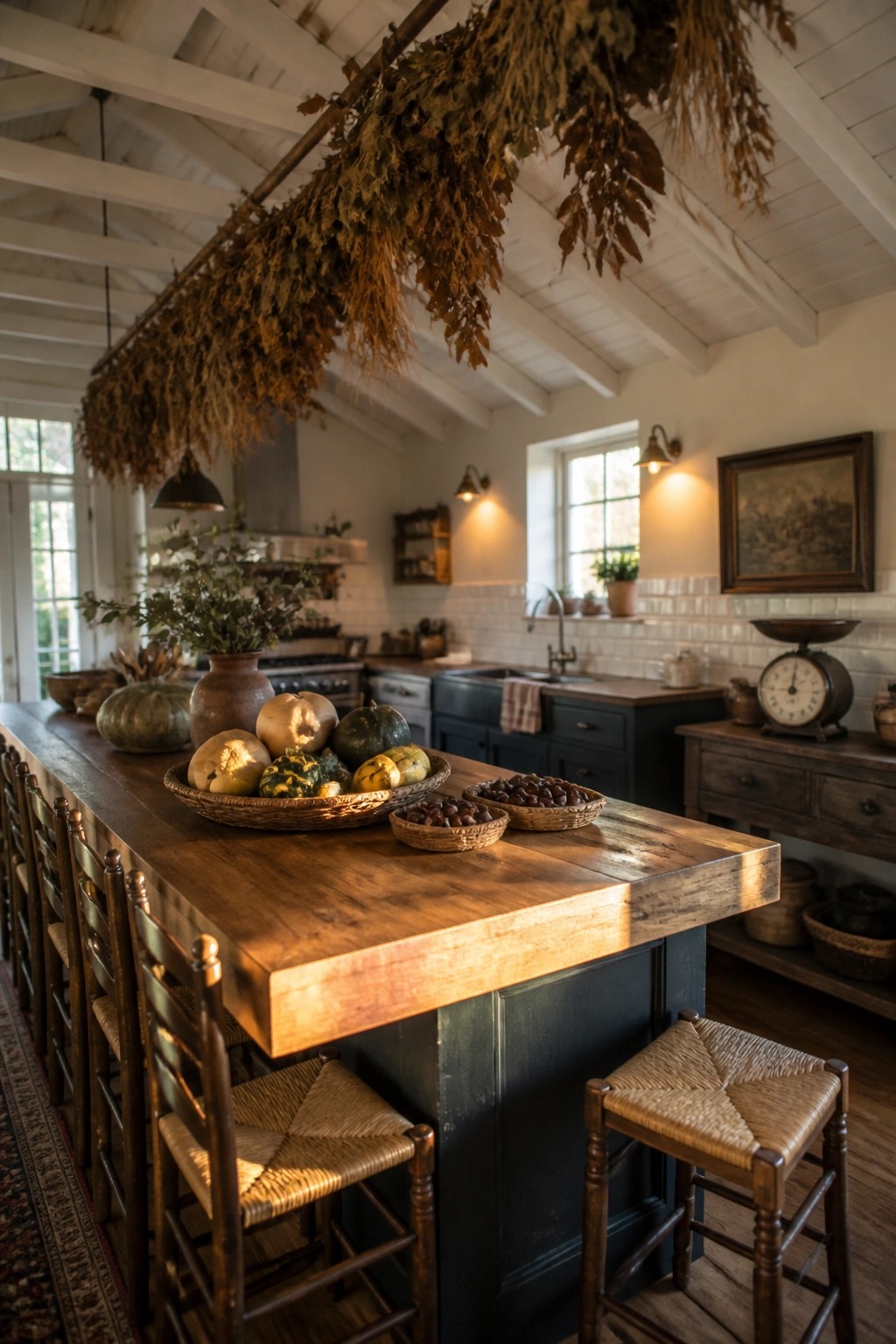
A thick wood island gives the kitchen a steady place to set out baskets of squash and other harvest items. The surface feels warm and practical at the same time, so the produce looks like it belongs there instead of being added on later.
This idea works best in kitchens that already have some wood tones or dark cabinetry. Keep the arrangement low and simple with just a few baskets so the island stays usable for daily tasks. It suits older homes or any space that needs a bit more warmth without extra pieces of furniture.
Style The Counter With A Wooden Harvest Tray

A wooden tray filled with seasonal fruit and a few leaves gives the counter a simple fall touch without much effort. It works because the wood already matches the cabinets and beams, so the produce stands out without feeling added on.
This approach suits kitchens that already lean rustic or have plenty of wood tones. Swap the fruit every couple of weeks and keep the tray in a spot where it will not get in the way of daily use.
Wooden Island for Harvest Displays

A wooden island gives you a solid surface that handles both daily cooking and seasonal displays without looking staged. The natural grain stands out against painted cabinets and makes piles of nuts, dried leaves, or jars of preserves feel like they belong there.
Place the island where it can serve as a casual work spot and a spot to set out what you have gathered. It suits older homes or kitchens with simple cabinetry, and the wood only improves with use. Keep the rest of the counters clear so the island stays the main focus.
Display Fall Produce in a Wooden Crate

A wooden crate filled with pumpkins and gourds makes a simple centerpiece that feels right at home in a rustic kitchen. It adds texture and color without needing extra decorations or fancy arrangements.
This works best on a round table in a breakfast nook or near a window seat where the light can hit the produce. Keep other items off the table so the crate stays the focus, and swap the contents as the season changes.
A Wooden Island With Open Storage Below
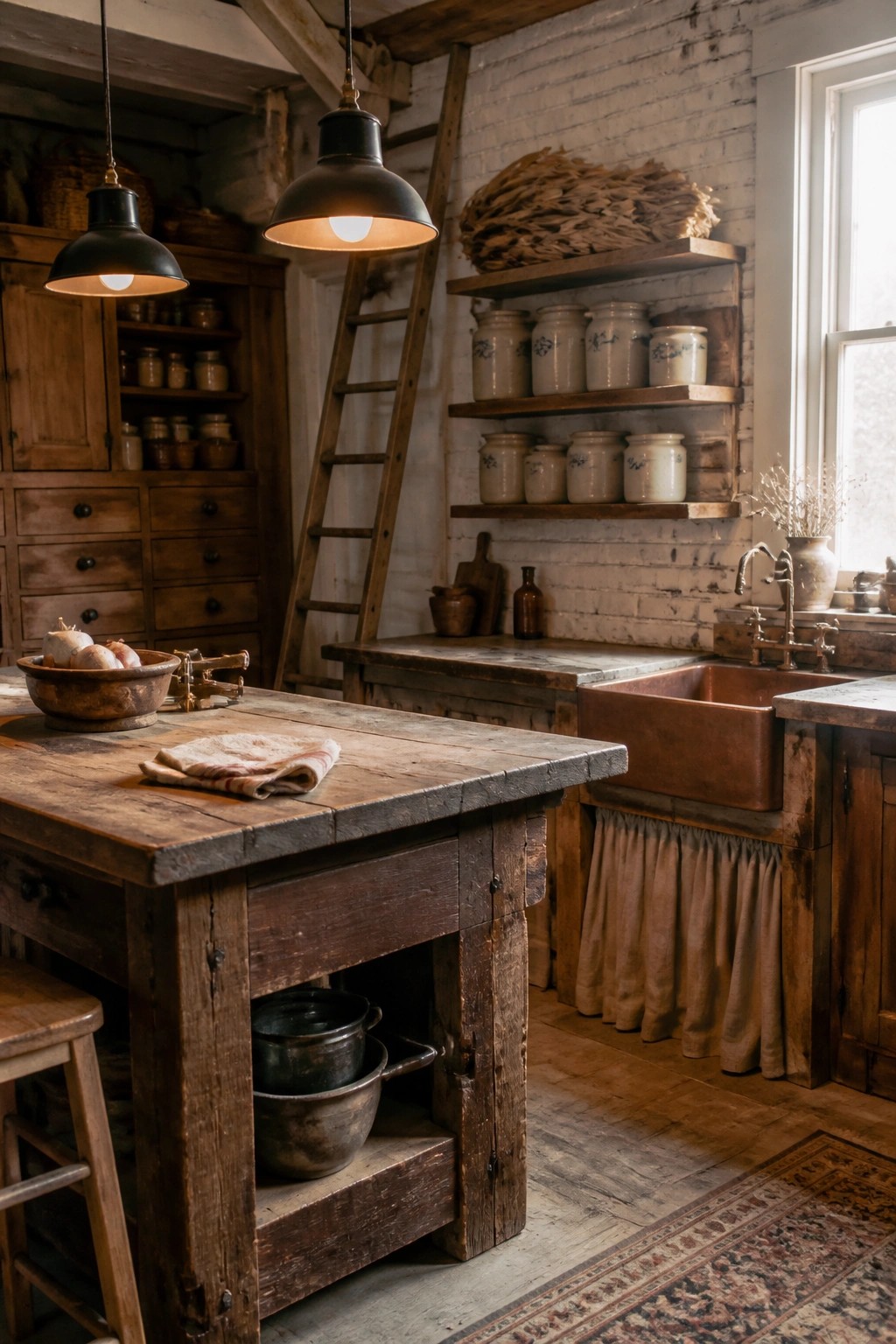
A large wooden island works well in a rustic kitchen because it gives you both a solid work surface and extra spots to keep everyday items within reach. The lower shelves make it easy to grab pots or bowls without opening cabinets, which keeps the space feeling simple and useful during busy seasons.
This setup suits older homes or kitchens that already use wood tones and natural textures. Keep the shelves lightly stocked so they do not collect dust, and choose a finish that can handle spills and daily wear.
Open Shelving With Harvest Touches
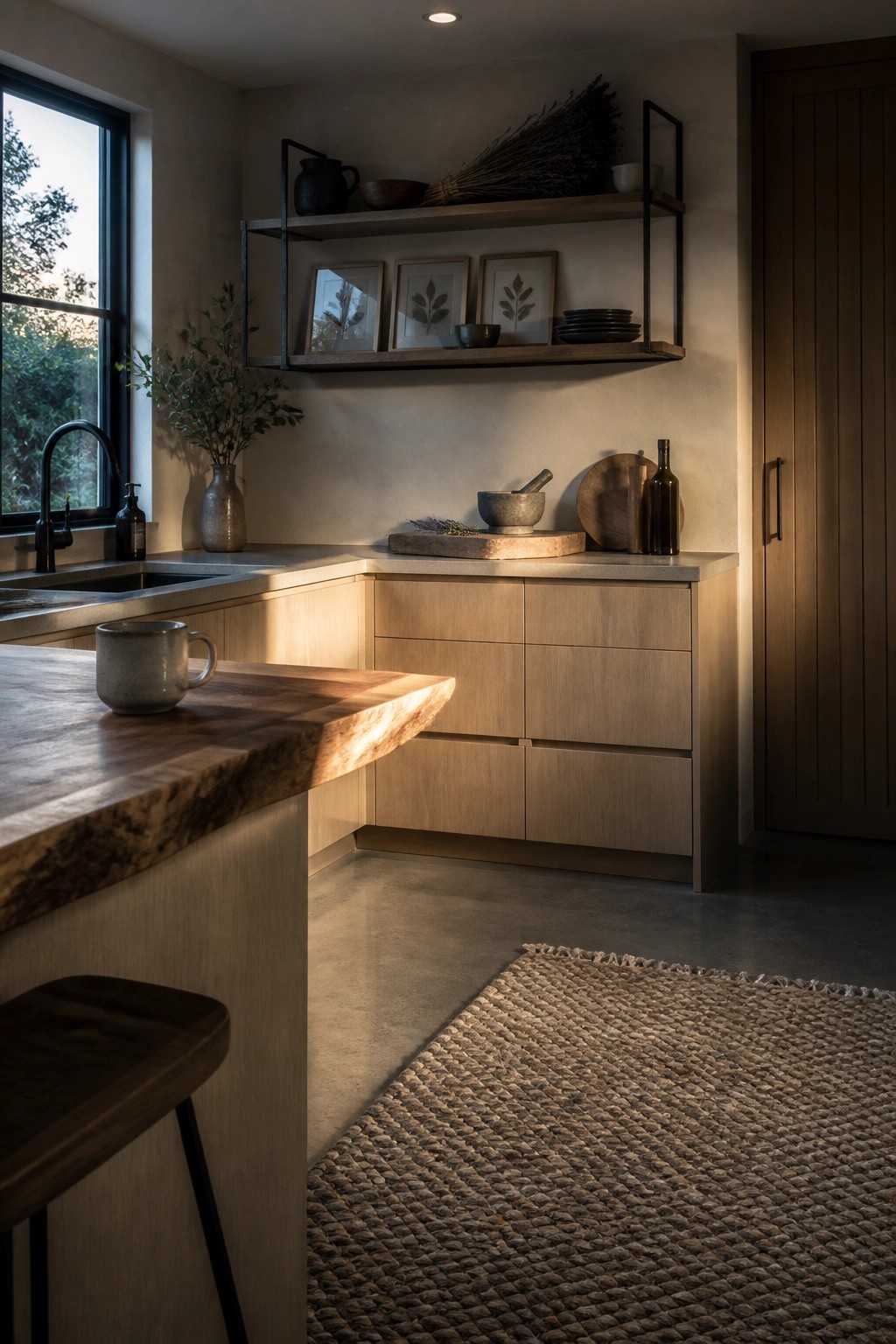
Open shelving gives you a simple way to bring a few seasonal pieces into the kitchen without adding clutter. A few dried stems and wooden boards keep the focus on natural textures that feel right for fall.
This approach suits kitchens that already have wood tones and neutral walls. Keep the items spaced out so the shelves stay useful rather than crowded.
Open Shelving For Seasonal Produce

Open shelves on a kitchen island give you a place to keep fall vegetables where you can actually reach them. Baskets keep the look simple while letting the harvest do most of the work.
This works best in homes that already lean rustic or farmhouse. Just make sure the shelves are deep enough for the baskets and not too low, or you will be constantly bumping into them when you stand at the counter.
Using Apples And Leaves On Wood
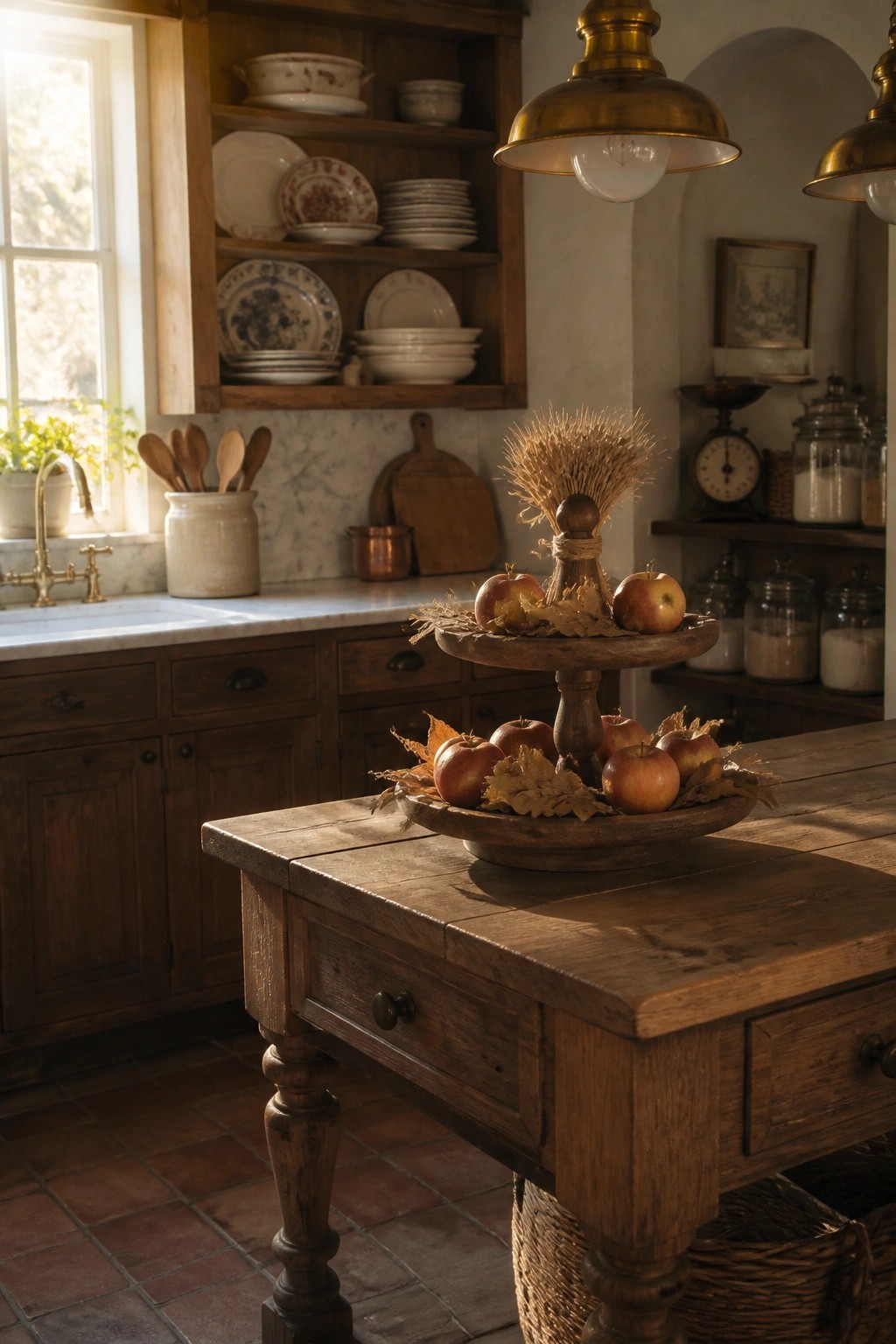
Many kitchens feel warmer in fall when a few apples and dried leaves are added to a wooden surface. The mix brings in natural color and texture that fits right in with existing wood tones and simple cabinetry.
This approach works best in rustic or traditional kitchens where the wood already sets the base. Keep the display low and centered on a table or island so it stays practical for daily use. Replace the fruit every few days if needed.
A Wooden Island as the Kitchen Centerpiece

A large wooden island gives a rustic kitchen real presence. It adds warmth through its grain and color while offering a surface that works for both daily tasks and light seasonal touches like dried stems or simple pottery.
Place it where people naturally gather and keep the surrounding cabinetry simpler so the island stands out. This setup suits older homes or any kitchen that needs a grounded, practical focal point without extra layers of decoration.
Hang Dried Herbs For Seasonal Interest

Dried herbs bring a quiet harvest feel into a kitchen without much effort. A simple ladder or hook setup lets you show off bundles of greenery that feel right at home with wood tones and earthy colors.
This works best in a rustic or farmhouse kitchen where you have a bit of wall space near the cooking area. Keep the bundles small so they do not collect dust, and swap them out when the season changes.
A Wooden Table as the Kitchen Centerpiece

A big wooden table can pull a rustic kitchen together in a way that feels natural and useful at the same time. It creates a central spot for both everyday tasks and seasonal displays, and the grain and texture of the wood add warmth without extra effort.
Place the table where it can handle traffic from the stove or sinks, then keep the surface fairly open so it still works for meals or prep. A few baskets of produce and one simple arrangement are usually enough to give it a fall feel without crowding the space.
Using A Wooden Harvest Bowl On The Island

A large wooden bowl filled with autumn leaves and a few bunches of grapes makes an easy seasonal accent on a kitchen island. It brings in natural texture and color without much effort, and it works especially well when the island and surrounding shelves already feature wood tones.
This approach suits rustic or farmhouse kitchens where you want to refresh the space each season. Keep the arrangement loose rather than perfect, and swap the contents as the months change so it stays simple and practical.
Frequently Asked Questions
Q: How do I keep fresh leaves from drying out too quickly on the counter? A: Gather them in the morning when they still hold moisture. Mist the stems lightly every other day and tuck the base into a shallow dish of water. This keeps the edges soft without making everything damp.
Q: Where should I place wood pieces so they do not scratch my table? A: Set a folded cloth or a simple woven mat underneath first. Move the heavier items only when you clean, and check the surface every week or so for any marks. A quick wipe keeps both the wood and the table looking good.
Q: Can I swap in dried wheat or corn husks if I run out of leaves? A: Yes, bundle a few stalks together and tie them with twine near the wood accents. They add height and texture without needing extra color. Trim the ends short so nothing hangs into your cooking space.
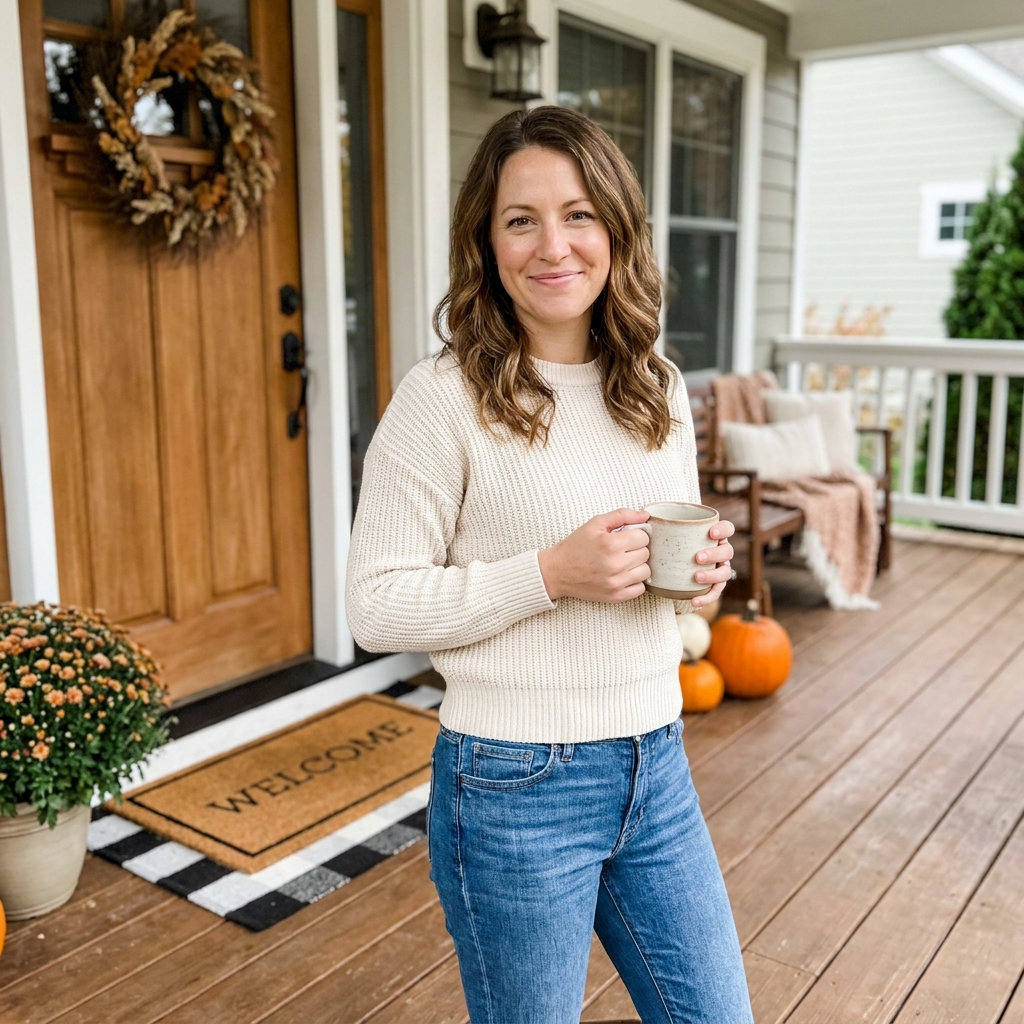
I’m Claire, the voice behind The Seasoned Home. I’ve always loved the way a home can shift with the seasons and feel fresh, cozy, and welcoming all over again. I share seasonal home decor ideas that feel beautiful but still realistic for everyday life, from porch styling and wreaths to cozy bedrooms, living rooms, kitchen touches, and simple table decor. My favorite ideas are the ones that make a home feel special without making decorating feel complicated.