

I have noticed over the years that fall yard touches tend to work better when they follow the lines already set by beds and paths instead of cutting across them.
Placing seasonal elements so they reinforce those existing edges usually makes the whole layout read more clearly once the leaves start to drop.
A few stand out in practice.
Last year I set clusters of dried stems right along the side border and the change made the slope behind it feel more deliberate without needing new plantings.
Trying one or two of these adjustments in your own space tends to reveal which ones actually suit the way the yard grows over time.
Using Hay Bales And Pumpkins To Highlight Garden Paths
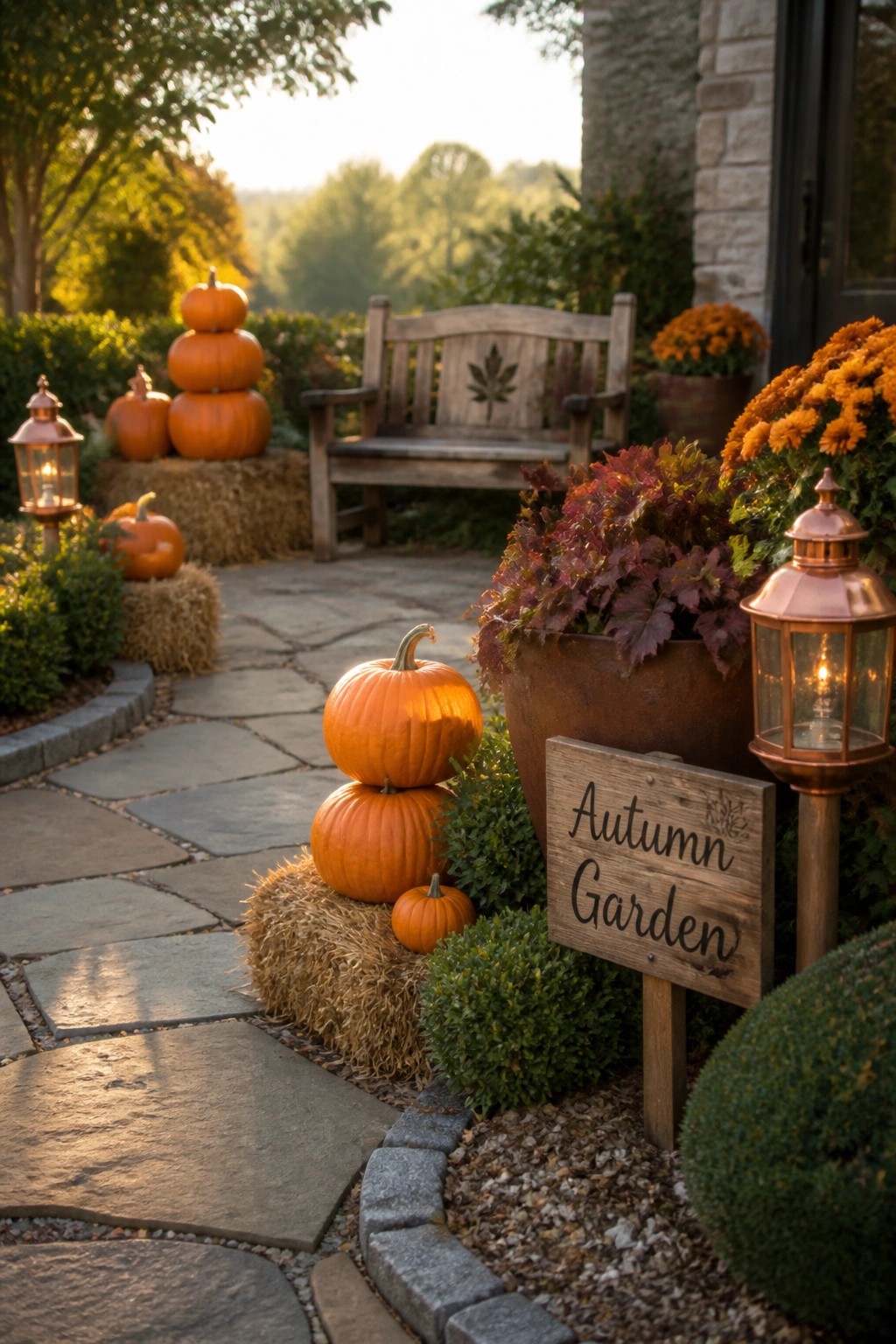
Hay bales stacked with pumpkins make a simple way to mark the edges of a path and give it more presence in fall. The natural texture of the straw pairs well with stone or gravel, and the pumpkins add color without needing flowers that might fade early. It keeps the walkway feeling intentional rather than just a route through the yard.
This approach works best on homes that already have a clear path through the garden or around the side of the house. Place the bales in small groups rather than a continuous line so the look stays casual. Check that the bales sit flat on the ground and use smaller pumpkins on top to keep them steady.
Terracing a Slope with Stone Walls
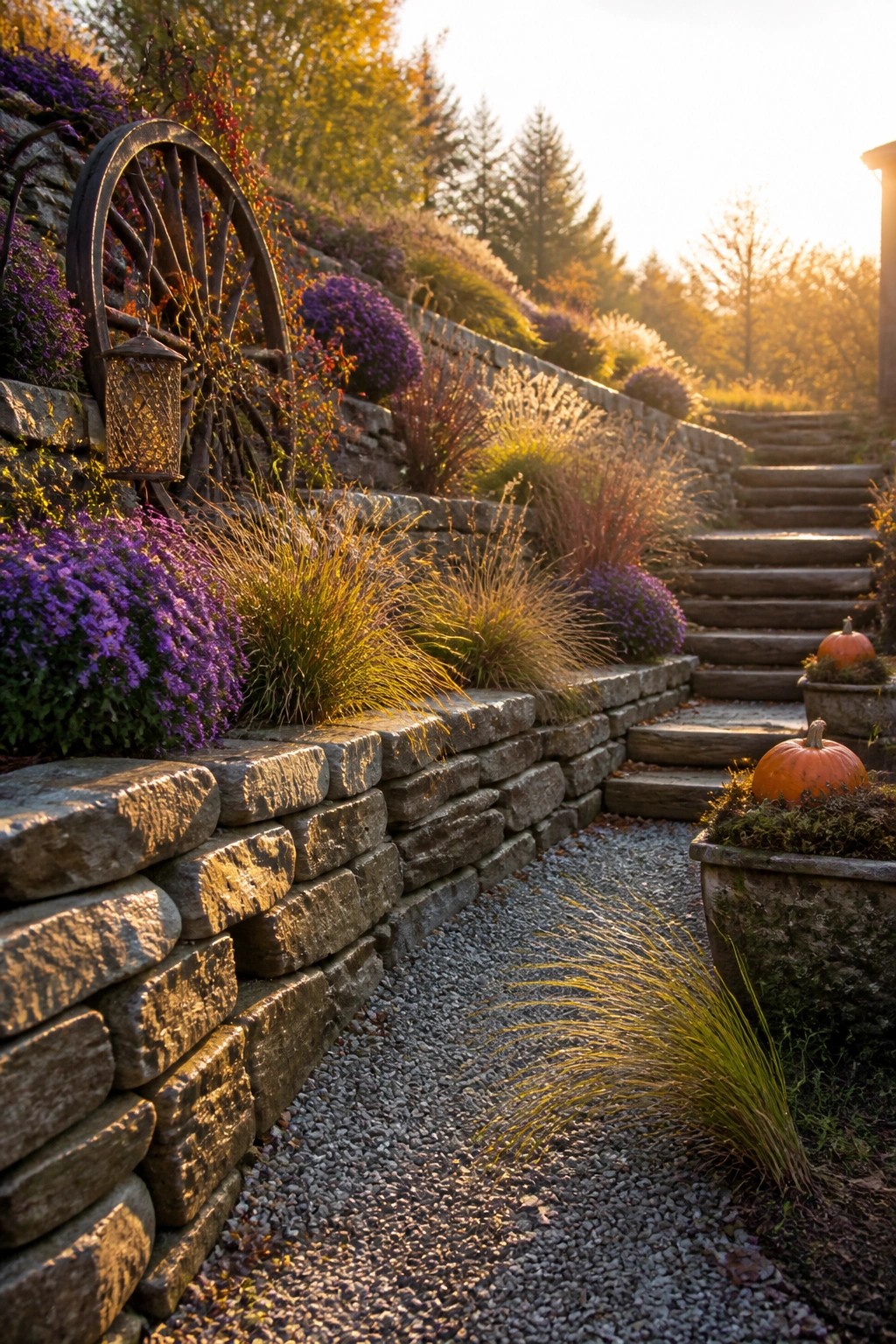
Slopes can be tricky in a yard because they are hard to plant and maintain. Low stone retaining walls solve that by creating flat beds at different levels so you can grow more without losing the whole hill to erosion or weeds.
This works best on properties that already have a gentle rise or bank near the house. Keep the walls under two feet high, use a matching gravel path to tie the levels together, and plant in layers so the beds stay full without looking crowded.
Soften Garden Paths With Moss And Stepping Stones
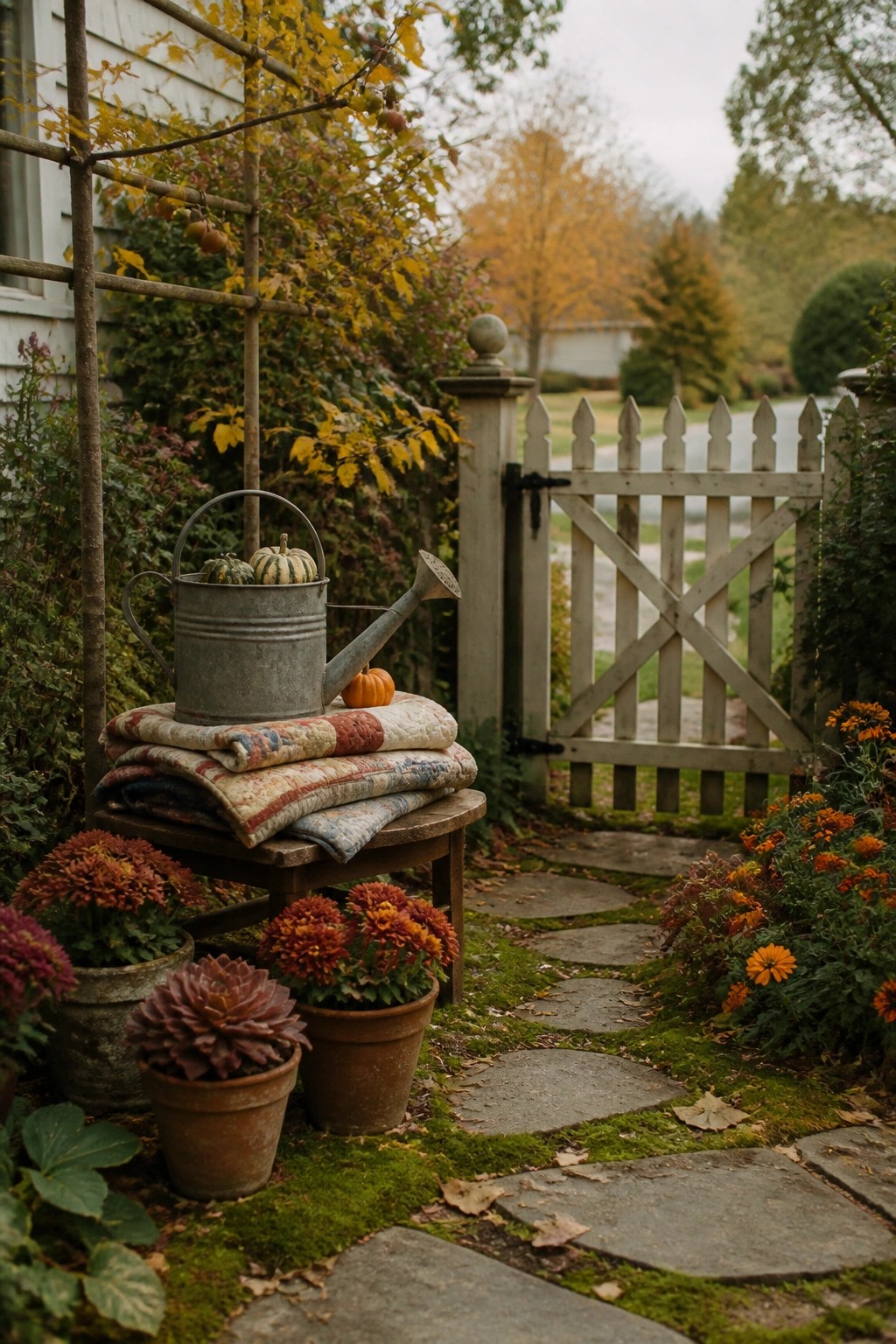
A stone path set into moss gives the yard a settled look that feels natural rather than planned. The green ground cover fills the gaps between the stones and keeps the whole walkway from looking too hard or formal.
This approach works best in partly shaded spots where moss can take hold without much fuss. Add a few pots of seasonal flowers along the edges to bring in color that changes with the months.
Large Planters Along a Stone Path
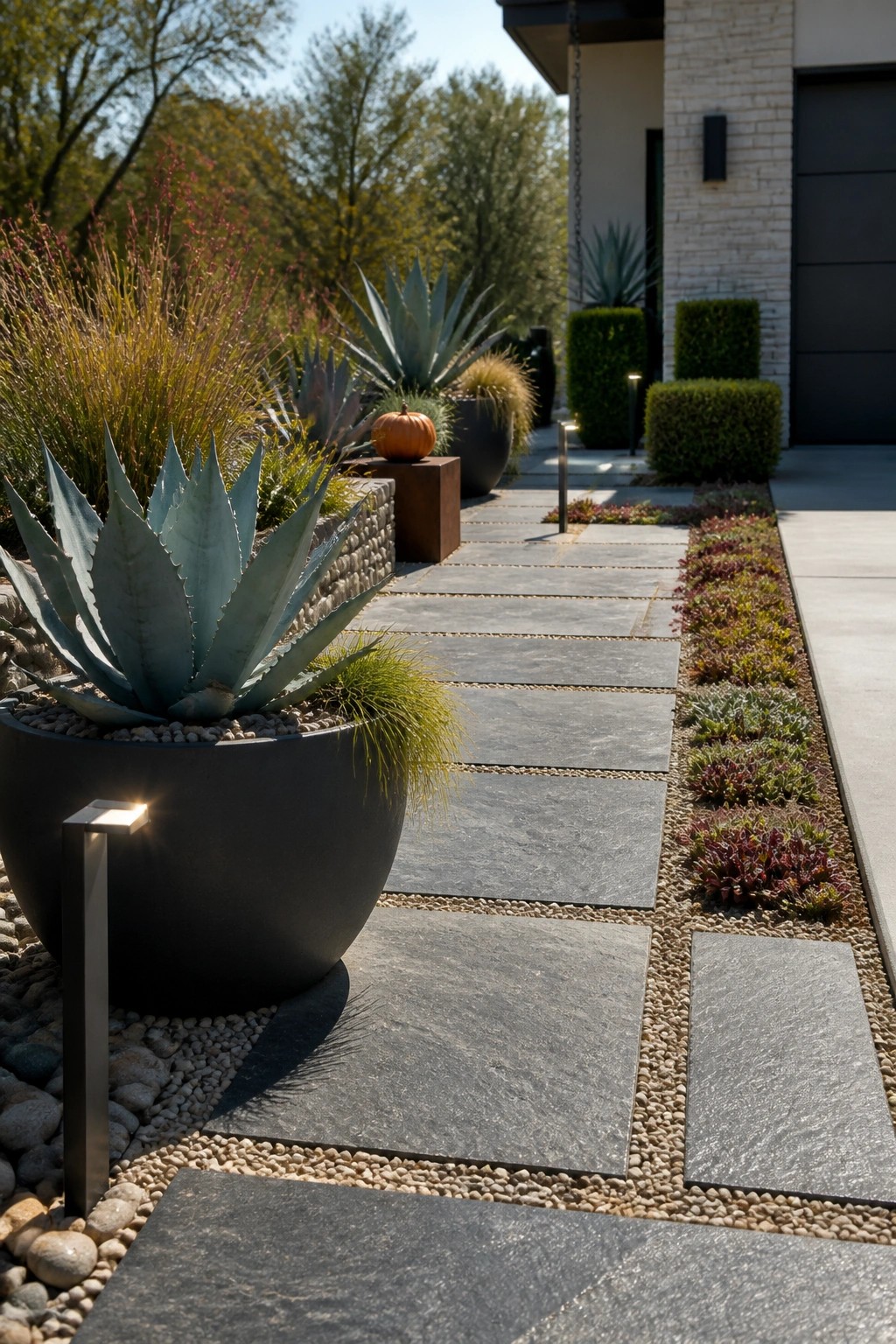
Large pots placed beside a walkway give the landscape a strong shape without needing a lot of plants. The dark containers stand out against the gravel and pavers, and they let you move the planting around when the seasons change.
This works well on narrow side yards or front paths where a full garden bed would feel crowded. Keep the pots simple and use plants that hold their form into fall so the look stays neat with little upkeep.
Center Your Patio Around A Fire Pit
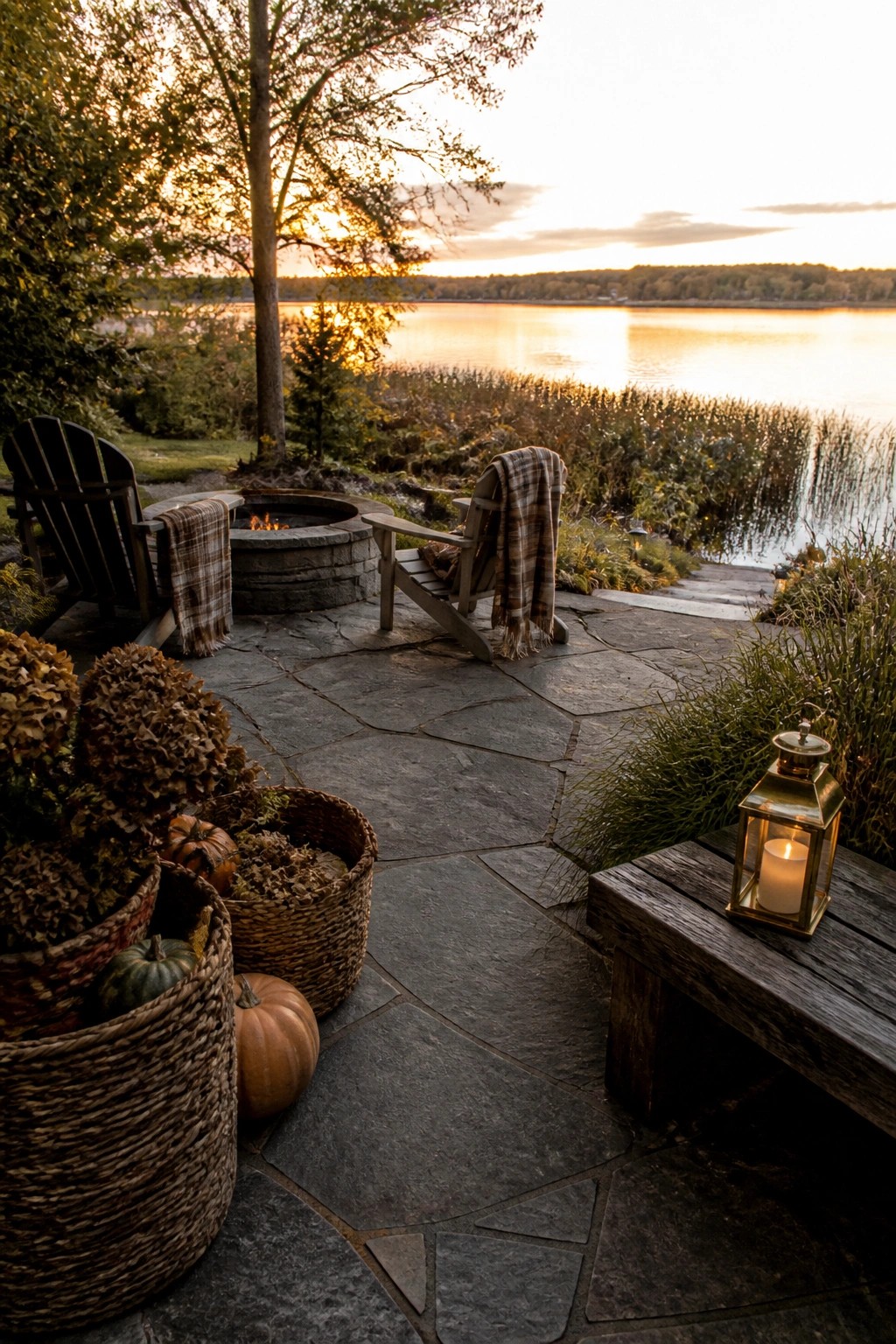
A fire pit gives the patio a clear reason to linger once the evenings turn cool. It pulls the seating into one spot so the space feels used instead of just open.
Set the pit where chairs can face it without blocking the view beyond. Stone paving holds up well to heat and foot traffic, and it pairs easily with simple seasonal accents like a throw or a couple of planted containers.
Line Paths with Metal Bucket Planters
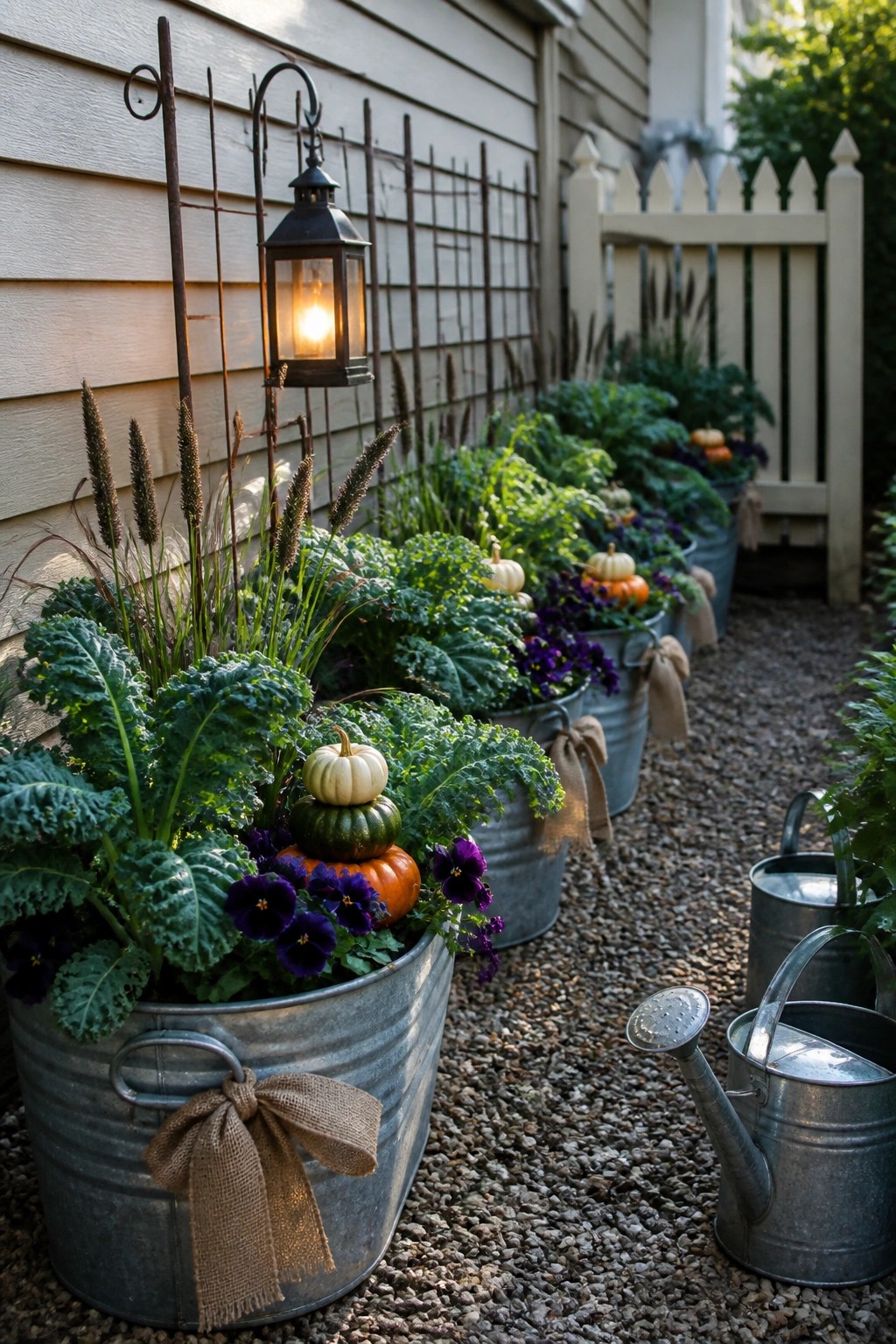
Metal buckets make an easy way to bring fall plants right up next to a walkway. They hold up well outdoors, give a simple rustic touch, and let you move things around if the layout needs tweaking later.
This works best on gravel paths or along the side of a house where you want seasonal color without digging new beds. Fill them with sturdy plants that handle cooler weather and stack a few small pumpkins on top for extra interest.
Label Your Garden With A Plant List Sign

A plant list sign gives visitors something useful to look at while they walk through the beds. It turns a collection of flowers into something more organized and easy to understand. Many people like knowing the names without having to guess or ask.
Put the sign near the front of a bed or along a path where it can be read without stepping off the walkway. A chalkboard works fine if you want to change the names each season. This approach fits best in gardens with lots of different perennials that bloom at different times.
Use Low Hedges To Define A Reflecting Pool
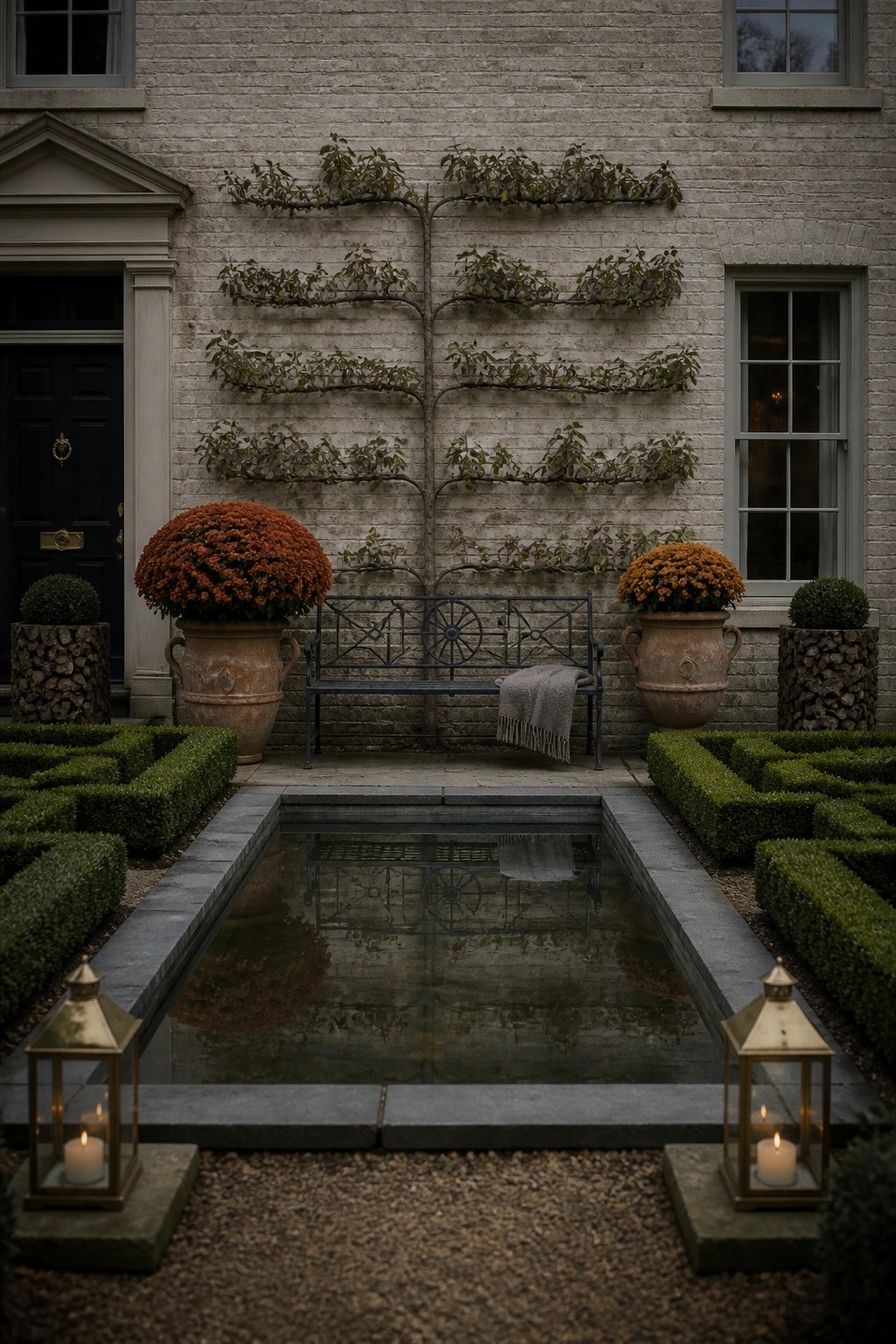
A small rectangular pool gains a lot more presence when it sits inside a frame of low boxwood hedges. The hedges keep the shape crisp and make the water look intentional instead of just dropped into the yard.
This works best on fairly flat ground where you can run gravel paths around the edges. Place a simple bench at one end and a couple of large pots nearby so the whole area feels pulled together without needing much extra decoration.
Hay Bale Seating For Casual Fall Evenings
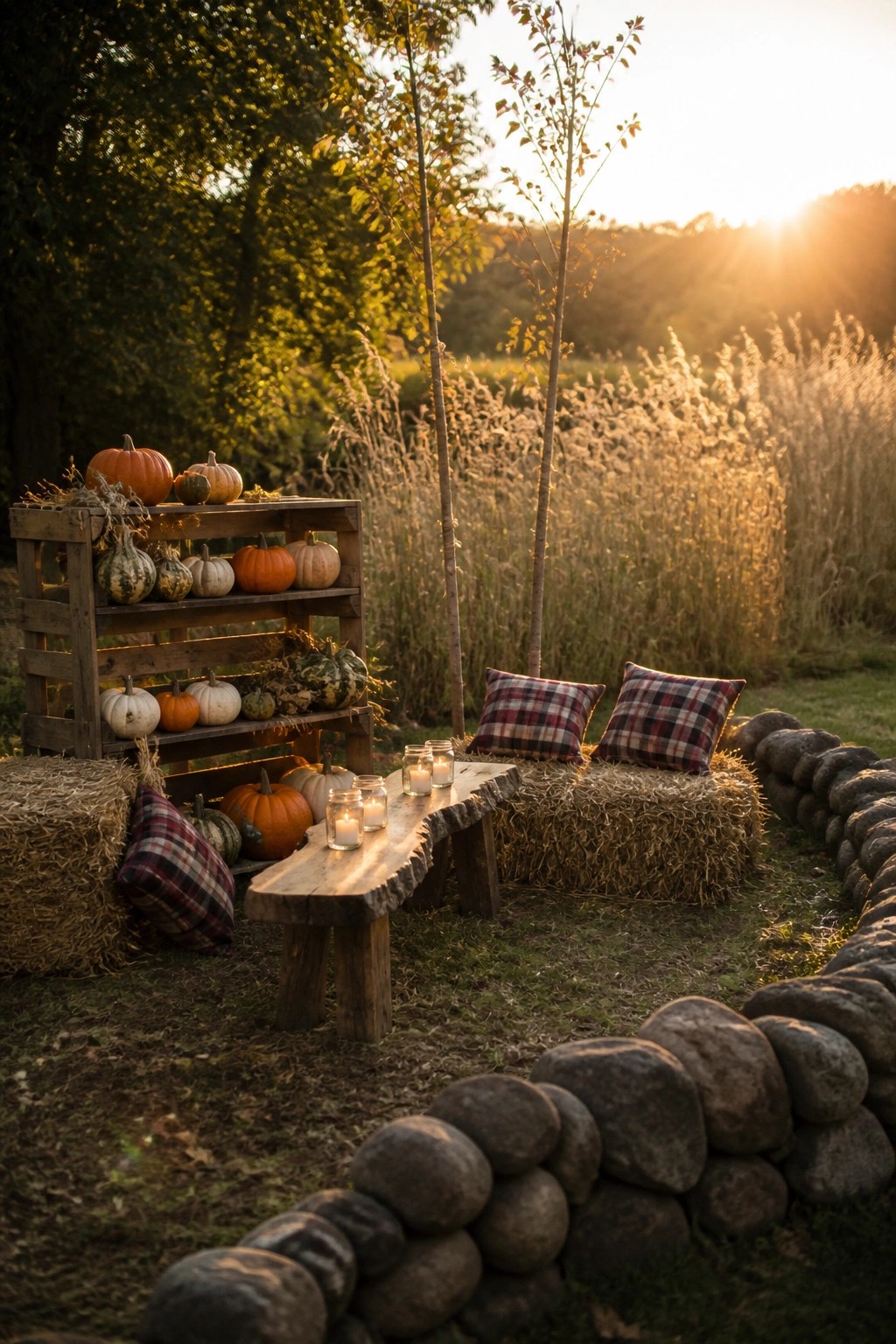
Hay bales make a quick and practical way to add seating in the yard during fall. They sit low to the ground, blend with the landscape, and give you flexible spots for people to gather without needing permanent furniture.
This setup works well in open yards or near garden edges where you can move things around easily. Place a few bales in a loose group, add some pillows for comfort, and keep the rest of the area simple so the focus stays on the open space.
Use a Raised Planter with a Metal Backdrop
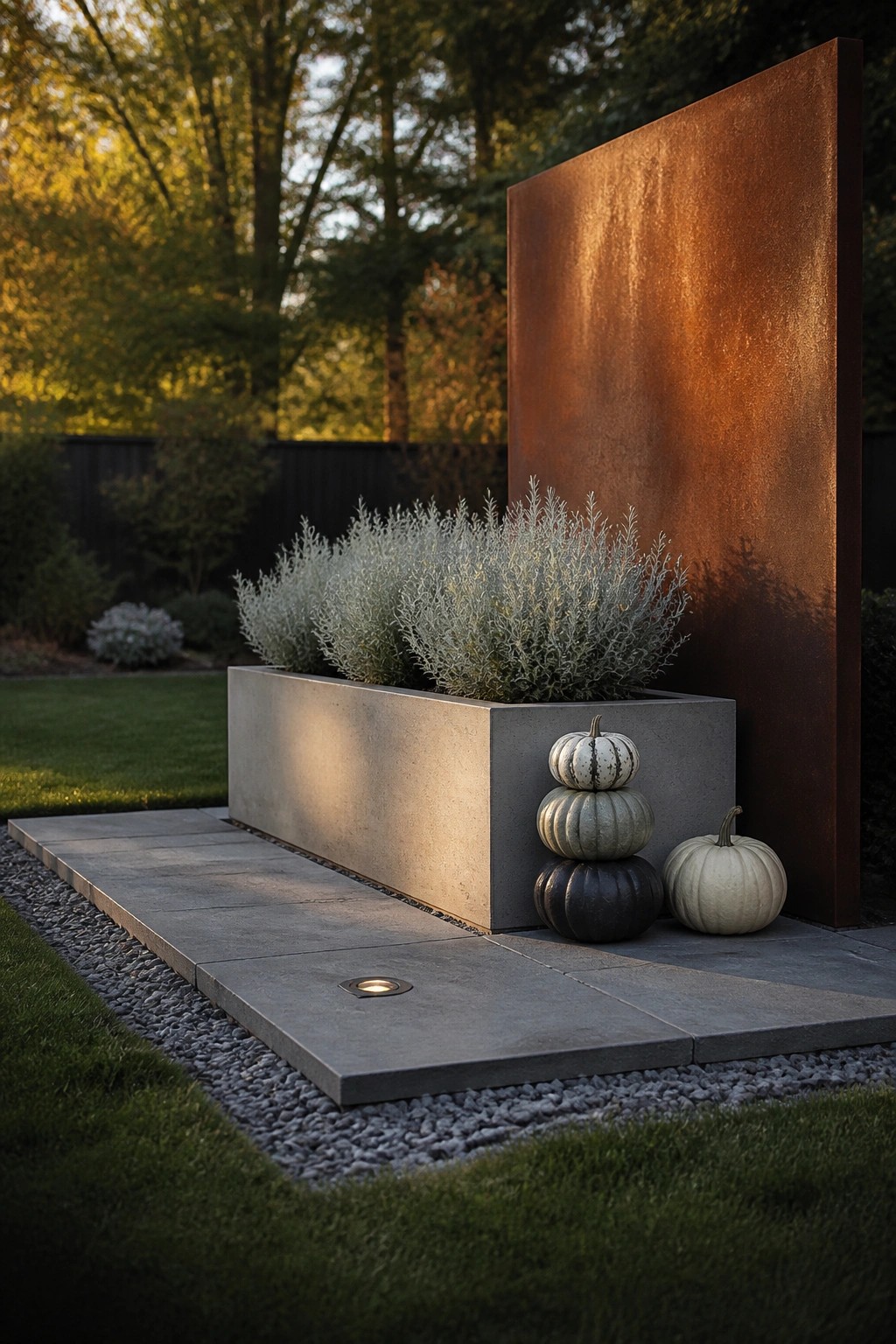
A raised concrete planter set against a metal panel gives the landscape a solid anchor point. The combination defines the space clearly and keeps the planting area from blending into the surrounding lawn or gravel.
This approach works best along the edge of a yard or near a patio where you want structure without adding too many separate elements. Keep the planting simple and use the panel to create contrast with the concrete and surrounding greenery.
Edge A Path With Lanterns And Pumpkins
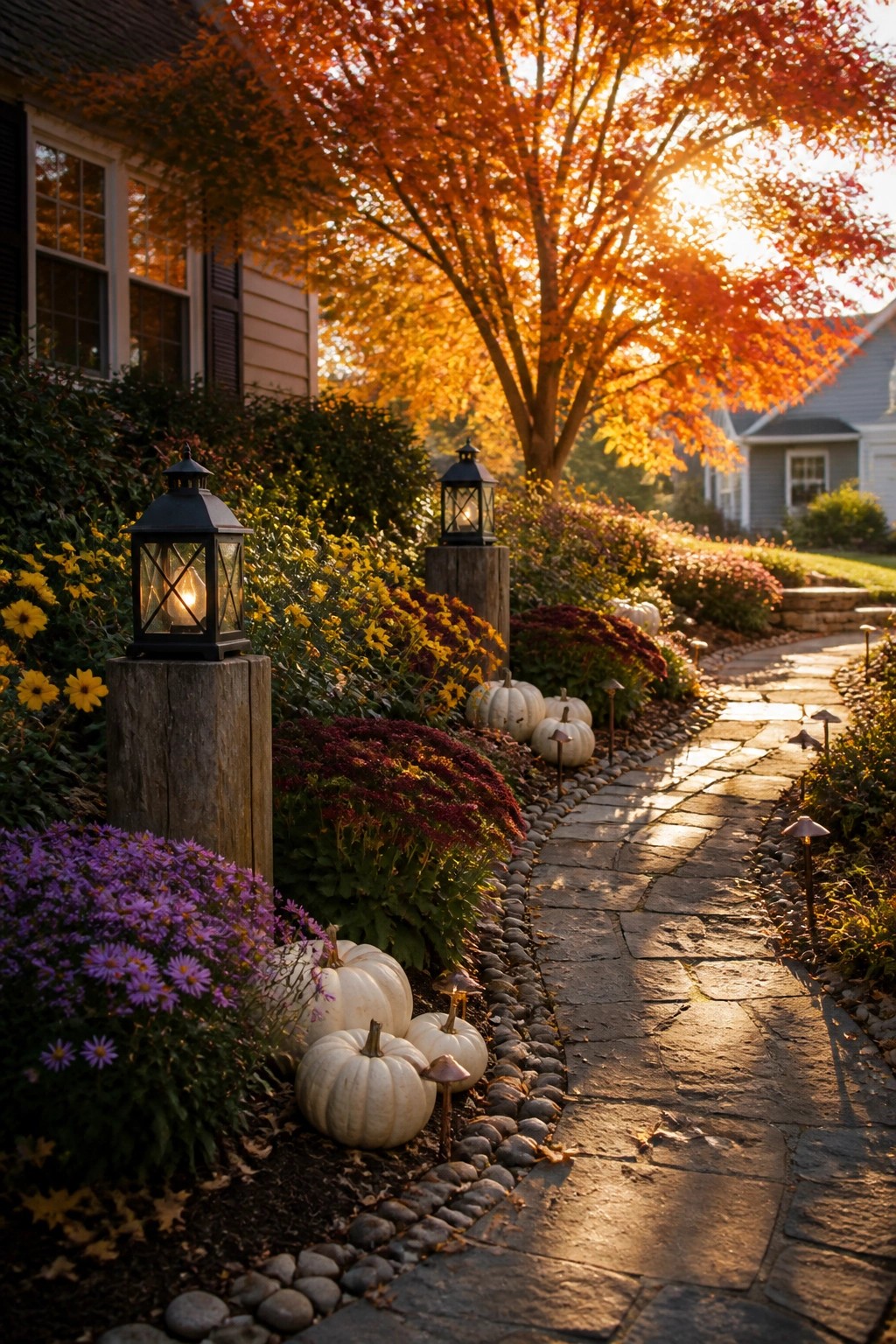
A simple stone path gains a lot of character when you place lanterns along the edge and tuck a few pumpkins into the beds beside it. The lights create a gentle line at night while the pumpkins add color and shape during the day. This approach works especially well in fall when the surrounding flowers are already in their peak colors.
It suits homes with existing garden beds and a walkway that runs along the side or front. Keep the lanterns at a consistent height and space the pumpkins in small clusters rather than a straight row. Avoid overcrowding the edges so the path still feels open and easy to walk.
String Lights Over A Bench Area
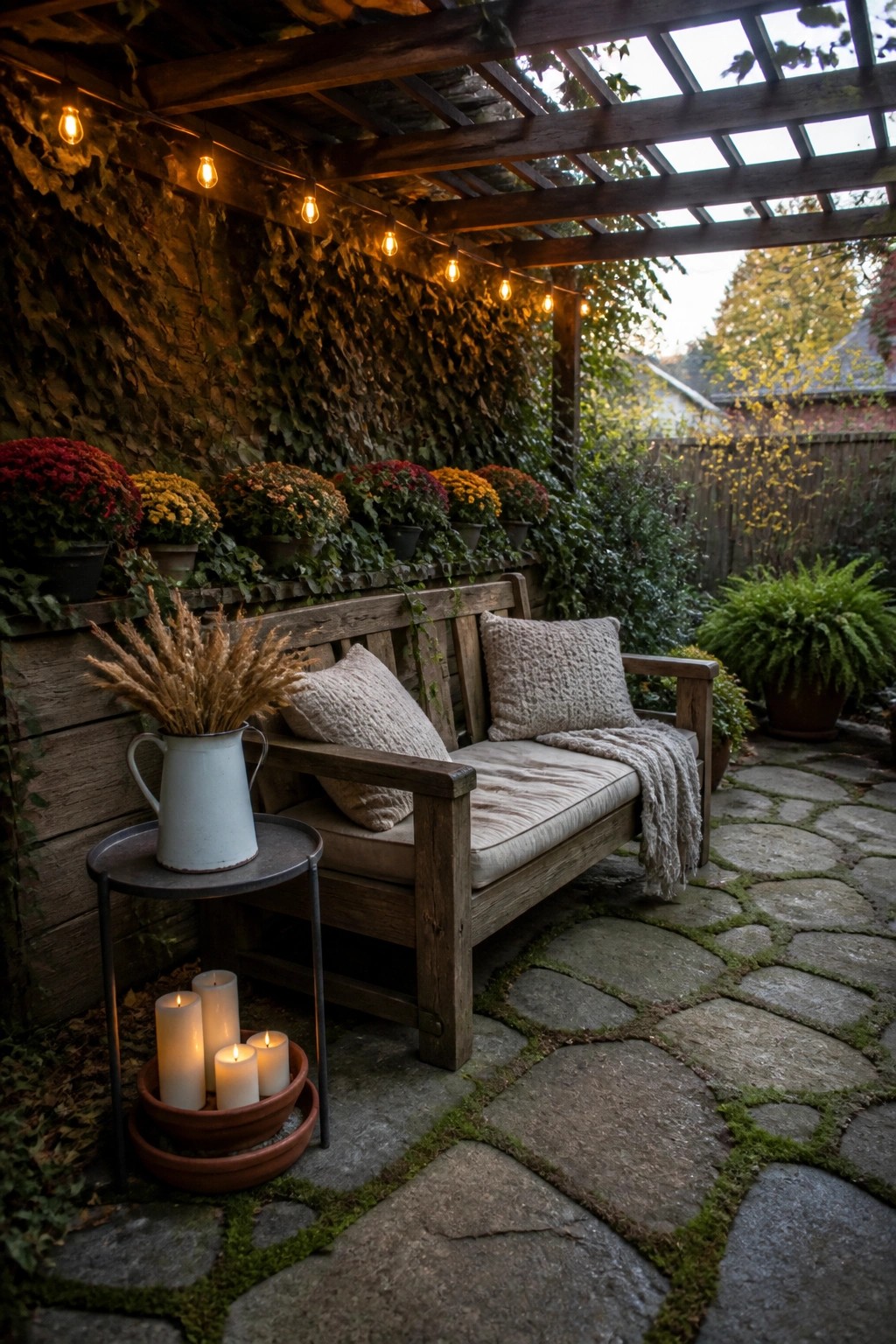
String lights work well over a bench because they keep the space usable once the sun goes down. The soft glow feels right for fall without needing anything complicated.
Run a simple strand along the edge of a pergola or from the house to a nearby post. This setup suits most yards and pairs easily with potted plants for added seasonal color.
Add A Winding Stone Path
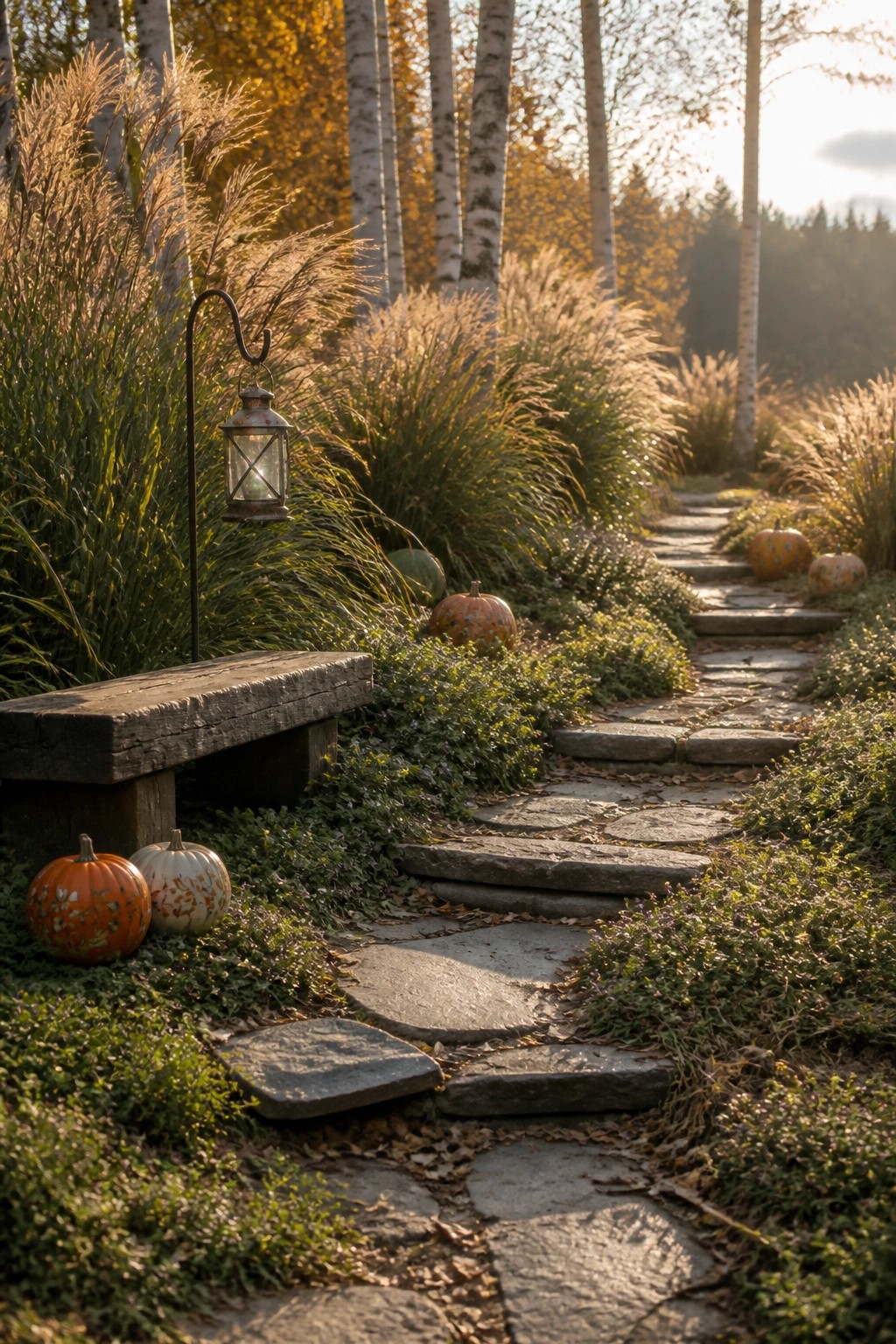
A stone path gives the yard a clear route that feels natural and easy to follow. It works especially well in fall when the surrounding grasses turn golden and a few pumpkins can be tucked along the edges without looking forced.
This idea suits homes with larger yards or wooded lots where you want to guide people through different plantings. Keep the path slightly irregular so it blends with the landscape, and limit the decorations to a handful of seasonal pieces so the stones and plants stay the main focus.
Raised Beds Give Fall Gardens Clear Shape
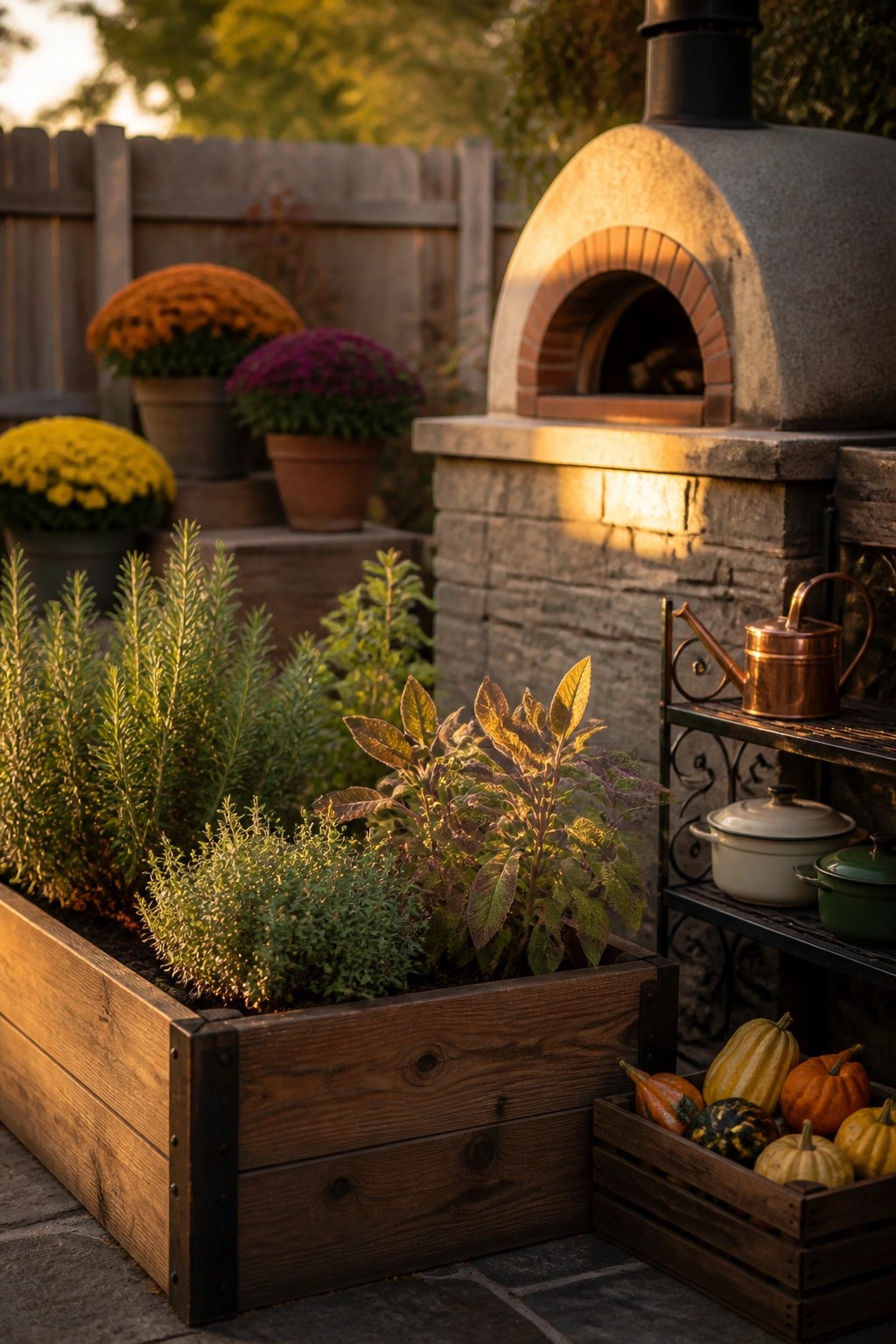
Raised beds help organize your plantings so the fall display stays neat without constant tidying. The wood frame holds everything in place while letting you mix taller herbs with lower ground covers in one spot.
They suit smaller yards or paved areas where digging new beds is not practical. Keep the beds near a path or seating area so the plants stay visible and easy to tend through the season.
Use Large Potted Trees for Fall Color
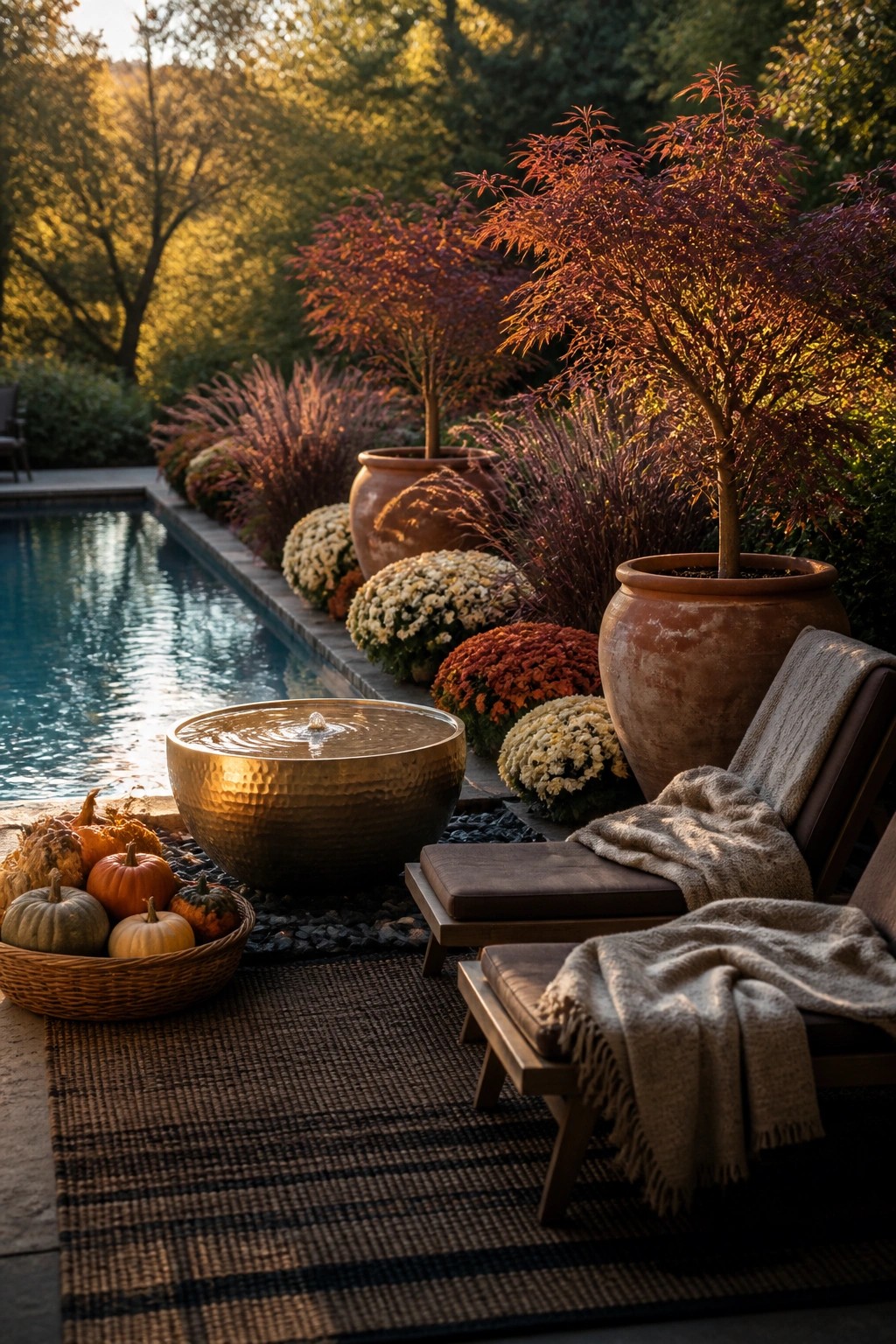
Large pots filled with trees and shrubs give an outdoor space structure that lasts through the season. They add height without needing permanent planting beds, and the changing leaf color does most of the work once cooler weather arrives.
Place a few pots of different sizes near seating so the area feels settled rather than empty. This works well along a pool edge or on a patio where you want color but still need room to walk around. Stick with one or two tree varieties so the look stays simple.
Build a Simple Stone Pathway
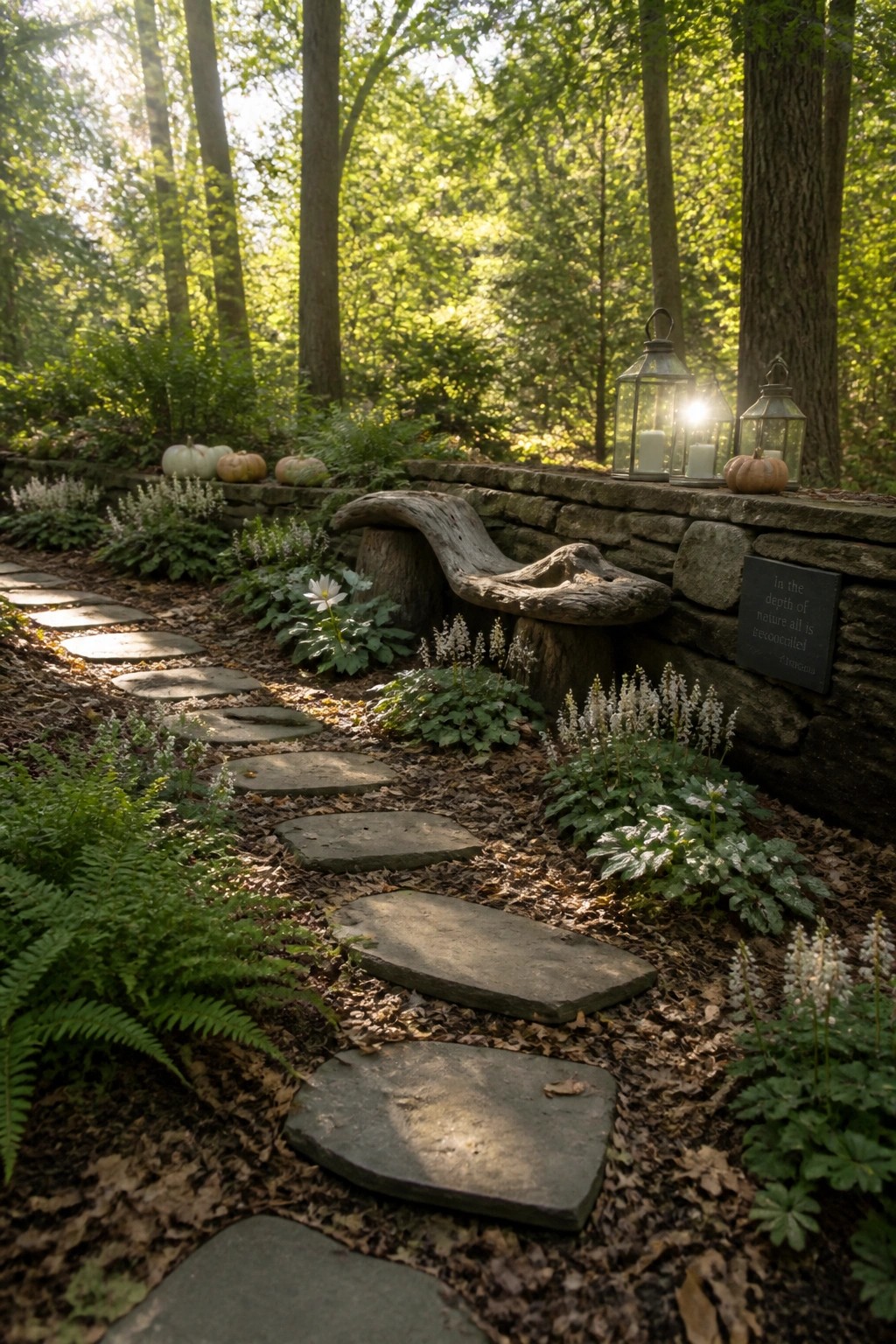
A stone path gives the yard a clear way to move through it while keeping the natural feel intact. It turns scattered plantings and open ground into something that feels more put together without looking too formal.
Set the stones where foot traffic already happens and keep the spacing comfortable for walking. This approach works best on lots with trees or gentle slopes, where the path can follow the land instead of fighting it.
Raised Beds For Seasonal Color Along Paths

A raised metal bed gives you a clean way to pack fall color right next to a walkway. The height lifts the plants so they show up better from the path, and the straight lines keep everything looking tidy even when the plants grow full.
This setup works best in narrow side yards or along fences where ground space is limited. Fill the bed with a mix of mums and ornamental cabbage, then tuck in a lantern or two if you want light after dark. Keep the bed narrow enough that it does not crowd the walking area.
Raised Beds Keep Vegetable Gardens Tidy
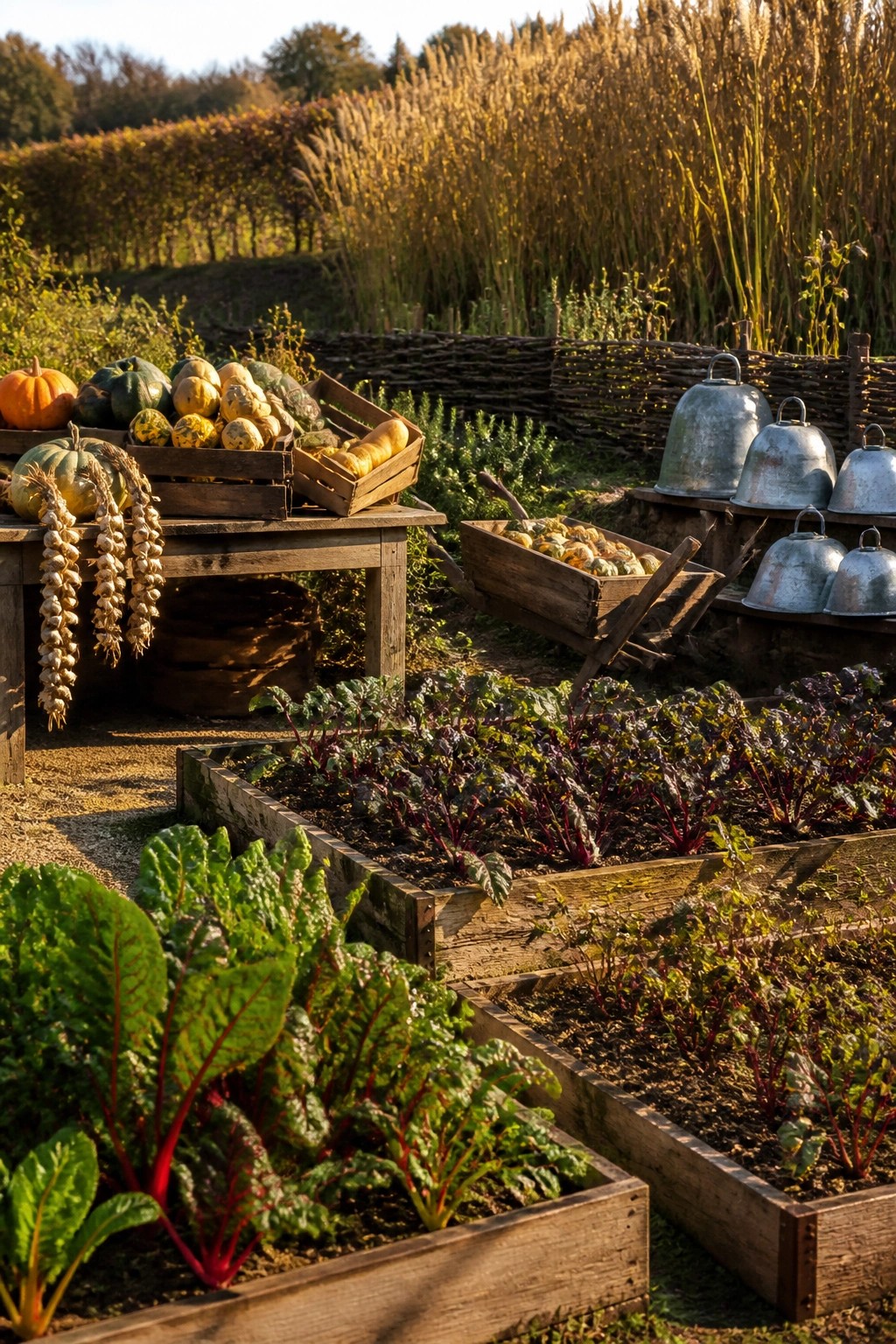
Raised beds give a garden clear lines and make it simpler to grow different crops without everything spilling together. They also help with drainage and keep soil from washing out during fall rains.
Place them near a path or work table so harvesting stays easy. This layout suits smaller yards where you want steady production without a messy look.
Lay A Stone Path Through The Yard
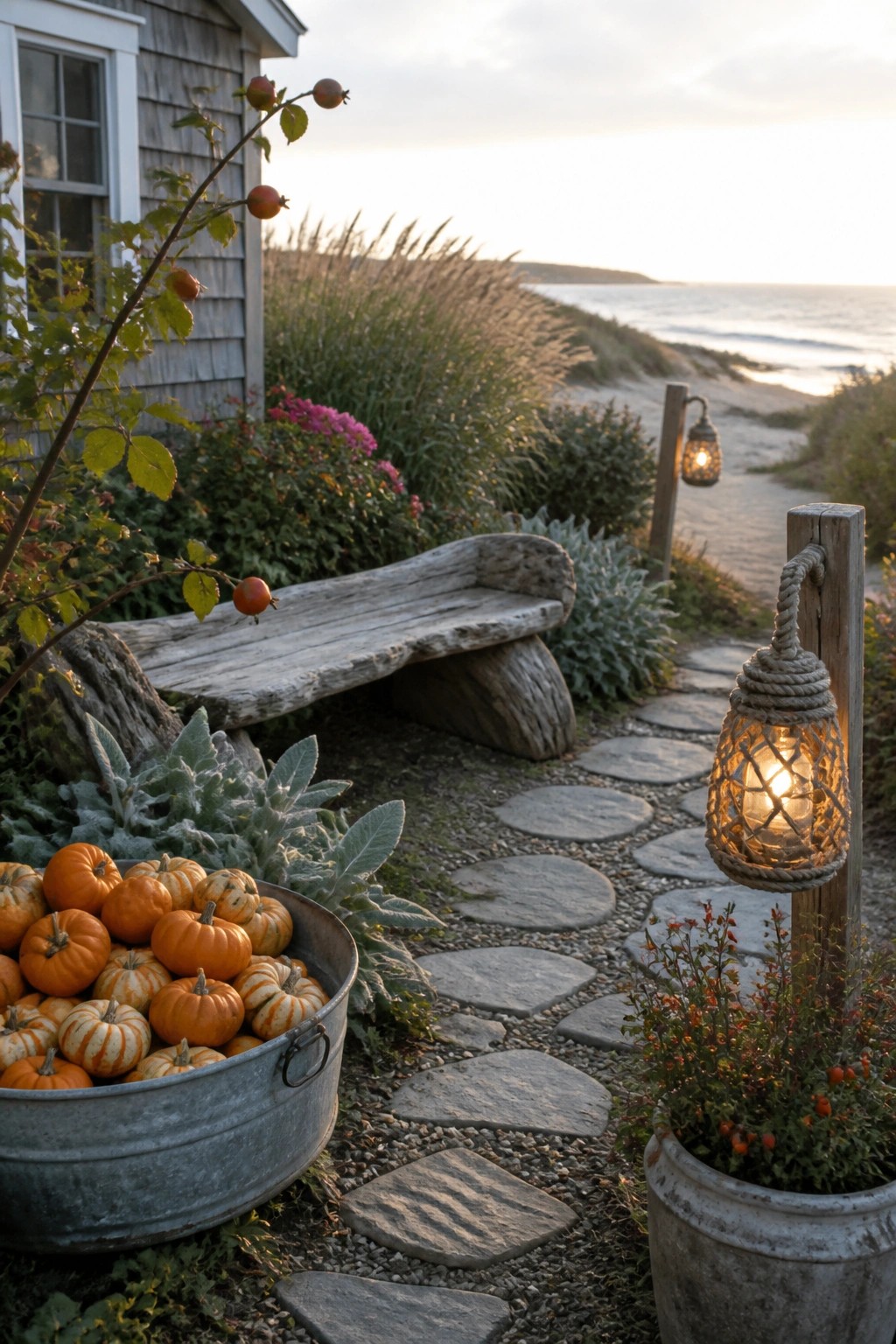
A stone path set in gravel gives the landscape some clear direction without making it feel stiff. It helps connect different parts of the yard and keeps foot traffic off the plants, which matters more once the ground gets soft in fall.
This approach works well in homes with open side yards or gentle slopes toward a view. Keep the stones irregular, space them for a natural step, and add simple markers like lanterns or a pot or two along the edge so the path stays easy to follow after dark.
Fall Accents In Large Planters
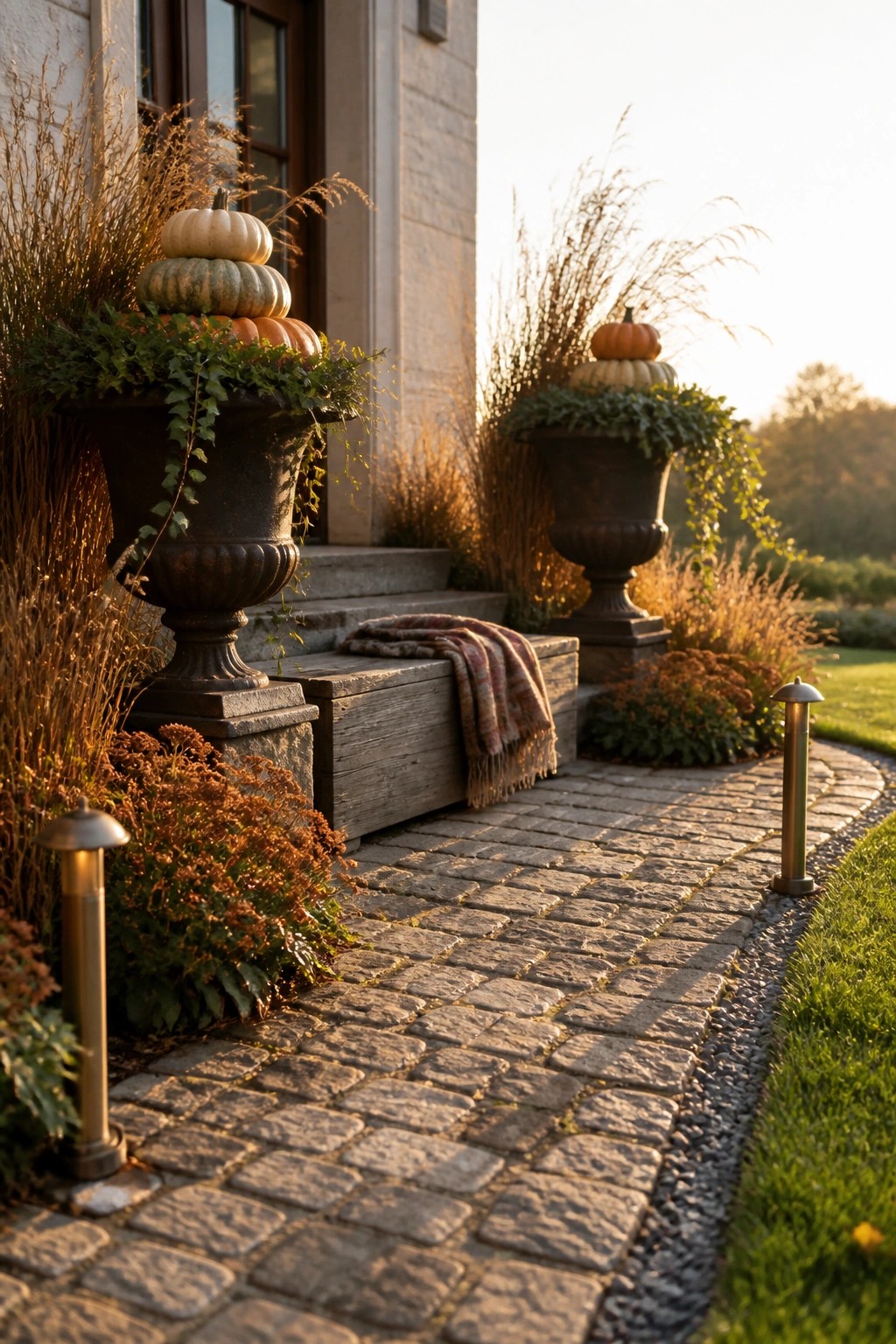
Large urns give you an easy way to add height and color along a walkway. Stacking pumpkins inside them with a bit of trailing ivy keeps the look seasonal without needing to redo whole beds every year.
This works best on homes that already have a clear path or entry steps. Keep the urns in pairs or at regular intervals so the eye follows the line of the walk. Just check that the containers sit on a stable base before loading them up.
Frequently Asked Questions
Q: How long do real pumpkins last outside before they start to rot? A: Pick ones with thick skins and set them on a dry spot away from sprinklers. Check them every few days and swap out any that soften. This keeps your display looking fresh through most of the season.
Q: Should I add lights to my fall setup? A: String some warm white lights around trees or along paths to make the space glow after dark. They highlight the textures of hay bales and corn stalks without much effort. Just use outdoor-rated ones so they handle the damp nights.
Q: Will these decor pieces crowd my flower beds? A: Tuck smaller items like lanterns or wreaths near the edges instead of right in the middle of your beds. Leave space around perennials so they still get sun and air. That way everything works together naturally.
Q: What if I want to try just one or two ideas this year? A: Start with a couple of hay bales and some colorful mums placed near your front walk. They pull the eye right to your landscape and cost very little to put together.
I’m Claire, the voice behind The Seasoned Home. I’ve always loved the way a home can shift with the seasons and feel fresh, cozy, and welcoming all over again. I share seasonal home decor ideas that feel beautiful but still realistic for everyday life, from porch styling and wreaths to cozy bedrooms, living rooms, kitchen touches, and simple table decor. My favorite ideas are the ones that make a home feel special without making decorating feel complicated.