
Understanding Air Conditioning Requirements
To determine how much air conditioning you need for a 1000 sq ft area, calculating the BTU (British Thermal Units) requirement is crucial. One ton of AC typically equals 12000 BTUs, meaning a 1-ton AC unit is suitable for a 500-600 sq ft area.
Calculating BTU Needs
- To get an approximate BTU estimate, multiply the square footage by 20 BTUs.
- For more accurate results, consider factors like ceiling height, insulation quality, and geographic location.
- Living in a warmer climate may require higher BTU output to combat the heat effectively.
Sizing Your AC Unit
- Oversized units waste energy and may result in poor humidity control.
- Undersized units constantly run, leading to wear and higher energy bills.
- Ensure a properly sized unit for optimal comfort and efficiency.
Energy Efficiency Tips
- Upgrade to ENERGY STAR certified models for greater efficiency.
- Regular maintenance keeps your AC unit working smoothly and extends its lifespan.
- Programmable thermostats help regulate temperature and reduce energy consumption.
Hiring a Professional
- Consult HVAC professionals for a detailed assessment and recommendations.
- An expert can advise on the ideal unit size and provide installation guidance.
- Understanding your air conditioning requirements is key to a comfortable living space.
- By calculating BTUs accurately and sizing your unit correctly, you can optimize efficiency and save on energy costs.
Calculating BTUs for a 1000 sq ft Space
Wondering how much AC you need for a 1000 sq ft area? Calculating the right BTUs is key. Here’s a quick guide to get it right:
- Step 1: Consider Factors: Account for ceiling height, insulation, and climate.
- Step 2: Calculate Total BTUs: For a 1000 sq ft space, you need approximately 24,000 BTUs.
- Step 3: Pick the Right Unit: A 2-ton AC (24,000 BTUs) is suitable for your needs.
- Remember, proper sizing avoids energy waste and ensures comfort!
Need help? Consider consulting HVAC professionals for accurate assessments and optimal cooling efficiency.
Recommended Products

Energy-Efficient Cooling & Heating: Our inverter mini split air conditioner is designed for maximum energy conservation and comfort. Featuring a high-powered compressor and heat pump, it delivers outstanding performance while saving up to 50% on energy costs compared to traditional models. Suitable for cooling and heating spaces up to 1500 sq. ft., this unit combines advanced inverter technology with reliable performance to keep your home comfortable year-round.

24000 BTU MINI SPLIT UNIT: This ductless AC heat pump system provides enough air conditioning for rooms around 1000 to 1500 sq. ft. in size, which is ideal for many uses such as in a living room, loft, apartment, studio, or garage.

[ENERGY EFFICIENT & SAVING]: Powered by advanced DC inverter technology and rated at 20 SEER2, this system intelligently adjusts compressor speed to minimize frequent on/off cycling and maintain a stable indoor temperature. It is designed to reduce electricity consumption by up to 40%, delivering efficient and consistent performance. ETL Listed and AHRI Certified for dependable operation.
Factors Influencing AC Sizing
When determining the appropriate AC size for your 1,000 sq ft space, various factors come into play:
- Insulation Quality: Well-insulated rooms require less cooling capacity.
- Ceiling Height: Taller ceilings might need a higher BTU output.
- Sunlight Exposure: Rooms with more sunlight may need increased cooling.
- Number of Windows: Each window adds heat load and affects AC sizing.
- Local Climate: Warmer regions may need higher cooling capacity.
By considering these aspects, you can accurately calculate the BTUs required for efficient cooling in your 1,000 sq ft area.
Choosing the Right AC Unit
When determining the appropriate AC unit for your 1000 sq ft space, accuracy is key to ensuring efficient cooling. Here are essential factors to consider when making your selection:
- Calculate BTUs: Start by calculating the British Thermal Units (BTUs) required for your area. Given your space’s size, a 2-ton AC unit with around 24,000 BTUs is generally recommended.
- Energy Efficiency: Opt for an AC unit with a high Energy Efficiency Ratio (EER) to ensure cost-effective operation.
- Proper Sizing: Avoid under or oversizing your unit by consulting with HVAC professionals for precise assessments.
- Consider Additional Factors: Take into account aspects such as insulation quality, ceiling height, sunlight exposure, number of windows, and the local climate to determine the most suitable AC unit for your needs.
By carefully evaluating these factors, you can select an AC unit that not only meets your cooling requirements but also enhances energy efficiency and overall comfort in your 1000 sq ft space.
Recommended Products
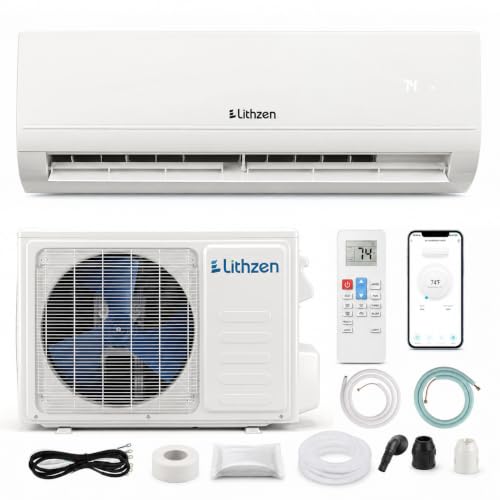
High-Efficiency Cooling & Heating: Designed for powerful year-round performance, this mini split AC system features 24000 BTU cooling capacity a 2 ton pre-charged heat pump, making it an all-season solution for dependable indoor comfort. With a coverage up to 1500 sq.ft, it is ideal for bedrooms, living areas, offices, and more.

Efficient 24,000 BTU Cooling & Heating:This 21 SEER2 mini split system delivers powerful 24,000 BTU cooling and heating, perfect for spaces up to 1500 sq. ft. With advanced inverter technology, it reduces energy consumption by up to 43% while maintaining consistent comfort. The 208 / 230V unit operates quietly at 25 dB, ideal for bedrooms, offices, or small living areas. Five modes (Cool/Heat/Dry/Fan/Auto) provide year-round climate control, ensuring optimal performance in any season.

Quick Cooling & Heating: With impressive 24000 BTU cooling and heating capacity, this mini split air conditioner offers consistent comfort for all seasons, ideal for areas up to 1200 sq. ft. The outdoor unit features a chassis electrical heating system that prevents freezing for stable performance in extreme weather, even when temperatures reach as high as 126℉ or as low as 5℉.
Evaluating Energy Efficiency
When evaluating the energy efficiency of an AC unit for a 1000 sq ft area, focus on factors that can impact its performance and overall efficiency. Here are some key points to consider:
- Energy Efficiency Ratio (EER): This rating indicates how efficiently an AC unit can cool a space. Look for a unit with a high EER, as it means better energy efficiency.
- Proper Sizing: Ensuring that the AC unit is appropriately sized for your space is crucial. An undersized unit will struggle to cool effectively, while an oversized unit can lead to inefficient operation.
- Insulation Quality: Good insulation can help maintain a consistent indoor temperature, reducing the workload on your AC unit and improving energy efficiency.
- Ceiling Height: Taller ceilings may require a different AC unit size to ensure proper cooling throughout the space.
- Sunlight Exposure: Consider how much sunlight enters the area, as this can impact the cooling needs and energy efficiency of the AC unit.
- Number of Windows: Windows can contribute to heat gain in a room. The more windows you have, the more important it is to choose an AC unit that can effectively counteract this heat gain.
- Local Climate: Factor in the climate of your region when selecting an AC unit. Hotter climates may require more cooling power to maintain a comfortable indoor temperature.
By carefully evaluating these factors, you can choose an AC unit that not only enhances energy efficiency but also provides optimal cooling performance for your 1000 sq ft area.
Recommended Products

[ENERGY SAVING] Della UL Listed rated 6000 BTU 115V/60Hz window ac unit conditioner has a Combined Energy Efficiency Rate (CEER) of 11.0 which helps reduce the energy costs to save you money throughout the year and helping to protect our climate.

Effortless Cooling: Achieve optimal comfort with customizable temperature settings and two fan speeds; Effortless Temperature Control helps to maintain your preset temperatures for consistent comfort

POWERFUL COOLING PERFORMANCE – This portable air conditioner offers 10,000 BTU cooling capacity, perfect for medium sized living rooms, bedrooms, and offices. It cools areas up to 450 sq ft, keeping your space comfortable during hot days.
Conclusion
Choosing the right AC unit for your 1000 sq ft space is essential for efficient cooling. Factors like EER, proper sizing, insulation, ceiling height, sunlight exposure, windows, and climate play a crucial role in the unit’s performance. By considering these aspects, you can ensure that your AC not only saves energy but also effectively cools your space. Make an informed decision to enjoy a comfortable and energy-efficient environment.
Frequently Asked Questions
What factors are crucial for evaluating the energy efficiency of an AC unit for a 1000 sq ft area?
Factors like Energy Efficiency Ratio (EER), proper sizing, insulation quality, ceiling height, sunlight exposure, number of windows, and local climate play key roles in determining an AC unit’s energy efficiency and performance for a 1000 sq ft area.
How can I ensure optimal cooling while enhancing energy efficiency in a 1000 sq ft space?
By considering factors such as EER, proper sizing, insulation quality, ceiling height, sunlight exposure, number of windows, and the local climate, one can select an AC unit that provides both optimal cooling and enhanced energy efficiency for a 1000 sq ft space.

Hi, I’m Charlie, and I cover all things laundry here at Appliance Mastery.
I’ve spent over eight years working on washing machines, dryers, and dishwashers. I also have a degree in mechanical engineering, which helps me understand how these appliances really work.
I try to make every guide clear and practical. If you’re stuck with a noisy dryer or a leaking washer, I’ll help you figure out what’s wrong and how to fix it.