
Ever wondered how much power your RV’s air conditioner really consumes? Picture this: you’re on the road, the sun’s scorching, and you’re relying on your AC to keep you cool. But do you know how many amps it’s drawing? Understanding this can save you from unexpected power shortages during your travels.
Understanding Amps and Power Consumption
When it comes to RV air conditioners, understanding amps and power consumption is crucial for a hassle-free journey. Here’s what you need to know:
- Amps Drawn: RV air conditioners typically draw around 12-14 amps during operation, but this can vary based on the AC unit’s size and efficiency.
- Power Usage: To calculate the power consumption of your RV’s AC unit, you multiply the amps drawn by the voltage. For example, if the AC draws 12 amps at 120 volts, the power usage would be 1440 watts.
- Generator Capacity: Ensure your generator can handle the amp draw of your RV’s AC unit to avoid power shortages on the road.
- Energy Efficiency: Opt for an energy-efficient AC unit to lower power consumption and extend your RV’s battery life during trips.
- Monitoring Usage: Keep an eye on your amp usage to prevent overloading your RV’s electrical system, especially when running multiple appliances simultaneously.
Understanding how many amps your RV’s AC draws is vital for a smooth and comfortable travel experience.
Factors Affecting RV AC Power Draw
When it comes to understanding RV air conditioner power consumption, several factors can affect how many amps your AC unit draws. Here’s what you need to consider:
- AC Unit Size: Larger AC units typically draw more amps than smaller ones.
- Temperature Setting: Running your AC at lower temperatures means it works harder, drawing more amps.
- Insulation: Well-insulated RVs require less effort from the AC, leading to lower amp draw.
- Age of the AC Unit: Older units may be less energy-efficient, resulting in higher amp usage.
- Other Appliances: Running multiple appliances simultaneously can increase overall amp draw.
To optimize your RV’s power usage and ensure a smooth journey, it’s essential to be mindful of these factors.
Recommended Products
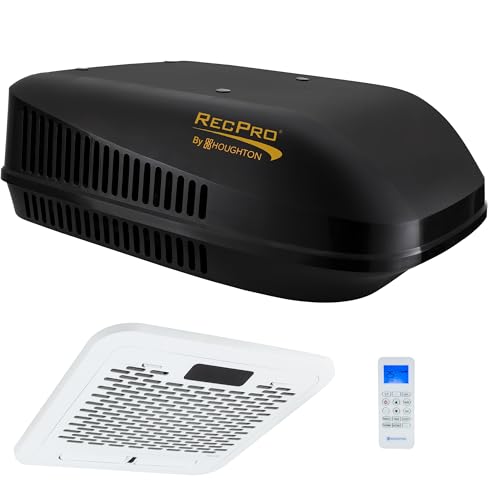
Energy-Efficient Low Amp Draw – Our RecPro RV air conditioner is engineered with a low amp draw, allowing you to power multiple RV appliances at once without overloading your system. Ideal for off-grid, solar, or generator setups—maximize comfort while minimizing energy usage.

WHY NEED IT: By installing the Briidea RV air conditioner soft starter, you can start a 15,000 BTU air conditioner with only a 2200W generator, while also powering other appliances such as a refrigerator, heater, microwave, hair dryer, fan, and TV simultaneously

EASY TO INSTALL — This camper air conditioner mounts with a simple bolt-on installation and comes with a clear step-by-step installation guide. Please Note: This is the AC unit only. ADB sold separately and includes all necessary installation components (B0F147CJCT)
Calculating the Amps for Your RV AC
- Amps and Voltage: Your RV air conditioner typically draws 12-14 amps, but this can vary based on the unit’s size and efficiency. To calculate the actual power usage, multiply the amps drawn by the voltage of your RV system.
- Example: If your RV AC draws 13 amps and the voltage is 120 volts, the power consumption would be 13 amps * 120 volts = 1560 watts.
- Considerations: Factors like the temperature settings, insulation levels, and even the age of your AC unit can influence the power draw. Using multiple appliances simultaneously can also impact the overall power consumption.
- Optimizing Power Usage: Being mindful of these factors is key to ensuring you don’t overload your RV’s electrical system. This approach helps in optimizing power usage and ensures a comfortable and efficient travel experience.
Recommended Products

✅ 【Powerful & Rapid Cooling】Delivers up to 10,000 BTU of cooling power. Utilizing inverter technology, it cools your space rapidly within 3 minutes and maintains a constant temperature. Specifically designed for RV summer trips, performing excellently in hot weather.

300-900W Inverter Design: 10,000 BTU of the Contrymod RV air conditioner can achieve rapid cooling. The variable frequency design intelligently adjusts the compressor speed, outputs cooling capacity on demand, and automatically adjusts the temperature to the most comfortable temperature in the car.
✅【 3-Minute Comfort, Any Season】Beat summer heat and stay warm in freezing weather. Advanced PTC technology delivers instant heat even on below-freezing mornings, with no waiting. Switch to powerful cooling in seconds. Wherever the road takes you, enjoy the perfect temperature in just 3 minutes.
Tips for Efficiently Running Your RV AC
- Use a Generator: Opt for a generator with enough wattage to power your RV AC efficiently.
- Visit Cooler Locations: Park in shady areas or places with cooler temperatures to lessen the workload on your AC.
- Maximize Insulation: Keep heat out by ensuring your RV is well-insulated to reduce the need for excessive air conditioning.
- Manage Other Appliances: Be mindful of other appliances running simultaneously to avoid overloading your electrical system.
- Regular Maintenance: Schedule routine maintenance to keep your AC unit functioning optimally.
- Utilize Fans: Use fans to help circulate air and assist your AC in cooling the space.
- Shut Windows and Doors: Ensure all windows and doors are shut to prevent cool air from escaping.
| Important Facts |
|---|
| Average AC Draw: 12-14 amps |
| Key Influencing Factors: Temperature settings, insulation levels, age of the unit, and simultaneous appliance use |
Recommended Products

1. Monitors key AC power readings in one panel display: This hardwired AC power meter shows voltage, current, wattage, kWh energy, frequency and power factor, helping you watch generator load, RV power, workshop circuits or appliance consumption in real time

Comprehensive Electricity Monitoring: Our Smart Energy Monitor Helps You Conveniently Monitor and Manage Your Energy Consumption. Clip the Sensor to the Firewire for Detection and You Can Easily Keep Track of Your Home's Power Consumption and Costs With a Real-Time Display of Hourly, Daily, Monthly and Yearly Energy Consumption in Kilowatt-Hours

INSTANT RV VOLTAGE READOUT - Clear digital display shows real-time voltage at a glance, helping you quickly monitor your RV’s electrical power.
Conclusion
Now that you have a better understanding of how many amps your RV AC draws and ways to maximize its efficiency, you can ensure a comfortable and hassle-free travel experience. By implementing the tips mentioned in this article, such as proper maintenance, strategic insulation, and thoughtful use of other appliances, you can make the most of your RV’s electrical system. Remember to keep an eye on temperature settings and appliance usage to prevent overloading. With these considerations in mind, you’ll be well-equipped to enjoy your adventures on the road without worrying about power consumption.
Frequently Asked Questions
How can I optimize power usage when running my RV air conditioner?
To optimize power usage when running your RV air conditioner, ensure to use a generator with sufficient wattage, park in cooler locations, maximize insulation, manage other appliances to prevent overloading the electrical system, schedule regular maintenance, utilize fans for air circulation, and keep windows and doors shut.
What are the key factors influencing power consumption of an RV air conditioner?
The key factors influencing power consumption of an RV air conditioner include temperature settings, insulation levels, unit age, and simultaneous appliance use. It’s important to consider these factors to effectively manage power usage and ensure a comfortable travel experience in your RV.

Hi, I’m Charlie, and I cover all things laundry here at Appliance Mastery.
I’ve spent over eight years working on washing machines, dryers, and dishwashers. I also have a degree in mechanical engineering, which helps me understand how these appliances really work.
I try to make every guide clear and practical. If you’re stuck with a noisy dryer or a leaking washer, I’ll help you figure out what’s wrong and how to fix it.