
Resetting a Carrier furnace limit switch clears most temporary overheat faults in under ten minutes. The process involves shutting off power and manually pressing the switch button after confirming airflow issues.
Owners avoid repeated lockouts by addressing the underlying cause such as a dirty filter or blocked vent. This method saves the cost of a service visit while restoring heat output quickly.
Carrier Furnace Limit Switch Trip Suspects
A limit switch on a Carrier furnace trips when internal temperatures exceed safe thresholds during operation. Primary suspects range from restricted airflow to component wear that requires direct inspection. The difficulty scale helps owners gauge whether the task stays within basic maintenance or needs tools beyond a standard screwdriver set. Matching symptoms to suspects narrows the diagnostic path before any reset attempt begins.
| Symptom | Primary Suspect | Difficulty 1-5 |
|---|---|---|
| Frequent shutdowns | Dirty air filter | 1 |
| No heat after run | Blocked return vent | 2 |
| Switch trips on start | Weak blower motor | 3 |
| Intermittent faults | Corroded wiring | 4 |
Carrier Furnace Overheat Trigger Verification Steps
Overheat conditions in Carrier furnaces originate from reduced airflow across the heat exchanger. A clogged filter forces the exchanger to retain heat beyond the switch rating. Debris in the blower housing compounds the problem by lowering motor speed and overall circulation. Wiring issues at the switch terminals create false readings that mimic true overheat events. Each factor must receive separate verification to prevent repeat trips after the initial reset.
Step by Step Limit Switch Reset
Power down the Carrier furnace at the main breaker before any contact with internal components. Remove the front access panel with a screwdriver to expose the limit switch housing. Locate the small reset button on the switch body and press it firmly until it clicks. Restore power and run the furnace through a full cycle to confirm stable operation. Replace the access panel once temperatures remain within normal range.
Carrier Blower Cleaning for Limit Switch Trips
Dust accumulation inside the blower housing restricts airflow and triggers the limit switch repeatedly. Disconnect power and remove the blower assembly from its mounting rails. Vacuum the fan blades and motor housing with a shop vac attachment to restore full speed. Reinstall the assembly and secure all fasteners before testing the furnace cycle. This step often resolves trips that persist after a simple switch reset.
Carrier Furnace Return Vent Blockage Checks
Return air vents blocked by furniture or debris reduce overall system flow and overheat the exchanger. Inspect each vent opening in the home and clear any obstructions from the grilles. Check the exterior exhaust pipe for bird nests or ice buildup that restricts outflow. Clear the path completely and verify suction at the return with a piece of paper held to the grille. Restored flow prevents the switch from activating during normal heat calls.
Carrier Furnace Thermostat Calibration Verification
An inaccurate thermostat can command continuous operation that overheats the furnace and trips the limit switch. Remove the thermostat cover and compare its reading against a separate digital thermometer placed nearby. Adjust the calibration screw if the difference exceeds two degrees. Cycle the system again to ensure the furnace shuts off at the correct temperature point. Proper calibration reduces unnecessary runtime that stresses the switch.
Carrier Furnace Heat Exchanger Diagnosis
Before attempting a limit switch reset on a Carrier furnace, proper diagnosis of the heat exchanger ensures underlying issues receive attention. Technicians examine this component to detect cracks or failures that might cause repeated tripping. Such an approach keeps the entire repair process straightforward and minimizes future disruptions.
Persistent trips after these steps indicate deeper issues with the heat exchanger or control board. Contact a licensed technician for pressure testing and component replacement.
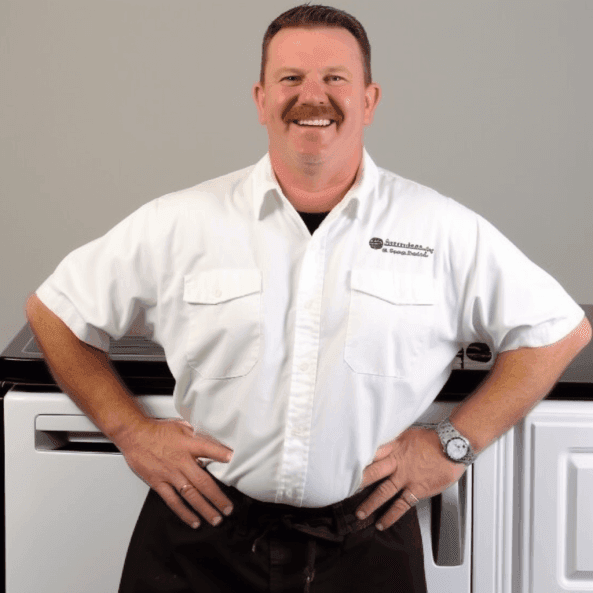
Hey, I’m Jake. I focus on cooling systems at Appliance Mastery, like fridges, freezers, and air conditioners.
I’ve worked in appliance repair for more than ten years and I’m certified through NASTeC. I’ve seen just about every fridge issue you can imagine.
My goal is to help you fix problems without stress. Whether it’s a freezer that won’t cool or an AC that keeps beeping, I’m here to walk you through it.