
Ever wondered why your dryer is getting wet inside? Picture this: You eagerly open the dryer, only to find damp clothes and a mysterious pool of water. Frustrating, right? In this article, we’ll unravel the mystery behind this puzzling issue and help you keep your laundry routine smooth and dry.
Have you been dealing with soggy laundry and a damp dryer interior? Don’t worry, you’re not alone. Understanding the reasons behind this inconvenience can save you time, money, and unnecessary stress. Let’s dive into the common culprits causing your dryer to turn into a moisture hotspot.
Clogged Ventilation System
A Clogged Ventilation System is a common culprit behind a wet interior in your dryer. When lint, debris, or other blockages accumulate in the vents, it restricts the airflow, causing moisture to build up inside.
- Problem: The restricted airflow prevents the hot, moist air from escaping properly, leading to condensation and wetness inside the dryer.
- Solution: Regularly clean out the vents and exhaust duct to ensure proper airflow and prevent moisture buildup.
Remember, a simple maintenance task like unclogging the ventilation system can save you from the hassle of dealing with a wet dryer interior.
Recommended Products

[Stretch Universal Connector] PetOde dryer lint vacuum cleaner attachment is designed with a premium elasticated stretch universal connector that can be connected to most vacuum cleaners! Say goodbye to the worry of purchasing incompatible attachment models
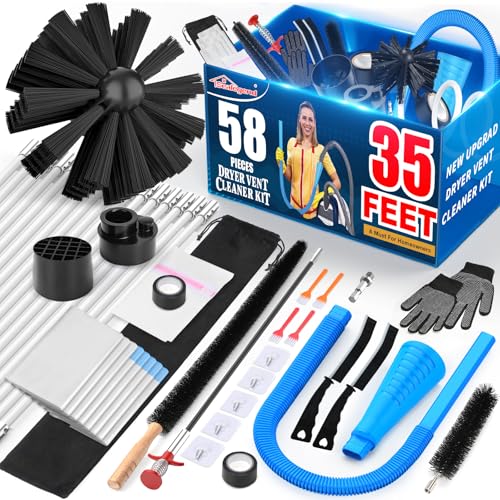
【Efficient dryer cleaning tool set】-Professional cleaning tool set can help you deep clean buildup lint in the dryer. Including 35feet Dryer Vent Brush × 1, Dryer Lint Vacuum Attachment × 1, Lint Trap Brush × 1, Vacuum Cleaner Adapter x1, Dryer Adapter x1, Drill Bit x 1, Multi-Use Lint Cleaner Brush x1, Anti-SLip Gloves x1, Strong Tape x2, Rods Collection Bag x1, Laundry Bag x1, Lint Collection Bag x33, Lint Grabber x1, Blockage Removal Tool x1, Gap Brush x2,MULT-FUNCTIONALCLEANINGBRUSH x4,SELF-ADHECIVEHOOK x5

COMPREHENSIVE DRYER VENT CLEANER KIT: Premium clothes dryer replacement vents will help you deep clean buildup lint in the dryer. Package Includes:DRYER VENT BRUSH HEAD x1,NYLON RODSx1,BLUE LONG VACUUM HOSE(31.5”) x1,BLUE ADAPTER(5.5”)x1,HOSE CONNECTION ACCESSORIER(7.5”) x1,DRYER LINT BRUSH x1,DRYER ADAPTER x1,VACUUM CLEANER ADAPTER x1,GAP CLEANING BRUSH x2, LINT TRAP BRUSH x1,ANTI-SLIP GLOVES x2,LINT GRABBER x1,COLLECTION BAG x1,LAUNDRY BAG x1,STRONG TAPE(FOR NYLON ROD) x2,DUST COLLECTOR BAG x30,DRILL BIT x1,TRANSPARENT SELF-ADHESIVE HOOK x5,SMALL GAP BRUSH x2,GROOVE GAP BRUSH x2
Improper Installation
If your dryer is unexpectedly getting wet inside, one possible reason could be improper installation. During the setup process, if the ventilation system is not installed correctly, moisture from the clothes might not be directed outside as intended. This could result in water accumulation inside the dryer instead of being properly expelled.
Incorrect venting can lead to condensation forming inside the dryer due to inadequate airflow. Make sure that the exhaust duct is connected securely and there are no kinks or obstructions that could hinder the moisture from exiting the appliance. A professional inspection or reinstallation of the ventilation system might be necessary to ensure proper airflow and prevent dampness inside your dryer.
To avoid wetness issues caused by improper installation, it’s essential to verify that your dryer is set up correctly right from the start.
Recommended Products

Compact and Lightweight Design: Weighing just 1.26 lbs and measuring 6.25 (H) x 10.5 (W) x 5.2 (D) inches, the kit is space-efficient and built to improve your dryer’s overall performance with minimal effort.

The Soffit Eave Vents Exclusive Dual Door Design makes our soffit vent the completely bird proof without having to use dangerous screens and cages that can collect lint and increase the chance of Fire

【Durable Material】These lint bags are made of durable materials that can withstand outdoor conditions. They are constructed from a mesh-like polyester that allows airflow while effectively trapping lint and dust.
Condensation Buildup
When moist air from the laundry gets trapped inside your dryer, it can lead to Condensation Buildup. This buildup occurs when the warm, damp air cools down too quickly, causing water droplets to form inside the dryer.
To prevent condensation in your dryer, make sure to ventilate the area properly. Proper ventilation allows the moist air to escape outside instead of lingering inside the dryer.
Another way to address condensation buildup is by checking the exhaust duct for any blockages that might be impeding airflow. A clear duct ensures that the moist air is directed outside without any obstructions.
If you notice condensation in your dryer, consider running a ventilation fan in the room or opening a window to help circulate air and reduce moisture levels.
Remember, addressing condensation buildup promptly can help prevent your dryer from getting wet inside.
Faulty Door Seal
If your dryer is getting wet inside, one common culprit could be a Faulty Door Seal. Over time, the seal around the dryer door may wear out or become damaged, allowing moist air to escape during the drying cycle. This escaping air can lead to condensation forming inside the dryer.
To check if the door seal is the issue, simply inspect it for any signs of wear, tear, or gaps. A damaged door seal can be replaced to restore proper sealing and prevent moisture from seeping out.
Another symptom of a faulty door seal is if you notice moisture or water around the dryer door after a drying cycle. This could indicate that the seal is no longer providing an airtight closure.
In case you find that the door seal is indeed causing the problem, replacing it with a new seal specifically designed for your dryer model can help address the issue effectively.
Air Leakage
To understand why your dryer is getting wet inside, consider the possibility of Air Leakage. When there are gaps or openings in your dryer’s seal, moist air can escape during the drying cycle, causing condensation to build up inside. Over time, this can lead to dampness inside the dryer, affecting its performance.
Signs of Air Leakage:
- Moisture around the dryer door after a cycle
- Condensation inside the dryer
- Damaged or deteriorated door seal
What You Can Do:
- Check the door seal for wear and tear regularly
- Replace the door seal if you notice any gaps or damage
- Ensure the seal is properly aligned and sealing tightly
Preventing Air Leakage:
- Promptly address any issues with the door seal to prevent further moisture buildup
- Consult your dryer’s manual for the correct replacement part
- Properly install the new door seal to ensure a tight seal and prevent air leakage
- Improved dryer efficiency
- Prevention of internal wetness issues
- Long-term cost savings on energy bills
Remember, addressing air leakage promptly is key to maintaining the efficiency of your dryer and preventing internal wetness.
Recommended Products

DURABLE MATERIAL: Dryer Door Seal W10861521 is made of durable material that can withstand the high temperatures inside the dryer without warping or deteriorating. Compatible with dryer models from Maytag, kenmore, Amana, Roper, Magic, Chef, Crosley, Admiral, Estate, Kirkland, KitchenAid, Inglis Whirlpool and more.

【Latest Quality & Wear-resistant Material】W10906683 Dryer Door Seal for Whirlpool Dryer Door Seal is made from high-quality nylon material, strictly in accordance with the standard production, good heat preservation performance, strong sealing. And after the manufacturer's rigorous testing to ensure wear-resistant, unbreakable performance, longer service life so that you no longer need to worry about the frequent wear and tear of the dryer door seals! Non-original aftermarket parts. Meet OEM standards! Guaranteed to exceed OEM requirements!

【OEM Replacement Part】DC62-00344A dryer front panel air seal replaces original part numbers 3992255, AP5916629, PS4276050, EAP4276050. Manufactured to meet OEM specifications with precise dimensions for a direct fit.
Conclusion
Ensuring your dryer’s door seal is intact and free from wear and tear is crucial in preventing Air Leakage. By addressing this issue promptly, you can maintain your dryer’s efficiency and avoid internal wetness problems. Regularly checking for signs of moisture around the door and inside the dryer can help you catch any potential Air Leakage early on. Remember, proper installation of a new door seal is key to preventing condensation buildup and saving on energy costs in the long run. Stay proactive in maintaining your dryer to keep it running smoothly and effectively.
Frequently Asked Questions
What is Air Leakage in dryers?
Air Leakage in dryers occurs when gaps or openings in the seal allow moist air to escape, causing condensation buildup inside the appliance.
How can I identify Air Leakage in my dryer?
Signs of Air Leakage include moisture around the dryer door, condensation inside the dryer, and a damaged door seal.
How can I address Air Leakage in my dryer?
Regularly check the door seal for wear and tear, and promptly replace it if any damage is detected to prevent Air Leakage and maintain dryer efficiency.
Hi, I’m Charlie, and I cover all things laundry here at Appliance Mastery.
I’ve spent over eight years working on washing machines, dryers, and dishwashers. I also have a degree in mechanical engineering, which helps me understand how these appliances really work.
I try to make every guide clear and practical. If you’re stuck with a noisy dryer or a leaking washer, I’ll help you figure out what’s wrong and how to fix it.