
The E3 error code on a Daikin mini split signals a high pressure fault triggered by blocked condenser airflow or a defective pressure switch. Clearing outdoor unit obstructions and confirming fan motor function fixes the code in most installations. Technicians trace the issue through pressure readings and component tests rather than random part swaps.
Examining E3 Fault Symptoms Quickly
Daikin mini split systems display the E3 code when internal pressure exceeds safe limits during cooling or heating cycles. This fault appears on the indoor display after the outdoor unit detects abnormal conditions through its sensors. Owners notice reduced cooling capacity alongside the code along with possible compressor shutdowns after short run times. The Quick Look table below outlines common indicators and their typical origins.
| Symptom | Primary Suspect | Difficulty 1-5 |
|---|---|---|
| E3 code with warm air output | Dirty condenser coils | 2 |
| E3 code and fan not spinning | Failed outdoor fan motor | 3 |
| E3 code after recent service | Overcharged refrigerant | 4 |
| E3 code with normal fans | Faulty pressure switch | 3 |
Daikin E3 High Pressure Fault Causes
High pressure faults develop when heat cannot escape the refrigerant loop effectively. Blocked fins on the outdoor coil reduce heat transfer and raise discharge pressures rapidly. A seized fan motor prevents adequate airflow across the same coil surfaces. Low quality or incorrect refrigerant charges also push pressures beyond limits during peak loads. Each cause requires targeted inspection before any component replacement occurs.
Performing Step by Step E3 Resolution
Power down the entire system at the disconnect before any inspection begins. Remove the outdoor unit top cover and side panels to access the coil surfaces. Clean condenser coils with a soft brush and approved coil cleaner to restore airflow. Reassemble the panels and restore power to test operation. Check outdoor fan motor rotation by observing startup after the unit calls for cooling. Replace the motor if it fails to reach full speed within seconds of activation.
Daikin E3 Outdoor Coil Blockage Check
Outdoor placement often allows leaves and grass clippings to accumulate against the coil face. Measure the temperature differential across the coil with an infrared thermometer during operation. A difference below ten degrees indicates severe blockage that must be cleared immediately. Straighten bent fins with a fin comb after debris removal to maintain design airflow rates. Repeat the E3 code test after these corrections to confirm resolution.
Daikin E3 High Pressure Switch Continuity Test
Locate the high pressure switch on the discharge line near the compressor. Disconnect the switch leads and use a multimeter to check continuity across the terminals. The switch should show continuity when system pressure sits below its rated cutout point. An open circuit at normal pressure confirms the switch has failed internally. Install a new switch rated for the exact model pressure range and retest the full cooling cycle.
Daikin E3 High Pressure Refrigerant Verification
Attach manifold gauges to the service ports after confirming safe pressures. Compare measured values against the Daikin charging chart for the specific outdoor temperature. Add or recover refrigerant only in small increments while monitoring superheat and subcooling. Overcharging creates the same high pressure condition that triggers the E3 code repeatedly. Document final charge amounts for future service reference.
Daikin E3 High Pressure Switch Replacement
Isolate power and recover any refrigerant present in the lines before switch removal. Unscrew the old switch from its port and apply thread sealant to the new unit threads. Torque the replacement to manufacturer specifications to prevent leaks. Evacuate the system to proper vacuum levels and recharge according to the nameplate data. Run a full operational test cycle to verify the E3 code no longer appears under load.
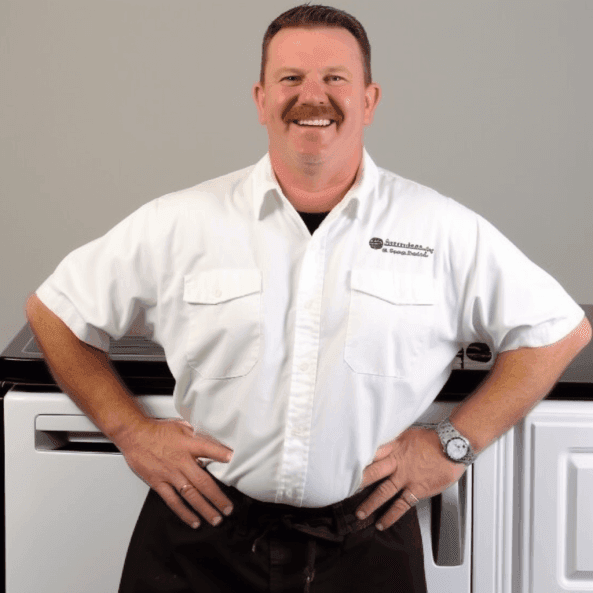
Hey, I’m Jake. I focus on cooling systems at Appliance Mastery, like fridges, freezers, and air conditioners.
I’ve worked in appliance repair for more than ten years and I’m certified through NASTeC. I’ve seen just about every fridge issue you can imagine.
My goal is to help you fix problems without stress. Whether it’s a freezer that won’t cool or an AC that keeps beeping, I’m here to walk you through it.