

Autumn always shifts my focus to the mantel because that one surface can pull the entire room together when the days start getting shorter.
Textures from natural materials tend to catch the light differently than polished ones and that subtle change affects how comfortable the space feels when you are actually sitting in it.
Layering matters more than I expected.
I have found that mixing rough and smooth elements keeps the arrangement from looking too flat or one dimensional once the fire is lit.
Saving a couple of these approaches for my own space seems practical since they rely on things I can gather outdoors rather than special purchases.
Start With Weathered Wood On The Mantel
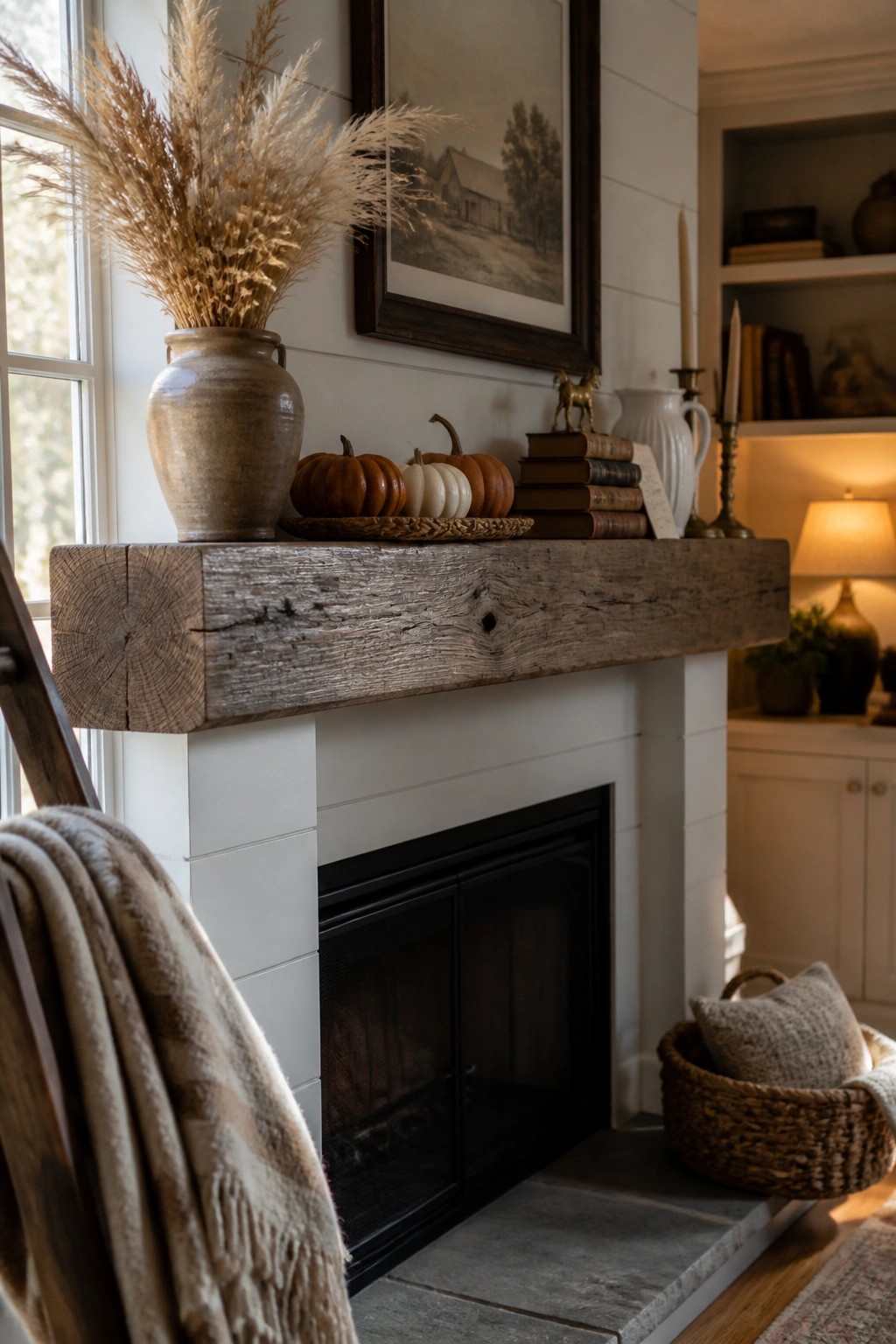
A thick wooden mantel gives the whole fireplace a grounded feel that works well for autumn. The grain and finish already add texture, so the rest of the display can stay simple with just a few natural pieces.
This approach suits homes that already have some wood trim or beams. It looks best when the styling stays loose rather than perfectly arranged, and it pairs especially well with white walls that let the wood stand out.
Style Your Mantel with Natural Textures

Natural textures give an autumn mantel a quiet, grounded feel that lasts through the season. A linen runner, dried stems, and a few small pumpkins can soften the surface without crowding it.
This works best on a simple wood shelf in a calm room. Keep the colors muted and let the different materials create the interest rather than adding too many extra pieces.
Velvet Pumpkins With Wood And Vintage Books

Mixing a few natural textures keeps an autumn mantel interesting without looking busy. Velvet pumpkins bring softness, while wood and old books add weight and a bit of roughness that feels right for the season.
This approach works best on a simple mantel where the textures can stand out. Limit the items to three or four so the materials do the work instead of a crowded arrangement.
Dried Flowers And Gourds On A Stone Mantel

One of the easiest ways to give a mantel autumn character is to gather a few natural items that already have texture. A stone surround pairs especially well with dried flowers, small gourds, and older books because the surfaces catch light differently and keep the display from feeling flat.
This approach works in almost any room with a fireplace, but it suits homes that already have wood, plaster, or stone details. Keep the number of pieces low so each one can be seen, and swap the flowers or gourds as they fade.
Add Dried Grasses To A Mantel For Gentle Movement

Dried grasses give a mantel an easy autumn feel without needing much else. They bring height and a bit of movement that pairs well with wood and stone, and they soften the harder lines of a fireplace surround.
Try placing them in one tall vase toward one end and keep the rest of the shelf fairly simple. A few stacked books or a small object on the other side is usually enough. This approach suits homes that already lean on natural materials and works best when you avoid crowding the shelf.
Clay Pots And Dried Stems For Autumn Texture
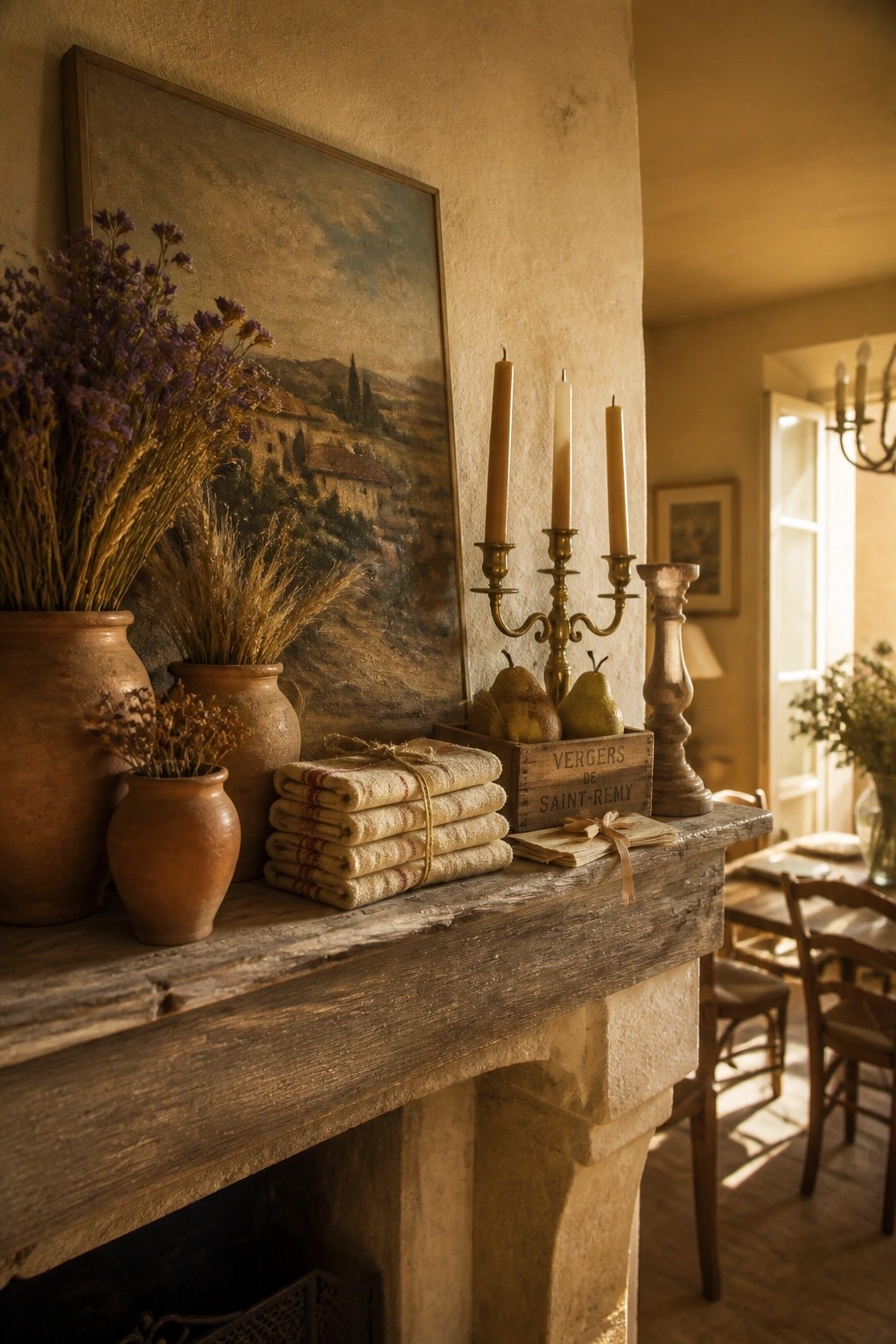
Clay pots and dried stems work well together because they bring different surfaces into one spot without needing much color. The rough wood of the mantel itself helps tie everything in, so the whole setup feels grounded rather than busy.
Try grouping a few similar pots at one end and letting the dried flowers spill over the edge a little. This approach suits older homes or rooms that already have wood and stone, and it holds up better than bright seasonal pieces once the holidays pass.
Driftwood And Glass Bottles For A Light Autumn Display

One simple way to style a mantel for autumn is to rely on natural materials instead of bright colors or heavy ornaments. Driftwood, dried grasses in old glass bottles, and a few small pumpkins add warmth through texture and keep the look light.
This works best in homes that already lean coastal or cottage. Group a handful of pieces with different heights and leave some open space so the mantel does not feel busy.
Stack Stones With Dried Grasses For Mantel Texture

Stacking a few smooth river stones on the mantel creates a quiet focal point that feels grounded and seasonal. The rough texture of the stones pairs naturally with wood and plaster, and it keeps the arrangement from looking too arranged. Dried grasses add height without clutter, and the whole setup stays simple enough to change with the seasons.
This works best in rooms that already lean neutral and natural. Place the stones slightly off center, add one tall vessel of grasses beside them, and keep candles low so the light stays soft. It suits older homes or spaces where you want texture without extra color.
Layer Woven Accents And Dried Grasses

Natural textures work especially well on a mantel because they catch the light and add quiet interest without needing bright colors. A macrame holder filled with dried grasses paired with small woven pumpkins creates that layered look while keeping things simple and seasonal.
This approach suits living rooms that already have wood tones and neutral walls. Keep the number of pieces low so the textures stand out, and swap in fresh dried material each year to refresh the same setup.
Stone Vases With Dried Lavender

Stone vases filled with dried lavender give a mantel an easy autumn texture without looking overdone. The rough surface of the stone pairs well with the soft, muted stems, and the whole arrangement feels grounded next to wood and marble.
This works best on a traditional fireplace where you already have some weight in the materials. Keep the rest of the mantel fairly simple so the lavender stays the main focus, and swap in fresh stems each season if you want the look to last longer.
Working With Natural Forms On The Mantel

A mantel gains a quiet seasonal feel when you let a few strong natural shapes do the work. A large dried gourd, a shallow bowl of bay leaves, and a few stacked books create texture without needing extra color or pattern. The rough concrete surface underneath helps everything feel grounded rather than arranged.
This approach suits homes that already have simple materials like stone, wood, or plaster. Keep the number of pieces low so the shapes can stand out. One or two larger objects usually look better than a full row of smaller ones.
Use Woven Baskets To Add Texture To The Mantel

A woven basket works well on a dark mantel because it brings in a natural material that breaks up the solid surface. It also gives you an easy way to group smaller items like pumpkins without them looking scattered.
Try placing one basket slightly off center and adding a few stems or dried pieces nearby. This approach works best in older homes where the mantel already has some weight and character. Keep the rest of the surface fairly clear so the texture stays noticeable.
Dried Grasses In Simple Clay Vases

Many people reach for dried stems on the mantel once the weather cools because they bring texture without any extra fuss. The look works because the materials already feel like autumn and they sit well against wood or plaster.
This approach suits homes that already have a few natural surfaces. Keep the vases plain and vary the heights so the arrangement stays relaxed rather than styled.
Focus on Natural Textures for the Mantel

Natural textures keep an autumn mantel from feeling staged. A wooden bowl filled with pears and nuts, a few dried stems in simple pots, and a couple of copper candlesticks sit easily together on the stone ledge. The mix feels gathered rather than arranged, and it works because nothing fights for attention.
This approach suits homes that already have raw materials like stone or wood nearby. Start with one large wooden piece, add a few stems that have some height, and finish with candles in metal holders that echo the wood tone. Skip anything too polished or matching and let the surfaces do the work.
Woven Decor And Old Books On A Wood Mantel

A mantel built from thick rough wood already gives a strong base. Adding woven pieces, dried stems, and old books keeps the whole setup feeling simple and seasonal without extra color or shine.
This works best in rooms that already have stone or timber around them. Keep the number of items low so the wood grain and basket texture stay easy to notice.
Layer Natural Elements with Everyday Pieces
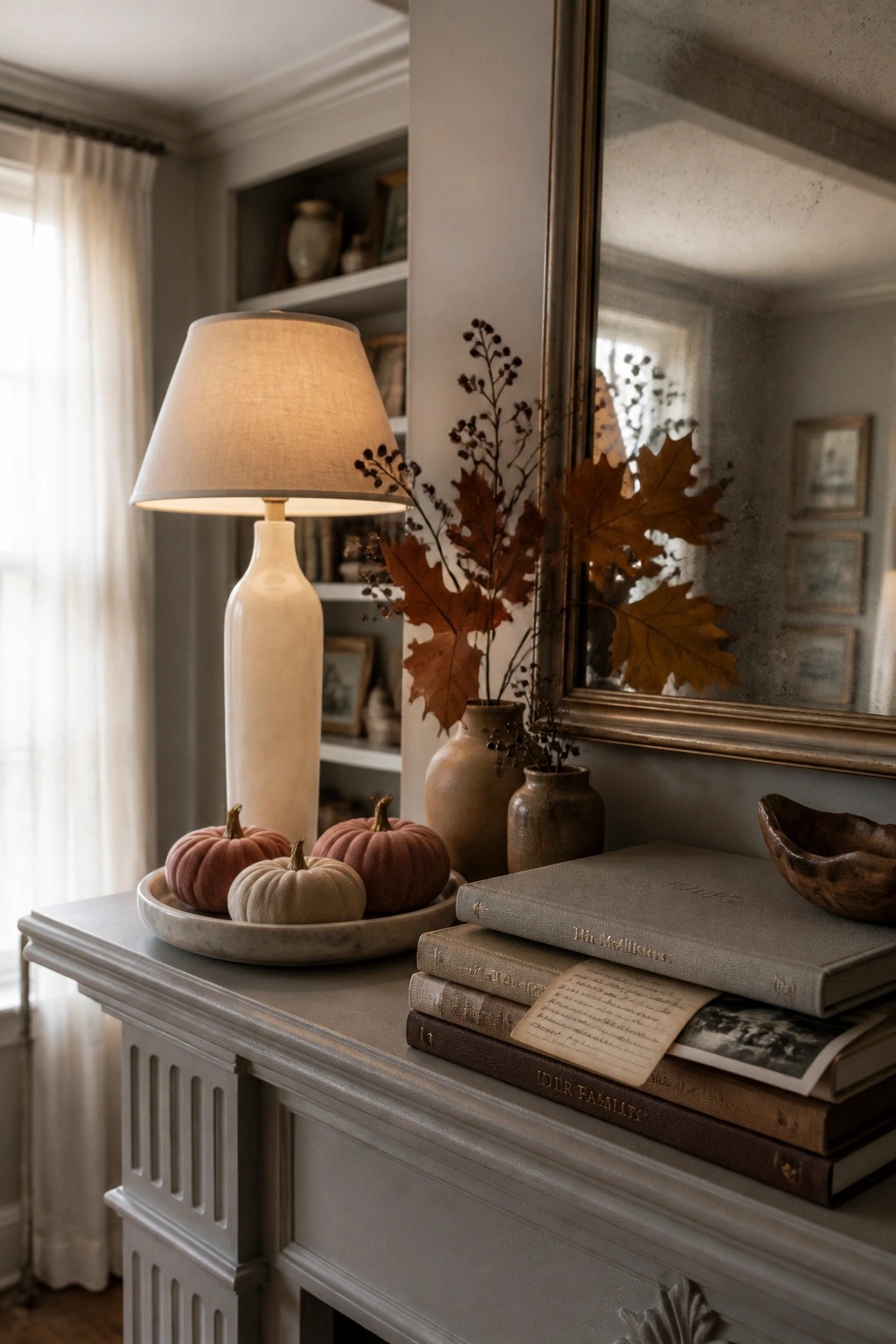
Many people find that mixing a few real autumn finds with things already on the mantel keeps the look relaxed and seasonal. Small pumpkins, dried leaves, and simple branches add texture without needing a full overhaul.
This approach works best when you start with what is already there, like a lamp or some books, and tuck the natural pieces around them. It suits older homes or mantels that feel a little bare in cooler months.
Build Autumn Mantel Decor Around Natural Textures

Natural materials do most of the work when you want a mantel that feels seasonal without looking staged. Wood, dried fruit, and stone already carry enough texture on their own, so the display stays simple and still reads as autumn.
This style works best on stone or brick fireplaces where the rough surface can contrast with smoother wood and softer elements. Keep the number of pieces low, let the materials show their age, and swap in fresh dried citrus or herbs when the season changes.
Woven Vase Covers With Dried Grasses
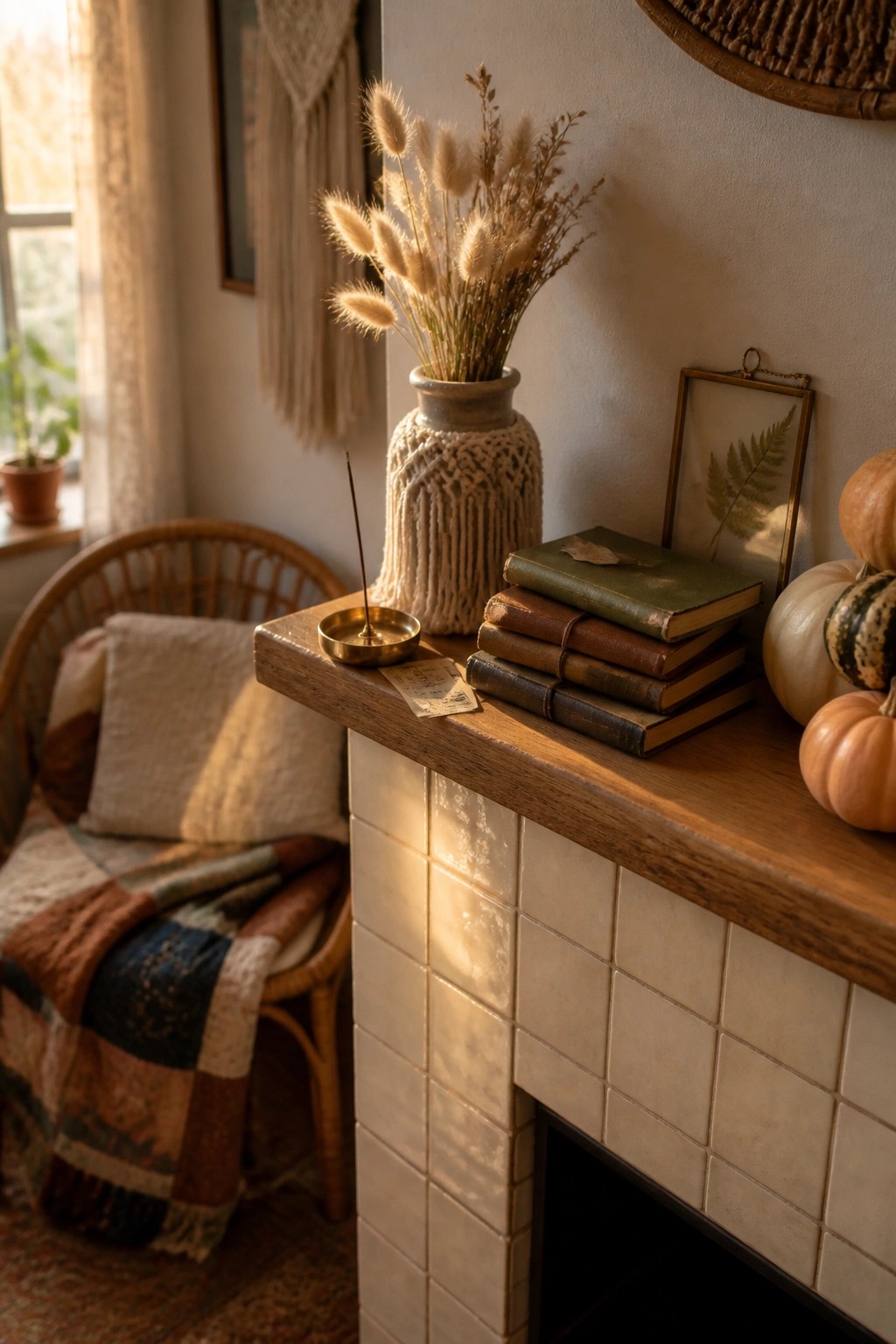
One simple way to give an autumn mantel some depth is to mix a few natural textures instead of relying on bright colors or lots of small items. A woven cover on a vase, some dried grasses, and a stack of old books already create enough variation to feel seasonal and grounded.
This approach works best on a plain wood mantel or one with simple tile, where the textures can stand out on their own. Keep the number of pieces low so nothing feels crowded, and let the materials do the work.
Wood Stoneware And Linen For Autumn Layering
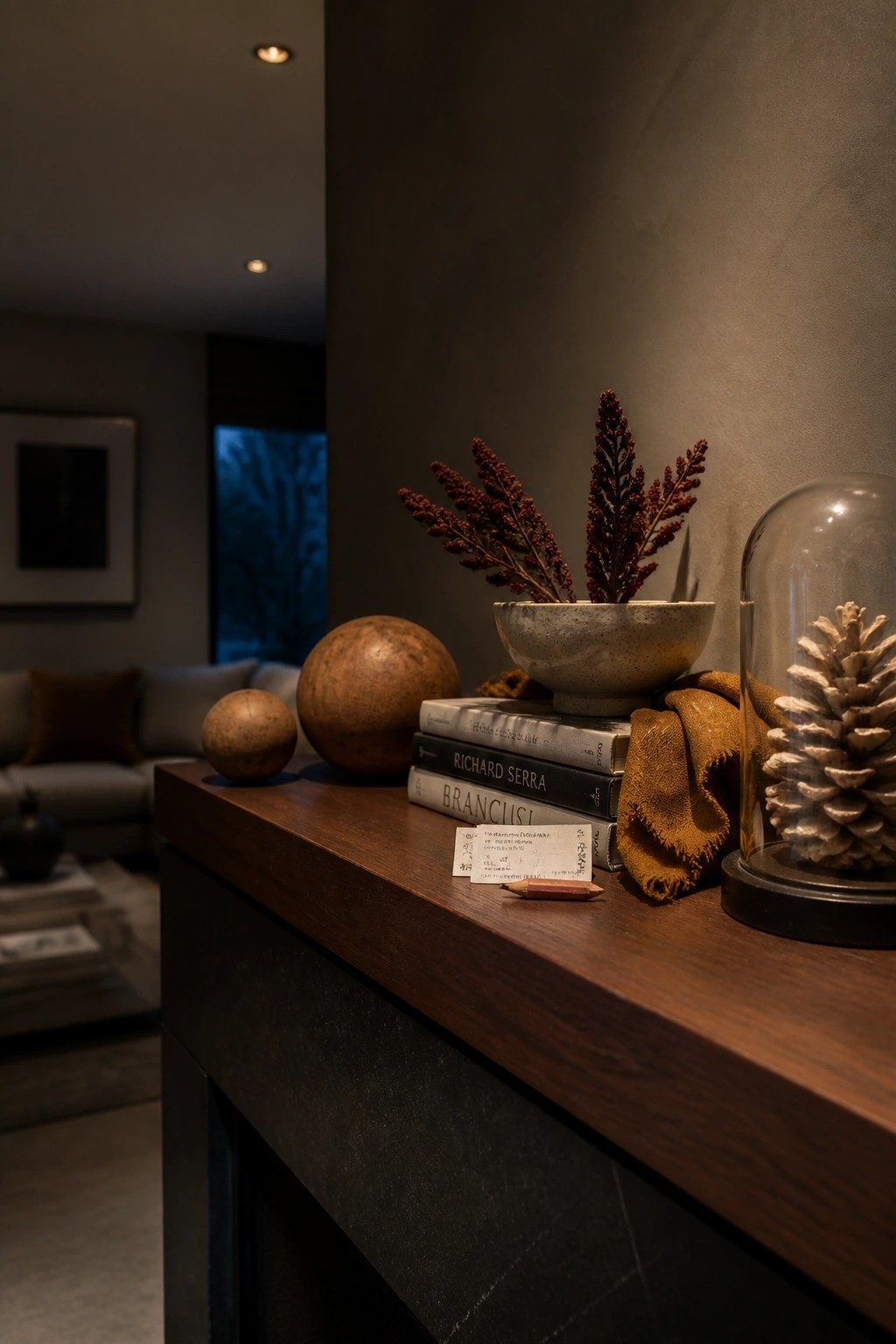
One simple way to make a mantel feel right for autumn is to focus on texture instead of color. Wood, rough stoneware, dried stems, and a bit of linen or cotton can sit together without looking forced. The mix gives the surface weight and keeps it from feeling flat once the summer pieces come down.
Start with a few solid bases like stacked books or a low bowl, then add one or two natural finds such as a large pinecone or dried branches. Keep the rest of the surface clear so the textures can stand out. This approach works best on wood mantels in living rooms that already have some warmth in the flooring or furniture.
Try Dried Grasses With A Few Small Pumpkins

A simple way to add autumn texture is to let one tall vessel of dried stems carry most of the look, then add just a few small pumpkins at the base. The contrast between the airy stems and the rounded shapes keeps the mantel from feeling flat or overdone.
This approach works best on a painted mantel in a room that already has some age to it. Keep the rest of the surface fairly clear so the natural materials stay the main focus.
Mixing Wood and Dried Botanicals on the Mantel

A thick wooden beam makes a good base for autumn mantel styling because it already brings warmth and age to the setup. Adding dried wheat in a metal container and a few simple metal cups keeps the focus on texture rather than on too many colors or patterns.
This works best in homes with older woodwork or stone, where the rough surfaces already feel at home. Keep the number of items low and let the materials speak for themselves so the mantel does not feel crowded.
Small Pumpkins Dried Flowers And Aged Metal Bowls

One of the simplest ways to give an autumn mantel real presence is to layer different natural textures instead of relying on color alone. Small pumpkins, dried flowers, and aged metal bowls all bring their own surface quality, so the display feels collected rather than arranged.
This approach works especially well on older fireplaces where the mantel already has some detail. Keep the number of items modest and let the textures do the work. Avoid crowding the surface or adding too many shiny accents that fight with the natural materials.
Frequently Asked Questions
Q: How do I stop dried leaves from crumbling everywhere once I bring them inside?
A: Mist the leaves lightly with hairspray right after you gather them. This seals the surface and keeps bits from dropping onto your mantel or floor. Refresh the spray every couple weeks if the air stays dry.
Q: Can I add real branches without the whole setup looking messy?
A: Trim branches to similar lengths and lean them against the wall at the back of your mantel. Nestle smaller texture pieces in front so the branches frame rather than crowd the space. Dust them weekly so they stay looking intentional.
Q: My mantel sits in a sunny window. Will the natural pieces fade fast?
A: Rotate anything made of fabric or dried botanicals every few days so one side does not take all the light. Tuck the most delicate items toward the center where shadows fall. This keeps colors richer through the whole season.

I’m Claire, the voice behind The Seasoned Home. I’ve always loved the way a home can shift with the seasons and feel fresh, cozy, and welcoming all over again. I share seasonal home decor ideas that feel beautiful but still realistic for everyday life, from porch styling and wreaths to cozy bedrooms, living rooms, kitchen touches, and simple table decor. My favorite ideas are the ones that make a home feel special without making decorating feel complicated.