
Ever wondered why your dishwasher doesn’t smell as fresh as it should? Picture this: after a long day, you load your dishes, hit start, and a funky odor wafts out once the cycle ends. Annoying, right? But fear not, because we’ve got a simple solution for you.
What if I told you that a bottle of bleach could be the key to a sparkling, odor-free dishwasher? Yes, you heard that right! In this article, we’ll walk you through the easy steps to effectively clean your dishwasher with bleach.
Importance of Cleaning Your Dishwasher
When it comes to cleaning your dishwasher, it’s not just about a shiny exterior. Maintaining a clean dishwasher is crucial for ensuring optimal performance and extending its lifespan. Here’s why it matters:
- Prevents Odors: Regular cleaning with bleach helps eliminate those unpleasant smells that can linger in your dishwasher.
- Removes Build-Up: Over time, detergent residue, food particles, and mineral deposits can accumulate, leading to clogs and inefficient cleaning.
- Improves Hygiene: A clean dishwasher reduces the risk of bacterial growth and cross-contamination on your dishes.
- Maintains Efficiency: A well-maintained dishwasher will run more efficiently, saving you time and energy in the long run.
Taking the time to clean your dishwasher regularly not only ensures cleaner dishes but also helps you avoid costly repairs down the line.
Materials Needed for Cleaning
When cleaning your dishwasher with bleach, you’ll need a few basic materials to get the job done effectively. Here’s what you’ll require:
- Rubber Gloves: To protect your hands from the bleach.
- Bleach: Choose a regular bleach for disinfecting and removing tough stains.
- Vinegar: A natural alternative to bleach for odor removal and cleaning.
- Soft Cloth or Sponge: For wiping down surfaces inside the dishwasher.
- Old Toothbrush: Ideal for scrubbing hard-to-reach areas.
- White Distilled Vinegar or Baking Soda: Optional for a final rinse to remove any residual bleach smell.
Cleaning your dishwasher with bleach is a simple process but requires the right materials to ensure a thorough job.
Recommended Products

Wide Compatibility - ACTIVE Dishwasher Cleaner is suitable for Most Residential or Commercial Automatic Dishwashing Units. Compatible with GE, Bosch, Frigidaire, LG, Samsung, Whirlpool, Kitchenaid, Kenmore, Maytag, Amana models, all styles including plastic & stainless steel. To ensure proper cleaning, we recommend to monitor your dishwasher during cycle. If you see any foam or water leaking from the machine, stop dishwasher and allow foam and water to drain before continuing

EXCEPTIONAL RESULTS: Introducing Tillbrook Cleaning Vinegar—the perfect choice for natural cleaning and maintenance. Our powerful formula, made from 6% all-natural vinegar and infused with a fresh citrus scent, delivers an unmatched cleaning experience without unnecessary additives.

Large 20 Gram Cleaning Tablets: Cleans up to 2 times as much as smaller tabs; No need to use multiple tablets. We don't stuff a bunch of tiny tabs in a box to make it look like you are getting more
Steps to Clean Your Dishwasher with Bleach
To clean your dishwasher with bleach effectively, follow these simple steps:
- Empty the Dishwasher: Make sure the dishwasher is completely empty before starting the cleaning process.
- Wipe Down the Edges: Using a soft cloth or sponge, wipe down the edges and seals of the dishwasher to remove any visible residue.
- Inspect the Drain: Check the drain at the bottom of the dishwasher for any debris or clogs. Clear out any buildup that you find.
- Prepare the Bleach Solution: Mix 1 cup of bleach with 1 gallon of water to create the cleaning solution.
- Run a Wash Cycle: Place the bleach solution in a dishwasher-safe container on the top rack of the dishwasher. Run a full wash cycle on the hottest setting.
- Final Rinse: After the cycle is complete, do a final rinse in the dishwasher using white distilled vinegar to remove any remaining bleach residue.
Remember, safety is key when working with bleach. Ensure the area is well-ventilated and wear protective gloves to avoid contact with the bleach solution.
Recommended Products
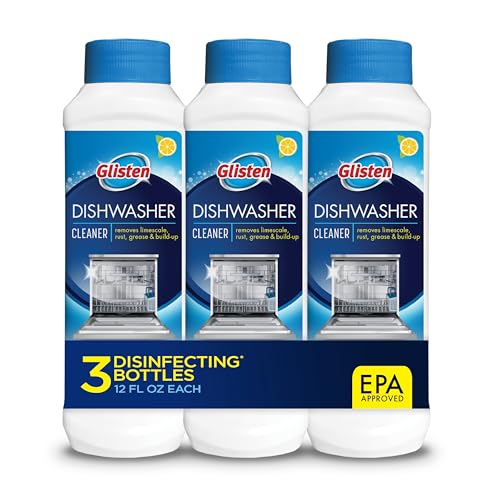
Powerful Disinfectant: Deep clean, freshen, and help maintain your dishwasher with our powerful cleaner. The quick, easy-to-use dishwasher cleaner helps break up dirty residue and buildup for a fresh appliance every day.

Powerful Deep Cleaning Descaler - Break down stubborn limescale, hard water stains, calcium deposits, grease, and odor-causing residue with a citric-acid powered formula that targets hidden buildup in spray arms, filters, pumps, and internal components.

DEEP CLEANS INNER PARTS: Finish Dishwasher Cleaner Tablets target hidden grease, hardwater buildups, and grime in spray arms, filter, and pipes for a hygienic clean.
Running a Rinse Cycle
When it’s time to run a rinse cycle after cleaning your dishwasher with bleach, you’re almost done with the whole process. Here’s what you need to do:
- Load the dishwasher: Place any items that you removed back into the dishwasher.
- Add white distilled vinegar: Pour a cup of white distilled vinegar into a dishwasher-safe container on the top rack.
- Start the rinse cycle: Run a complete rinse cycle on the hottest water setting available. This will help remove any remaining bleach residue and odor, leaving your dishwasher fresh and clean.
Maintaining a Fresh Dishwasher
Cleaning your dishwasher with bleach is crucial, but regular maintenance is key to keeping it fresh and odor-free. Here are some practical tips to ensure your dishwasher stays in top condition:
- Clean the Filter: Check and clean the dishwasher filter regularly to prevent food particles from clogging the drain and causing unpleasant smells.
- Wipe Down Seals and Edges: Use a damp cloth to wipe down the door seals and edges to remove any food residue or grime that might harbor bacteria.
- Run Hot Water Before Starting: Before running a cycle, let the hot water tap run for a few minutes to ensure the water entering the dishwasher is hot enough to clean effectively.
- Use Citrus Peels: Place a few citrus peels (like lemon or orange) in the utensil basket each month and run a cycle with no dishes to keep your dishwasher smelling fresh naturally.
- Regular Inspections: Periodically check for any leaks, unusual noises, or issues with the spray arms to address them promptly and prevent further damage.
| Facts |
|---|
| 80% |
| Over 34% |
By following these tips and incorporating good cleaning practices, you can maintain a fresh and clean dishwasher for years to come.
Recommended Products

HELPS POWER AWAY SMELLS created by odor causing bacteria, foggy limescale and mineral deposits hiding deep inside the dishwasher’s pump, filter, tub, valve, drain, washer arms and recirculation hoses to help optimize appliance performance.

The Power Of The Miracle Cleaning Paste Is Now Matched With Our Powerful Miracle Scrubber Tool. 4 Unique Brush Heads Make Tackling Any Tough Cleaning Job A Breeze.

🚫UNCLOG NARROW TUBES INSTANTLY: Tired of water pooling in your fridge or grime clogging your aquarium filters? This 67-inch (170cm) extra-long flexible drain brush is the ultimate problem-solver. It easily snakes through deep, narrow, and curved tubing to effortlessly remove gunky buildup, dirt, and residue.
Conclusion
Keep your dishwasher fresh and odor-free by regularly maintaining it. Using bleach is effective, but don’t forget to clean the filter, wipe down seals, and run hot water before starting a cycle. For a natural scent boost, try citrus peels. Stay proactive with regular inspections to catch any issues early. With these simple steps and good cleaning habits, your dishwasher will stay clean and perform well for a long time. Happy cleaning!
Frequently Asked Questions
Why is regular maintenance important for dishwashers?
Regular maintenance is crucial to prevent odors and ensure optimal performance of your dishwasher. Cleaning the filter and seals, running hot water before a cycle, and using natural fresh scents like citrus peels can help maintain a clean and functioning appliance.
How often should I clean my dishwasher?
It is recommended to clean your dishwasher once a month or as needed. Routine cleaning, including wiping down seals and conducting inspections, can help extend the lifespan of your appliance and prevent any unpleasant odors.
Can I use bleach to clean my dishwasher?
Yes, bleach can effectively clean and disinfect your dishwasher. However, make sure to follow the manufacturer’s guidelines and rinse thoroughly to avoid any potential damage or chemical residue.

Hi, I’m Charlie, and I cover all things laundry here at Appliance Mastery.
I’ve spent over eight years working on washing machines, dryers, and dishwashers. I also have a degree in mechanical engineering, which helps me understand how these appliances really work.
I try to make every guide clear and practical. If you’re stuck with a noisy dryer or a leaking washer, I’ll help you figure out what’s wrong and how to fix it.