
Ever found yourself staring at a sink full of dirty water after running your dishwasher? Frustrating, right? You’re not alone. A non-draining dishwasher can quickly turn a routine task into a messy headache. But fear not, because in this article, we’ve got your back! We’ll walk you through simple steps to troubleshoot and fix that stubborn dishwasher that refuses to drain.
Check the Drain Hose
When your dishwasher doesn’t drain, a common culprit could be a clogged drain hose. Here’s what you can do:
- Inspect the drain hose for any kinks, twists, or blockages.
- Remove the hose and look for debris or food particles stuck inside.
- Ensure the hose is connected properly to the dishwasher and the sink drain without any obstructions.
Taking a few moments to check the drain hose can often resolve drainage issues and get your dishwasher back to working smoothly.
Recommended Products

UNIVERSAL DISHWASHER DISCHARGE HOSE: Dishwasher drain hose coupling is used to connect the dishwasher to an air gap, or can also connect the dishwasher directly to a garbage disposal or drain tailpiece

Replaces for 154369601, 154411002, 154411001, 154411003, 5304435286, 154525301, 154606701, 154753201, 3276641, AP5806794 and PS9494138.
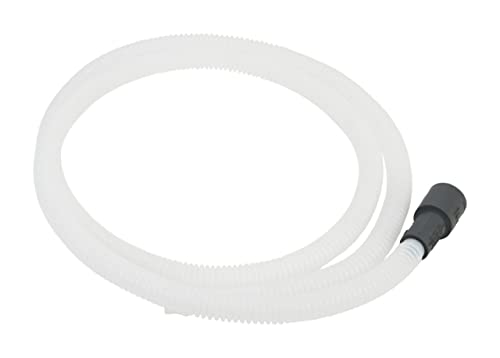
GENUINE OEM: Whirlpool Genuine OEM Accessories are designed specifically for your appliance, meet tested engineering standards, and are crafted to ensure the quality of your appliance, unlike non-OEM parts
Inspect the Garbage Disposal
When your dishwasher isn’t draining properly, the garbage disposal might be the culprit. Here’s what you can do:
- Check for blockages: Inspect the disposal for any clogs or debris buildup.
- Run the disposal: Turn it on to see if it’s functioning.
- Clear obstructions: Remove any blockages to ensure proper drainage.
- Ensure proper connection: Confirm that the disposal is connected correctly to the dishwasher.
By examining the garbage disposal, you can address potential issues that may be affecting your dishwasher’s drainage.
Clean the Filter
When your dishwasher isn’t draining properly, one common culprit is a clogged filter. The filter traps food particles and debris to prevent them from clogging the drain and spray arms. Over time, this filter can become clogged, hindering proper drainage.
To clean the filter:
- Locate the filter at the bottom of the dishwasher.
- Remove any visible debris or gunk by hand.
- Rinse the filter under running water to dislodge stubborn particles.
- Use a soft brush to scrub away buildup, if necessary.
Regularly cleaning the filter can improve your dishwasher’s drainage and extend its lifespan.
Recommended Products
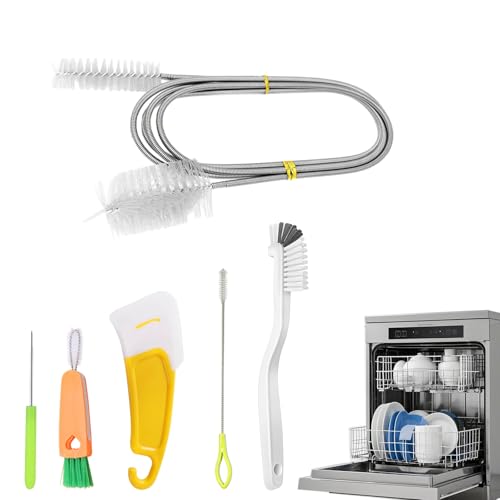
Deep Clean Every Corner Tackle hidden grime with our 6-piece brush kit! Includes a pick, silicone scraper, straw cleaner brush, gap cleaning brush, angle cleaning brush, and flexible tubes brush. Perfect for cleaning inlet/outlet pipes, water jets, and internal crevices. Removes food residue, limescale, and unclogs nozzles effortlessly.
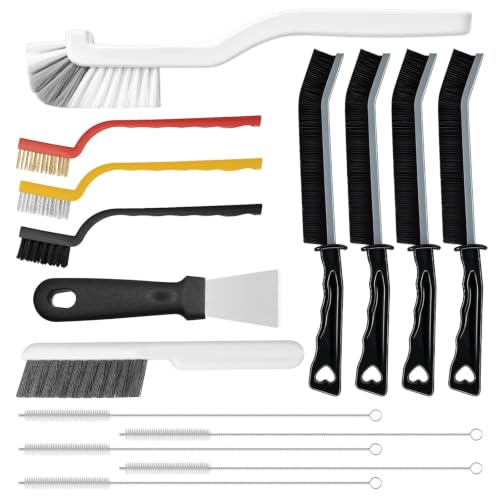
【Product Highlights】This 15-piece crevice cleaning kit includes hard bristle grout cleaning brush, putty knife scraper, straw brushes, bend brush, wire brushes and other handy brush—perfect for tackling every cleaning scenario. Plus, nearly every brush handle features a hanging hole at the end, making storage a breeze. Keep them organized, easy to grab.

❤ The nylon bristles long pipe cleaner brush collect and remove the drain, food, grease buildup, and debris; durable enough for long-term use.
Unclog the Drain Basket
When your dishwasher is struggling to drain properly, unclogging the drain basket is another simple yet crucial step in resolving the issue. The drain basket, like the filter, can also become clogged with debris over time, impeding drainage and causing problems. Here’s how you can effectively unclog the drain basket and improve your dishwasher’s performance:
- Locate the drain basket: It is usually found at the bottom of the dishwasher, near the back.
- Remove the drain basket carefully: Be sure to empty it of any debris that has accumulated.
- Check for any blockages: Inspect the drain basket for any food particles or objects that may be obstructing the flow of water.
- Clean the drain basket thoroughly: Use a brush or soft cloth to clean the basket and remove any buildup.
Remember regular maintenance is key to ensuring your dishwasher functions optimally. By routinely cleaning the drain basket, you can prevent future drainage issues and keep your appliance running smoothly.
Recommended Products

You will get 1 pcs 66" dual-ended drain brush with 0.6" and 1.2" diameter bristle heads, 1 pcs 58" pipe brush with 0.5" diameter bristle head, 2 pcs 8" straw cleaner brush with 0.4" diameter bristle head.
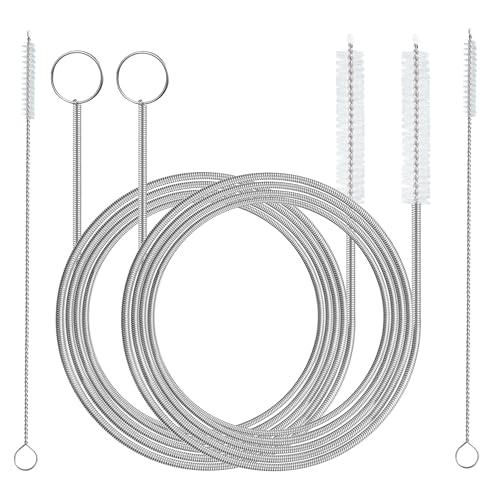
Piece Set for Versatile Use: This comprehensive cleaning kit includes two 61-inch-long pipe cleaners and two 7-inch straw brushes. The sufficient quantity ensures that the appropriate brush is available for each narrow pipe or tube cleaning requirement.
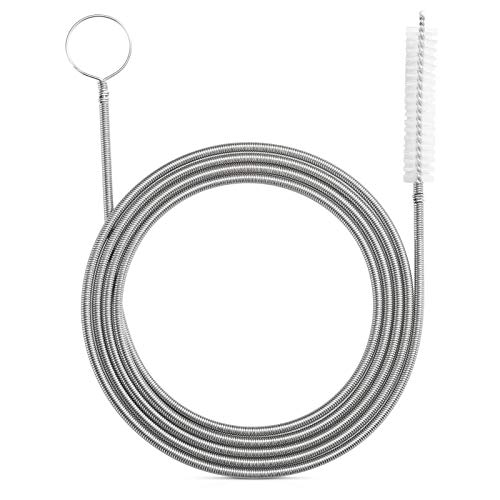
61 Inch/155cm Long with 5CM X 1CM Diameter Bristle Head.
Test the Drain Pump
When your dishwasher is not draining properly, one vital component to check is the drain pump. This pump is responsible for pushing water out of the dishwasher during the draining process.
Here are the steps to test the drain pump:
- Locate the drain pump: It is typically found at the bottom of the dishwasher. Refer to your dishwasher’s manual if you’re unsure.
- Access the drain pump: Before checking the drain pump, make sure to disconnect the power to the dishwasher.
- Inspect the pump: Look for any visible blockages or debris that may be clogging the pump.
- Test the pump: Manually rotate the pump’s motor to see if it’s moving freely. If it’s stuck or difficult to move, there may be an issue with the pump.
- Check for power: If the pump doesn’t seem to be working, use a multimeter to check if it’s receiving power.
- Consult a professional: If you’re unable to determine the issue with the drain pump, it’s best to seek help from a professional technician to avoid causing further damage.
Regular maintenance and inspection of the drain pump can help prevent drainage issues and keep your dishwasher functioning efficiently.
Conclusion
Ensuring your dishwasher’s drain pump is free of blockages and debris is key to resolving drainage issues. By following the steps outlined in this article to test and maintain the drain pump, you can prevent future problems and keep your dishwasher running smoothly. Remember, regular inspection and upkeep of the drain pump are essential for optimal dishwasher performance. If you continue to experience draining issues, don’t hesitate to seek professional assistance. By taking these simple steps, you can troubleshoot and fix a dishwasher that doesn’t drain, saving you time and hassle in the long run.
Frequently Asked Questions
What should I do if my dishwasher is not draining properly?
If your dishwasher is not draining properly, it is essential to check the drain pump. The drain pump expels water during draining and may be blocked by debris. Locate the drain pump at the bottom of the dishwasher, inspect for clogs, manually rotate the pump’s motor, and check for power using a multimeter if necessary. If the issue persists, consider seeking professional assistance.
Why is maintenance of the drain pump important?
Maintaining the drain pump is crucial to prevent drainage issues and ensure the dishwasher operates efficiently. Regular inspection and cleaning of the drain pump can help identify and resolve blockages or clogs that may impede the draining process. By keeping the drain pump in good condition, you can extend the lifespan of your dishwasher and avoid costly repairs.

Hi, I’m Charlie, and I cover all things laundry here at Appliance Mastery.
I’ve spent over eight years working on washing machines, dryers, and dishwashers. I also have a degree in mechanical engineering, which helps me understand how these appliances really work.
I try to make every guide clear and practical. If you’re stuck with a noisy dryer or a leaking washer, I’ll help you figure out what’s wrong and how to fix it.