
Understanding the Issue
You know how frustrating it can be to pull out dishes from your dishwasher only to find spots all over them. Why does this happen? Let’s dive into the factors behind those annoying spots.
- Water Quality Matters: Tap water with high mineral content can lead to spots on dishes as the minerals deposit during the washing and drying cycles.
- Rinse Aid Importance: Rinse aid plays a crucial role – it helps water flow off dishes smoothly, preventing spots and ensuring a dry finish.
- Loading Habits Count: Overcrowded dishes can trap water, resulting in spots. Properly spacing out items allows for better water circulation.
Now that you understand the root causes of spots on your dishes, let’s move on to effective solutions.
Proper Loading Techniques
When loading your dishwasher, keeping a few key tips in mind can make a significant difference in preventing spots on your dishes. Here’s how to properly load your dishwasher:
- Face dirty dishes towards the spray arm to ensure thorough cleaning.
- Avoid blocking the spray arms by arranging dishes strategically.
- Do not overcrowd the dishwasher to allow water to reach all items.
- Place bowls and cups at an angle to allow water to drain off easily.
- Keep items with concave surfaces facing down to prevent water accumulation.
Following these loading techniques can help optimize the dishwasher’s performance and reduce the chances of spotting on your dishes.
Recommended Products

Replaces Part Numbers:The WD22X33499 Lower spray arm directly replaces multiple part numbers, including WD22X27724 (AP7014276), WD22X33499 (AP7219298), WD22X26621, WD22X10091, WD22X25962, and WD22X33499-30PK. It serves as a substitute for worn or damaged original parts, saving you the hassle of searching for specific old part numbers

ATMA SUPPLY 5304517203 dishwasher lower spray arm. Package includes 1 x 5304517203 dishwasher bottom spray arm, Color: Blue, Size: 18.8in

MODEL NUMBER: WD22X27724 (AP7014276) replaces WD22X26621, WD22X10091, Replacement Arm.
Using the Right Detergent
When it comes to preventing spots on your dishes in the dishwasher, using the right detergent plays a crucial role. Here are some key pointers to keep in mind:
- Choose a High-Quality Detergent: Opt for a detergent specifically designed for dishwashers. Look for products that mention spot prevention on the label.
- Follow Manufacturer’s Instructions: Ensure you carefully read and follow the instructions provided by the dishwasher and detergent manufacturers. This will help you use the correct amount of detergent for optimal performance.
- Avoid Overuse: Using too much detergent can actually lead to spots on your dishes. Be mindful of the recommended amount and avoid excessive pouring.
- Consider Rinse Aid: Adding a rinse aid to your dishwasher routine can further enhance the spot-free results. Rinse aids help water sheet off dishes, reducing the chances of spots and ensuring a sparkling finish.
- Regular Maintenance: Keep your dishwasher in top condition by cleaning it periodically. Accumulated grime and residue can hinder the detergent’s effectiveness, leading to spots on dishes.
By paying attention to these detergent-related tips, you can significantly improve your dishwasher’s performance and say goodbye to those pesky spots on your dishes.
Regular Maintenance Tips
Taking care of your dishwasher with regular maintenance can significantly contribute to preventing spots on your dishes. Here are some practical tips to keep your dishwasher running smoothly:
- Clean the Filter: Regularly check and clean the dishwasher’s filter to prevent food particles and debris from clogging it up.
- Inspect Spray Arms: Make sure the spray arms are clear of any blockages. You can use a toothpick or small brush to clean out any debris.
- Run Hot Water Before Starting: Run your kitchen faucet with hot water before starting the dishwasher. This helps ensure that hot water enters the dishwasher from the beginning, improving overall cleaning performance.
- Use Vinegar: Once a month, pour a cup of white vinegar into the bottom of an empty dishwasher and run a hot cycle. This helps remove any buildup and keeps your dishwasher fresh.
Recommended Products
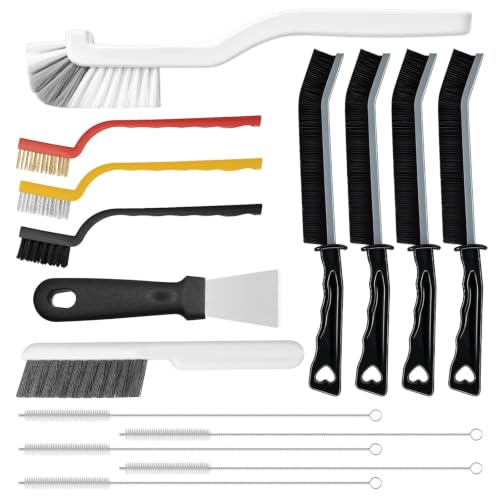
【Product Highlights】This 15-piece crevice cleaning kit includes hard bristle grout cleaning brush, putty knife scraper, straw brushes, bend brush, wire brushes and other handy brush—perfect for tackling every cleaning scenario. Plus, nearly every brush handle features a hanging hole at the end, making storage a breeze. Keep them organized, easy to grab.

【8-Piece Cleaning Brush Set for Every Hard-to-Reach Spot】 Finally clean the places other tools miss. This versatile 8-piece cleaning brush set includes 3 crevice brushes for grout lines, shower door tracks, window tracks, and corners, 2 right-angle scrub brushes for bottles, cups, and narrow interiors, plus 3 wire brushes (brass, steel, nylon) for rust removal, polishing, and detailed scrubbing. A complete cleaning tool set for kitchen, bathroom, and household deep cleaning.
Final Thoughts
Now that you have learned the essential tips for preventing spots on your dishes in the dishwasher, you’re well-equipped to maintain sparkling clean dishes. By selecting the right detergent, following manufacturer guidelines, and incorporating regular maintenance practices, you can ensure that your dishes come out spot-free after every wash. Remember, a little care and attention to detail go a long way in preserving the efficiency of your dishwasher and keeping your dishes looking their best. Implement these strategies consistently, and you’ll enjoy the satisfaction of flawlessly clean dishes every time.
Frequently Asked Questions
What type of detergent should I use in the dishwasher?
Choose a high-quality detergent labeled for spot prevention. Follow manufacturer instructions for best results.
How can I prevent spots on dishes in the dishwasher?
Avoid overusing detergent, consider using a rinse aid, and maintain the dishwasher regularly. Cleaning the filter, inspecting spray arms, running hot water before starting, and using vinegar monthly can help prevent spots effectively.

Hi, I’m Charlie, and I cover all things laundry here at Appliance Mastery.
I’ve spent over eight years working on washing machines, dryers, and dishwashers. I also have a degree in mechanical engineering, which helps me understand how these appliances really work.
I try to make every guide clear and practical. If you’re stuck with a noisy dryer or a leaking washer, I’ll help you figure out what’s wrong and how to fix it.