
Ever found yourself standing in front of a pile of wet laundry, wondering why your washer won’t drain? Picture this: you hit the ‘start’ button, eagerly anticipating fresh, clean clothes, but instead, you’re met with a tub full of water. Frustrating, right? Don’t worry, we’ve got your back! In this article, we’ll dive into the common reasons behind a stubbornly uncooperative washer drain.
Imagine the convenience of having a smoothly functioning washer that efficiently drains after each cycle. No more soggy surprises or last-minute laundromat runs. With our expert tips and troubleshooting advice, you’ll soon be back to enjoying hassle-free laundry days. So, grab a cup of coffee, sit back, and let’s unravel the mystery of why your washer is playing hard to drain.
Signs of a clogged drain
When facing a washer that won’t drain, one common culprit could be a clogged drain. Here are some signs to watch out for:
- Water fails to drain during or after a wash cycle.
- Pooling water at the bottom of the washer.
- Unusual gurgling sounds during the draining process.
- Foul odors emanating from the washer.
If you notice these signs, it’s likely that a clogged drain may be the root cause of your washer troubles.
Inspecting the drain hose
When troubleshooting why your washer won’t drain, Inspecting the drain hose is crucial. Here are a few steps to guide you through this process:
- Start by unplugging your washer from the power source.
- Check the drain hose for kinks or bends that may be obstructing water flow.
- Ensure the hose is not clogged with debris or lint buildup.
- Verify that the hose is positioned correctly, without any dips or loops that could impede drainage.
Remember, a clear and properly installed drain hose is essential for your washer to function efficiently.
Recommended Products
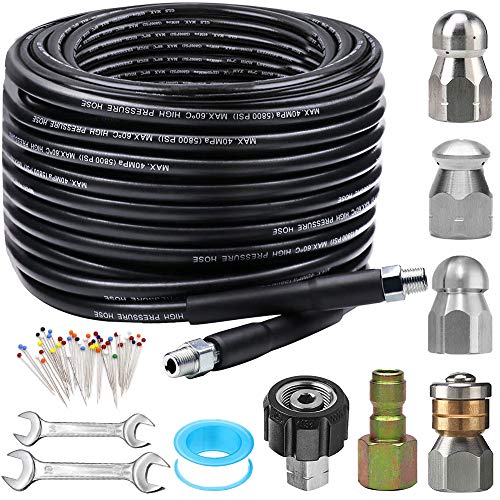
【New Family Set 6 Heads Sewer Jetter Kit】We've included a variety of accessories you might use to make it easy for you to use our sewer jetting kit ! 1 × 100ft sewer jet hose,1 × button nose sewer jet nozzle, orifice 4.0,1 × M22 female to 1/4’’ female NPT coupler,1 × 1/4’’ quick connect plug,1 × rotating sewer jetter nozzle,1 × Side hole sewer jetter nozzle,1 × corner sewer nozzle.1x waterproof tape, 2xspanners, 1x box of pearl corsage pin.
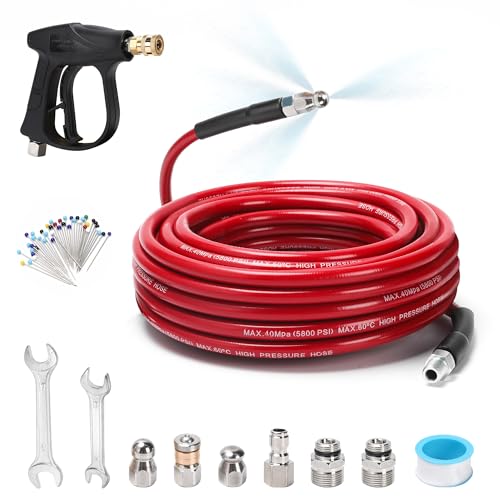
Complete Professional Jetting Kit: Includes everything you need for sewer cleaning: 50 ft sewer jet hose x1; pressure washer gun x1; button nose nozzle x1; rotating nozzle x1; corner sewer nozzle x1; 2 adapters: (1 x M22-15mm male, and 1 x M22-14mm male); 1/4'' quick connect plug x1; wrenches x2; corsage pin box x1; watertight tape x1

【Multi-diameter drain hose】 This drainage hose comes with four different diameter pipe heads, including 3/4, 7/8, 1-1/4, and 1-1/2 inches. You need to measure the diameter of your washing machine's drainage port to confirm whether our product meets your needs.
Checking the drain pump
When your washer won’t drain, it’s essential to check the drain pump. The drain pump is responsible for expelling water from the washer during the draining process. If it malfunctions, water may remain in the tub, leading to drainage issues.
To diagnose potential problems with the drain pump:
- Inspect the pump: Look for any visible signs of damage or debris that may be obstructing its operation.
- Check the pump filter: Over time, the pump filter can become clogged with lint, coins, or other small objects. Cleaning it can often resolve drainage issues.
- Test the pump motor: Verify if the pump motor is functioning correctly by listening for any unusual noises or vibrations during the draining cycle.
Regular inspection and maintenance of the drain pump can prevent costly repairs and keep your washer running smoothly. By addressing any issues promptly, you ensure efficient drainage and prolong the lifespan of your appliance.
Remember, a well-functioning drain pump is crucial for the proper operation of your washer.
Recommended Products

LOW PROFILE DESIGN – Slides under many front load washer access panels to guide draining water during routine filter cleanout and washer care.

CATCH WATER AT THE DRAIN AREA: Place the tray below a reachable front-load washer drain outlet or filter access area to collect residual water, drips and small splashes during draining or routine filter cleaning. It is a localized water-catching solution, not a full-size under-washer flood pan.

EFFICIENT FILTRATION: The BlueStars WH11X34741 Washer Drain Pump Filter efficiently captures lint, fibers, and debris before they enter the drain system. It prevents clogging, supports smooth drainage, and helps maintain stable washing performance. This filter fixes common issues such as washer not draining, wet clothes after spin, long wash cycles, washer pausing mid-cycle, or unusual vibration and noise.
Clearing blockages in the drain filter
If your washer is not draining properly, a clogged drain filter could be the culprit. Here’s how you can clear blockages in the drain filter:
- Locate the drain filter – Typically found at the front or back of the washing machine.
- Prepare for drainage – Have a towel or shallow pan ready to catch any excess water.
- Open the filter cover – Use a screwdriver or coin to twist and remove the cover.
- Check for debris – Look for lint, coins, or small objects that may be blocking the filter.
- Remove the blockage – Carefully clear out any obstructions with a cloth or brush.
- Clean the filter – Rinse the filter under running water to remove any remaining debris.
- Replace the filter – Securely put the filter back in place and close the cover tightly.
Regularly cleaning the drain filter not only helps prevent drainage issues but also improves the overall efficiency of your washer.
Recommended Products

Refrigerator Water Line Cleaner Kit: Refrigerator drain cleaning tool not only is it used for fridge water line cleaner, be used for water dispenser cleaner, aquariums, filtration systems, long tube brush cleaner hose/glass tubes clog, and even complex drain hole cleaner with ease.

【64-Inch Flexible Design】This extra-long cleaner brush reaches deep into pipes to clear tough clogs. The thick stainless steel spring bends easily through curves—great for pipe tube, sink drains, narrow space and bathroom, This flexible pipe brush is perfect for hard-to-reach areas

Package Includes: You will receive a set of sunroof drain cleaning tools, including a 120 inch sunroof drain brush, two 7 inch cleaning brushes, a 39 inch injector hose, and an 80ml injector. These tools are specially designed for cleaning narrow pipes that are difficult to reach.
Seeking professional help
If you’ve tried cleaning the drain filter and your washer still won’t drain properly, it might be time to seek professional help. Here are some reasons to consider calling in a professional:
- Complex Issues: A technician can diagnose and fix complicated problems that may be beyond your expertise.
- Specialized Knowledge: Professionals have training and experience working with washers, ensuring a thorough inspection.
- Saves Time: Getting expert help can save you time and frustration in trying to troubleshoot on your own.
Remember, when it comes to your washer’s functionality, sometimes it’s best to leave it to the pros.
Conclusion
Ensuring your washer drains properly is crucial for its performance. By regularly clearing blockages in the drain filter, you can maintain your washer’s efficiency. If cleaning the filter doesn’t fix the issue, it’s best to consult a professional. They can identify complex problems, provide expert solutions, and save you time, ultimately extending your washer’s lifespan. Remember, a well-maintained washer leads to hassle-free laundry days.
Frequently Asked Questions
What is the main focus of the article?
The main focus of the article is to highlight the significance of removing blockages in the drain filter to address washer drainage problems efficiently.
What does the article guide on related to drain filter maintenance?
The article guides on locating, inspecting, and cleaning the drain filter to improve the performance of the washer.
What should you do if cleaning the filter does not solve the issue?
If cleaning the filter does not resolve the problem, it is advisable to seek help from professional technicians for diagnosing complex washer issues and ensuring proper functionality.

Hi, I’m Charlie, and I cover all things laundry here at Appliance Mastery.
I’ve spent over eight years working on washing machines, dryers, and dishwashers. I also have a degree in mechanical engineering, which helps me understand how these appliances really work.
I try to make every guide clear and practical. If you’re stuck with a noisy dryer or a leaking washer, I’ll help you figure out what’s wrong and how to fix it.