
Understanding Soap Scum in Dishwashers
Soap scum is a common issue in dishwashers that can be frustrating to deal with. It’s caused by minerals in hard water mixing with soap and forming a residue on dishes, glasses, and the dishwasher itself.
Here’s how it happens:
- Hard Water: Contains high levels of minerals.
- Soap: Reacts with these minerals, creating soap scum.
- Residue: Builds up on surfaces over time, especially in warm, moist environments like dishwashers.
To tackle soap scum effectively, it’s essential to understand its components and how they interact in your dishwasher.
Common Causes of Soap Scum Build-up
If you’re dealing with stubborn soap scum in your dishwasher, understanding the common causes behind its build-up can help you tackle the issue effectively. Here’s what you need to know:
- Hard Water: One of the primary culprits for soap scum in dishwashers is hard water. The minerals in hard water react with soap, creating a filmy residue that accumulates on dishes and the interior of the dishwasher.
- Insufficient Rinsing: When dishes are not rinsed thoroughly before loading them into the dishwasher, soap residue can linger and contribute to soap scum build-up.
- Excessive Detergent Usage: Using more detergent than necessary doesn’t equate to cleaner dishes. In fact, it can lead to soap scum formation, especially in combination with hard water.
- Low Water Temperature: Washing dishes with low water temperatures might not be effective in dissolving detergent completely, leaving behind residues that evolve into soap scum over time.
To combat soap scum effectively, it’s crucial to address these underlying causes to prevent its accumulation in your dishwasher. Stay tuned for the next section on practical solutions to help you get rid of soap scum for good.
Effective Methods for Removing Soap Scum
To tackle soap scum buildup in your dishwasher effectively, try these methods:
- Vinegar Rinse: Run a cycle with a cup of white vinegar to dissolve soap scum and mineral deposits.
- Baking Soda Scrub: Sprinkle baking soda in the dishwasher and run a hot cycle to combat stubborn residue.
- Citric Acid Solution: Using citric acid can help break down soap scum and restore dishwasher cleanliness.
- Regular Cleaning: Wipe down the interior of your dishwasher regularly to prevent soap scum accumulation.
- Check Water Temperature: Ensure you’re using hot water for optimal cleaning and soap scum prevention.
Remember, tackling soap scum requires consistency and the right approach to keep your dishwasher running smoothly.
Recommended Products

No Need to Switch Detergents: ACTIVE Dishwasher Detergent Enhancer works alongside dishwasher pods & pacs, liquid detergent gel & dishwasher powder. Compatible with dishwashing supplies like in-wash rinse aid & salt pellets. If your "clean" dishes are still a bit dirty, your detergent may just need a boost to finish the job

Wide Compatibility - ACTIVE Dishwasher Cleaner is suitable for Most Residential or Commercial Automatic Dishwashing Units. Compatible with GE, Bosch, Frigidaire, LG, Samsung, Whirlpool, Kitchenaid, Kenmore, Maytag, Amana models, all styles including plastic & stainless steel. To ensure proper cleaning, we recommend to monitor your dishwasher during cycle. If you see any foam or water leaking from the machine, stop dishwasher and allow foam and water to drain before continuing

HELPS POWER AWAY SMELLS created by odor causing bacteria, foggy limescale and mineral deposits hiding deep inside the dishwasher’s pump, filter, tub, valve, drain, washer arms and recirculation hoses to help optimize appliance performance.
Natural Remedies to Combat Soap Scum
If you’re dealing with stubborn soap scum in your dishwasher, there are natural remedies you can use to tackle the issue effectively without harsh chemicals. Here are some practical tips to help you combat soap scum buildup:
- Vinegar Rinse: Run a cycle with a cup of white vinegar to help break down soap scum and mineral deposits.
- Baking Soda Scrub: Sprinkle baking soda on a damp sponge and scrub affected areas to remove soap scum residue.
- Citric Acid Solution: Use a citric acid-based dishwasher cleaner to dissolve soap scum and hard water deposits.
- Regular Cleaning: Wipe down the interior of your dishwasher regularly to prevent soap scum accumulation.
- Hot Water Usage: Ensure your dishwasher’s water temperature is set to a minimum of 120°F for optimal cleaning and to prevent soap scum formation.
Taking these steps can help maintain a clean and efficient dishwasher while combating soap scum naturally. Remember, consistency in cleaning and using the right remedies is key to keeping soap scum at bay.
Recommended Products

DEEP CLEANS INNER PARTS: Finish Liquid Dishwasher Cleaner targets hidden grease, hardwater buildups, and limescale in spray arms, filter, and pipes for a hygienic clean.

100% GUARANTEED HARD WATER CLEANER: Our powerful booster solution is here to save your favorite glassware, coffee maker, and dishes; Add to your dishwasher and watch those hard water spots, film, and other mineral deposits disappear
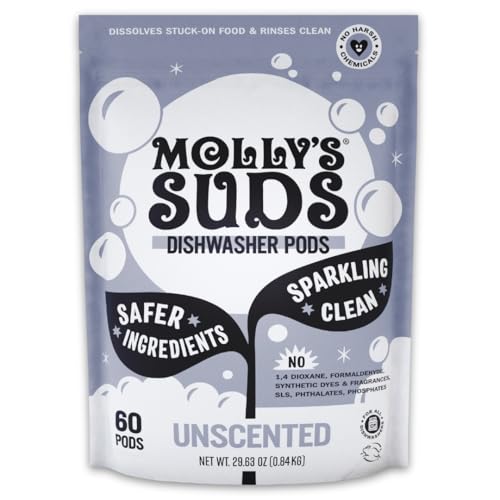
SPARKLING CLEAN WITHOUT HARSH CHEMICALS: Molly’s Suds Dishwasher Detergent Pods cut through grease & stuck-on food stains to leave dishes sparking with zero residue, streaks, or other mineral build-up. Simple and effective, Molly’s Suds products are free from ethoxylates and certified cruelty-free by Leaping Bunny.
Preventing Soap Scum Build-up in the Future
Keeping your dishwasher free from soap scum is essential for efficient cleaning. Follow these tips to prevent build-up:
- **Use **Powdered Detergent: ** Unlike liquid detergents, powder helps reduce soap scum.
- Maintain Proper Water Temperature: Set it to at least 120°F for optimal cleaning and** preventing soap scum formation.
- Regular Cleaning: Clean your dishwasher and filter monthly to prevent build-up.
| Temperature | Frequency |
|---|---|
| 120°F | Monthly |
- Minimize Soap Use: Use less soap to reduce soap scum formation.
Recommended Products

Deep Clean Every Corner Tackle hidden grime with our 6-piece brush kit! Includes a pick, silicone scraper, straw cleaner brush, gap cleaning brush, angle cleaning brush, and flexible tubes brush. Perfect for cleaning inlet/outlet pipes, water jets, and internal crevices. Removes food residue, limescale, and unclogs nozzles effortlessly.

ONE SCRUBBING DISHWAND: One package of Scotch-Brite Soap Control Dishwand; one pack contains one scrubbing wand.

UNIVERSAL GARBAGE DISPOSAL BRUSH AND CLEANER: Kit includes one Mr.Scrappy garbage disposal brush and one pack of garbage disposer cleaner
Conclusion
You now have the tools to tackle soap scum in your dishwasher effectively. Remember, consistency is key in keeping your dishwasher clean and running smoothly. By incorporating natural remedies like vinegar, baking soda, and citric acid into your routine, you can say goodbye to soap scum build-up. Don’t forget to adjust your water temperature to at least 120°F for optimal results. Additionally, using powdered detergent and minimizing soap usage will help prevent future issues. Regular maintenance, including cleaning the dishwasher and filter monthly, is essential for long-term cleanliness. With these strategies in place, your dishwasher will be sparkling and soap scum-free. Keep up the good work!
Frequently Asked Questions
What causes soap scum to form in dishwashers?
Soap scum in dishwashers is caused by hard water minerals reacting with soap during the washing cycle.
How can soap scum in dishwashers be effectively removed?
Soap scum can be effectively removed by using natural remedies like vinegar rinses, baking soda scrubs, and citric acid solutions.
Why is setting the dishwasher’s water temperature to 120°F important?
Setting the water temperature to at least 120°F is crucial because it helps in optimal cleaning and prevents soap scum formation in dishwashers.
What strategies can be used to prevent soap scum build-up in the future?
To prevent soap scum build-up in dishwashers, use powdered detergent, maintain proper water temperature, clean regularly, and minimize soap usage for optimal results.
How often should the dishwasher and filter be cleaned to prevent build-up?
It is advised to clean the dishwasher and filter monthly to prevent soap scum build-up and ensure efficient cleaning performance.

Hi, I’m Charlie, and I cover all things laundry here at Appliance Mastery.
I’ve spent over eight years working on washing machines, dryers, and dishwashers. I also have a degree in mechanical engineering, which helps me understand how these appliances really work.
I try to make every guide clear and practical. If you’re stuck with a noisy dryer or a leaking washer, I’ll help you figure out what’s wrong and how to fix it.