

I have found that the middle of a round dining table often shapes how the whole room feels during everyday meals.
When the table sits in a smaller space the balance between height and width starts to matter more than any single color choice.
Small changes here matter.
Over the years I have noticed that pieces which work well in photos can still crowd the surface once plates and glasses are set down.
Trying a couple of these arrangements in my own dining area has shown me which ones leave enough room to reach across without knocking anything over.
Small Pumpkin Clusters Keep A Round Table Balanced
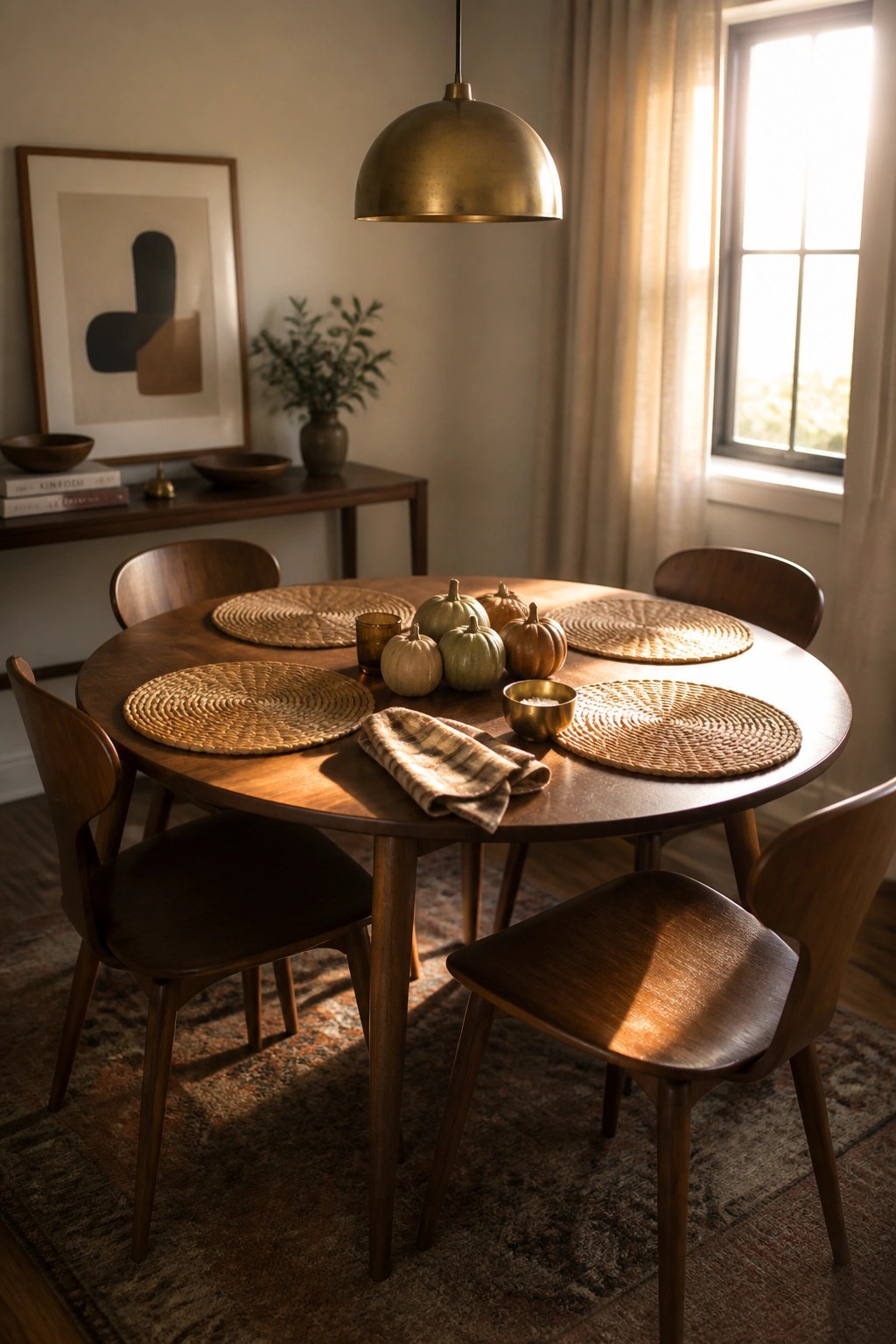
A few small pumpkins grouped loosely in the center let the round shape of the table stay visible and usable. This approach avoids crowding the surface while still giving the space a clear seasonal note. The low height also means conversations across the table stay easy.
Try the same idea in any dining area where the table gets daily use. Stick to three to five small gourds and leave the rest of the surface clear for plates and serving dishes. It works especially well in rooms with warm wood tones and simple furniture.
Tall Dried Grasses As A Simple Fall Centerpiece
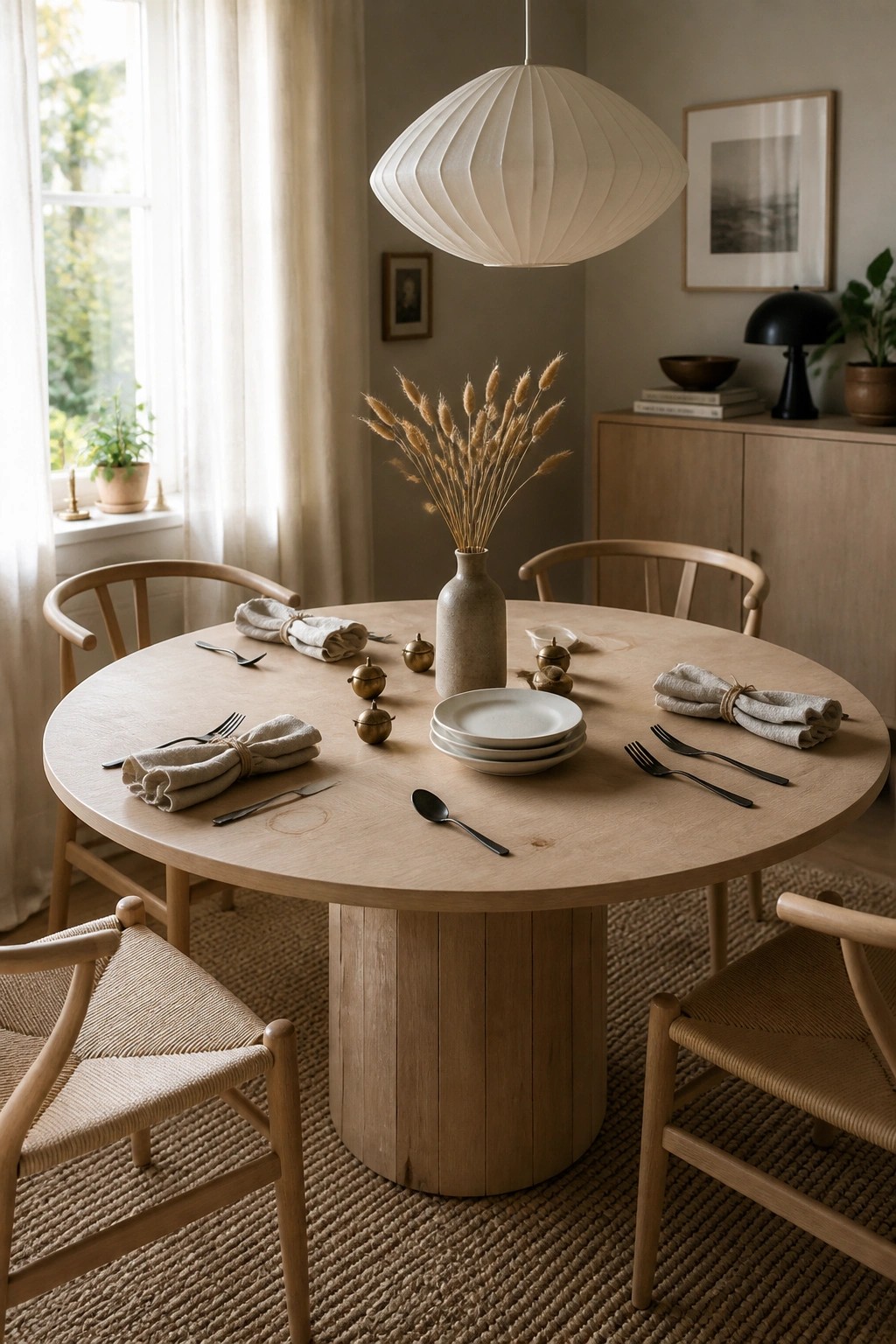
A single tall vase of dried grasses gives a round dining table an easy fall touch without taking over the surface. The height adds interest while the narrow shape leaves plenty of room for plates and conversation.
This works best in smaller spaces or when you want the look to feel calm rather than busy. Use a plain ceramic or stone vase and choose stems that stay mostly upright so the arrangement stays balanced through the season.
A Tray Keeps Fall Centerpieces Compact on Round Tables
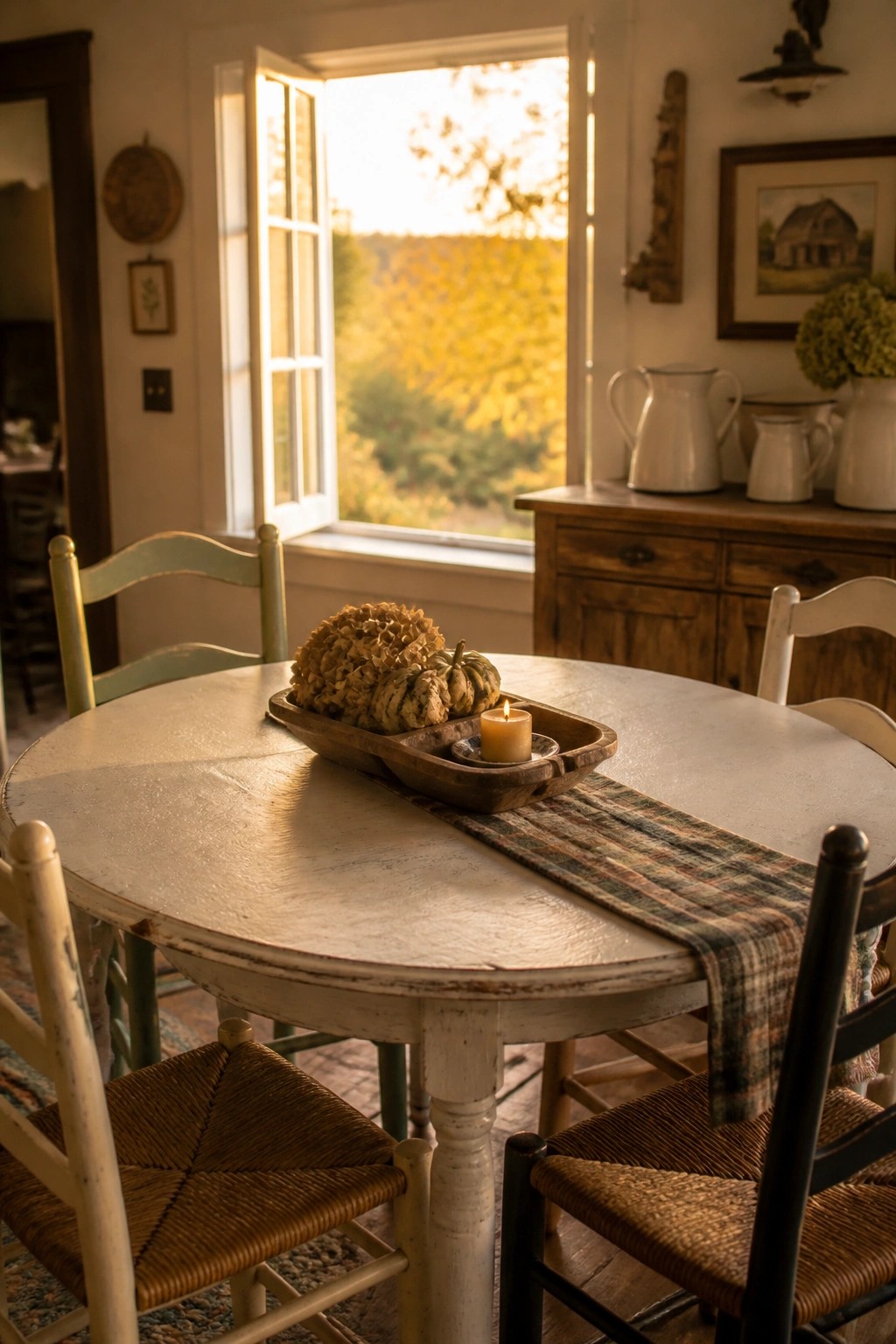
A divided wooden tray works well for fall centerpieces because it holds everything in one low spot. The table stays open for plates and elbows, and the arrangement stays balanced even on a smaller round surface.
This setup suits older dining rooms or homes where the table gets daily use. Keep the items inside the tray simple, like dried flowers, a couple of small gourds, and one candle. Skip anything tall that blocks the view across the table.
Low Centerpieces Keep Round Tables Open
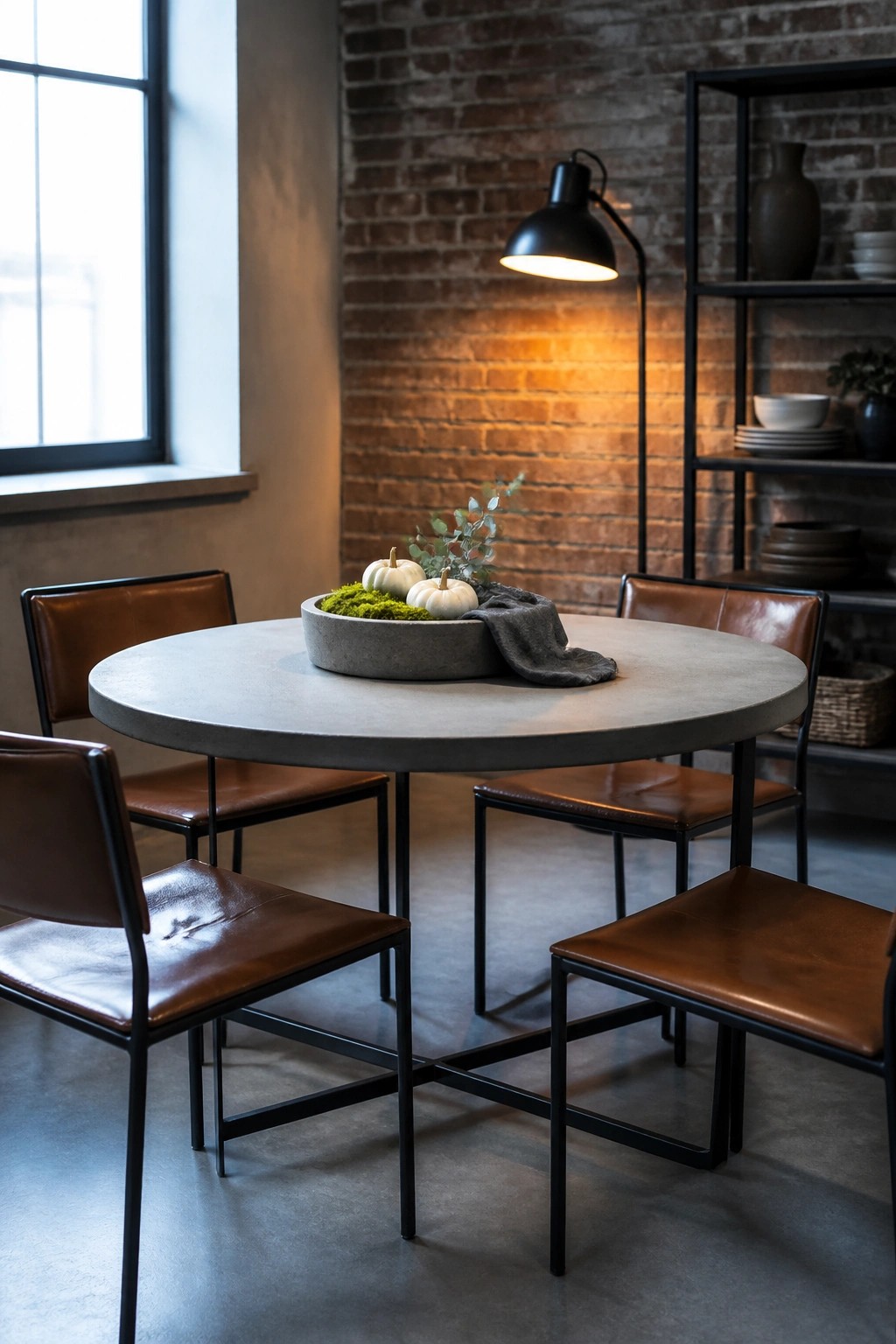
A low bowl with just a few small pumpkins and a bit of moss works well on a round table. It leaves the surface clear enough for plates and glasses while still adding a simple fall touch.
This approach suits smaller dining spaces where you want seasonal decor without crowding the table. Keep the arrangement shallow and contained so it does not interfere with conversation or everyday use.
Simple Jar Centerpieces For Round Tables
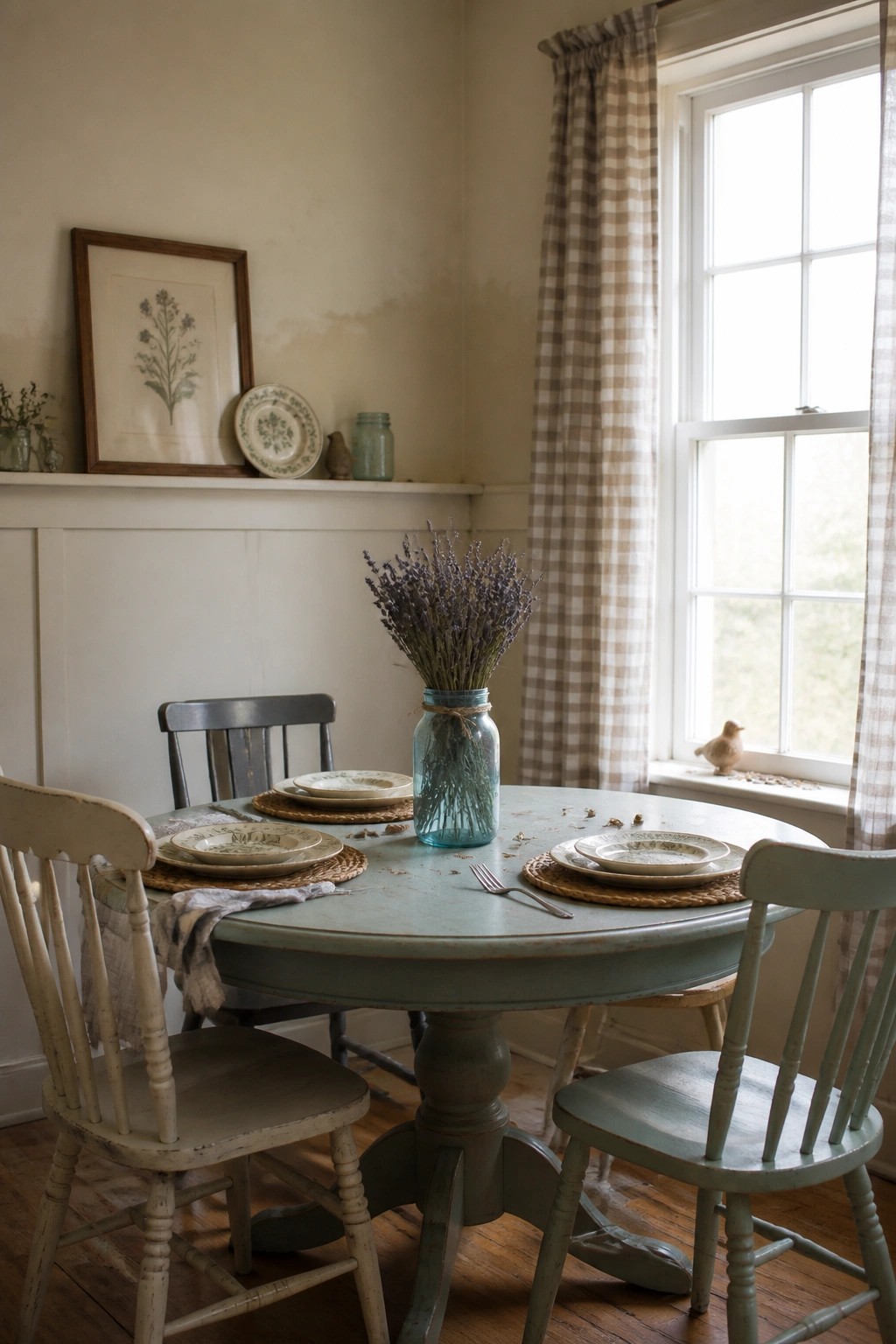
A single jar of dried lavender keeps the middle of a round table feeling open and balanced. The narrow shape leaves plenty of room around the edges for plates and elbows, and the soft purple tones add a quiet fall note without crowding the space.
This works best in smaller dining areas where you still want the table clear for meals. Choose a medium height vessel and keep the stems loose so the arrangement feels natural rather than styled.
Low Centerpieces Keep A Round Table Balanced
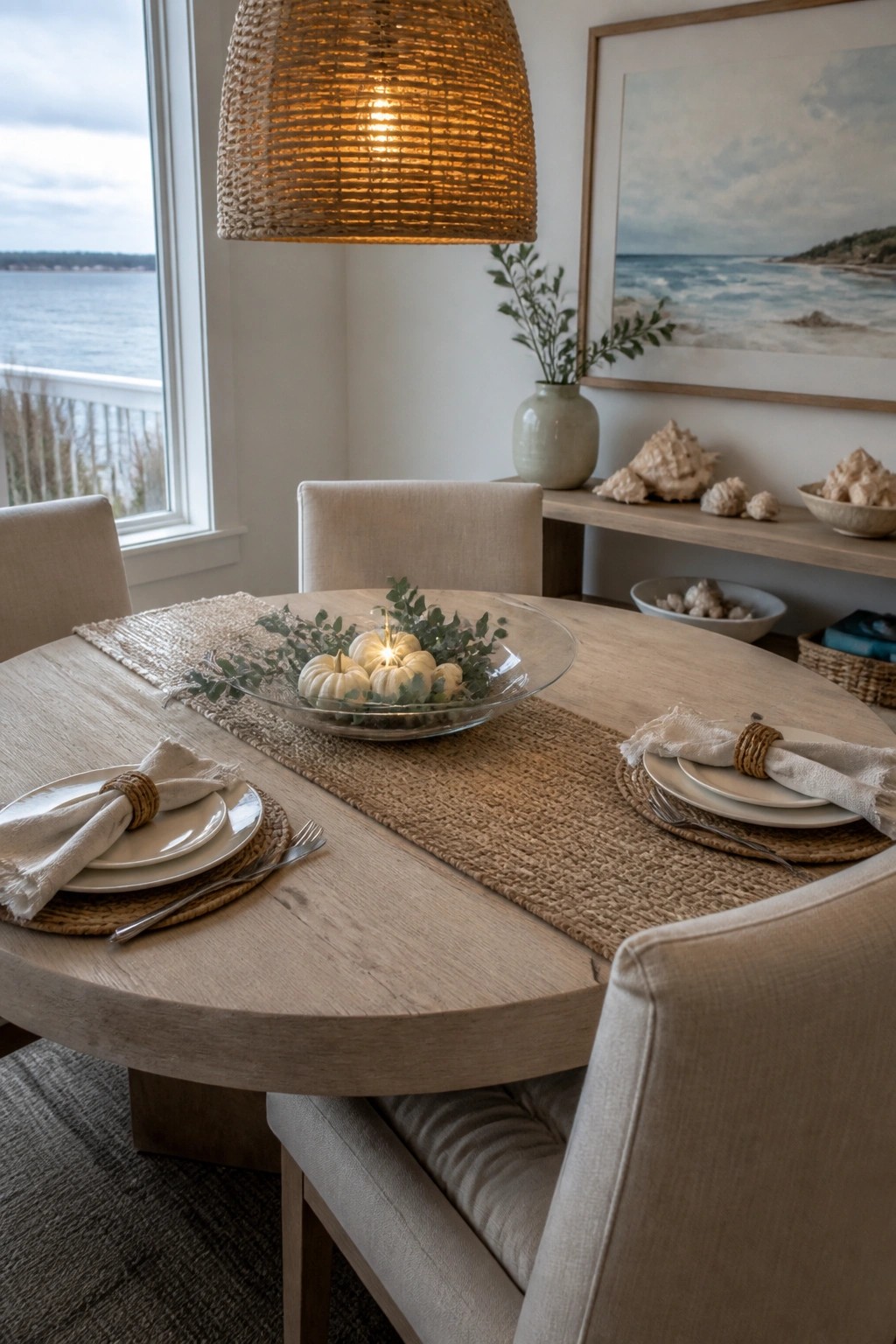
A low centerpiece made with a glass bowl and a few small pumpkins works well on round tables because it stays out of the way. It adds a seasonal touch without crowding the surface or making it hard for people to see each other during meals.
This style works best in smaller dining spaces where the table gets used often. Keep the arrangement under the height of the chairs so it does not interfere with conversation or serving dishes.
One Bowl of Gourds Keeps the Table Clear
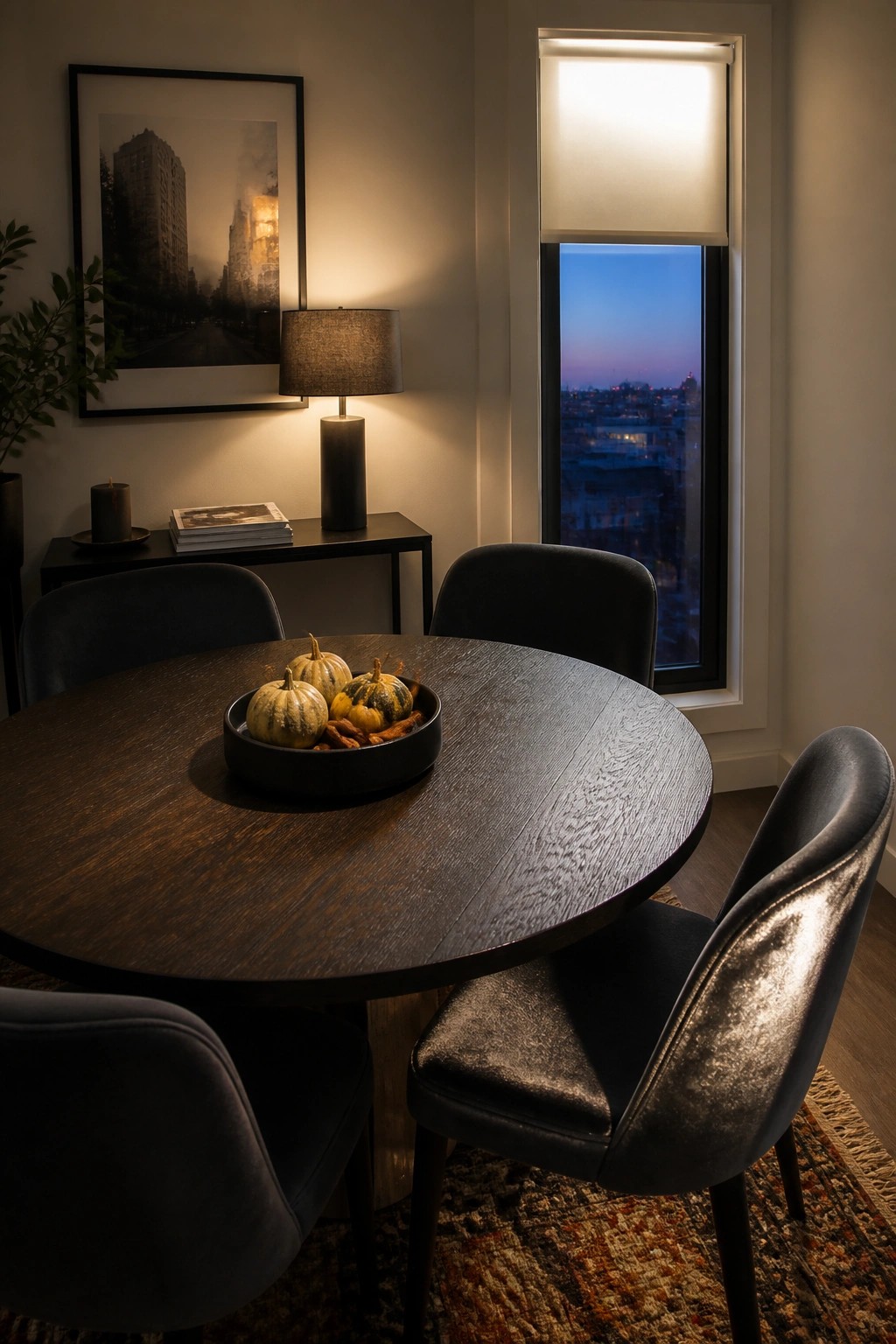
A round dining table stays more usable when the centerpiece stays low and contained. A single dark bowl filled with a few small gourds adds a quiet fall note without spreading across the surface or getting in the way of plates and conversation.
This approach works especially well in smaller dining areas or apartments where space is tight. It leaves the rest of the table open and makes it easy to clear the bowl later when you need the full surface for meals or other seasons.
Contain Small Centerpieces on a Tray
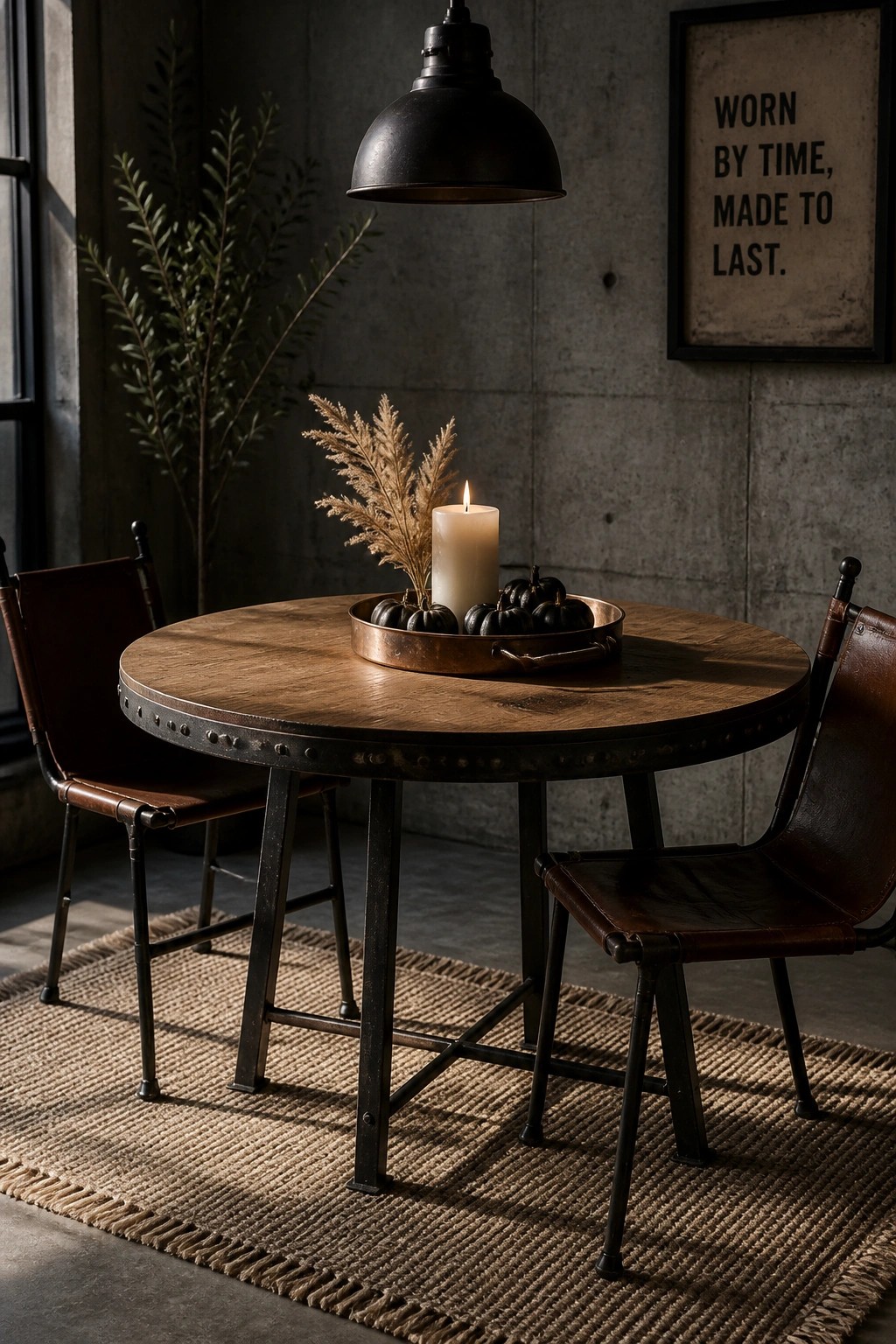
A tray helps keep a fall centerpiece looking neat on a round table. It pulls the items together so they do not spread out and crowd the surface.
This setup works best in smaller dining spaces where you want a simple seasonal touch without extra clutter. Choose a shallow tray that fits the scale of your table and add just a few items like mini pumpkins or a single candle.
Small Round Tables for Simple Fall Centerpieces
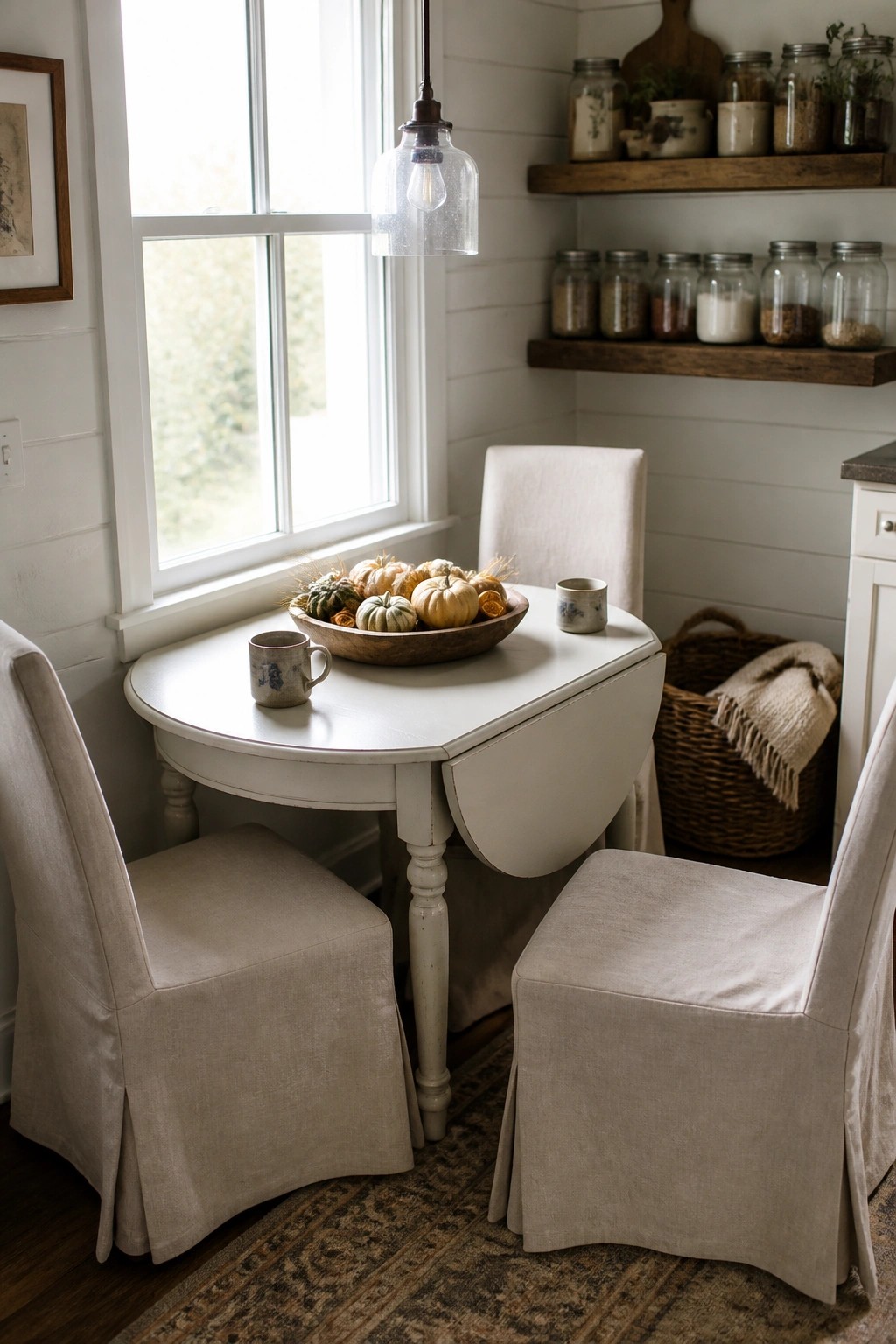
A compact round table helps keep fall decor feeling balanced rather than busy. The drop leaf sides let you adjust the size to fit the room, and a single wooden bowl of small pumpkins sits right in the middle without crowding the surface.
This works especially well in corners or smaller kitchens where you still want a seasonal touch. Keep the centerpiece low and contained so the table stays useful for meals or coffee instead of turning into a display.
A Few Leaves and a Candle for Fall
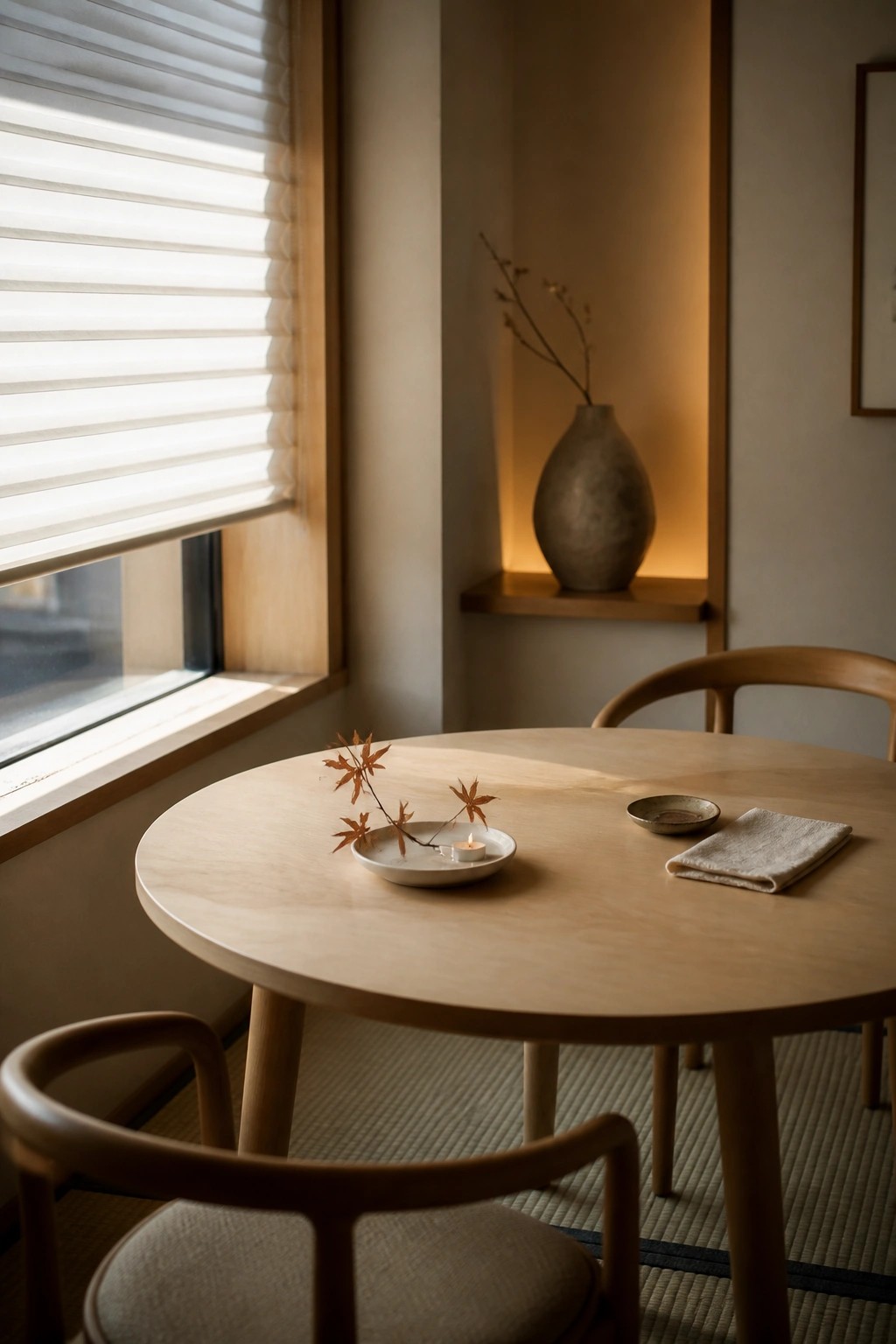
A small dish with a couple of autumn leaves and one lit candle keeps the center of a round table feeling open. It adds a seasonal touch without crowding the surface or getting in the way of meals.
This works best in smaller dining areas where you still need room for plates and elbows. Place the dish slightly off center so the table does not feel perfectly symmetrical, and swap the leaves as they dry out.
Keep The Centerpiece Small And Simple
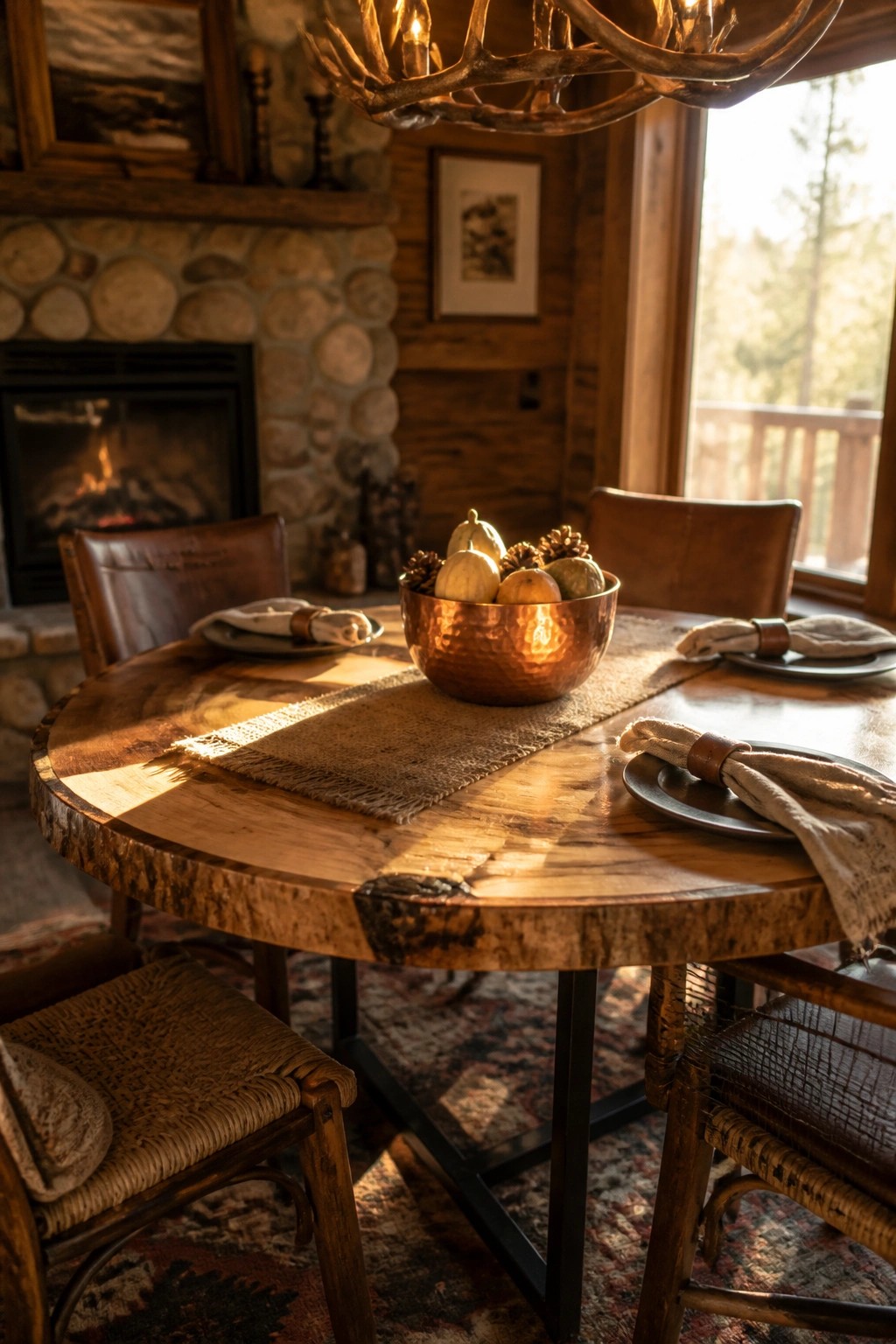
A small bowl filled with just a few seasonal items can sit nicely in the middle of a round table without taking over. It leaves plenty of room for plates and elbows while still giving the table a finished look for fall.
This approach works best in smaller dining areas or homes that want a light seasonal touch rather than a full display. Stick to one contained vessel and limit the number of pieces inside so the table stays usable for everyday meals.
Use A Tray For Balanced Fall Centerpieces
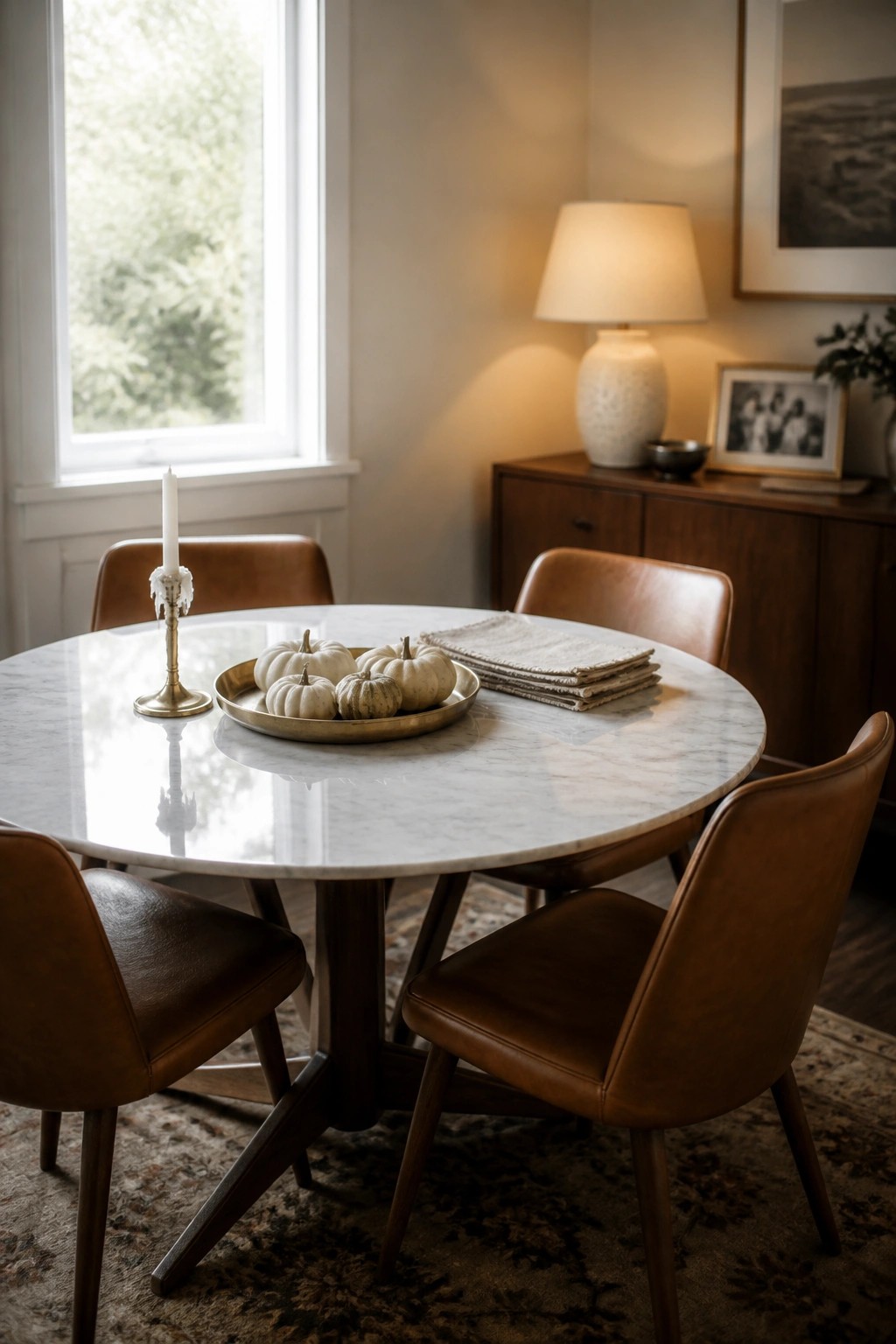
A tray gives a small fall arrangement a clear boundary on a round table. It stops the pieces from drifting and keeps the look neat without needing much height or volume.
This approach works well in dining rooms where you want the table surface to stay visible. Keep the items few and low, like a handful of small pumpkins, and the whole setup stays balanced even when the table is in daily use.
Contain Fall Decor in a Single Basket
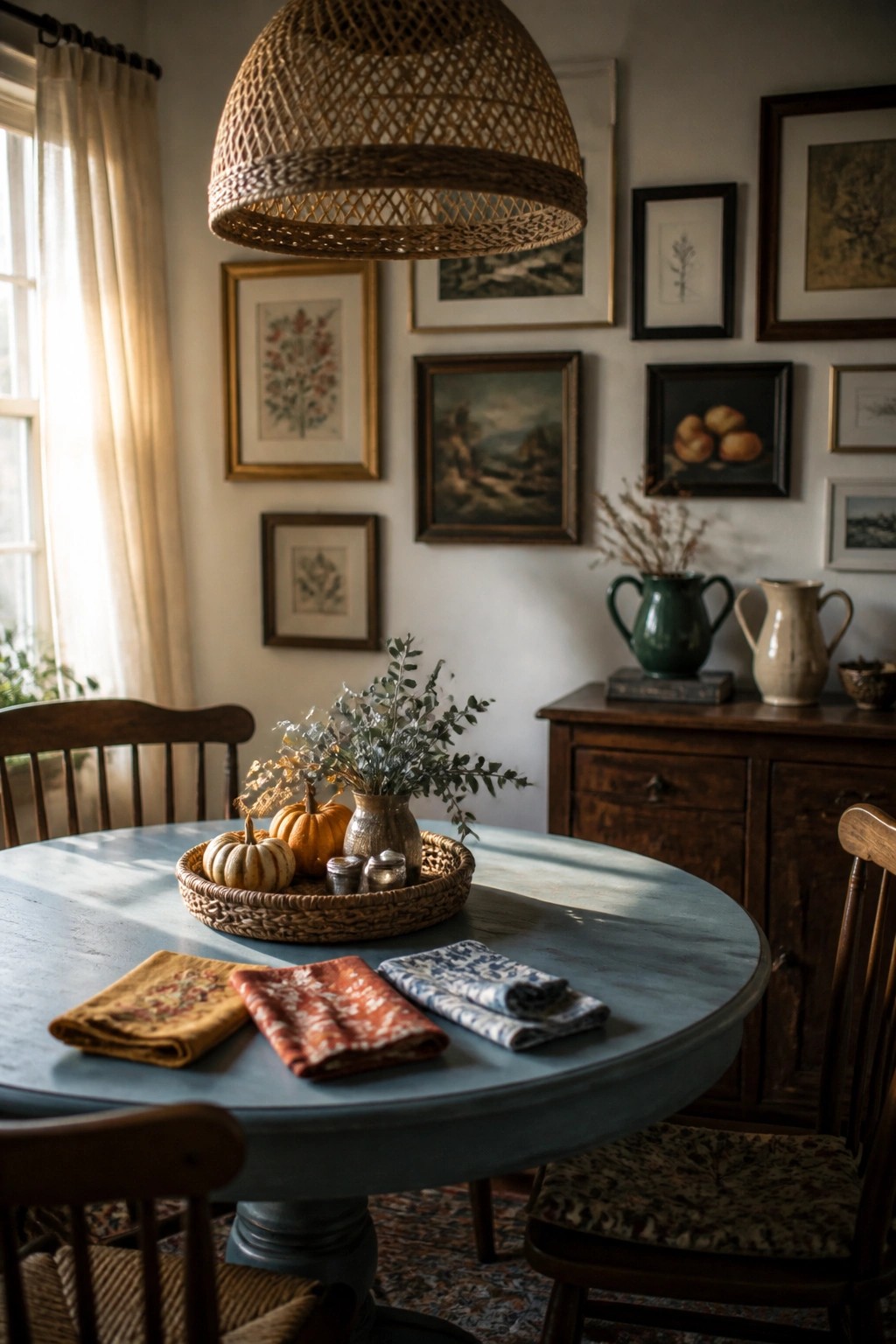
Grouping a few small pieces together inside one basket keeps the table surface clear and the arrangement balanced. It stops the center from looking scattered while still giving the space a seasonal feel.
This approach works well on round tables in smaller dining rooms where you want some color without taking up too much room. Stick to a basket that sits comfortably in the middle and add just a handful of items like a couple pumpkins and a short vase of greenery.
A Large Wooden Bowl as a Fall Centerpiece
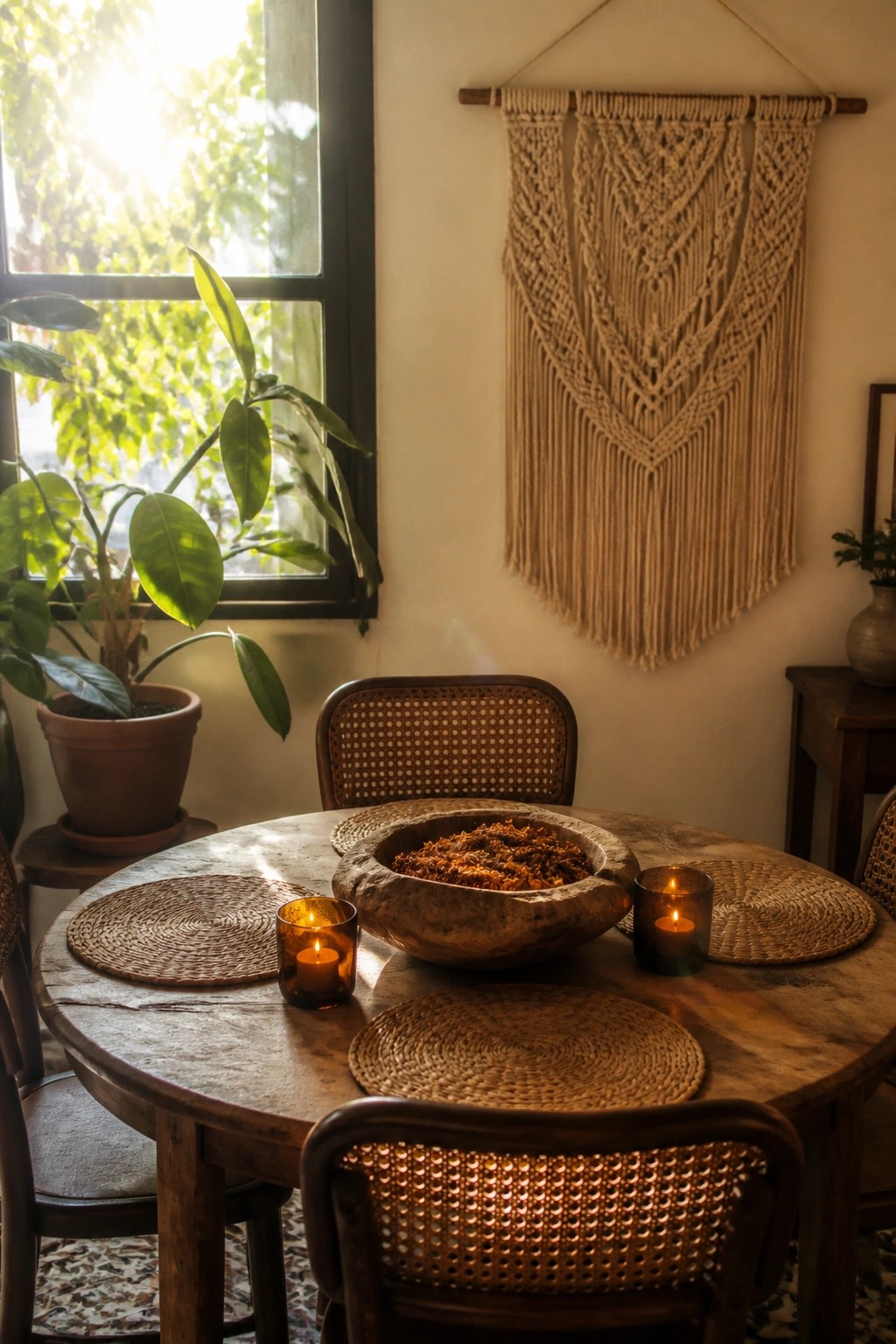
A single big bowl keeps the center of a round table feeling open while still giving it a seasonal touch. It works because the shape stays low and contained, so it does not block conversation or crowd the space the way taller arrangements can.
Fill the bowl with dried leaves, small gourds, or even just a layer of moss, then add a couple of candles nearby if you want light. This setup suits smaller dining areas or homes that already lean natural and unfussy. Just keep the rest of the table clear so the bowl stays the main focus.
A Low Centerpiece Keeps Things Balanced
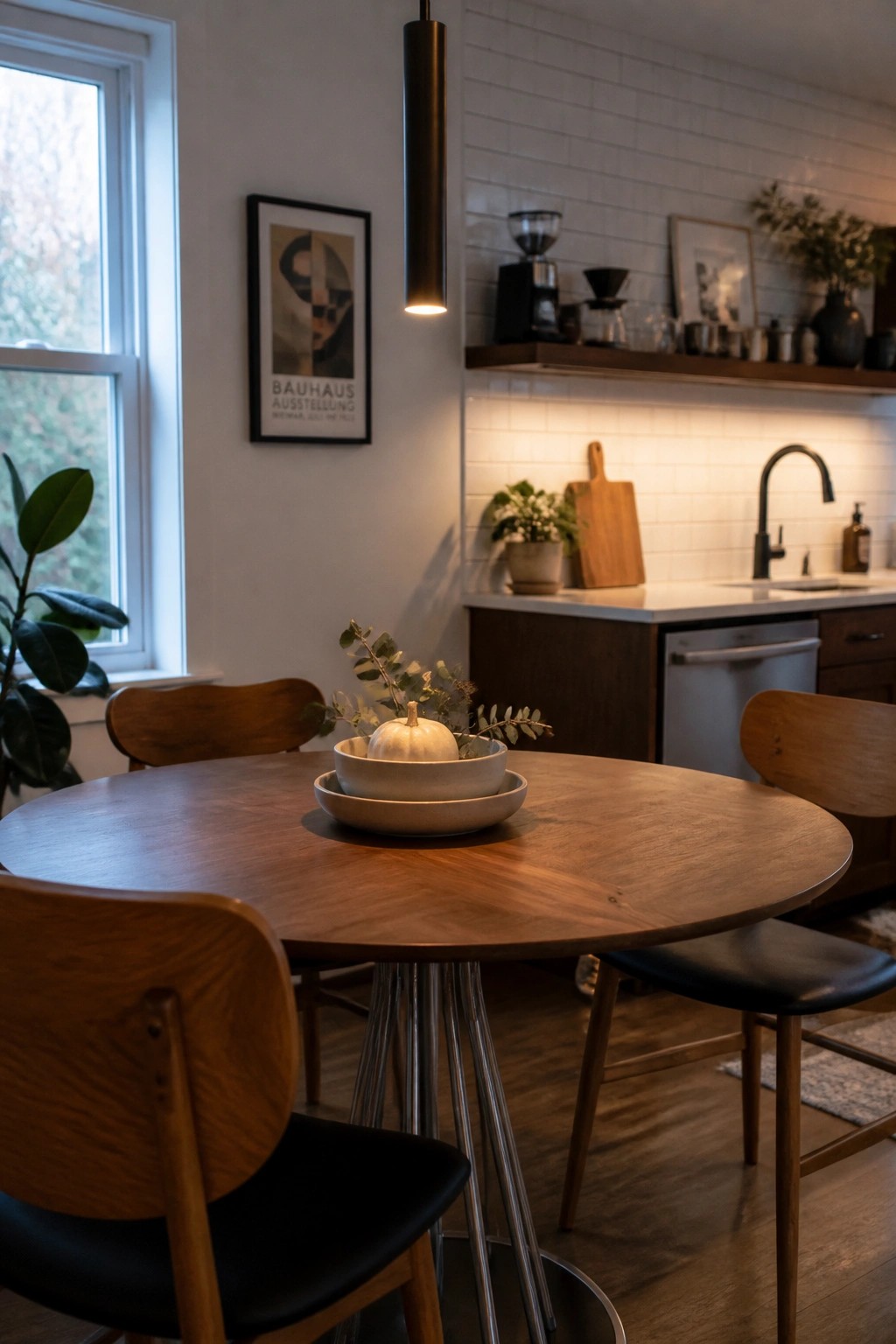
A small arrangement in the middle of a round table often works better than something tall or wide. It leaves room for plates and elbows while still giving the table a finished look for fall. The low bowl setup here shows how a few items can mark the season without taking over the surface.
This approach suits smaller kitchens or dining areas where the table gets used every day. Stick with shallow dishes or a single low element like a small gourd and a bit of greenery. Skip anything that blocks the view across the table or crowds the chairs.
A Low Centerpiece Keeps The Table Balanced
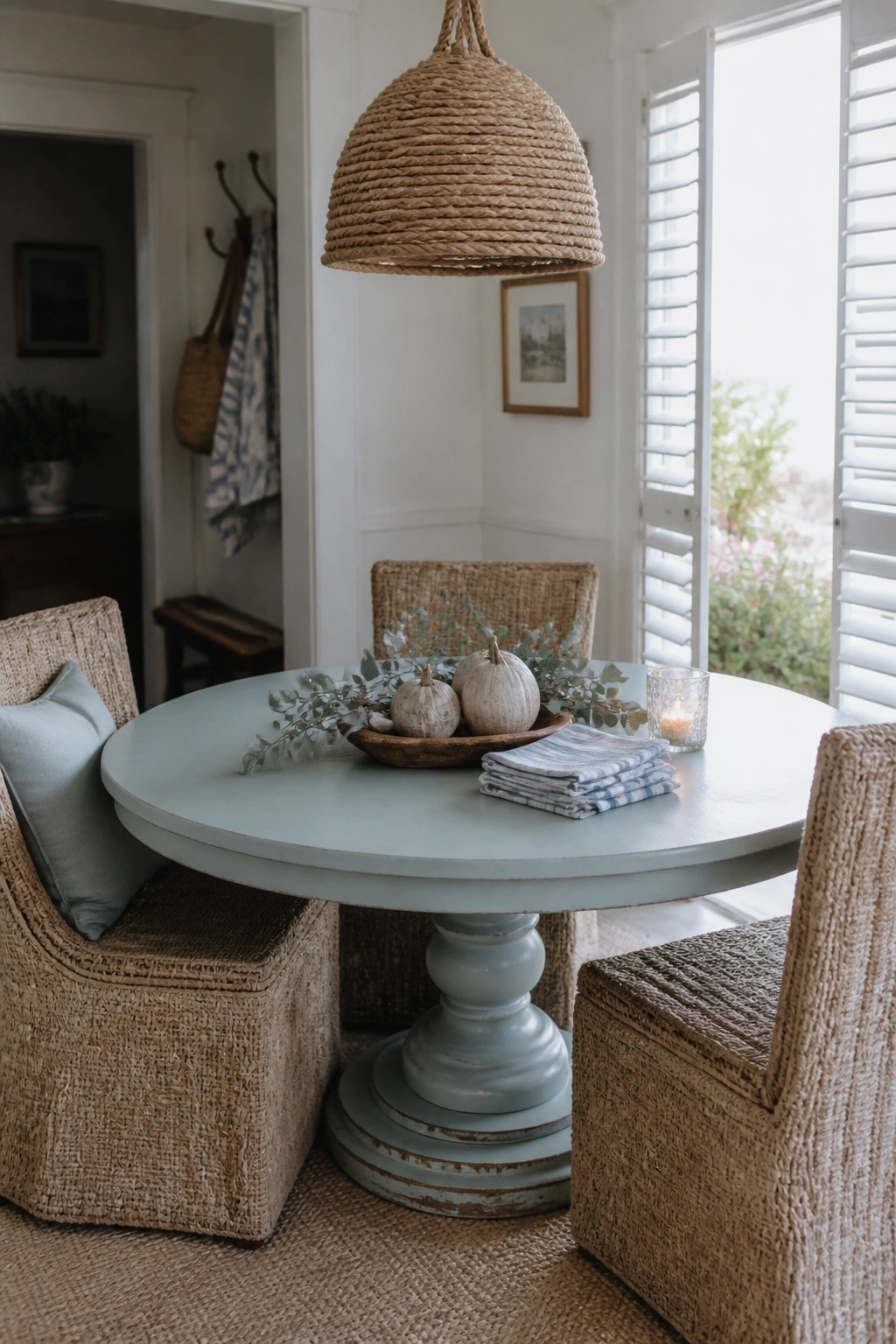
A round table needs a centerpiece that sits low and stays compact. This approach leaves plenty of room for plates and elbows while still giving the surface a finished look for fall. The key is using just a few elements grouped together instead of spreading things out.
This style works especially well in smaller dining areas or breakfast nooks where the table serves multiple purposes during the day. Stick to one shallow bowl or tray and limit the height so sightlines stay open across the room. It also keeps the setup easy to clear when the table needs to be used for something else.
Low Candle Centerpieces Suit Round Tables
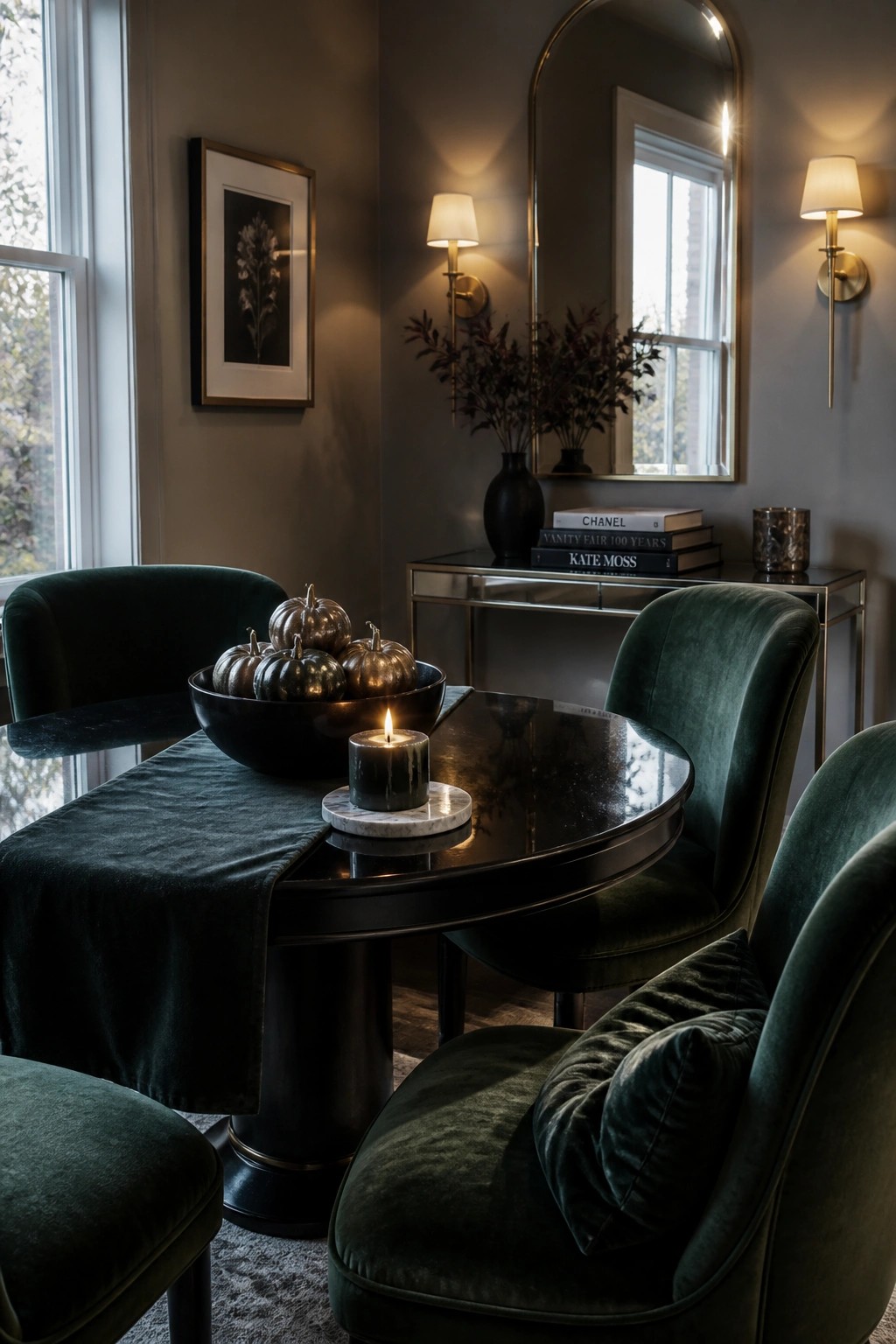
A single low candle keeps a round table balanced without crowding the surface. It sits in the center and leaves plenty of room around it for plates and conversation.
This works especially well in smaller dining spots where taller arrangements can feel in the way. Set the candle on a small stone or marble base so it stays steady, and keep any extra items like a bowl of seasonal pieces grouped low beside it.
Use One Small Bowl For The Centerpiece
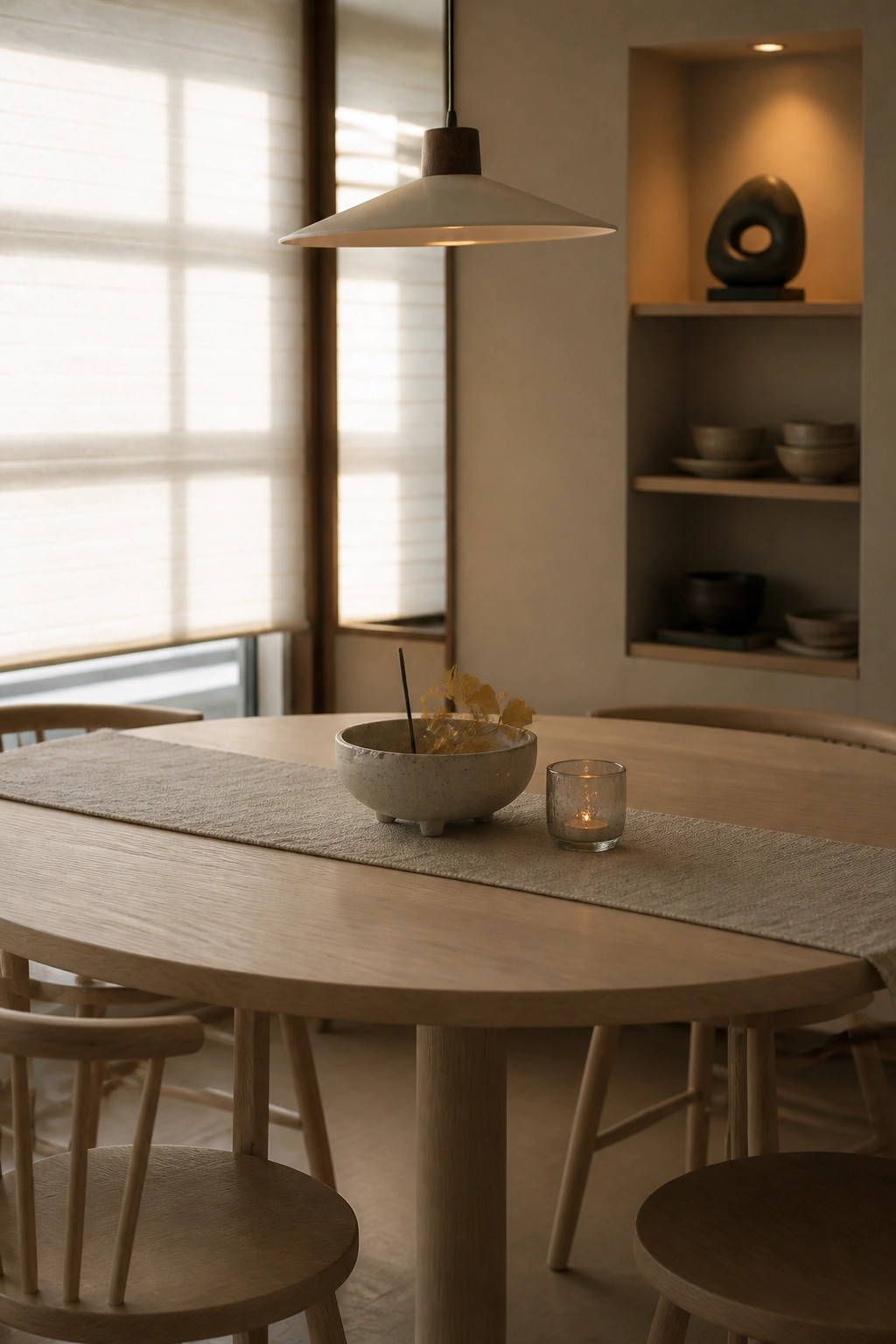
A single low bowl with just a few dried stems keeps a round table feeling open. The arrangement sits quietly in the middle without crowding the surface or blocking conversation across the table.
This works best in smaller dining spaces where you still need room for plates and elbows. Stick with natural textures and one or two extra items at most so the table does not feel busy.
Compact Centerpieces Balance Round Tables
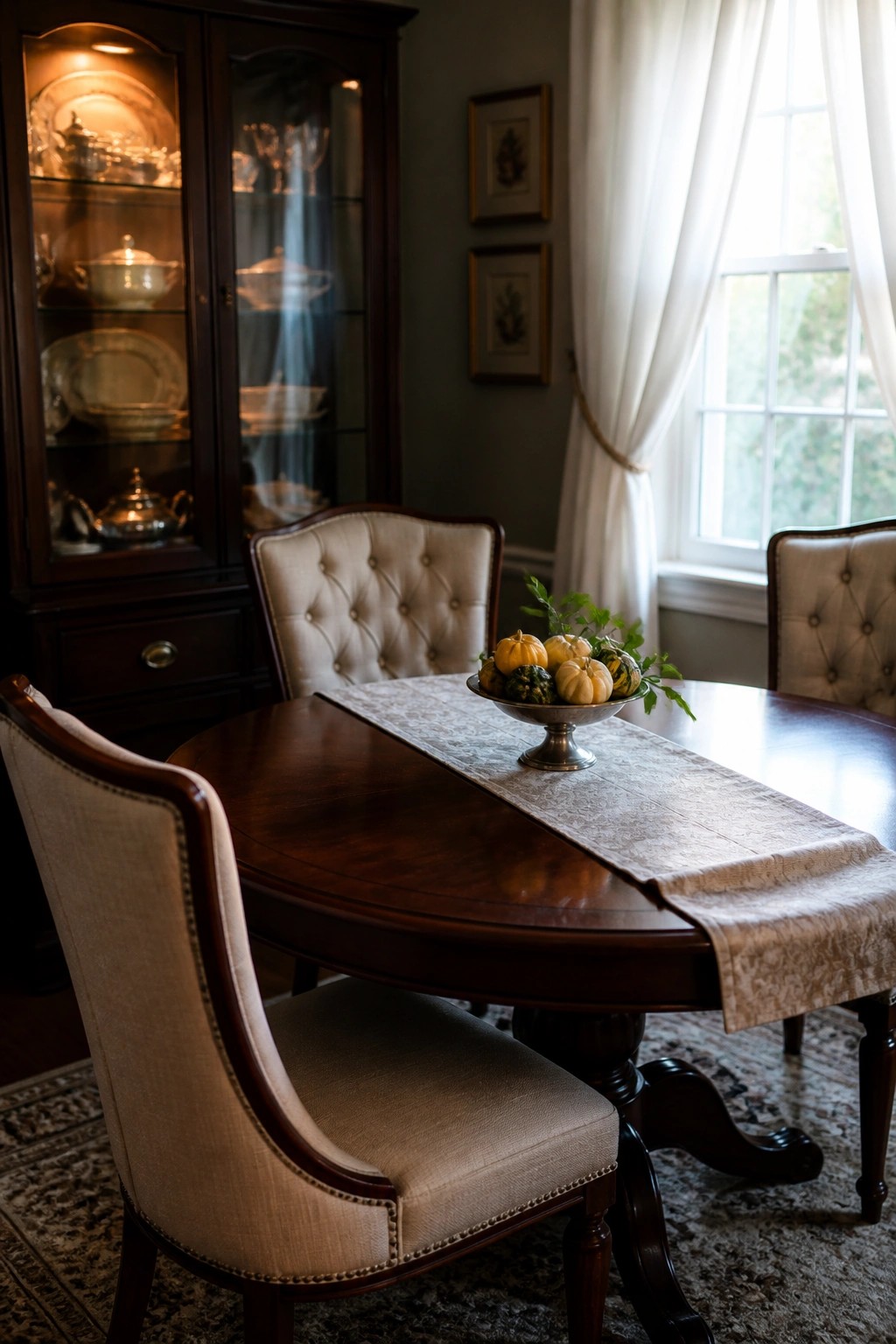
A small bowl of gourds placed on a narrow runner keeps the center of a round table open. This approach prevents the arrangement from crowding the surface or blocking sight lines between people sitting across from each other.
It works especially well in rooms where the table is used for meals rather than display. Stick to low or narrow pieces and skip anything tall or wide that forces guests to reach around it.
Low Centerpieces Work Best on Round Tables
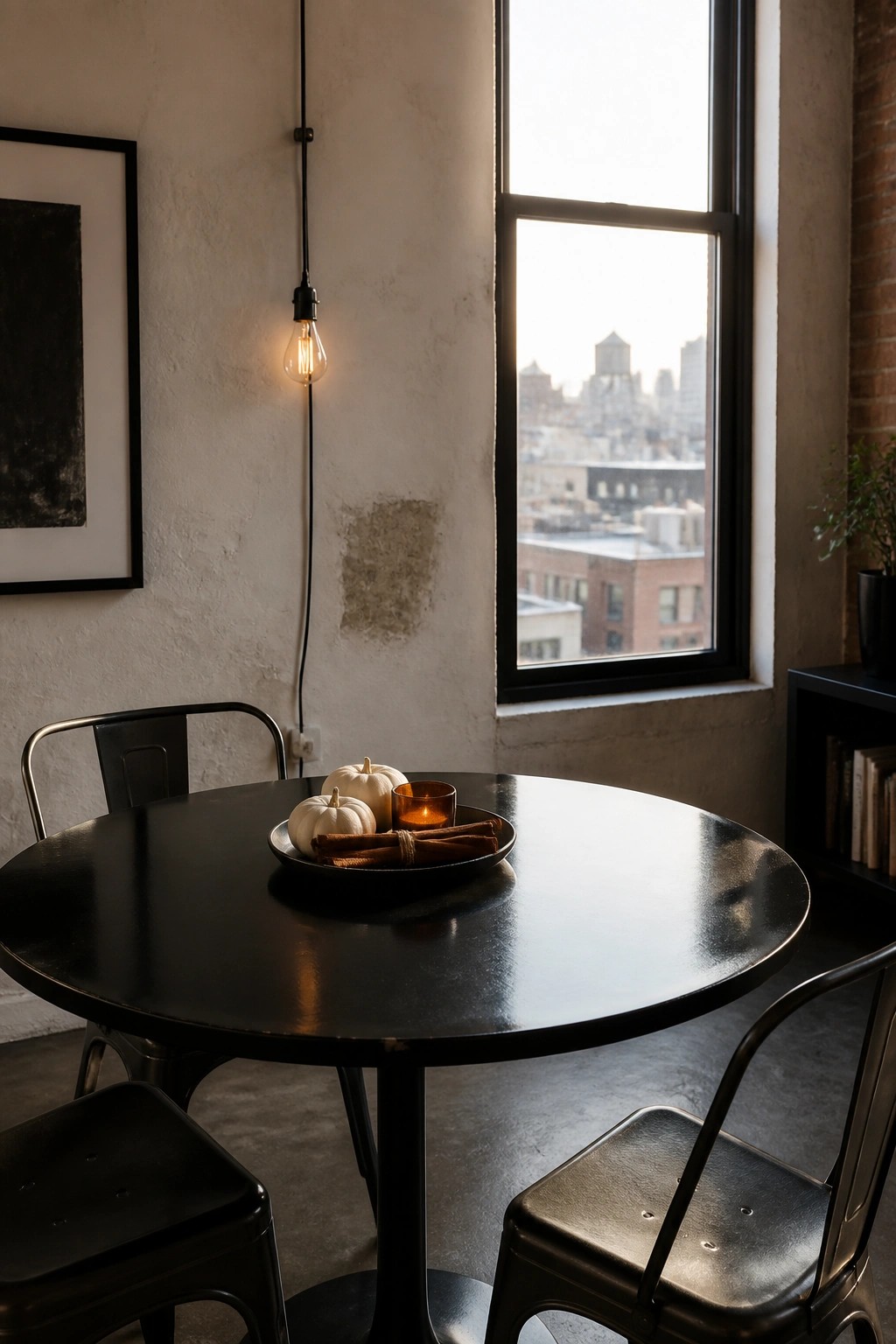
A round table can feel cramped once fall items are added, so a small arrangement helps keep the surface open. A shallow tray holding just a couple of mini pumpkins and a few cinnamon sticks sits low enough that it does not block sight lines or get in the way during meals.
This style suits apartments or small dining areas where every inch counts. Stick to items under six inches tall and skip tall candles or wide vases so the table stays practical for everyday use.
Keep Fall Centerpieces Low and Contained
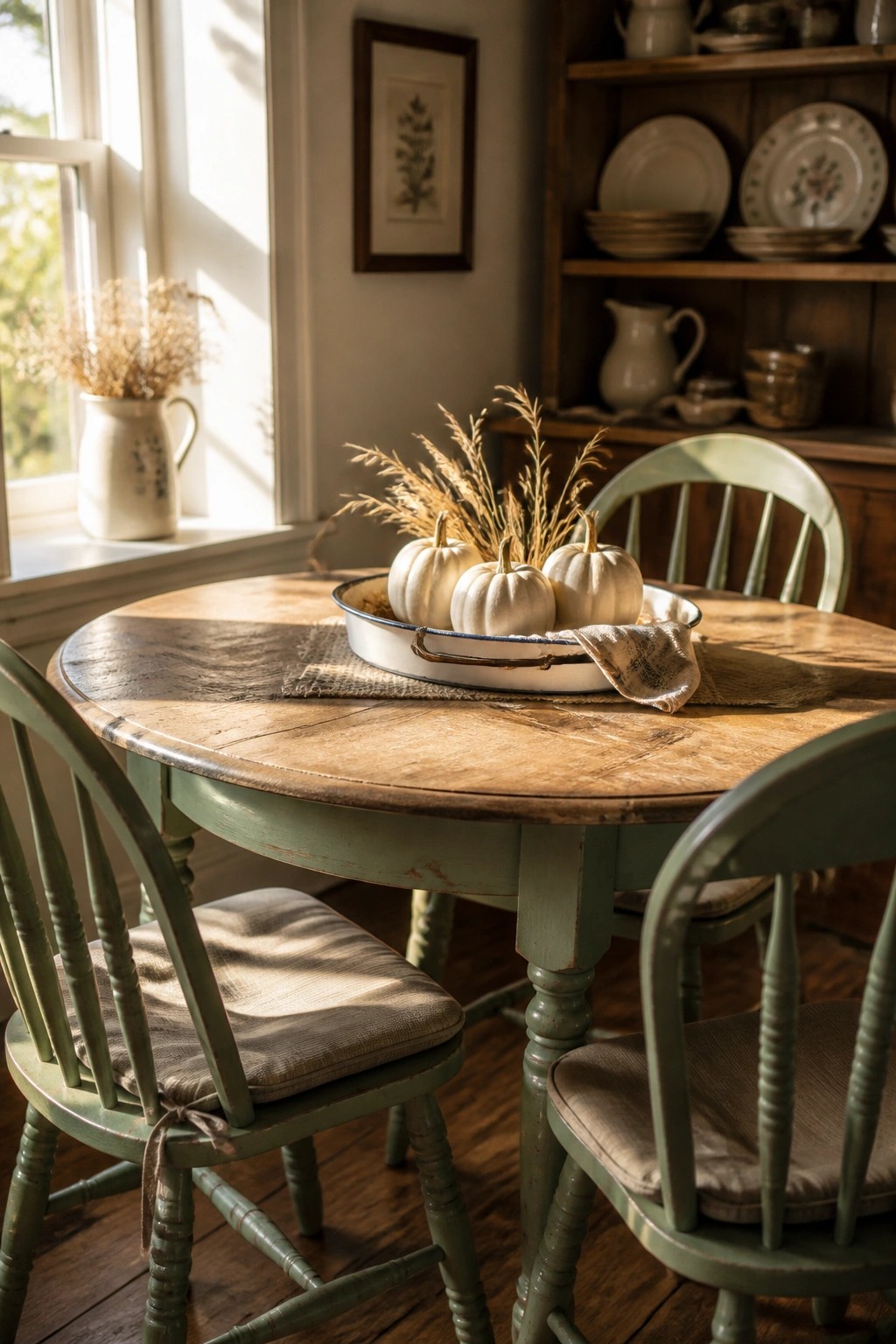
A shallow tray keeps small pumpkins and a few stems of dried grass from spreading across the whole table. On a round surface this matters because it leaves room for plates and still gives the table a seasonal note without feeling crowded.
This setup suits older homes or smaller dining spaces where you want a light touch rather than a big display. Stick to one contained group in the middle and skip extra layers if the table is already busy with chairs and daily use.
Keep Fall Centerpieces Small On Round Tables
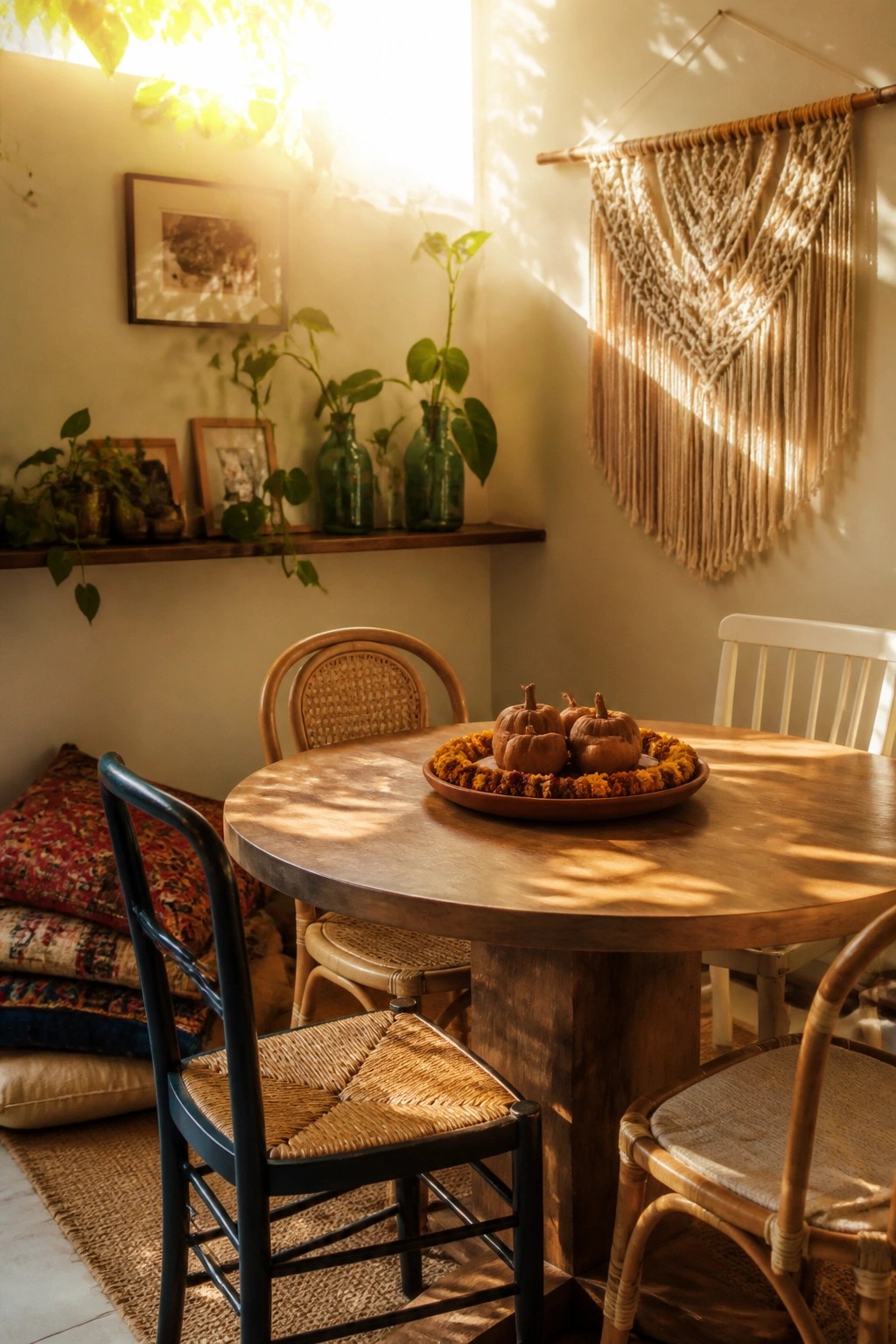
A small contained arrangement keeps a round table feeling open and balanced. It avoids crowding the surface so people can still reach across easily and the shape of the table stays visible.
This works well in smaller dining areas where a large display would quickly feel too much. Place the arrangement on a simple tray or plate and stick to just a few items so the table stays practical for everyday meals.
Use a Long Tray for Round Table Centerpieces
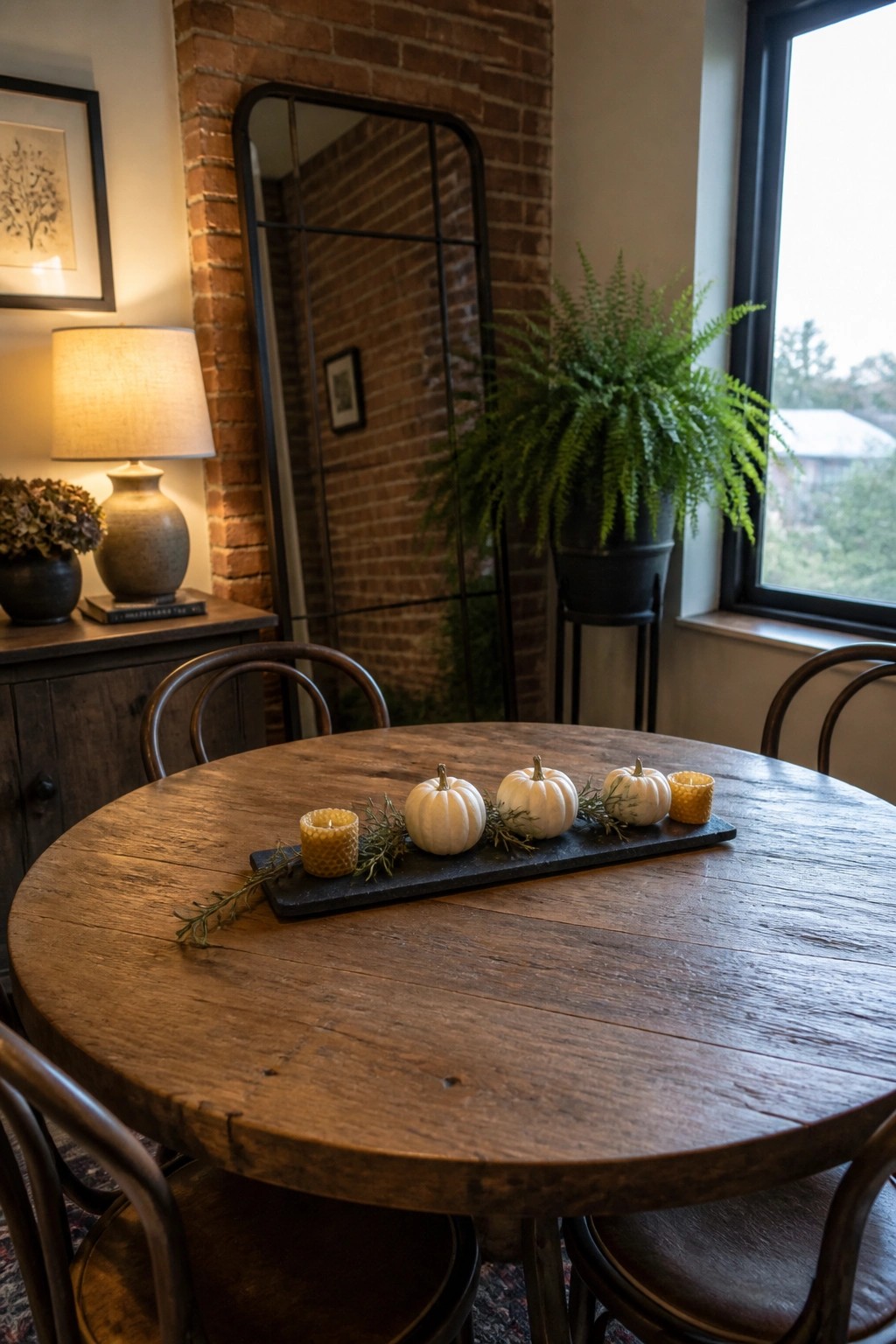
A long narrow tray works nicely on round tables because it creates a straight line that balances the curve without fighting it. The setup stays contained so the surface still feels open for plates and elbows.
This works best in smaller dining spots where you want a bit of fall color but still need room to move around the table. Keep the items low and spaced so nothing blocks sightlines or gets bumped when people reach across.
Small Centerpieces Balance Round Tables
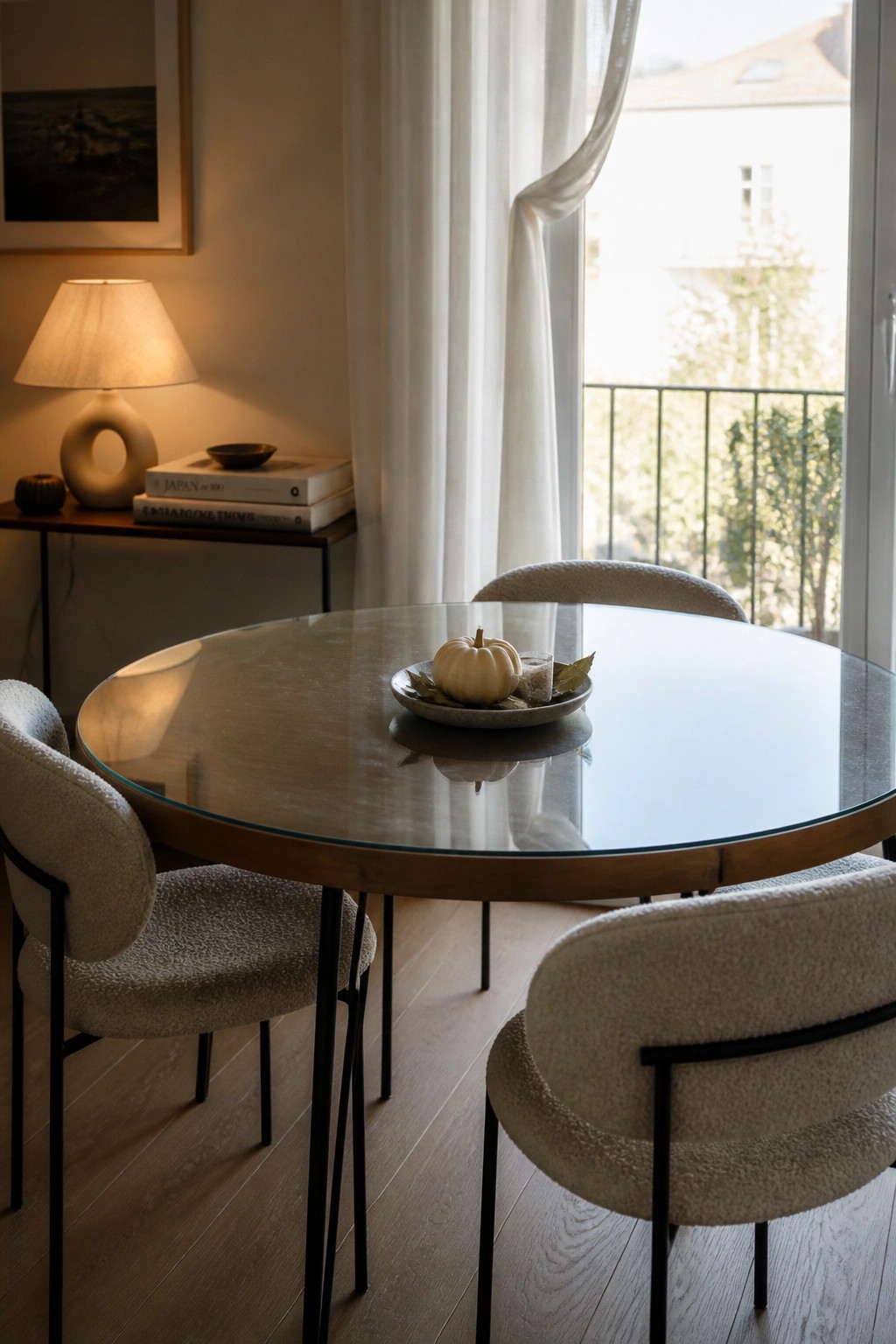
A small centerpiece works especially well on a round table because it leaves plenty of surface space open. The table stays usable for meals and does not feel crowded even in a smaller room. One modest arrangement in the middle keeps the shape of the table visible and the whole setup feeling calm.
This approach suits apartments or dining areas where space is tight. Choose one low item such as a single pumpkin or a shallow bowl with a few leaves, and place it slightly off center if you want an easy conversation flow. Avoid tall or wide pieces that block sight lines across the table.
Frequently Asked Questions
Q: How wide should a small centerpiece stay on a round table so plates still fit?
A: Measure the center area first and keep the whole setup under ten inches across. This leaves space for dishes and elbows during meals. A single candle with one small gourd often works without crowding.
Q: What if my centerpiece needs to move when the table gets cleared for dinner?
A: Build it on a tray you can lift in one motion. Swap in fresh items like mini apples or nuts when the mood strikes. The tray keeps everything contained and quick to reset.
Q: Can I mix wood and metal pieces without the look feeling off?
A: Start with one wood slice as the base and add a metal candle holder on top. Limit it to those two textures so nothing competes. Walk around the table to check how the balance shifts from each seat.
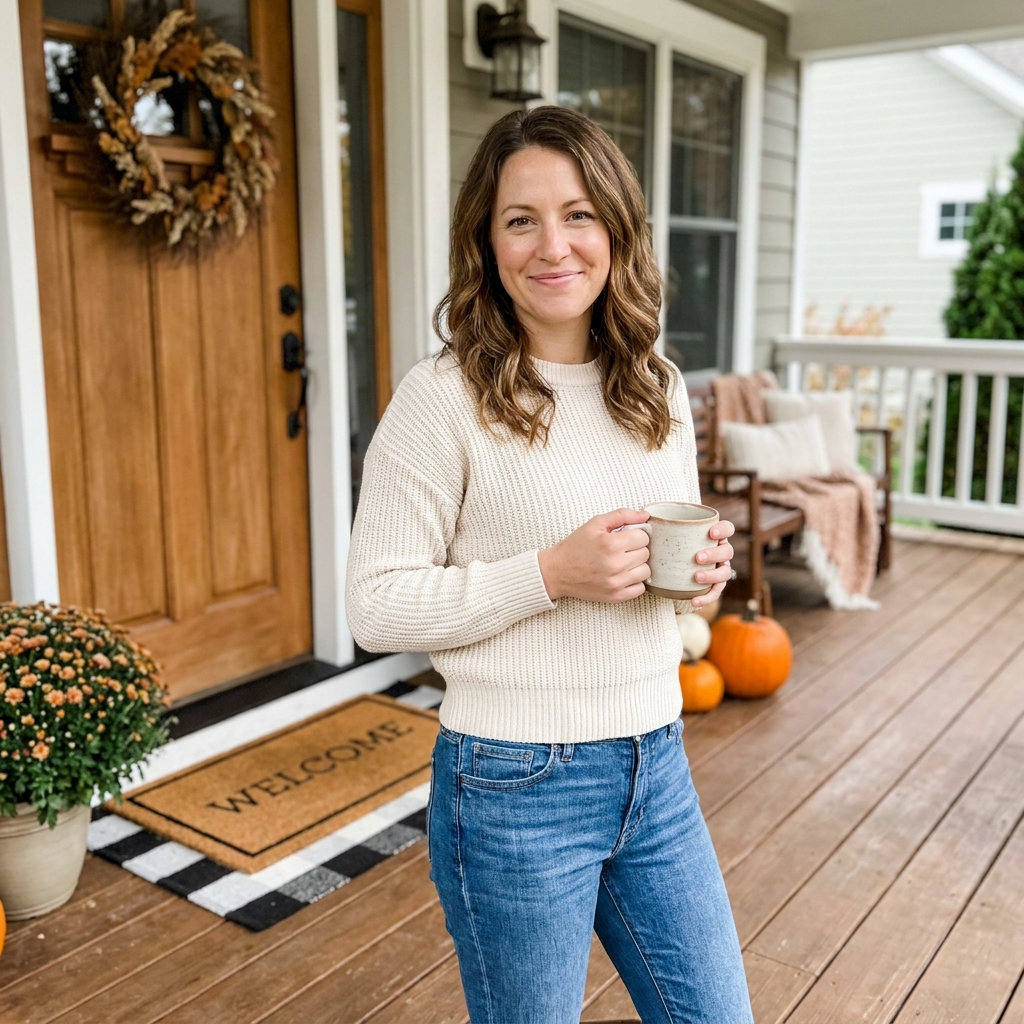
I’m Claire, the voice behind The Seasoned Home. I’ve always loved the way a home can shift with the seasons and feel fresh, cozy, and welcoming all over again. I share seasonal home decor ideas that feel beautiful but still realistic for everyday life, from porch styling and wreaths to cozy bedrooms, living rooms, kitchen touches, and simple table decor. My favorite ideas are the ones that make a home feel special without making decorating feel complicated.