
Ever wondered why your car’s AC doesn’t feel as cool as it should? Imagine driving on a scorching day, only to be greeted by lukewarm air. Frustrating, right? Well, what if I told you that a simple cabin filter could be the culprit behind your AC’s lackluster performance? Yes, you heard it right – that tiny filter might be the reason you’re sweating bullets in your own car.
When was the last time you checked or changed your cabin filter? If you’re drawing a blank, you might want to pay close attention. In this article, we’ll delve into the often-overlooked world of cabin filters and how they can make or break your AC system. From funky smells to reduced airflow, a neglected cabin filter can wreak havoc on your comfort and car maintenance costs. Stay tuned to uncover the secrets of this small yet mighty component.
Importance of Cabin Filter in Car AC System
When it comes to your car’s AC system, the cabin filter plays a crucial role in maintaining optimal performance. Here’s why it’s essential:
- Filters Air: The cabin filter removes dust, pollen, and other particles from the air that enters your car’s interior.
- Ensures Clean Air: By trapping contaminants, the cabin filter helps ensure that the air you breathe inside the car is clean and free from pollutants.
- Protects AC Components: A clean cabin filter prevents debris from clogging the AC system, extending the lifespan of its components.
- Maintains Efficiency: A clogged cabin filter can restrict airflow, causing the AC system to work harder and consuming more energy.
- Prevents Odors: A dirty filter can lead to unpleasant odors circulating in the cabin, affecting your comfort while driving.
Regularly checking and replacing your cabin filter is a simple yet effective way to ensure that your car’s AC system functions at optimal levels.
Recommended Products

【Fitment for Hyundai Models】fit for Elantra 2021-2025 2026, Ioniq 5 2022-2025 2026, Ioniq 5 N 2025-2026, Ioniq 9 2026, Santa Fe 2021-2026, Santa Cruz 2022-2026, Sonata 2020-2026, Tucson 2022-2026, Ioniq 6 2023-2025, Elantra N 2022-2026, Kona 2024-2026, Kona Electric 2024-2026

Effective Protection: Soda woven combined with activated carbon effectively captures contaminants that cause odors and offers clean and fresh breeze air for drivers and passengers. The cabin air filter offers exceptional protection in your vehicle interior.
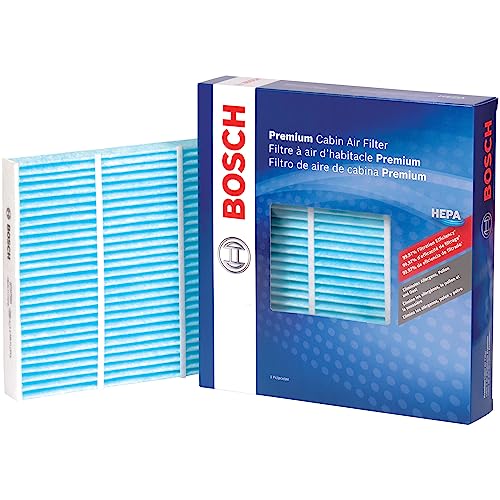
Bosch HEPA Premium Cabin Air Filters are designed and tested to meet High Efficiency Particulate Air (HEPA) standards based on ISO 29463-3:2011 and provide filtration efficiency of 99.97% at 0.3 microns
Signs of a Dirty or Clogged Cabin Filter
If you’re wondering whether a cabin filter can affect your AC, it’s crucial to know the signs of a dirty or clogged filter. Here are some indicators to watch out for:
- Reduced Airflow: When the cabin filter is dirty, you might notice a decrease in the airflow coming through the vents. This can result in weaker cooling and heating performance.
- Strange Odors: A musty or moldy smell in the cabin could indicate a clogged filter. This happens when the filter becomes a breeding ground for bacteria and fungi due to moisture buildup.
- Increased Noise Levels: A dirty filter can lead to increased noise levels as the system works harder to push air through the obstruction. If you hear unusual sounds coming from your AC system, it could be a sign of a clogged cabin filter.
Incorporating routine checks for these signs into your maintenance schedule can help you address cabin filter issues before they impact your AC system’s performance.
Impact of a Dirty Cabin Filter on AC Performance
When your cabin filter is dirty or clogged, it can significantly affect your AC performance. Here’s how:
- Reduced Airflow: A dirty filter restricts the airflow, making it harder for your AC system to cool the air efficiently.
- Strain on AC Components: The increased strain on AC components due to a clogged filter can lead to malfunctions and costly repairs.
- Poor Air Quality: Dust and pollutants trapped in a dirty filter may circulate in your car, affecting the air quality you breathe.
To avoid these issues, it’s essential to regularly check and replace your cabin filter. This simple maintenance task can improve AC performance, ensure better air quality in your car, and extend the lifespan of your AC system.
Recommended Products
Bosch High Efficiency Cabin Air Filters Are Designed To Provide Your Vehicle With The Ultimate In Clean, Fresh, Odor-Free Air For You And Your Family

Efficient Filtration: Particles are prevented from entering the cabin by a close-meshed, non-woven filter layer that protects your engine from wear to extend the life of your vehicle's system. It also optimizes air conditioning and heating systems, ensuring high flow capacity.
Bosch High Efficiency Cabin Air Filters are designed to provide your vehicle with the ultimate in clean, fresh, odor-free air for you and your family
Changing Your Cabin Filter: DIY Guide
Why Change Your Cabin Filter
The cabin filter plays a crucial role in maintaining optimal AC performance and air quality in your vehicle. Regularly replacing it ensures that the AC system functions efficiently, without any strain on its components.
When to Change Your Cabin Filter
Experts recommend replacing your cabin filter every 12,000 to 15,000 miles or at least once a year. However, if you drive in dusty or polluted areas, you may need to change it more frequently.
DIY Steps to Replace Your Cabin Filter
- Locate your cabin filter: Typically found behind the glove compartment, under the dashboard, or beneath the windshield cowling.
- Remove the old filter: Follow the specific instructions in your car’s manual for safe removal.
- Insert the new filter: Make sure it is facing the correct direction and fits snugly into place.
- Close the compartment: Ensure it is securely fastened to prevent any air leaks.
Benefits of DIY Cabin Filter Replacement
- Cost-effective: Saves money on labor costs at the mechanic.
- Improved Air Quality: Ensures the air circulating in your car is clean and free of pollutants.
- Enhanced AC Performance: Helps maintain a consistent airflow and cooling efficiency in your vehicle.
Extra Tip
Consider upgrading to a higher-quality cabin filter for better filtration and longer lifespan of your AC system.
Remember
Regularly changing your cabin filter is a simple yet effective way to keep your AC system running smoothly and your car’s interior air clean and fresh.
Recommended Products

Replacement for 2010–2024 4Runner, 2005–2018 Avalon, 2007–2017 Camry, 2009–2018 Corolla, 2019 Corolla (1.8L L4 only – BE-157 fits 2.0L L4), 2017–2018 Corolla iM, 2008–2019 Highlander, 2008–2011 Land Cruiser, 2013–2021 Land Cruiser, 2009–2013 Matrix, 2016–2020 Mirai, 2010–2015 Prius, 2012–2019 Prius C, 2012–2015 Prius Plug-in, 2012–2017 Prius V, 2006–2018 RAV4, 2008–2022 Sequoia, 2011–2020 Sienna, 2007–2021 Tundra, 2009–2015 Venza, 2007–2018 Yaris

Effective Protection: Soda woven combined with activated carbon effectively captures contaminants that cause odors and offers clean and fresh breeze air for drivers and passengers. The cabin air filter offers exceptional protection in your vehicle interior.
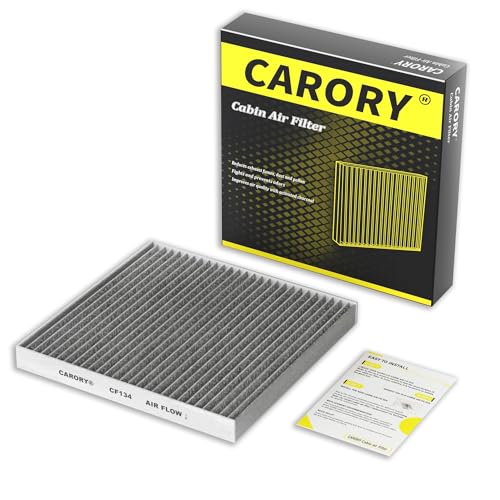
[Vehicle Fitment]: Replacement for Honda Accord 2003-2022, Accord Crosstour 2010-2011, Civic 2006-2015, CR-V 2007-2016, Crosstour 2012-2015, Odyssey 2005-2017, Passport 2019-2025, Pilot 2009-2022, Ridgeline 2006-2025
Conclusion
Remember, changing your car’s cabin filter is crucial for maintaining your AC system’s efficiency and the air quality inside your vehicle. By following the recommended interval of every 12,000 to 15,000 miles or annually, you can enjoy benefits like cost-effectiveness, cleaner air, and improved AC performance. Consider upgrading to a higher-quality filter for better filtration and longevity of your AC system. By making this simple adjustment a regular part of your vehicle maintenance routine, you’ll ensure that your AC system runs smoothly and that you breathe clean air while driving.
Frequently Asked Questions
When should I change the cabin filter in my car’s AC system?
Ideally, you should change the cabin filter every 12,000 to 15,000 miles or annually. If you frequently drive in dusty conditions, consider changing it more frequently to maintain optimal air quality and AC performance.
Why is it essential to replace the cabin filter regularly?
Regularly changing the cabin filter helps enhance air quality, improve AC performance, and prevent clogging in the system. It also ensures that the air inside your vehicle remains clean and free from pollutants.
What are the benefits of DIY cabin filter replacement?
DIY replacement is cost-effective, relatively simple, and allows you to choose a high-quality filter for better filtration. By replacing the cabin filter yourself, you can ensure the efficiency and longevity of your AC system.
Should I consider upgrading to a higher-quality cabin filter?
Upgrading to a higher-quality cabin filter is recommended for better filtration and increased longevity of your AC system. A higher-quality filter can trap smaller particles and provide cleaner air inside the vehicle.
How does changing the cabin filter improve AC system performance?
Changing the cabin filter prevents clogs, maintains proper airflow, and ensures that the AC system functions efficiently. This simple maintenance task can significantly impact the overall performance of your vehicle’s AC system.

Hi, I’m Charlie, and I cover all things laundry here at Appliance Mastery.
I’ve spent over eight years working on washing machines, dryers, and dishwashers. I also have a degree in mechanical engineering, which helps me understand how these appliances really work.
I try to make every guide clear and practical. If you’re stuck with a noisy dryer or a leaking washer, I’ll help you figure out what’s wrong and how to fix it.