
Resetting the Carrier furnace limit switch stops repeated overheating shutdowns without a service visit. Owners locate the switch on the blower housing and activate the reset after confirming clear airflow paths.
This approach resolves most limit trips caused by dirty filters or blocked vents. The full process takes under thirty minutes once the unit is powered down safely.
Carrier Limit Switch Activation Common Causes
Carrier furnaces trigger the limit switch when internal temperatures exceed safe thresholds during operation. The switch acts as a protective device that interrupts power to the burners until conditions normalize. Common triggers include restricted airflow from clogged components or failing motors that reduce circulation. Technicians often charge for this exact diagnosis even though the fix stays within homeowner capability in most cases. Review the table below to match observed issues with likely causes before proceeding further.
| Symptom | Primary Suspect | Difficulty 1-5 |
|---|---|---|
| Furnace shuts down after 5 minutes | Dirty air filter | 1 |
| Blower runs but no heat | Limit switch tripped | 2 |
| High pitched noise before shutdown | Failing blower motor | 3 |
| Frequent resets needed weekly | Blocked return vents | 1 |
Carrier Furnace Limit Switch Airflow Triggers
Overheating in Carrier units stems from reduced air movement across the heat exchanger. Dust buildup on the air filter forces the exchanger to retain heat longer than designed. A seized blower motor or collapsed duct sections create the same effect by limiting volume. The limit switch detects these conditions and opens the circuit to prevent damage. Multiple resets without addressing the underlying restriction will eventually crack the exchanger.
Perform Manual Reset Procedure
Power down the furnace at the breaker before any panel removal. Remove the front access cover to expose the blower compartment. Locate the small red or white button on the limit switch housing near the heat exchanger. Press the reset button firmly until it clicks into position. Restore power and run a heat cycle while monitoring for immediate shutdowns.
Carrier Furnace Heat Exchanger Crack Inspection
Visible cracks in the heat exchanger allow combustion gases to mix with circulating air. These fissures develop after repeated high temperature events from unresolved limit trips. Shine a flashlight across the exchanger surface while the unit is off to spot dark lines or soot streaks. Replacement of a cracked exchanger requires a full furnace swap in most Carrier models. Homeowners should stop using the system and contact a licensed technician if cracks appear.
Test Blower Motor Operation
A weak blower motor fails to move enough air even with a clean filter installed. Disconnect power and spin the blower wheel by hand to check for binding or grinding. Measure voltage at the motor leads during a call for heat to confirm it receives full power. Replace the motor assembly if it draws excessive amperage or fails to reach rated speed. This component sits directly below the limit switch in most Carrier configurations.
Carrier Furnace Filter Changes to Prevent Trips
Install a new air filter every thirty days during peak heating months. Undersized or low quality filters increase static pressure and trip the limit switch faster. Match the filter size exactly to the slot dimensions printed on the furnace door. Mark the installation date on the filter frame to track replacement intervals accurately. Consistent filter changes eliminate the majority of limit switch activations.
Carrier Limit Switch Exchanger Integrity Tests
Testing the integrity of the Carrier limit switch exchanger starts with targeted diagnostic checks on the manual reset limit switch assembly. These steps confirm whether the component maintains proper safety thresholds during operation. Homeowners can complete the process themselves to isolate faults and reduce reliance on paid service calls.
Persistent limit switch trips after completing the reset and airflow checks indicate deeper mechanical failure. A technician can perform combustion analysis and exchanger integrity tests beyond homeowner tools.
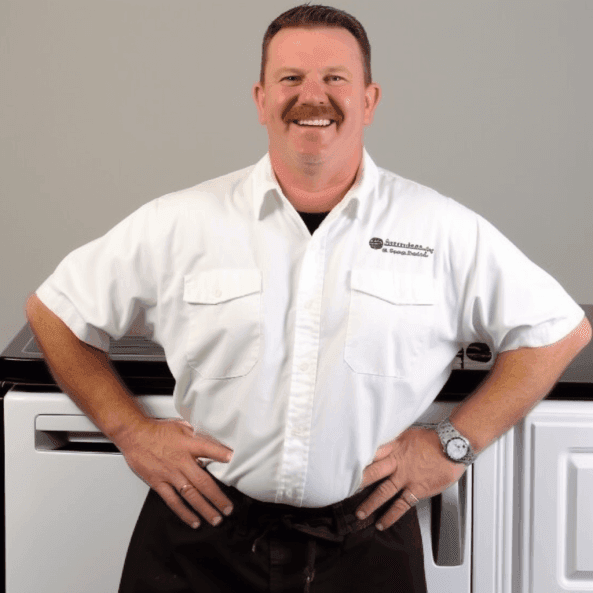
Hey, I’m Jake. I focus on cooling systems at Appliance Mastery, like fridges, freezers, and air conditioners.
I’ve worked in appliance repair for more than ten years and I’m certified through NASTeC. I’ve seen just about every fridge issue you can imagine.
My goal is to help you fix problems without stress. Whether it’s a freezer that won’t cool or an AC that keeps beeping, I’m here to walk you through it.