
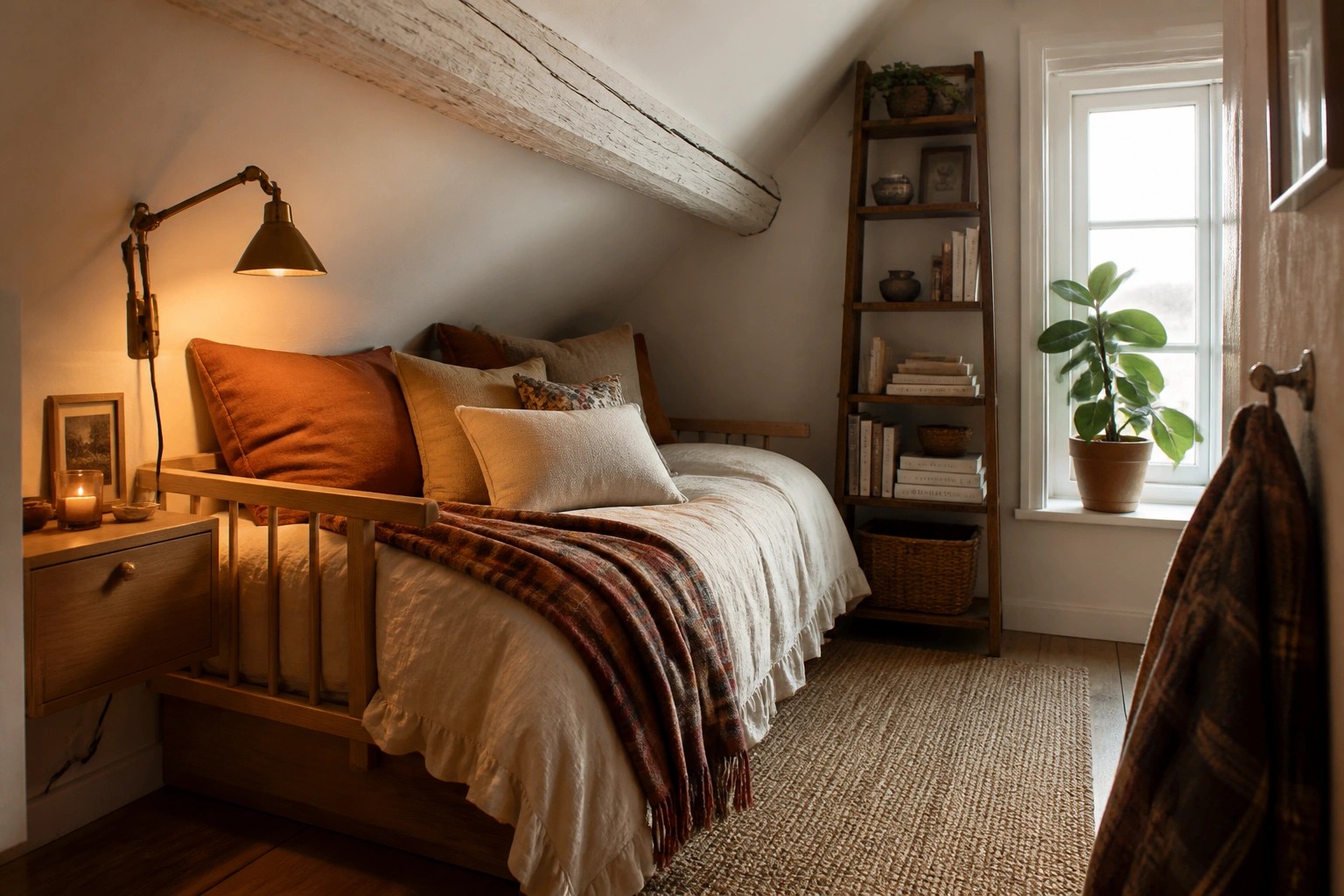
Small bedrooms often feel different once the light starts to change in fall, and the challenge is keeping them warm without making them feel smaller.
The real test comes down to how the layout lets you move around the bed and reach storage without bumping into everything else.
I usually try new layering ideas on the bed first because that single change shows me whether a setup will actually work day to day.
Once the main pieces sit in the right spots, adding texture through blankets or a different lampshade can pull the whole space together without extra furniture.
A few of these adjustments are easy to test this weekend.
Built-In Beds Make Small Bedrooms More Practical
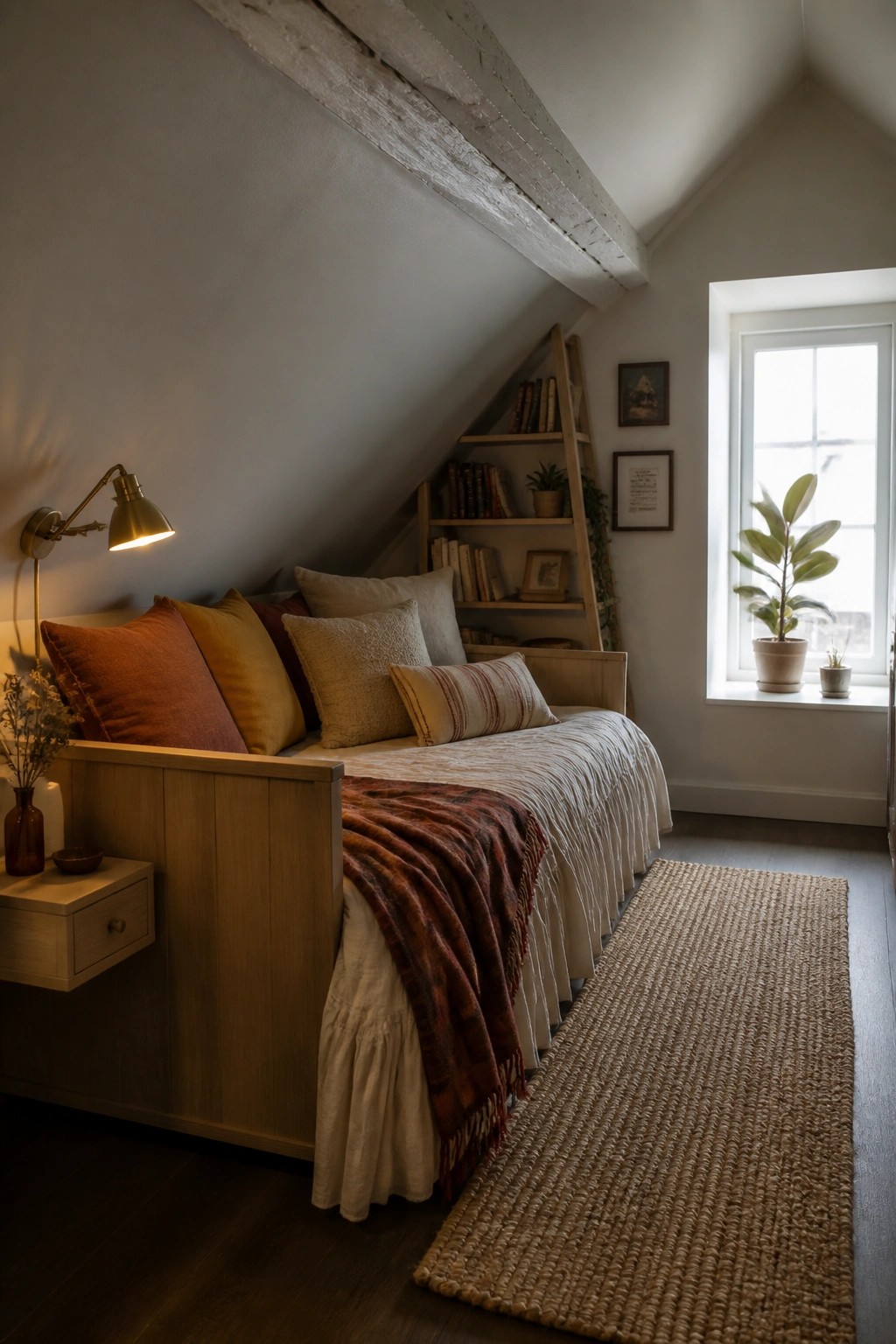
A built-in bed fits right into the shape of the room instead of sitting against it. In spaces where the ceiling drops low, this keeps the bed from feeling like it takes over everything else.
It works best in attic bedrooms or any small room with awkward angles. Add a drawer underneath for extra storage and keep the rest of the furniture light so the space stays open.
Murphy Beds With Built-In Storage
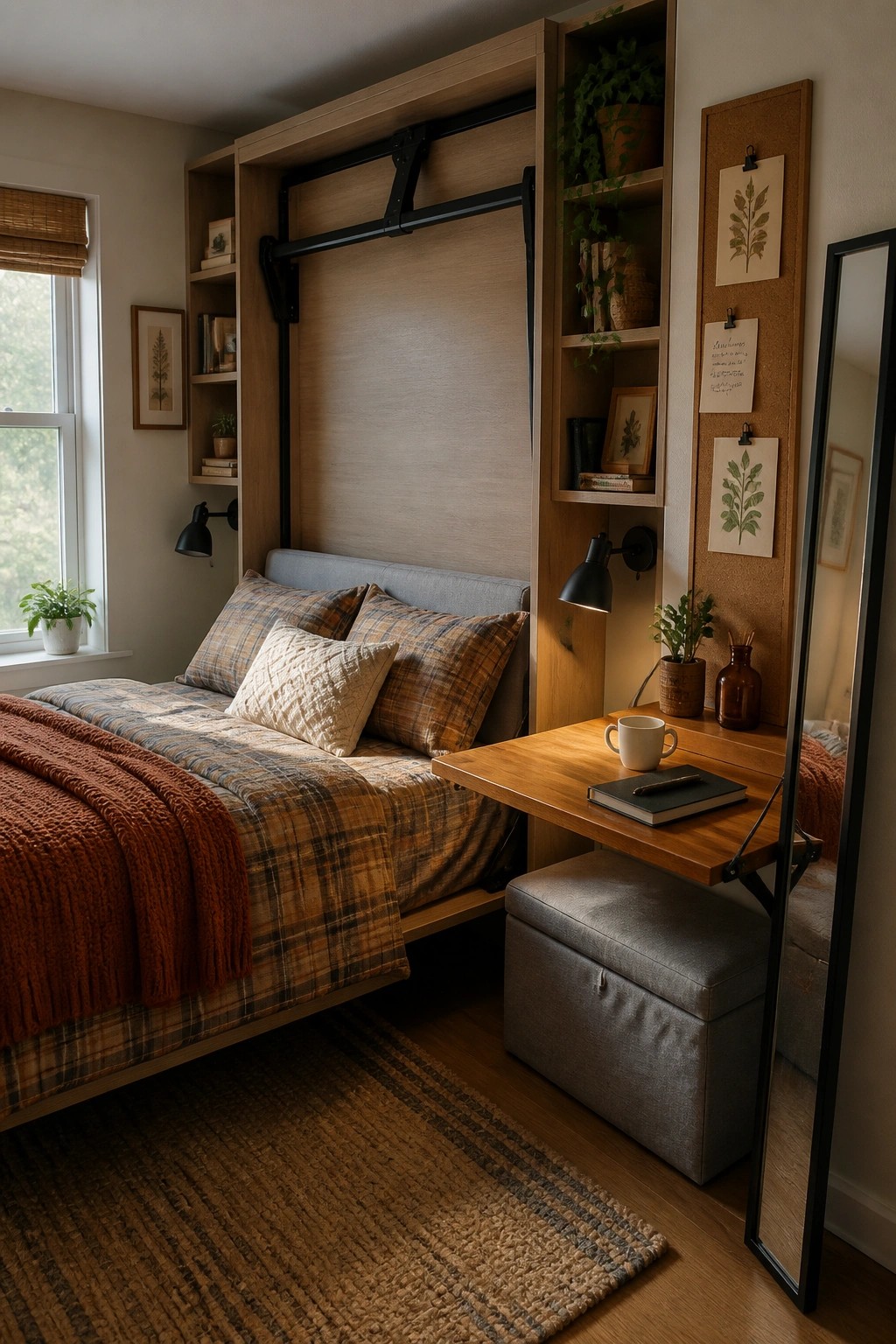
A Murphy bed that folds into the wall makes a small bedroom feel much bigger during the day. The shelves built around it keep books and plants within reach while the bed stays hidden, so the room can work as a sitting area or workspace when the bed is up.
This setup works well in apartments or guest rooms where floor space is tight. A fold-down desk adds a spot for a laptop or morning coffee without taking up extra room once the bed comes down at night.
Loft Beds That Free Up Floor Space
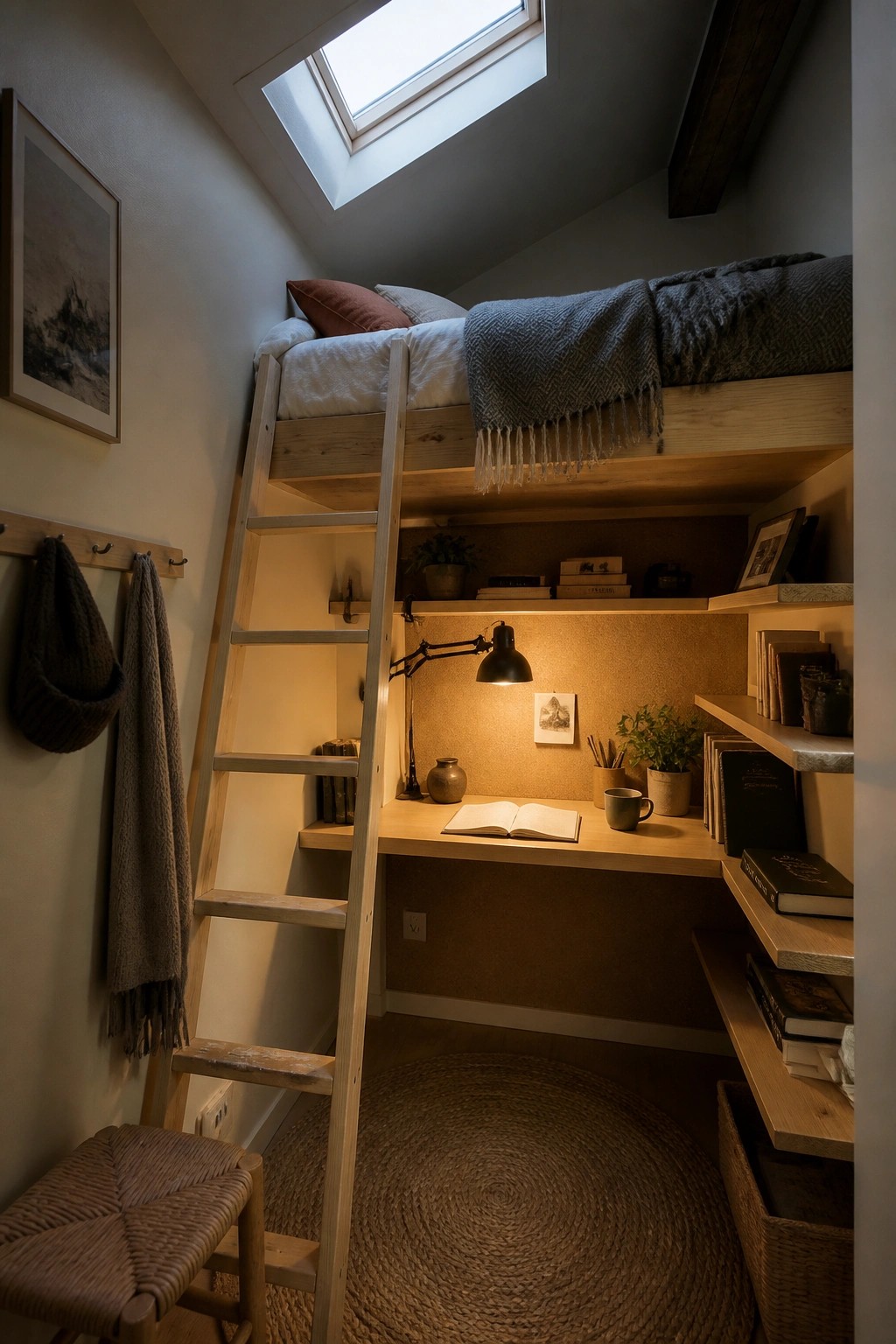
Raising the bed off the floor is one of the simplest ways to gain real useable space in a small bedroom. The area underneath becomes room for a desk, shelves, or even a reading spot without making the whole room feel cramped.
This setup works best in rooms with decent ceiling height. Keep the ladder sturdy and the lower area well lit so the space stays practical day to day.
Add a Window Seat for Extra Seating and Storage

A window seat with drawers built in underneath gives a small bedroom both a place to sit and hidden storage without taking up extra floor space. It works especially well when the room has a good sized window that already gets natural light.
This setup suits bedrooms where every inch counts. Keep the cushions neutral and limit extra pillows so the seat stays useful rather than crowded.
Built-In Storage And Loft Access For Small Bedrooms
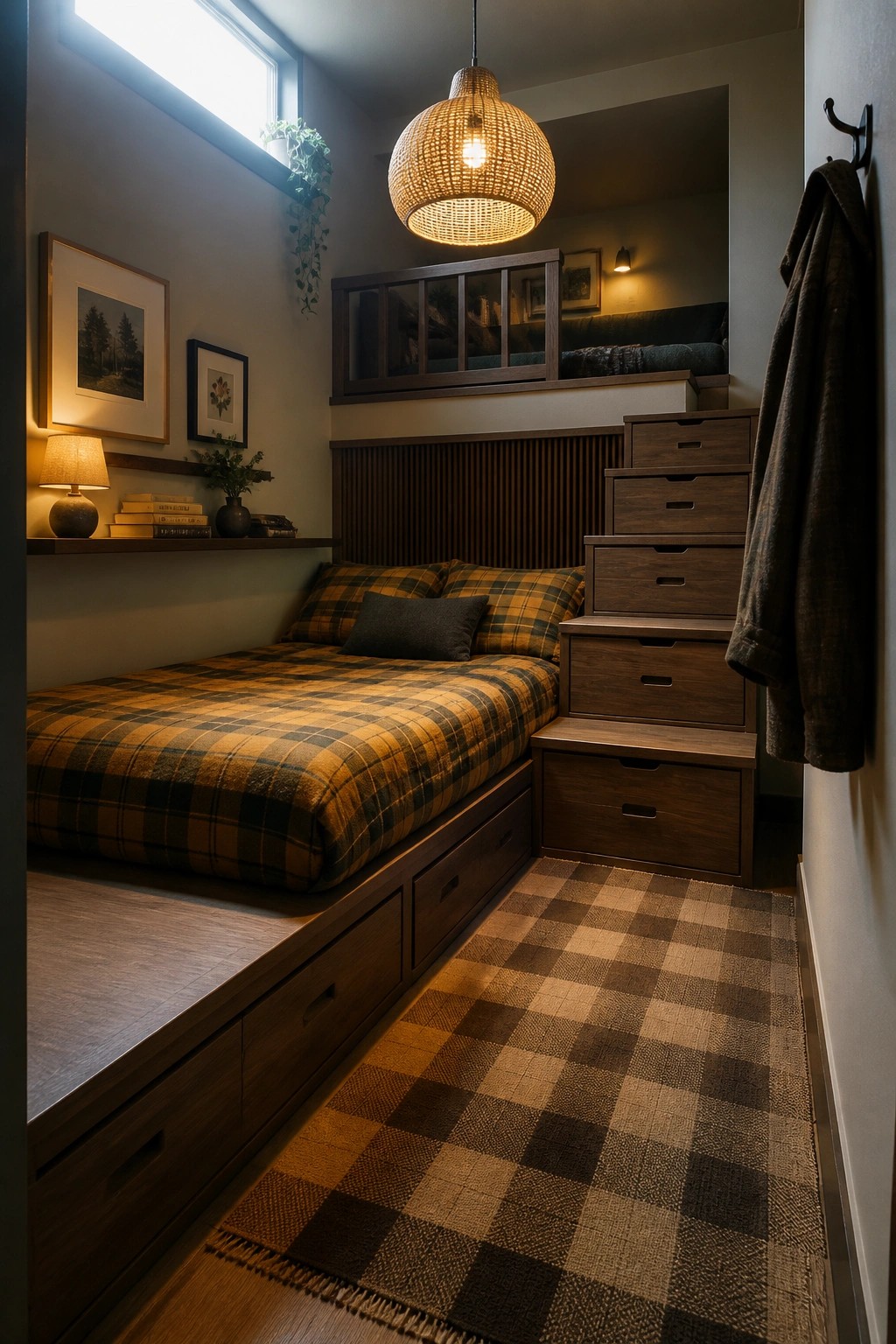
Many small bedrooms struggle with clutter because there is nowhere to put things without taking up floor space. Built-in drawers under the bed and along the steps to a loft give you places to store clothes, linens, and seasonal items while keeping the room open and easy to move around in.
This setup works best in narrow rooms or spaces with high ceilings where a raised sleeping area can be added without crowding the main floor. It suits apartments, cabins, or any home where every inch needs to count, and it avoids the need for extra dressers or bulky furniture that can make the room feel smaller.
Try Wall Mounted Storage For Clothes
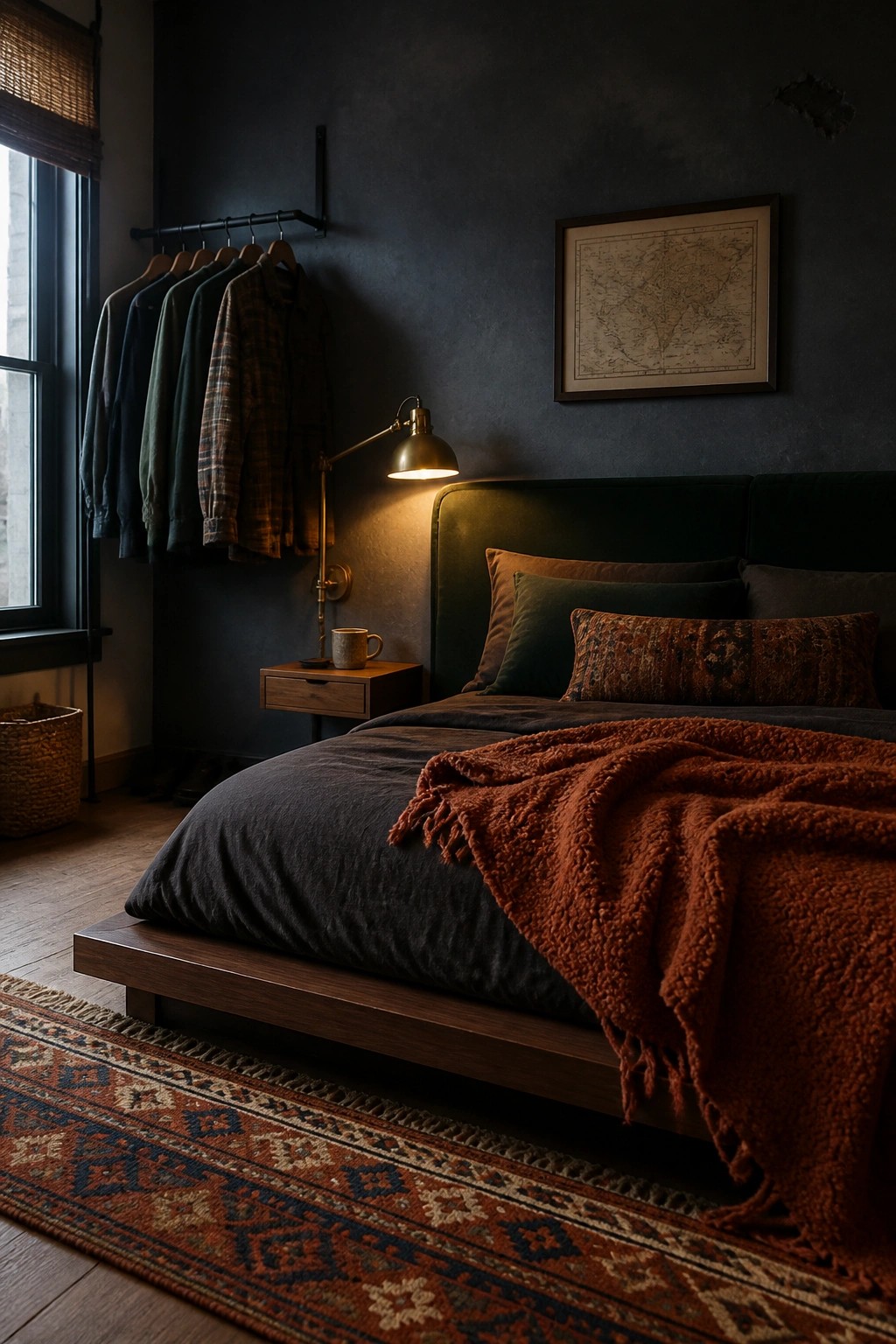
A wall mounted rack gives you a place to hang everyday clothes without adding a bulky dresser or taking over closet space. In smaller bedrooms this keeps the floor clear and makes the room feel more open while still giving easy access to what you wear most.
Place the rack on a blank wall near the bed or window and keep it at a height that feels comfortable. It works best in rooms where closet space is tight or shared, and it pairs well with a low bed and minimal nightstands so nothing crowds the walking area.
Under-Bed Drawers Free Up Floor Space
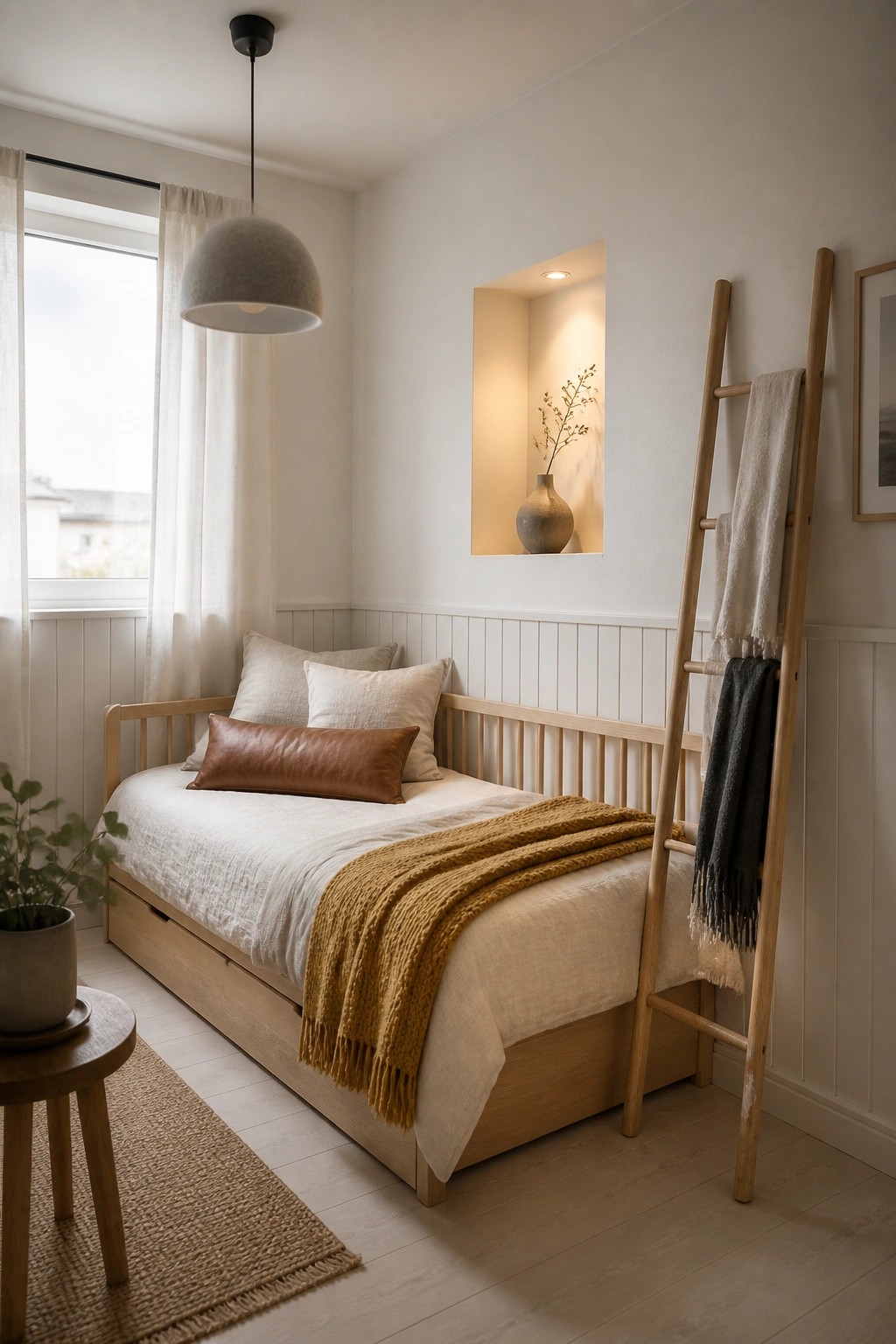
A bed with built-in drawers underneath gives you hidden storage without adding another piece of furniture. This keeps the room feeling open even when you need a place for extra bedding or seasonal clothes.
It works well in small bedrooms that also serve as guest rooms or workspaces. Choose a low frame so the drawers slide out easily and pair it with a simple ladder for hanging throws if you want more options without taking up wall space.
Create A Cozy Bed Alcove In A Small Bedroom
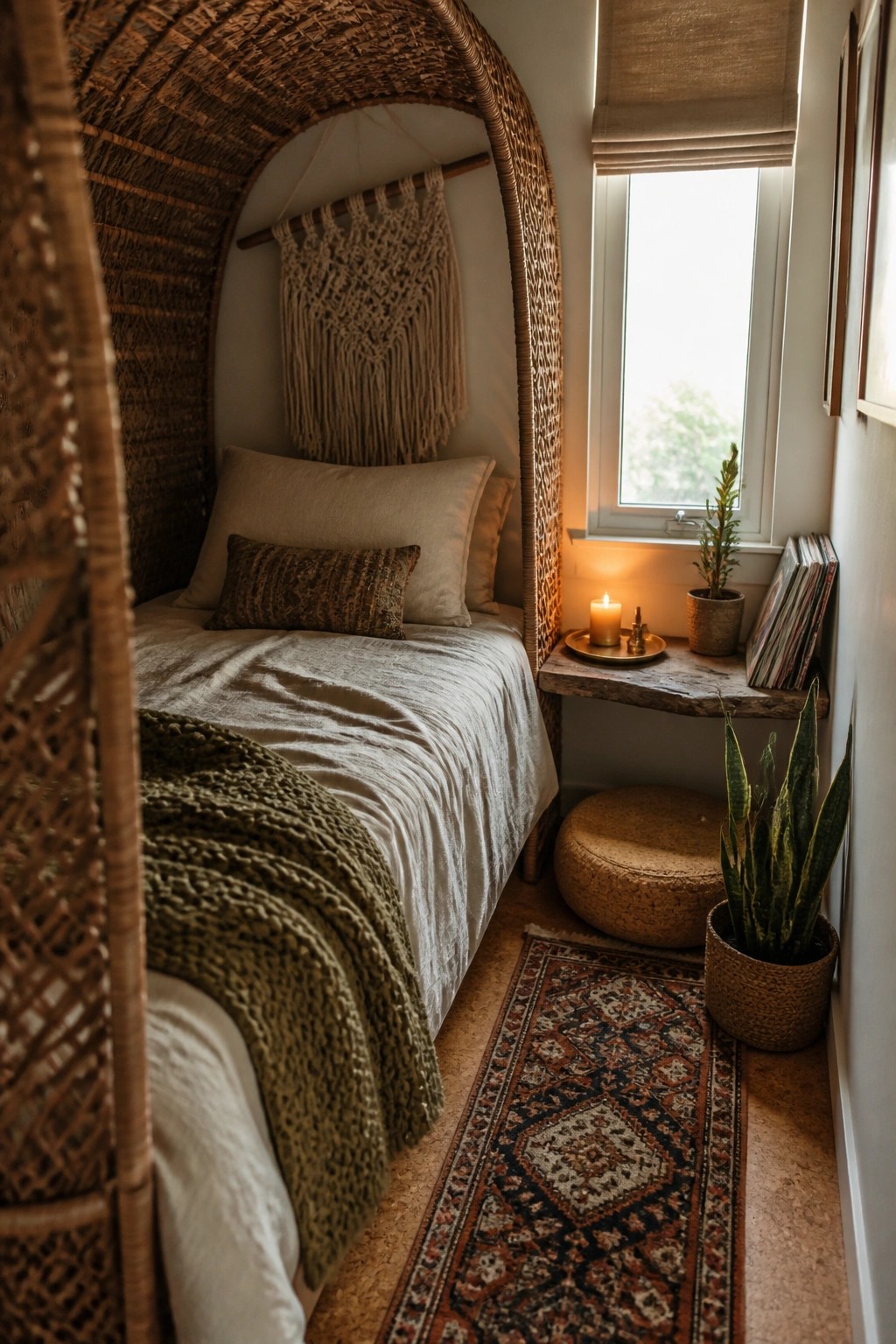
One simple way to handle a small bedroom is to tuck the bed into its own alcove. This gives the sleeping area a clear boundary so the rest of the room stays open and usable. The woven arch shown here turns an otherwise tight spot into a defined nook without adding bulky furniture.
This setup works best in narrow rooms or studio spaces where floor area is limited. Look for lightweight materials like rattan or wood so the structure does not feel heavy. Make sure the alcove has decent airflow and headroom before you commit to the build.
Built-In Shelves And Crate Nightstands
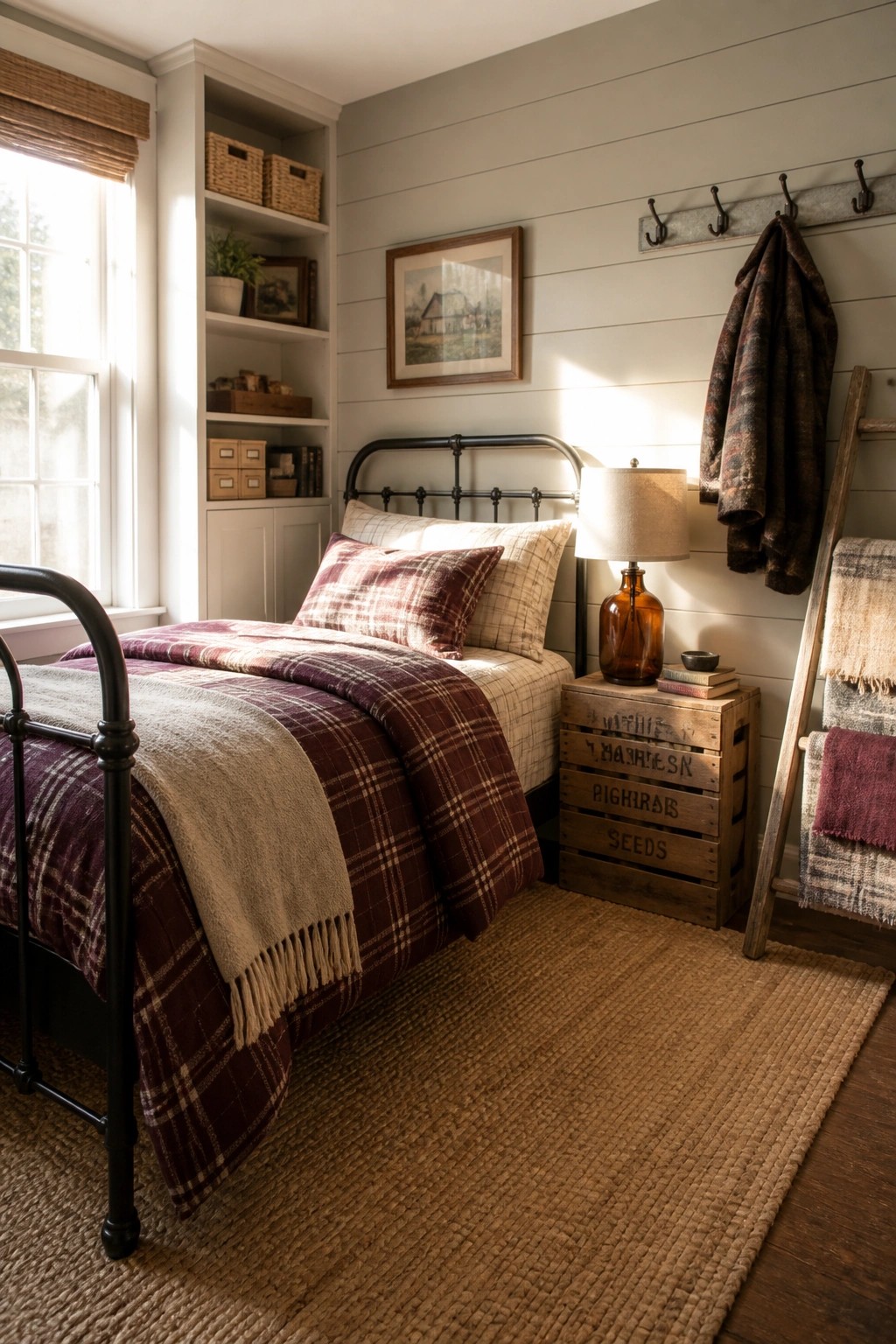
Built-in shelves make good use of wall space in a small bedroom. They hold baskets, books, and small items without eating into floor area, which keeps the room feeling open even when you add layers for fall.
A wooden crate works as a simple nightstand and gives extra storage underneath. This approach fits rooms with limited space and helps keep things organized without adding more furniture.
Built-In Beds With Hidden Storage
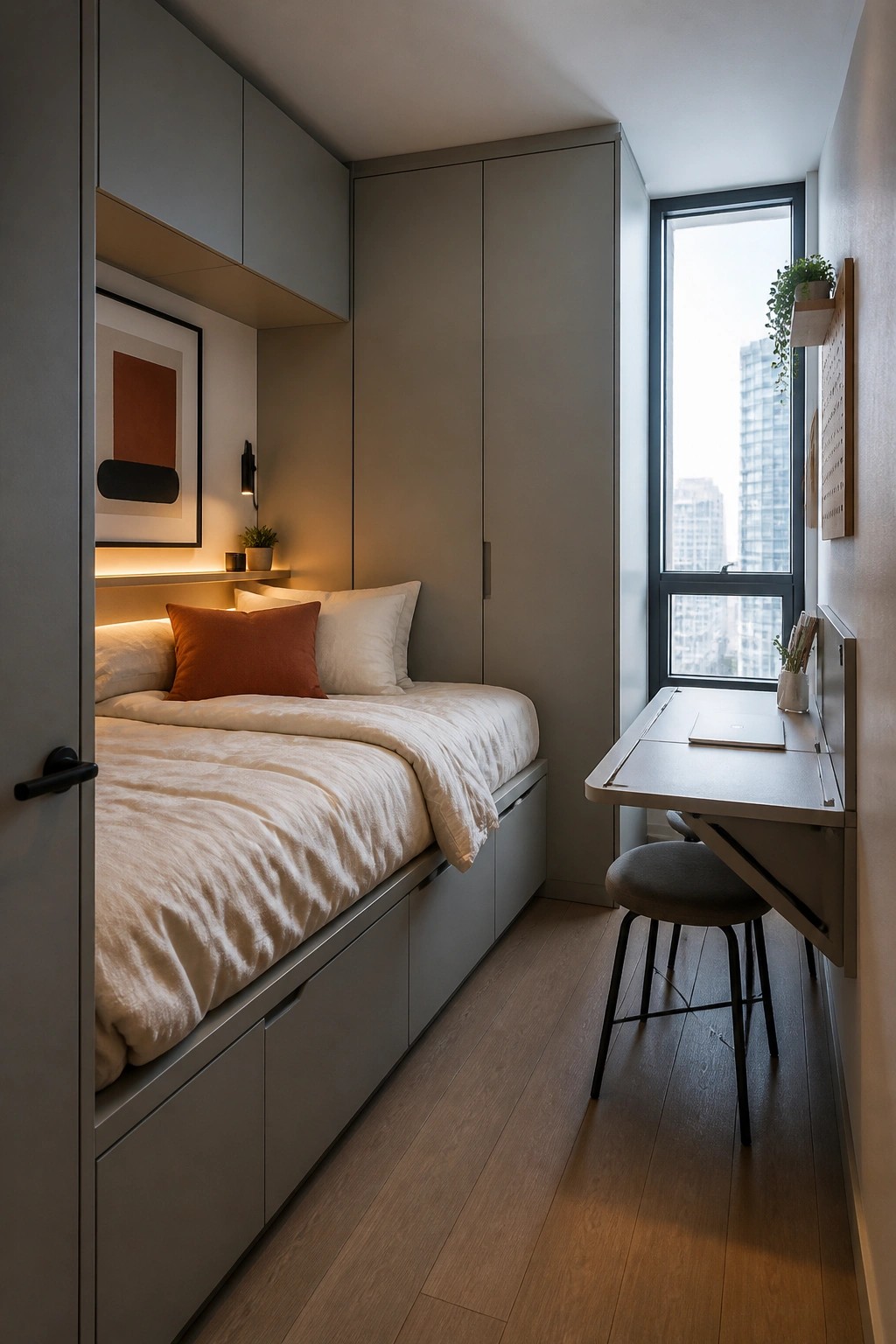
Built-in beds with drawers underneath give you a place to sleep and store extra bedding or clothes without adding more furniture. In a small room this keeps the floor open and cuts down on clutter that can make the space feel tighter.
They work best in narrow bedrooms or apartments where floor space is limited. Match the bed frame to the wall color so it feels like part of the room instead of a separate piece taking up room.
Anchor A Small Bedroom With A Braided Rug
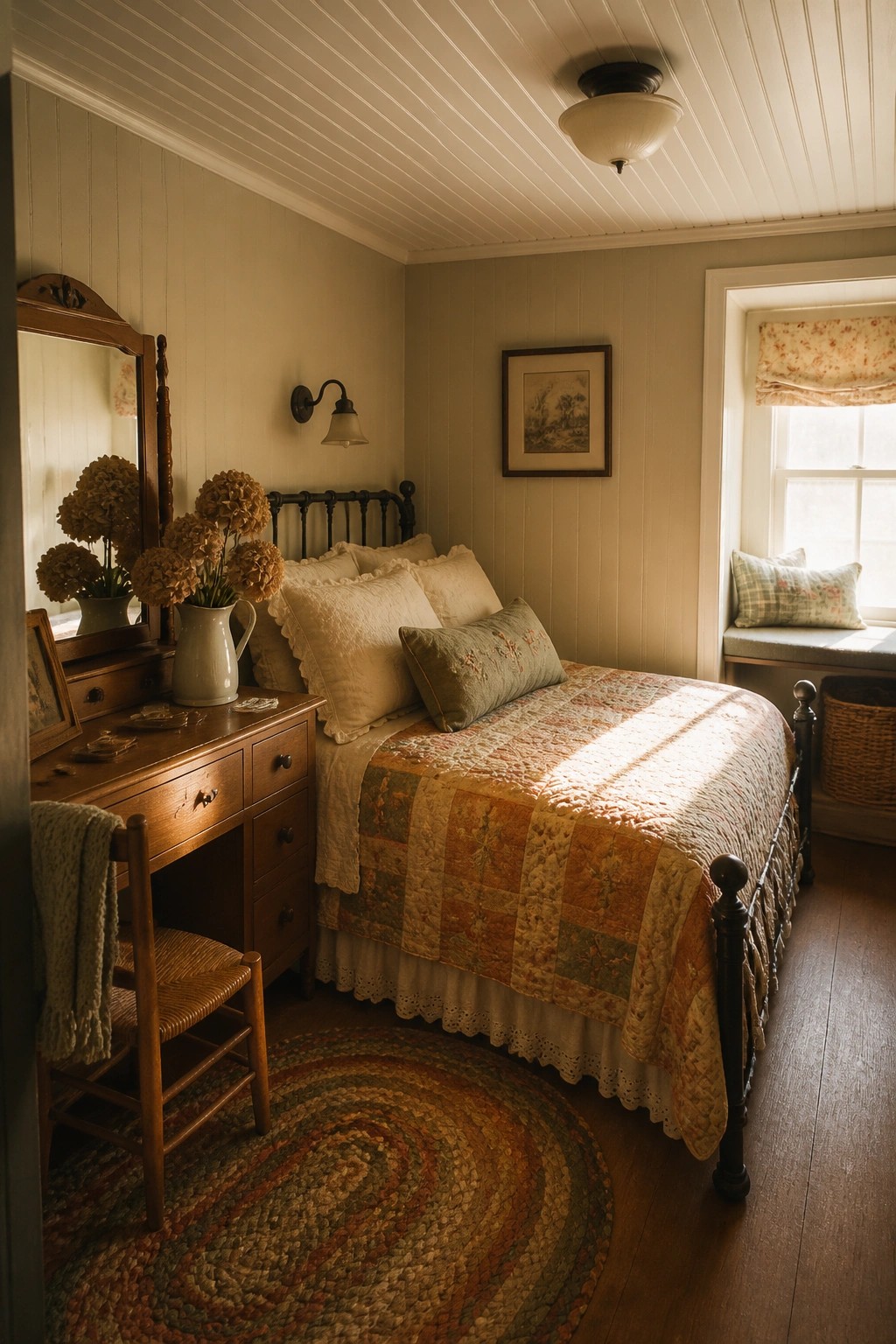
A large braided rug gives a small bedroom a clear center without adding bulky furniture. It pulls the bed, chair, and dresser into one cozy zone while the wood floor stays visible around the edges, which keeps the space from feeling cramped.
Place the rug so it sits under the bed and reaches out far enough for a chair or nightstand. This setup works especially well in older homes with simple trim and wood floors, and it lets you change the rug with the seasons if you want a lighter look in warmer months.
Add Warmth with a Woven Wall Basket

A large woven basket on the wall brings natural texture and a sense of depth to a small bedroom without using any floor space. It stands out against the painted surface and helps the room feel more layered and finished, especially when the rest of the space stays simple.
Place it above the bed or headboard where it can serve as the main focal point. This works well in older homes or rentals where you cannot add built-ins or heavy furniture. Keep the rest of the wall fairly clear so the basket does not compete with other pieces.
Built-In Storage Under The Bed
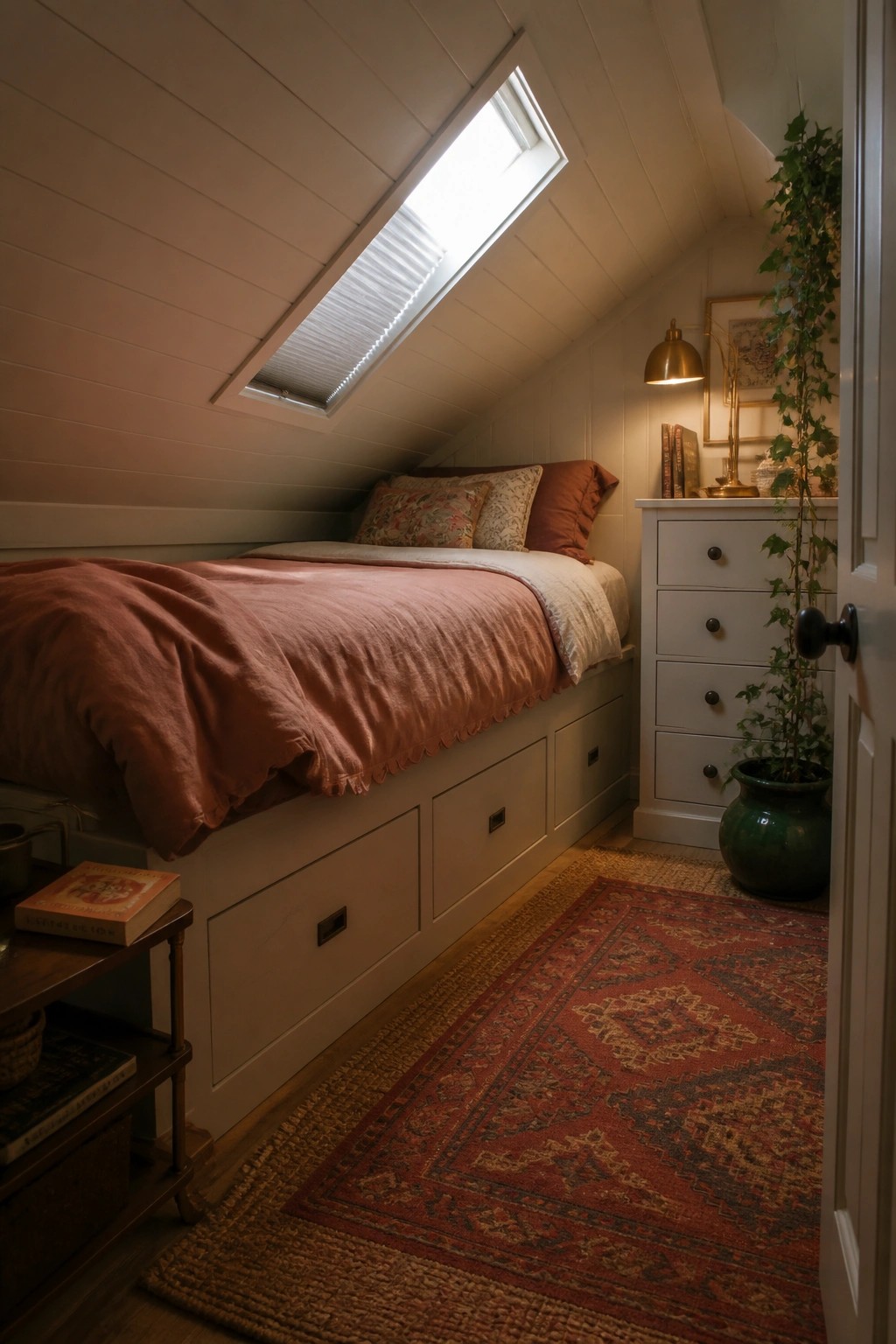
A built-in bed with drawers underneath gives you storage without crowding the floor. In small bedrooms this keeps things simple and leaves more room to move around. It works especially well when the ceiling slopes, since regular dressers often will not fit.
This approach suits older homes, attic spaces, or any room where floor space is tight. You can plan the drawers during a remodel or choose a bed frame that already includes them. Just keep the pull-out area clear so it stays easy to use every day.
Build A Window Seat Above The Bed
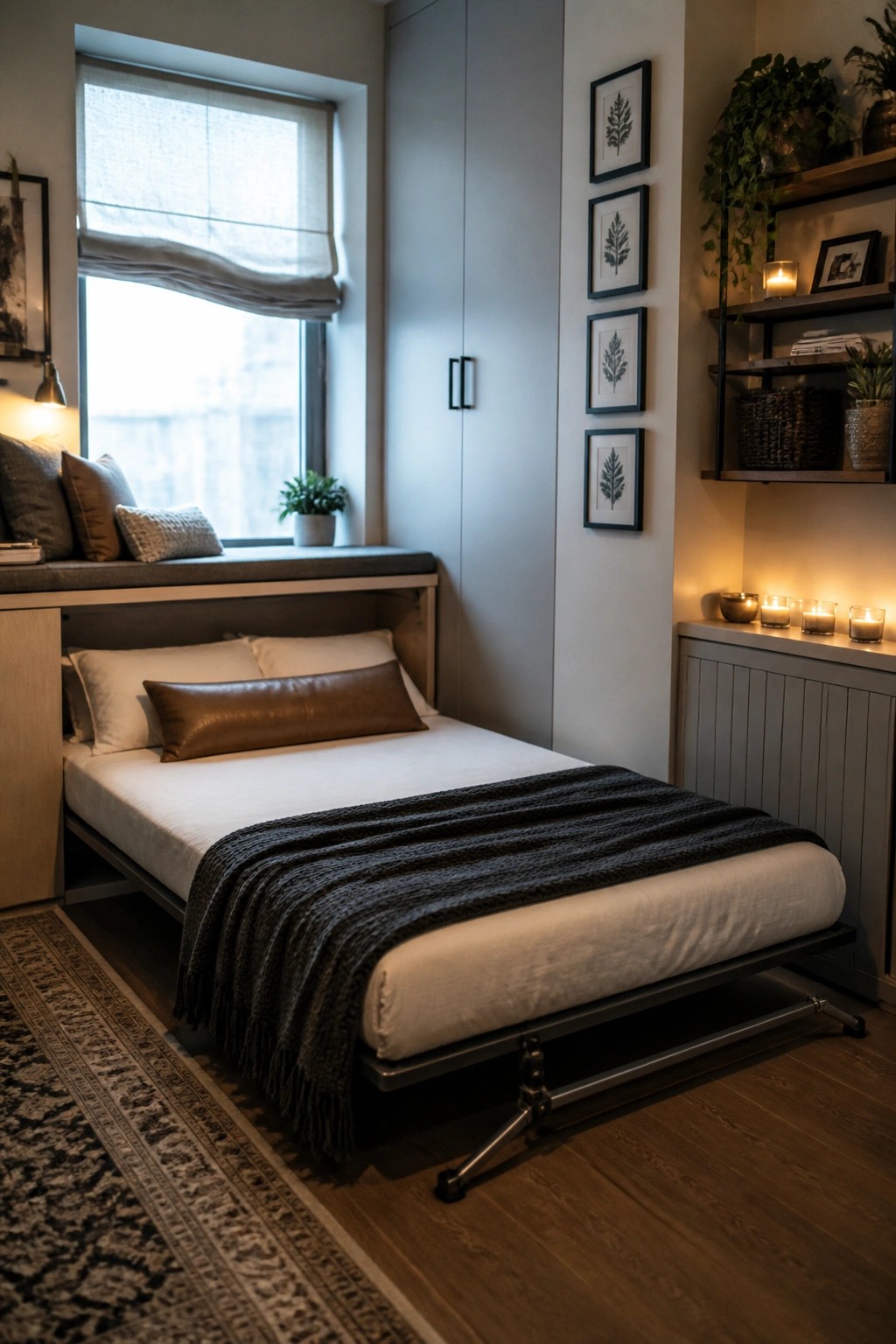
A window seat ledge above the bed works well in small bedrooms because it adds seating and a bit of storage without taking up any floor space. The idea feels practical since the ledge uses the wall area that would otherwise sit empty.
This setup suits narrow rooms best when the bed can tuck underneath. Keep the ledge depth shallow so it does not crowd the bed, and choose a simple cushion that matches the bedding.
Add Storage With a Bench at the Foot of the Bed
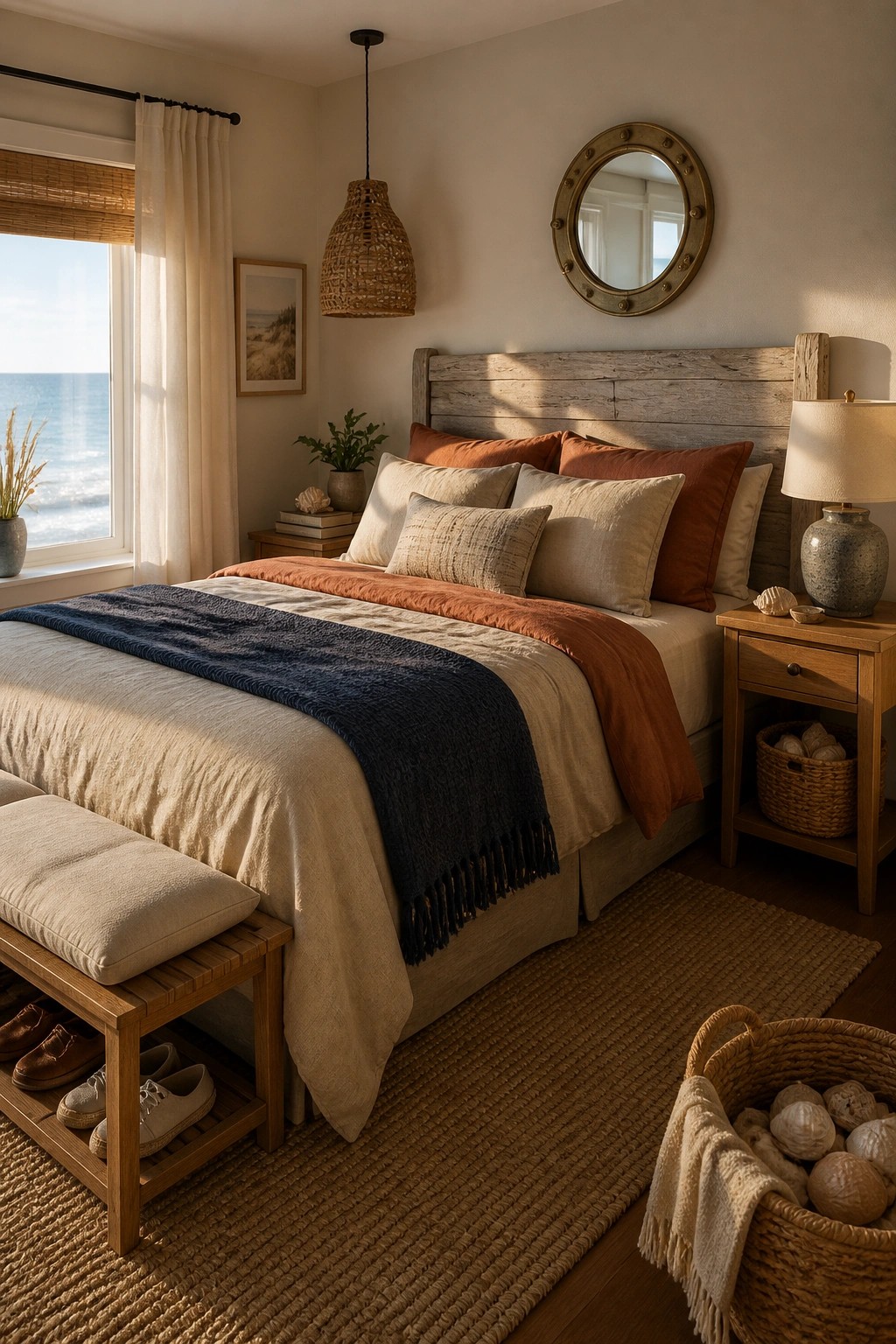
A bench at the end of the bed gives you a spot to sit while also hiding extra items underneath. In smaller bedrooms this keeps the floor clear and makes the space feel more organized without adding another piece of furniture.
It works best in rooms where you need seating for getting dressed but do not have wall space for a chair. Choose one with an open lower shelf or room for baskets so shoes and folded items stay out of the way.
Dark Walls Help Small Bedrooms Feel Cozy
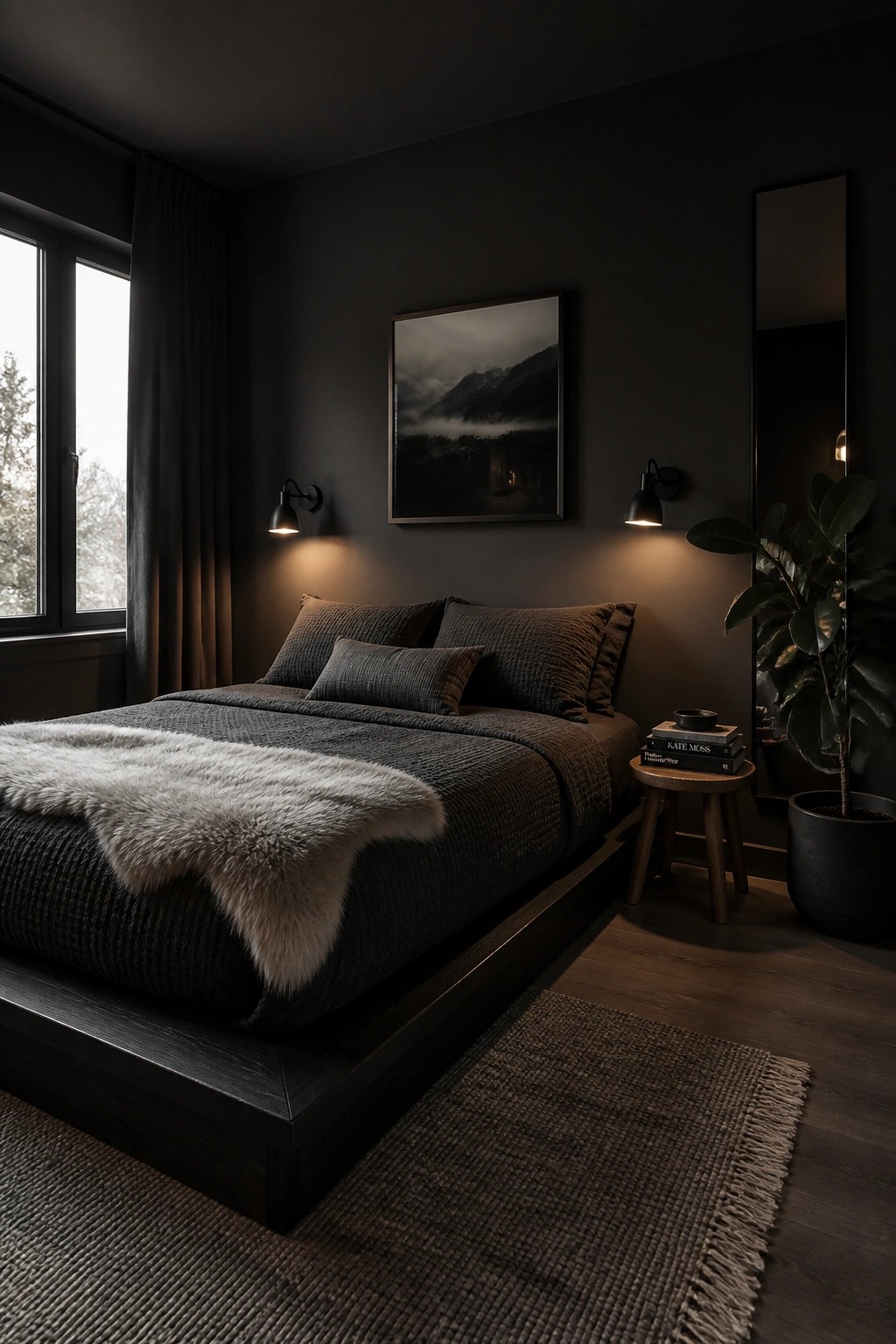
Dark paint on the walls can turn a small bedroom into a warmer space during fall. A low platform bed keeps everything grounded and leaves more visual room above, which prevents the space from feeling boxed in.
This works best in rooms that already get limited light or where you want a quiet, enclosed feel. Stick to simple layers on the bed and skip tall furniture that would compete with the walls.
Built-In Drawers Under the Bed

A bed frame with built-in drawers gives you storage right where you need it most. The drawers slide out easily and keep extra blankets or off-season clothes tucked away without adding any new furniture to the room.
This works well in small bedrooms that already feel crowded. It keeps the floor clear and pairs nicely with a simple nightstand that has open shelves for books or a lamp.
Canopy Beds Add Cozy Enclosure To Small Bedrooms
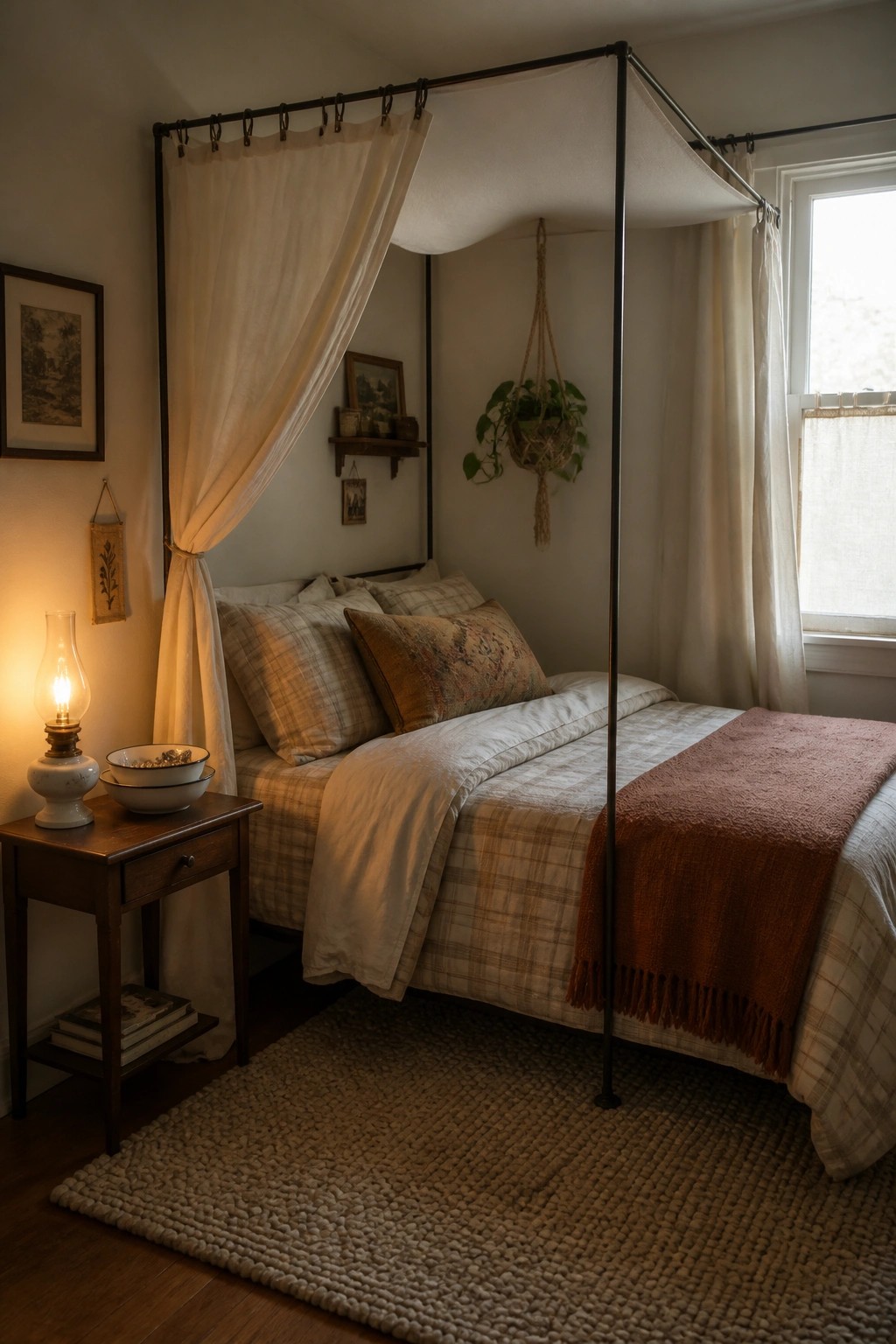
A canopy bed with simple fabric drapes can make a small bedroom feel more intimate without crowding the floor. The curtains help frame the bed and bring in softness that suits cooler months.
This setup works best when the frame is slim and the fabric stays light. It gives the sleeping area its own boundary while leaving the rest of the room open for other uses.
Built-In Beds That Add Storage In Small Rooms
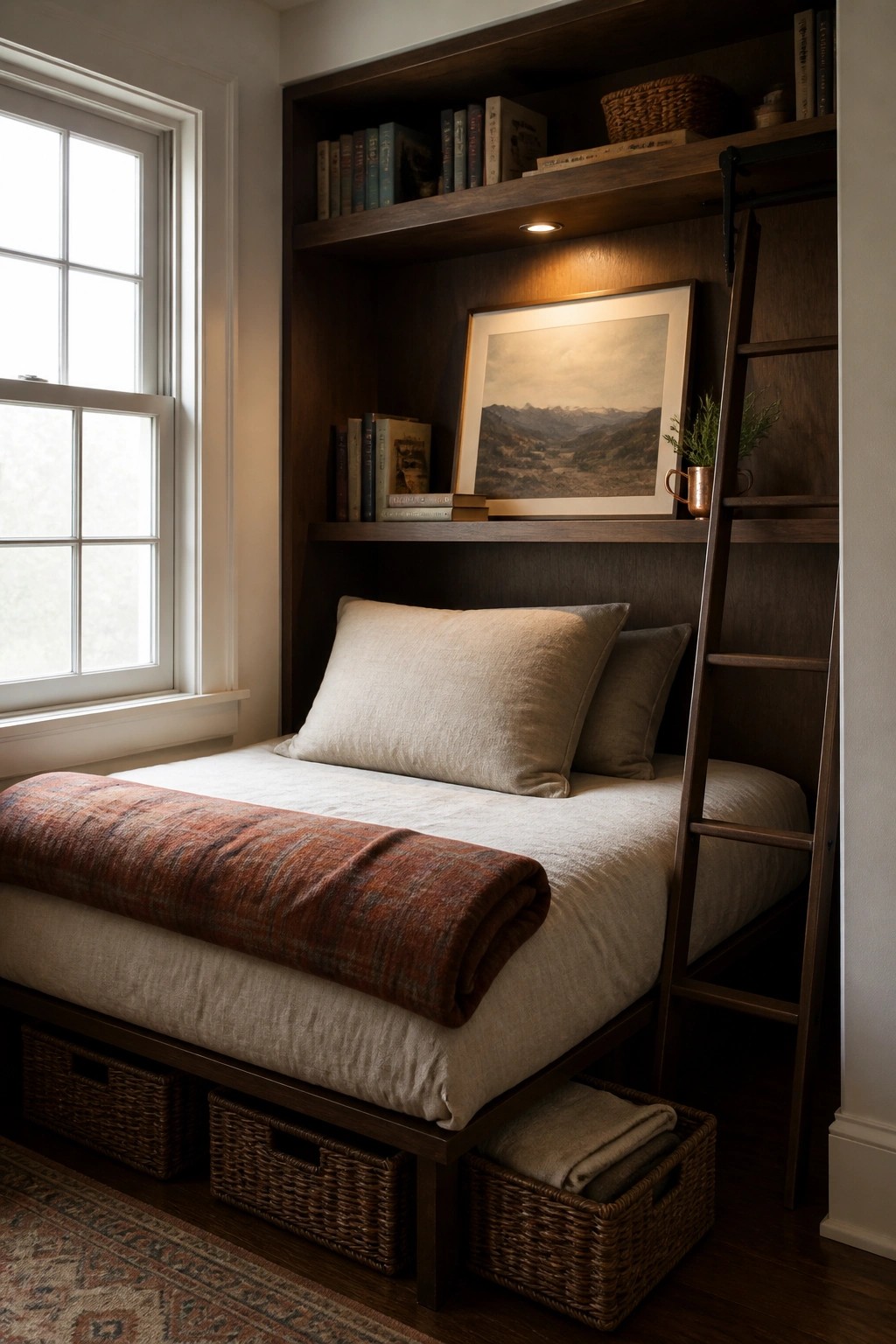
A built-in bed setup works well when space is tight because it turns the bed itself into the main storage area. Shelves above hold books and small items while baskets slide underneath for blankets and off-season clothes. This keeps the floor clear and makes the room feel more organized without needing extra furniture.
This approach suits older homes or apartments where every inch counts. It works best if you keep the bedding simple and use the upper shelves for things you reach often. The ladder makes the top area usable without taking up extra room.
Sliding Closet Doors Free Up Floor Space
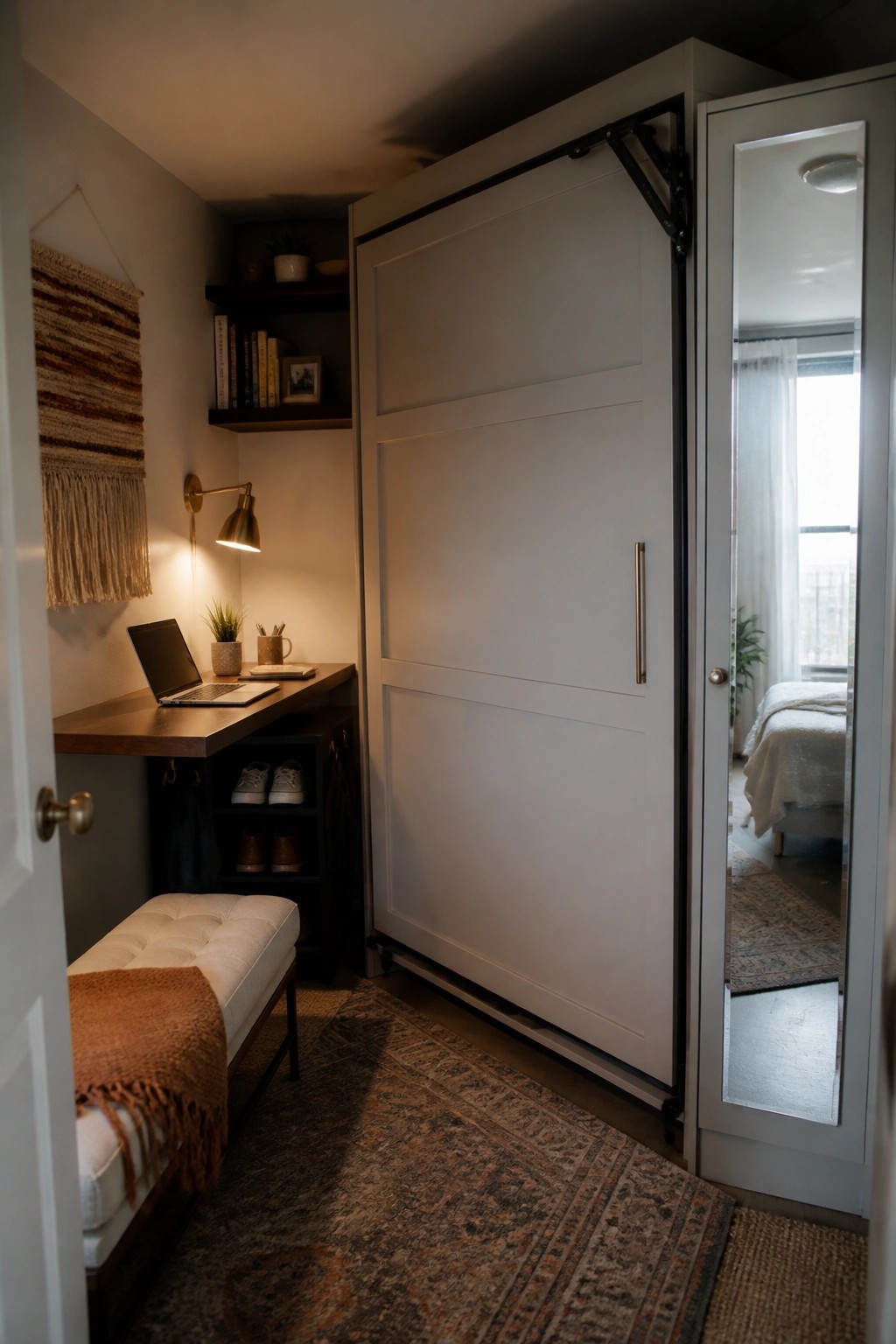
A sliding door on the closet makes a noticeable difference in a small bedroom. It slides along the wall instead of swinging out, so the floor stays open for walking or placing a bench or small seat nearby.
This works best in apartments or older homes where bedrooms run tight on square footage. Keep the rest of the room simple with a narrow desk or wall-mounted light so the space stays easy to move through.
Frequently Asked Questions
Q: How do I layer fall textures in a small bedroom without it feeling stuffed? A: Start with one soft knit blanket at the foot of the bed and add two pillows in matching tones. Swap them out after the season so the space stays open and easy to move around.
Q: What works for fall lighting when my room has almost no outlets? A: Plug a single warm bulb into a lamp you already use and place it on the floor behind a low piece of furniture. It casts a soft glow upward without cords running everywhere.
Q: Can I bring in fall scents without adding more stuff to my limited surfaces? A: Drop a couple of cinnamon sticks or a small sachet into a drawer you open often. The scent drifts out naturally when you reach for clothes.
Q: How do I keep extra cozy layers handy if I have zero closet room? A: Roll two spare throws and tuck them into a basket that slides under the bed. Pull one out at night when you want it and put it back in the morning.
I’m Claire, the voice behind The Seasoned Home. I’ve always loved the way a home can shift with the seasons and feel fresh, cozy, and welcoming all over again. I share seasonal home decor ideas that feel beautiful but still realistic for everyday life, from porch styling and wreaths to cozy bedrooms, living rooms, kitchen touches, and simple table decor. My favorite ideas are the ones that make a home feel special without making decorating feel complicated.