
Kitchens shift in feel once fall arrives because the same counters and cabinets start to need warmer layers that match how meals actually get made each day.
The layout matters more than people expect since items need to stay reachable while still adding that seasonal layer without crowding the workspace.
I usually test one or two texture changes first to see which ones hold up once the cooking routine picks up again.
Small swaps in color and material often change the daily experience more than a bigger refresh would.
Some of those swaps last longer than others.
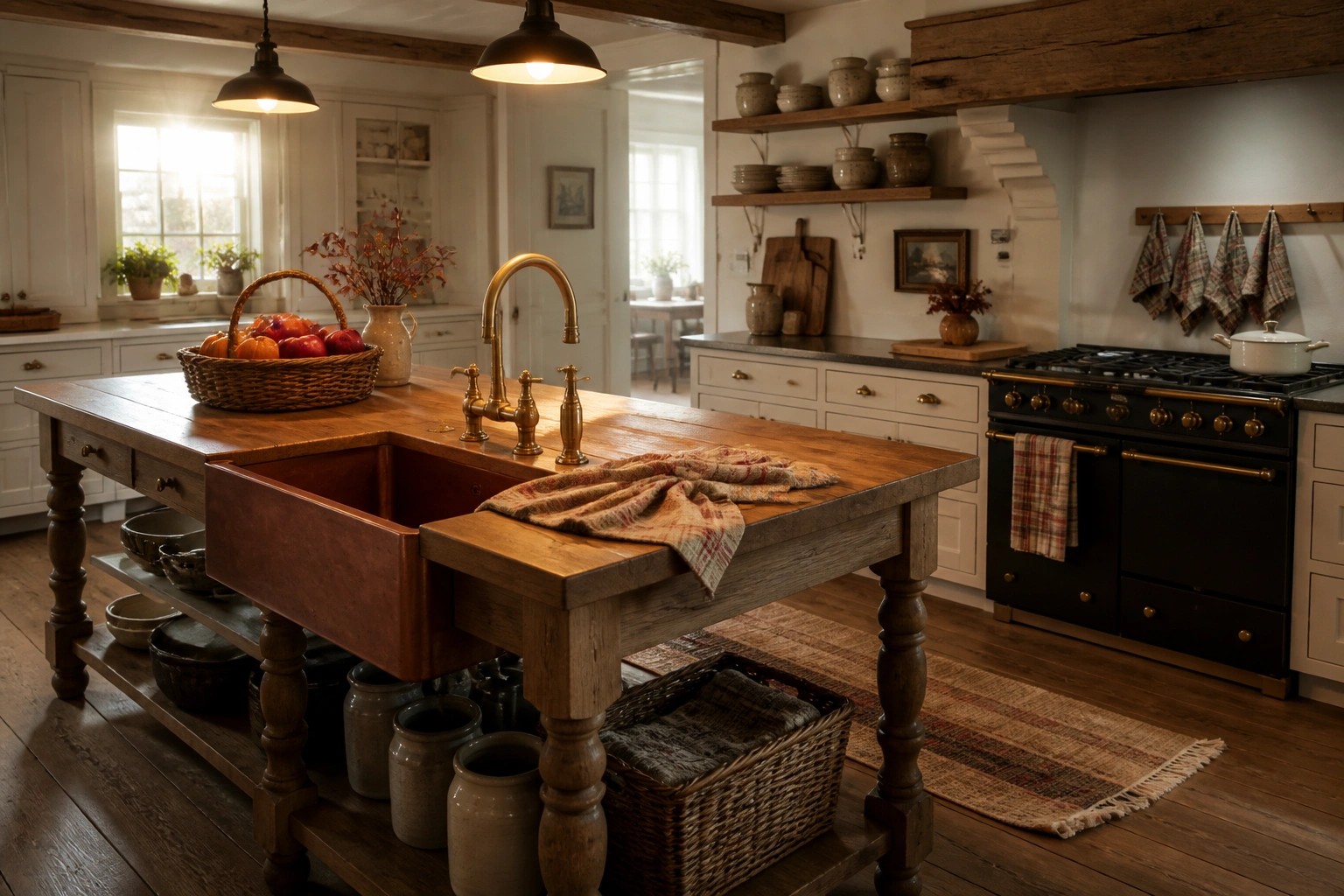
Wooden Kitchen Islands With Farmhouse Sinks

A large wooden island with a built-in farmhouse sink often becomes the most used spot in the kitchen. The solid wood surface and deep basin give the room a grounded feel that feels natural during cooler months when cooking happens more often.
This works best in homes that already lean toward simple or traditional styles. Keep the island size generous enough for daily prep, and choose a sink material like copper or cast iron so it holds up to regular use without needing much fuss.
Wood And Woven Textures For A Warmer Kitchen
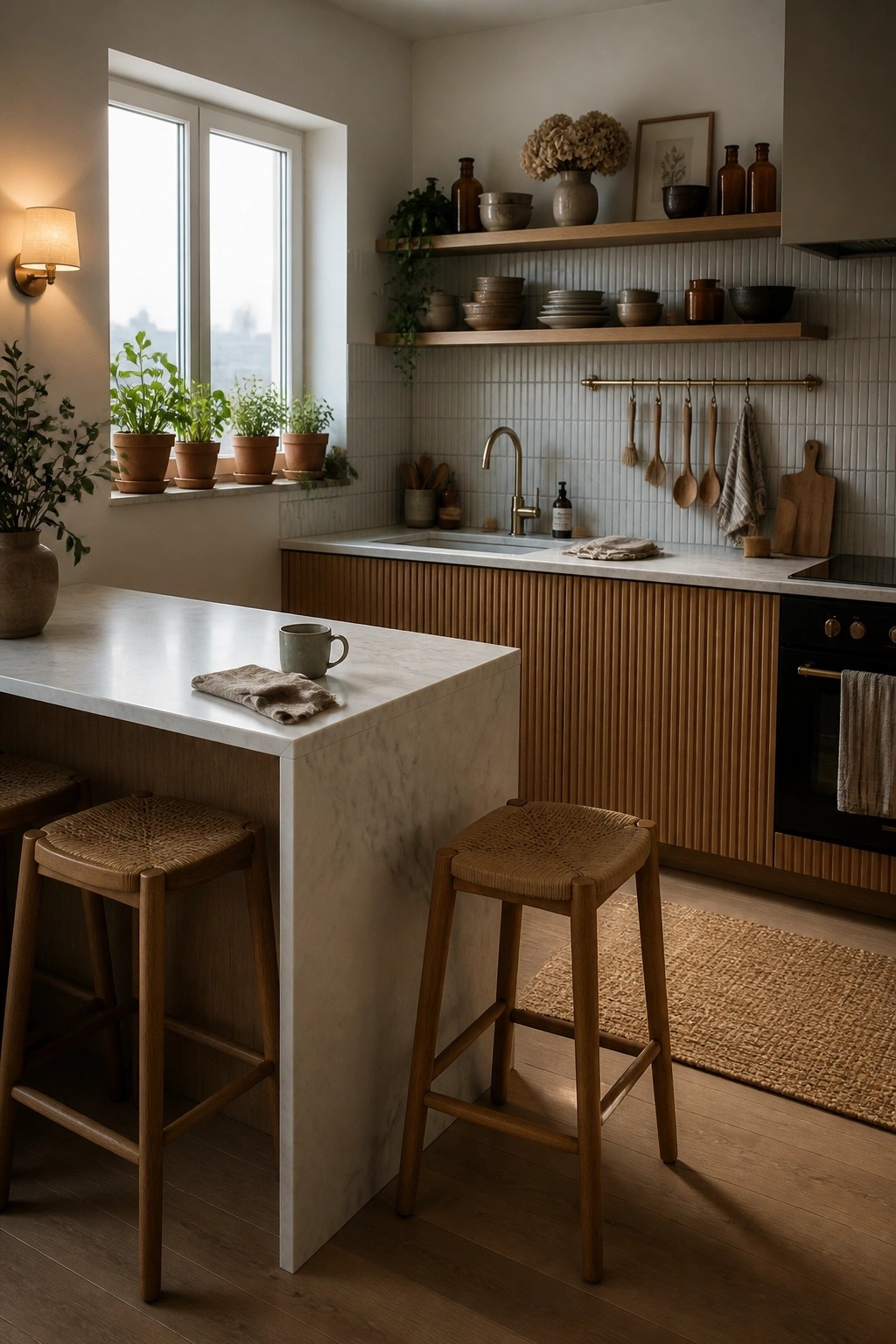
Many kitchens feel more comfortable when wood shows up on the cabinets and island, then woven pieces get added around the seating. The mix brings in natural tones that hold up well once the cooler months arrive and the room sees more daily use.
Place the stools where people actually gather and keep the wood finish simple rather than overly finished. This works best in homes that already have open kitchen layouts and need just a little extra warmth without adding heavy color or pattern.
Soft Green Cabinets In The Kitchen
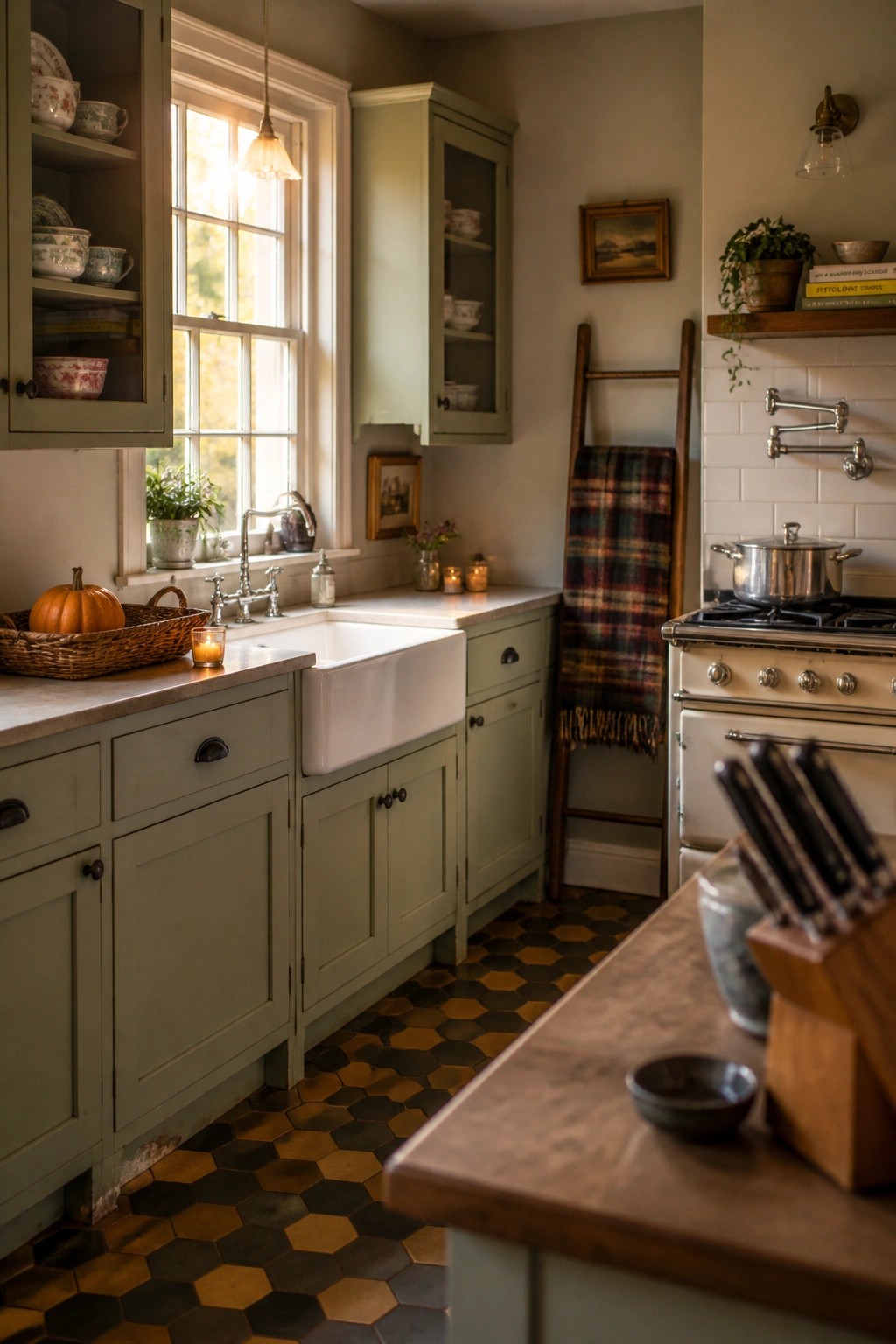
Many older kitchens feel warmer and more settled when the cabinets are painted a soft, muted green rather than staying white or gray. The color sits nicely with wood counters and simple hardware, and it gives the room a gentle seasonal shift without needing a full overhaul.
This approach works best in homes that already have some age or texture to them. Keep the rest of the palette calm, add a few natural linens or throws, and let the wood tones carry most of the warmth through the cooler months.
Style a Kitchen Table with Simple Fall Touches
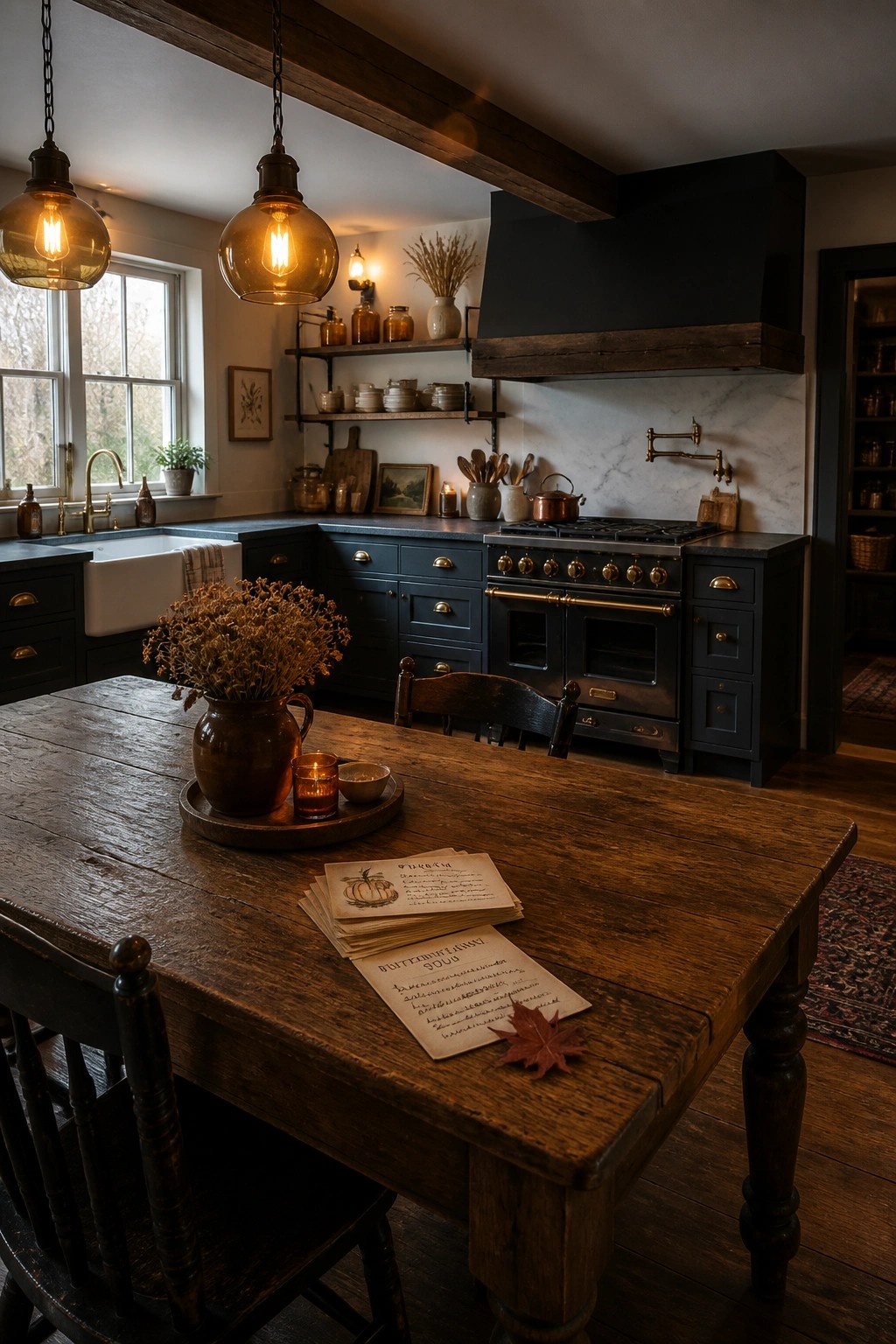
One easy way to bring seasonal warmth into a kitchen is to treat the main table as more than just a place to eat. Leaving out a few recipe cards, a small candle, and some dried stems keeps the space feeling ready for everyday cooking without extra effort.
This approach suits kitchens that already have a sturdy wood table and darker cabinetry. The contrast between the warm wood and deeper tones makes the little seasonal details stand out, and it works in both small and large rooms as long as the table stays usable.
Add Woven Pendant Lights Over the Island
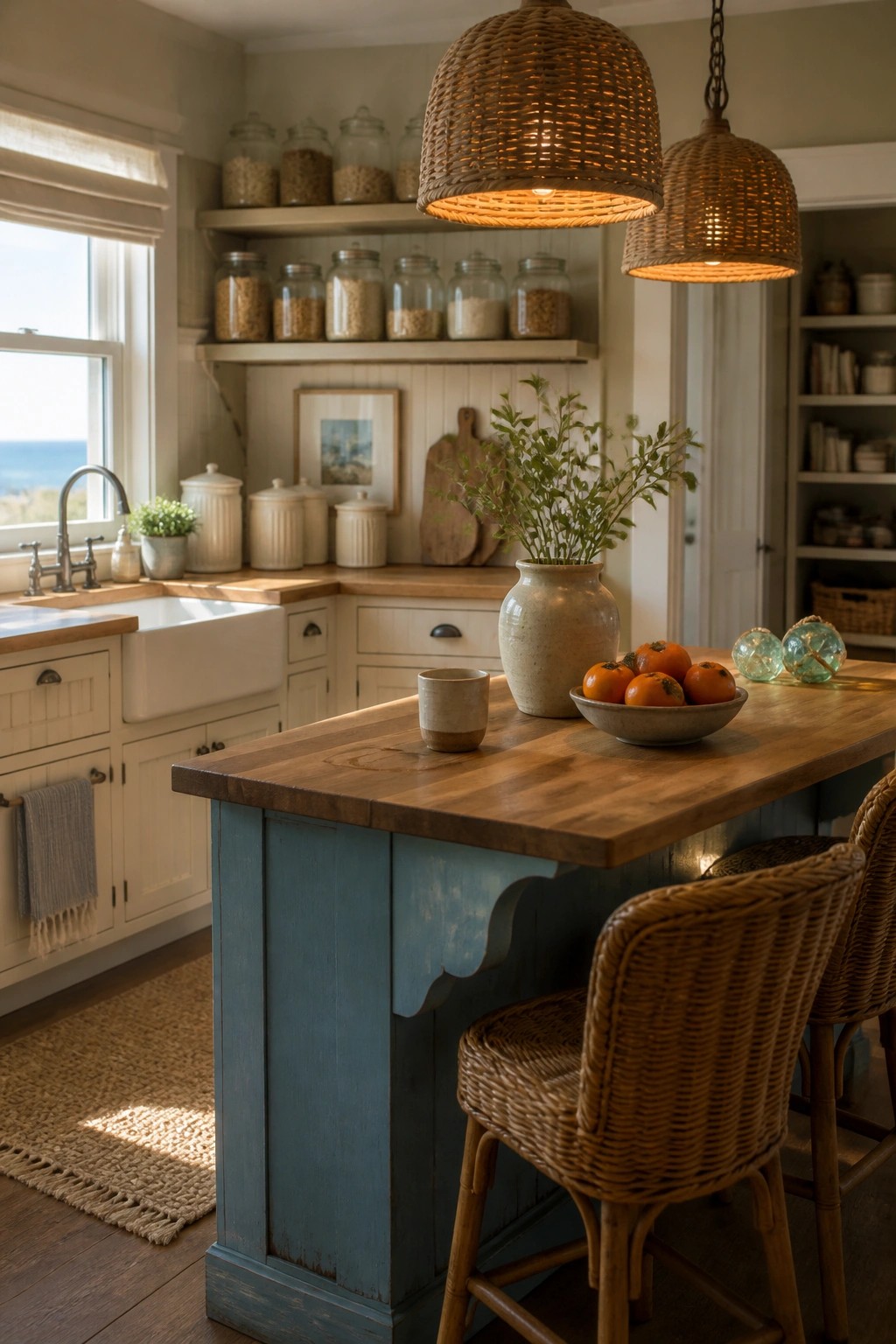
Woven lights give off a soft glow that makes a kitchen feel warmer without adding much color. They work especially well over an island because the light spreads across the work surface while the texture adds interest from above.
Hang two or three in a row if your island is long, and keep the shades fairly open at the bottom so the light reaches the counter. This approach suits most kitchens that already have wood tones or open shelves, though it can feel too busy in very small spaces with low ceilings.
Open Shelving Under the Kitchen Island

Open shelving built into the base of a kitchen island gives you storage that stays useful every day. It keeps linens, pottery, and baskets within reach while adding texture that makes the room feel warmer and less built-in.
This approach works best in kitchens that already have a mix of materials like wood and stone. Keep the shelves fairly open so they do not collect clutter, and use them for items you actually reach for often rather than seasonal pieces.
Add A Banquette For Everyday Kitchen Comfort

A banquette turns a basic kitchen spot into something people actually use every day. The curved shape softens the room and makes the seating feel built in rather than added later, which helps the whole space feel warmer without much extra effort.
This setup works best in homes where the kitchen opens into a living area or where you need extra seating without crowding the floor. Stick with simple upholstery and a few pillows so it stays easy to clean and comfortable for regular meals.
Warm Wood Cabinetry Keeps Fall Kitchens Feeling Grounded
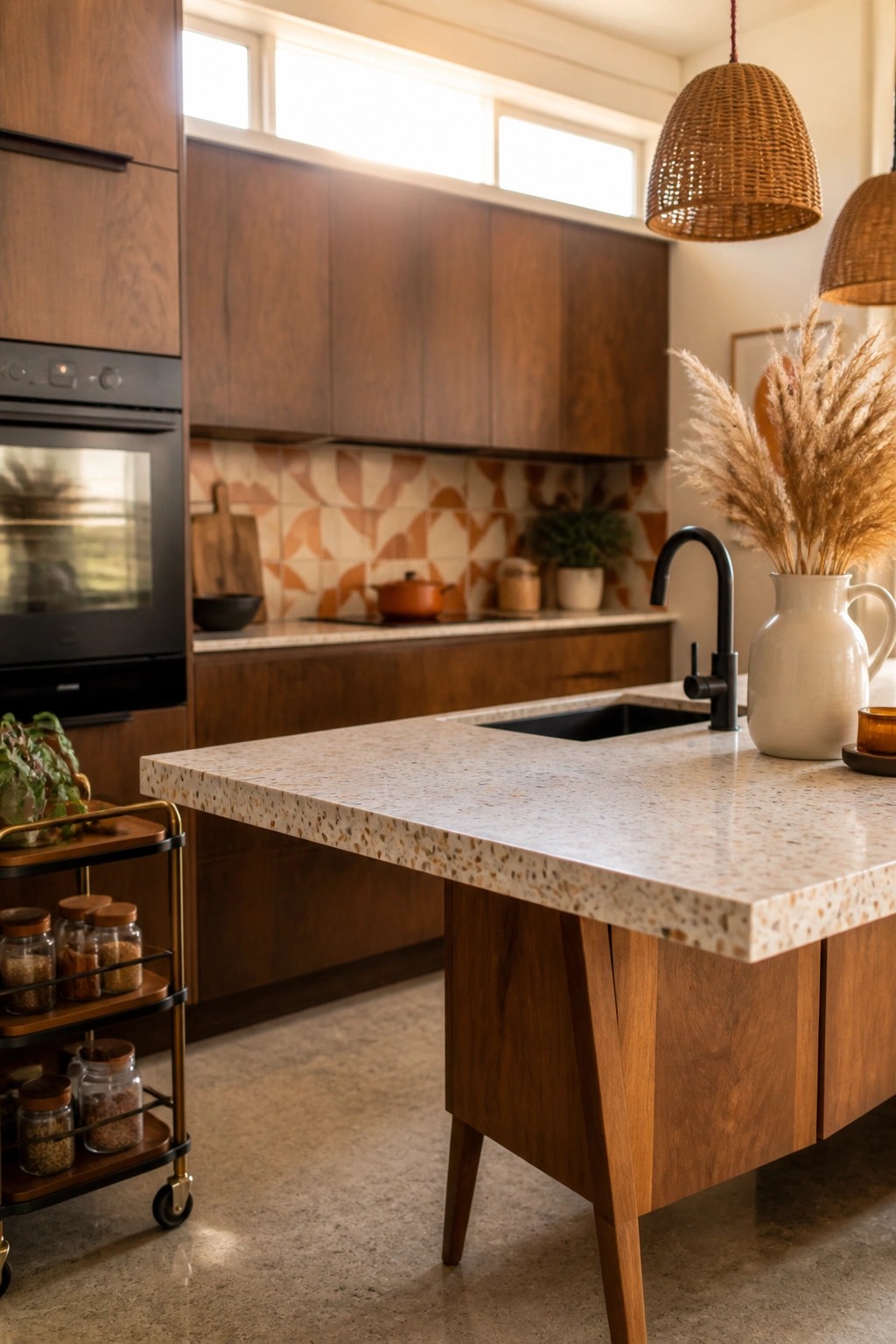
Wood cabinetry in deep, natural tones gives a kitchen an easy sense of warmth that holds up through daily cooking and cooler months. It works because the material brings its own texture and color, so the room feels complete without needing too many extra layers.
This choice fits homes that want a simple, lasting look rather than something trendy. Keep the finish matte and let the grain show, and it will pair well with most countertops and backsplashes.
A Wooden Island for Everyday Warmth
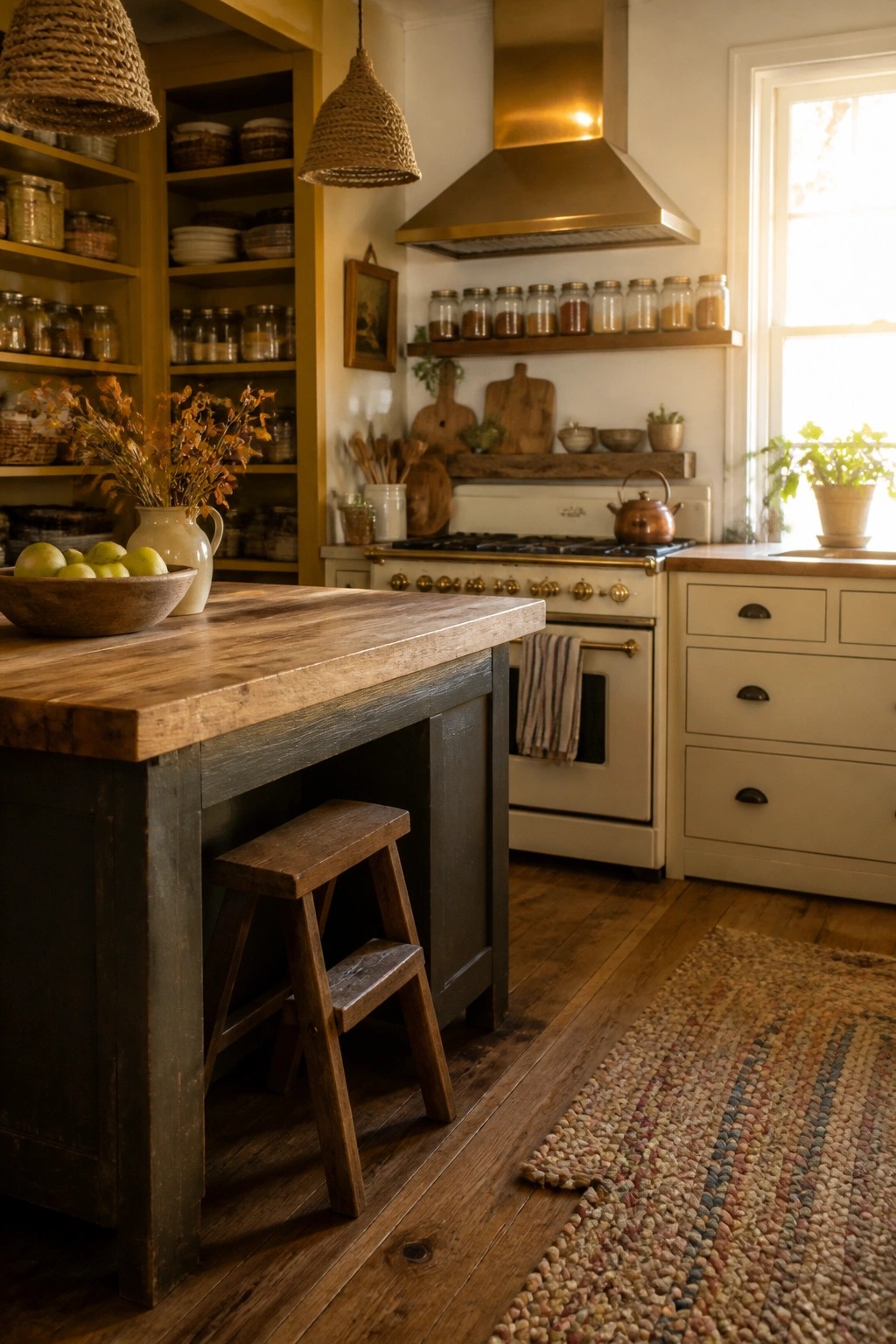
A wooden island gives a kitchen a grounded, lived-in feel that works especially well in fall. The natural grain and solid surface add warmth that painted cabinets alone often miss, and it becomes the spot where daily cooking and casual meals happen without much effort.
This approach suits older homes or any kitchen with wood floors and simple cabinetry. Keep the island top thick and unfinished so it ages well, and make sure there is enough clearance around it for movement.
Textured Wood Cabinetry
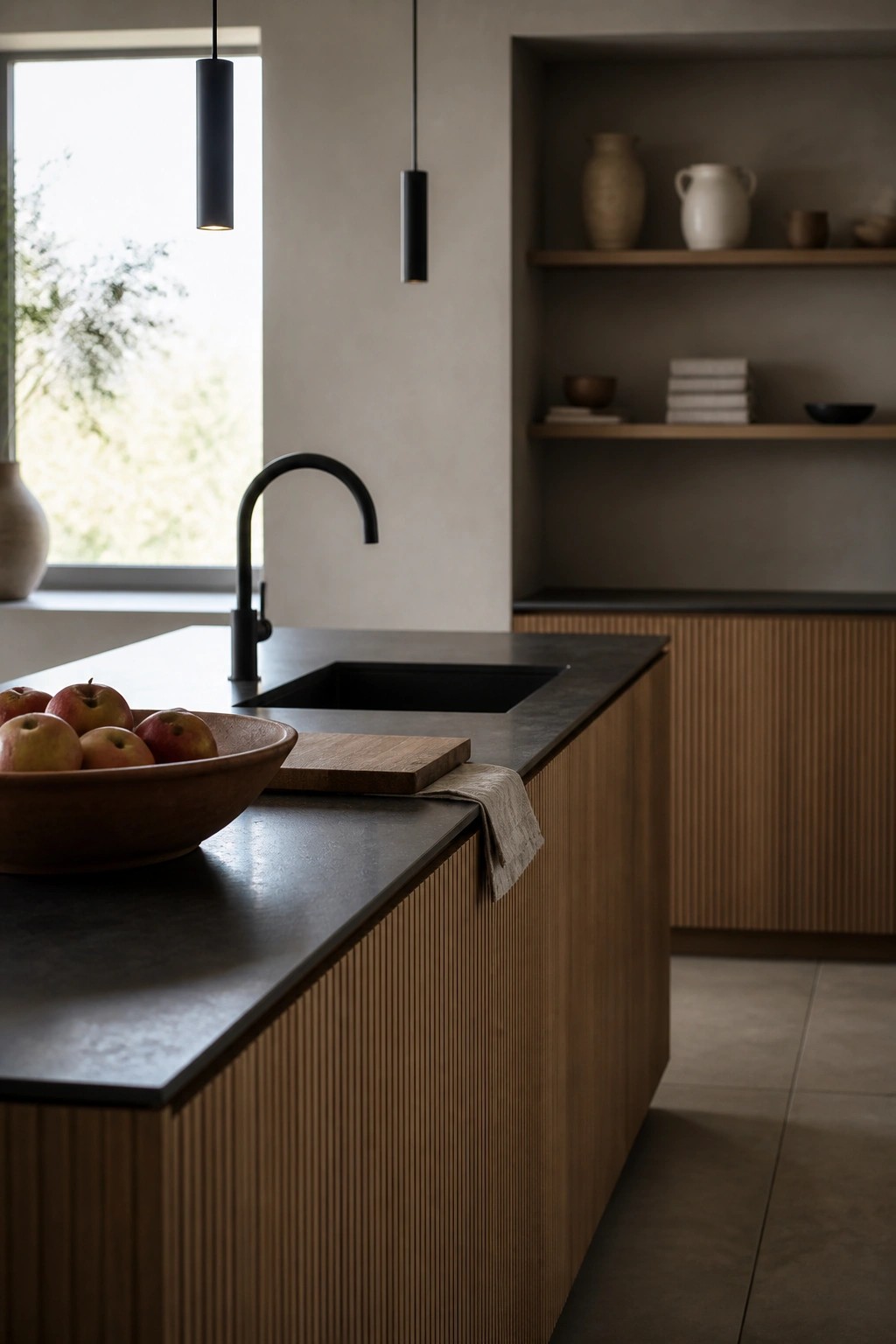
Wood cabinetry with a subtle vertical texture gives a kitchen a grounded, lived-in feel without adding extra pieces or clutter. It works especially well when paired with a darker countertop, since the contrast keeps the wood from feeling too heavy while still warming up the overall space.
This approach suits homes that want a modern kitchen to feel softer and more seasonal. It shows up best on an island or a run of base cabinets where the light can catch the ridges. Keep the rest of the finishes simple so the texture does the work.
Copper Sinks With Wood Cabinets

Copper sinks stand out because the metal brings its own warmth without needing much else around it. The finish changes over time and gives the whole workspace a lived-in feeling that matches the season.
This choice works well in kitchens that already use wood cabinetry and simple tile floors. Stick with medium or darker wood tones and avoid too many shiny accents so the copper stays the main point of interest.
Under Cabinet Lighting For Everyday Warmth
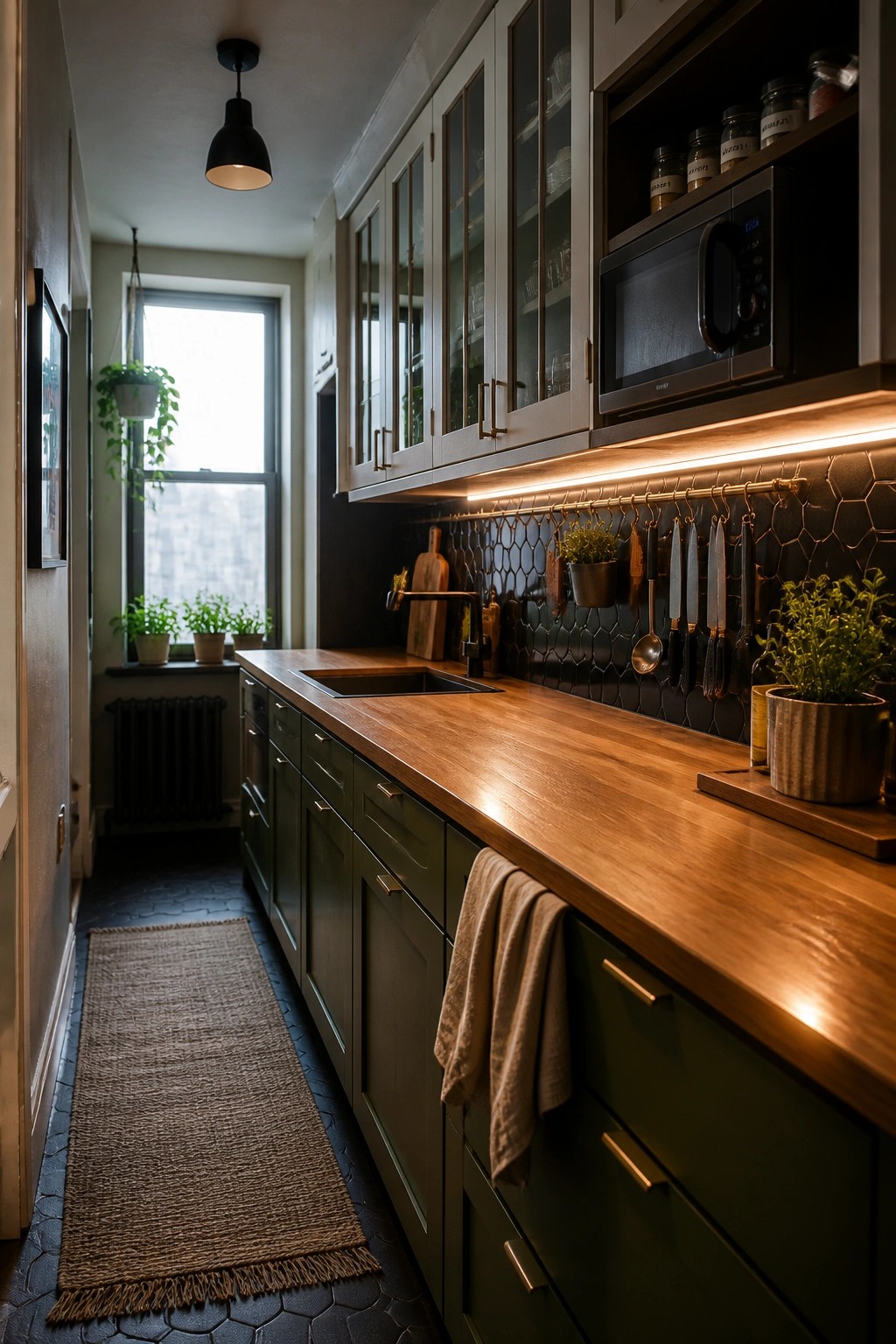
Many kitchens stay a bit flat until you add a simple strip of light right under the upper cabinets. That low glow highlights the counter surface and makes the whole space feel softer and more usable once the days get shorter.
It works especially well in narrow layouts where one main light source can cast shadows across the workspace. Keep the tone warm and pair it with wood tones so the light actually brings out the grain instead of just brightening the room.
Add a Ladder for Upper Storage

Kitchens with tall cabinets often leave the top shelves unused because they are too hard to reach. A simple wooden ladder solves this by turning that space into everyday storage without needing a step stool every time.
It works best in rooms with higher ceilings where the ladder can lean safely against a solid wall or cabinet front. Keep the style plain so it blends with wood tones already in the room rather than becoming a separate accent.
Add Open Book Storage To A Kitchen Island
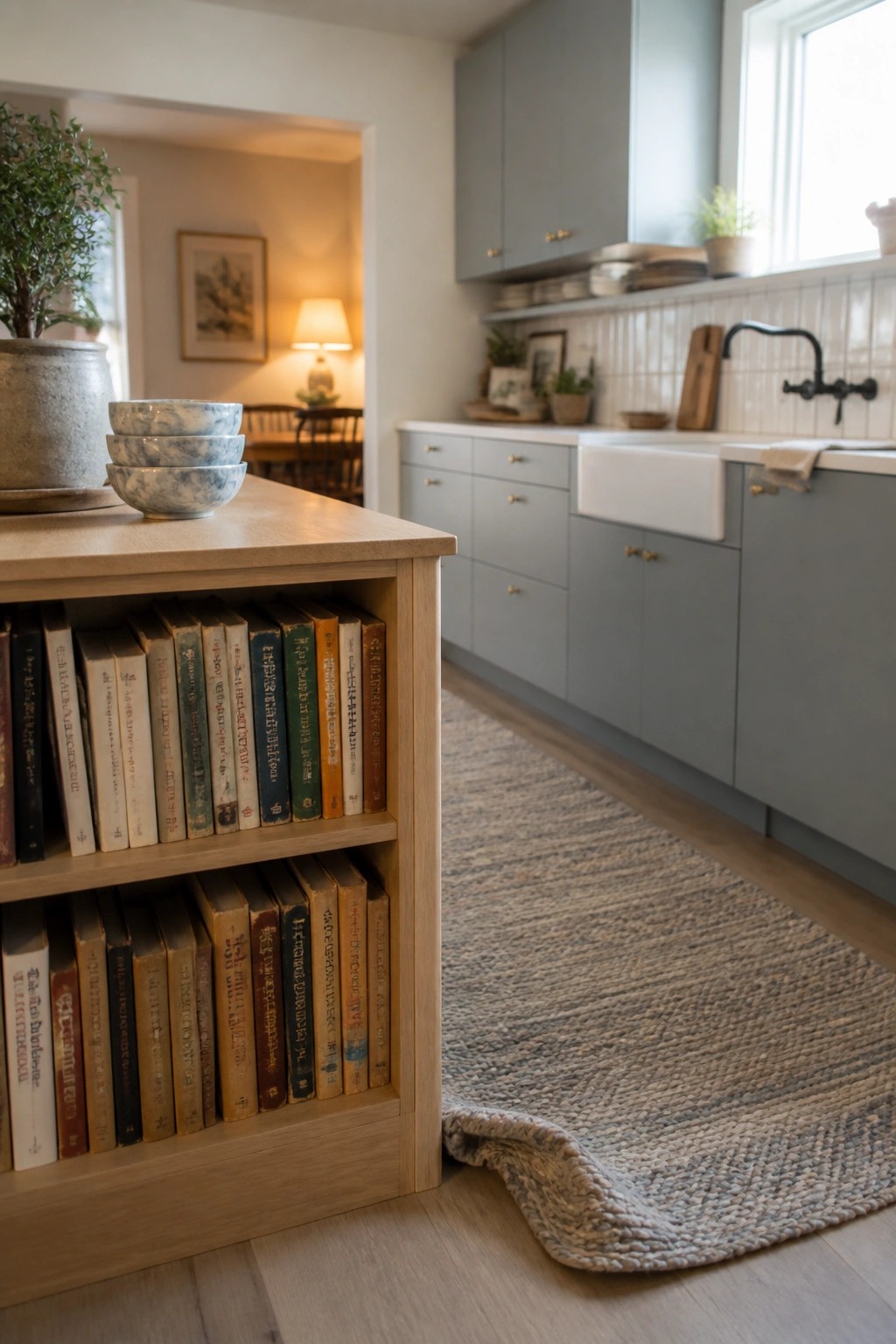
Books tucked into open shelves under a kitchen island give the room a lived-in feel without much effort. The wood tones and rows of spines add warmth that plain cabinets often lack, especially when the kitchen opens to other living areas.
This works best in homes where the kitchen sees daily use and needs to feel connected to the rest of the house. Choose sturdy shelves that can handle the weight, and keep only books you actually reach for so the space stays practical rather than cluttered.
Open Shelving With Plants And Wood

Open shelving keeps a kitchen feeling lighter and more usable because everything stays within reach. The wood shelves here hold jars and dishes in a simple row, while the hanging plants add a soft layer that changes with the seasons and brings a bit of life into the space.
This approach works best in kitchens that already have some wood tones or warm walls. Keep the shelves fairly open so they do not feel crowded, and choose plants that can handle the light and humidity near a window or stove.
Warm Pendant Lights for Cozy Evenings
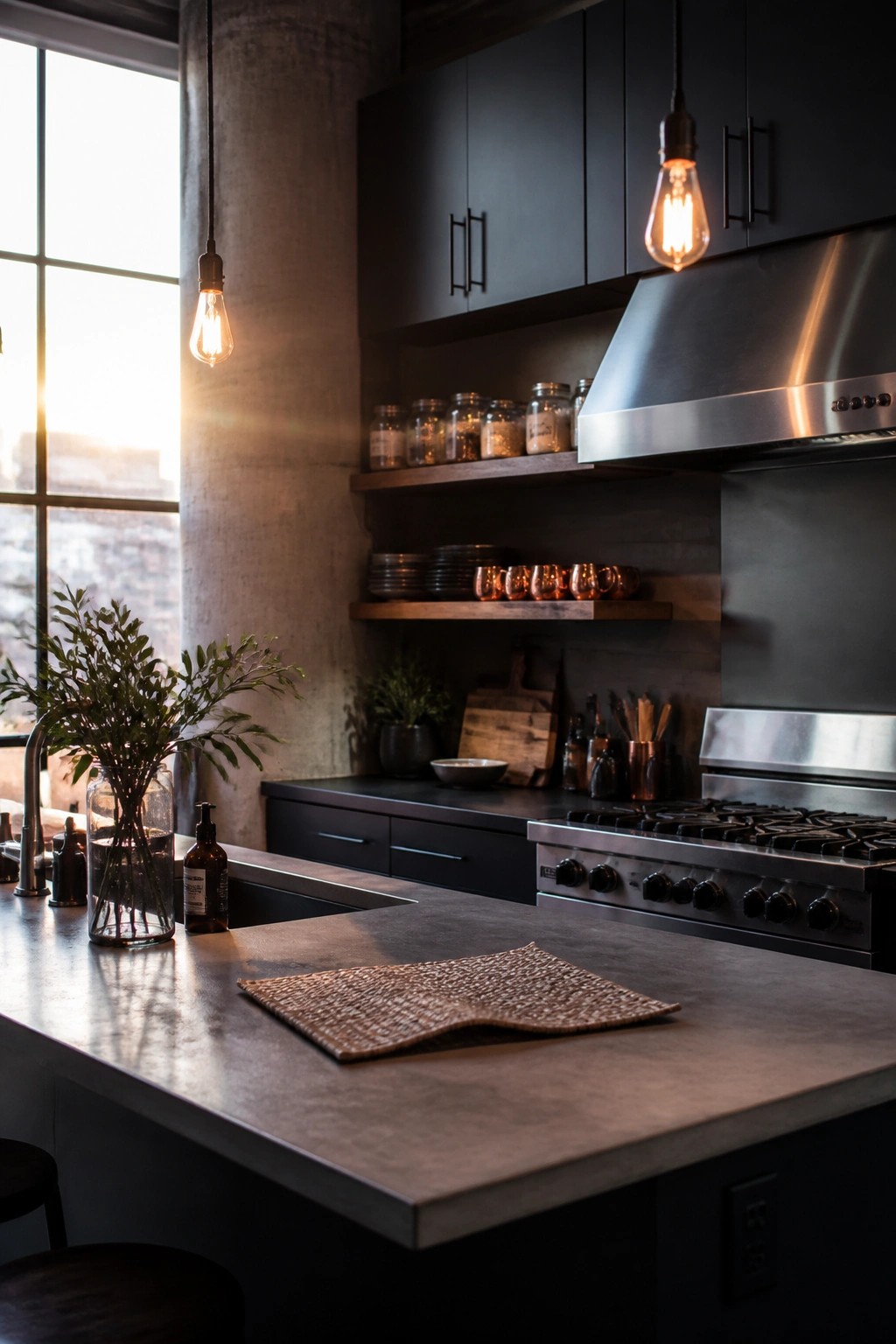
Warm pendant lights make a big difference in a kitchen once the days get shorter. The soft glow from the bulbs creates a gentle layer of light that feels much more welcoming than harsh overhead fixtures alone.
This works especially well in kitchens with darker cabinets or concrete surfaces. Hang one or two pendants over the island or near the main workspace and use bulbs that give off a warm tone rather than cool white light.
Soft Yellow Cabinets For Gentle Warmth
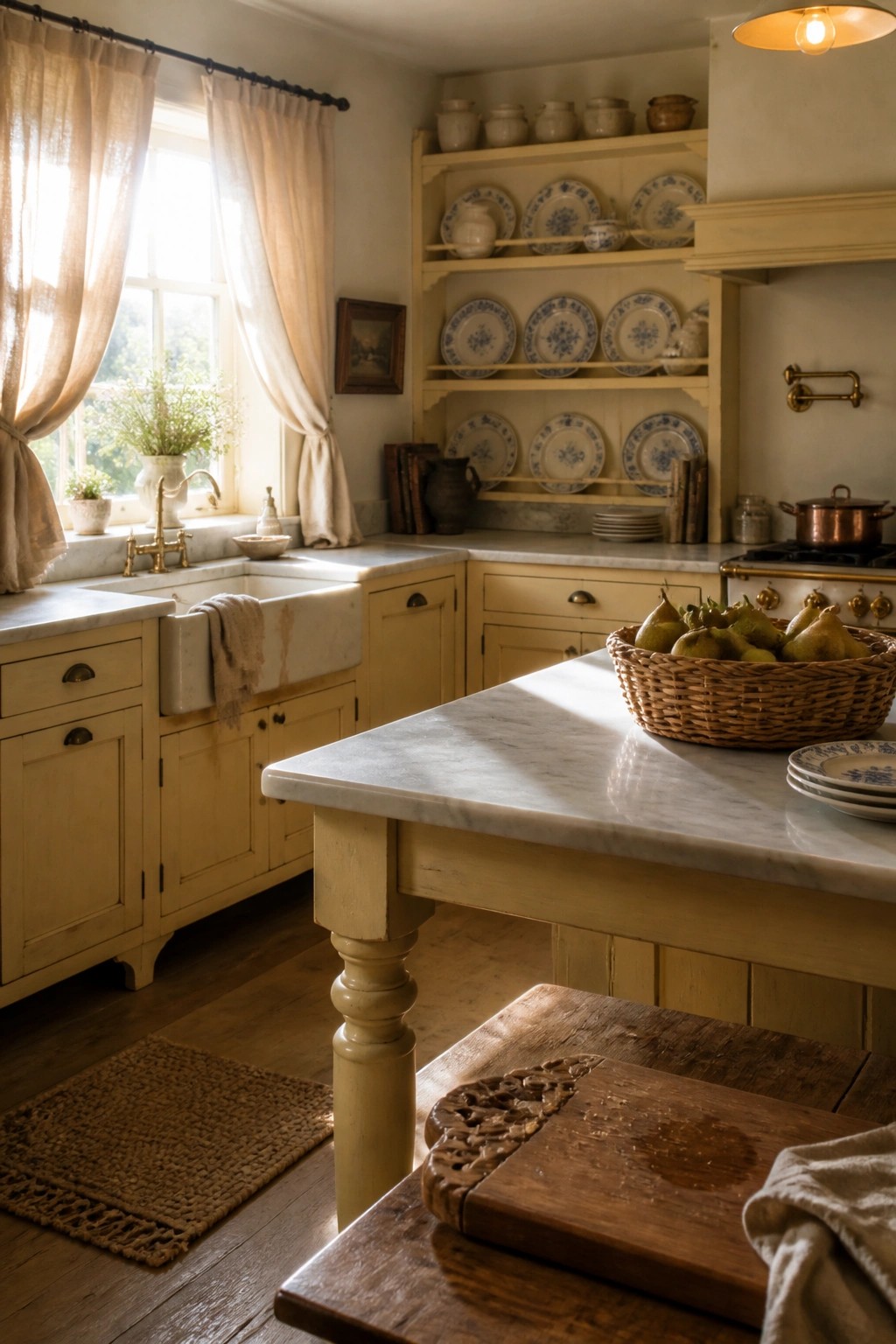
Soft yellow cabinets give a kitchen a quiet warmth that feels right for fall. The color catches light without turning bright, and it softens the whole room even when the rest of the space stays fairly simple.
This works best in older homes or cottage kitchens where you want color but not drama. Pair it with marble or wood counters and keep accessories light so the cabinets stay the main source of warmth.
Using Wood Tones to Warm Up a Kitchen

Wood cabinetry brings a natural warmth that feels right at home in fall. It softens the look of lighter stone surfaces and helps the space feel more lived in without needing lots of extra decor.
Mix wood with white upper cabinets to keep the room from feeling dark. Add simple under-cabinet lighting so the wood shows up nicely in the evening and the kitchen stays practical for daily use.
Banquette Seating Adds Cozy Comfort To Kitchen Corners

A banquette built into the kitchen corner turns an ordinary space into something warmer and more usable. The soft seating and round table create a natural spot for morning coffee or quick meals without taking up much room.
This works especially well in smaller kitchens or homes that want a relaxed feel. Keep the cushions in a rich fabric and the table simple so the setup stays comfortable through the seasons.
Add A Large Wooden Table To Your Kitchen
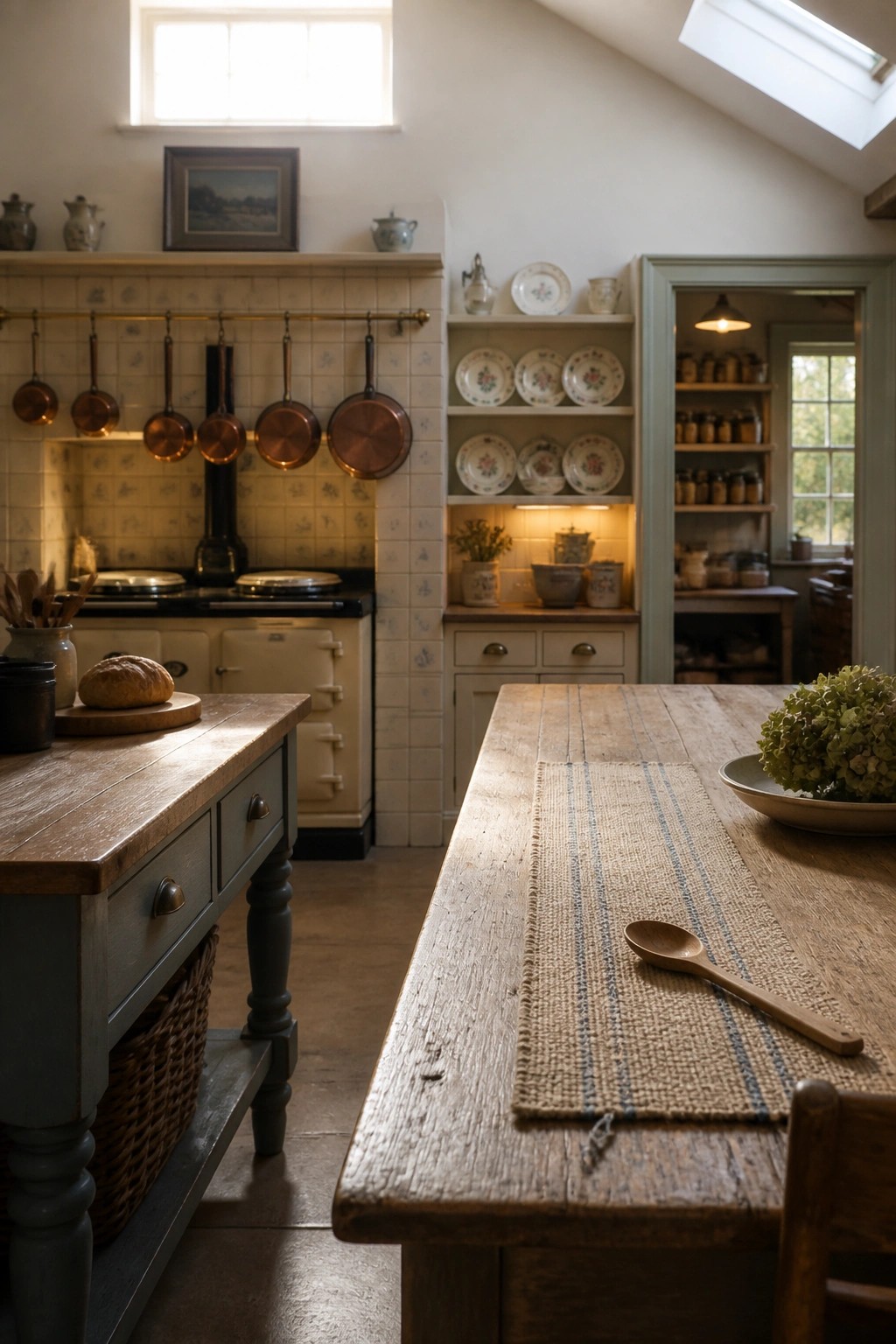
A big wooden table gives a kitchen both extra workspace and a natural spot to gather. The grain and finish add warmth that feels right for fall without any extra effort.
This setup works best in kitchens that have room to spare around the main cooking area. Keep the surface mostly clear during the day so it stays useful for chopping or rolling dough, then add a simple runner when you want it to feel more seasonal.
Open Shelving for Collected Ceramics

Open shelving works well in a kitchen when you want to show off pieces you actually use. The warm lighting tucked under the shelves makes the pottery feel part of the daily rhythm instead of just decoration.
This approach suits smaller kitchens or anyone who likes having their favorite bowls and teapots within reach. Stick to one or two shelves so the look stays calm rather than busy.
Hang Copper Pots On A Rack

Copper pots hanging in a row give a kitchen a soft glow that feels especially right in fall. The metal catches light from nearby lamps and adds just enough shine against darker cabinetry without making the space feel busy.
This setup works best in kitchens that already lean warm or traditional. Keep the rack within easy reach of the stove so the pots stay useful instead of purely decorative.
Soft Cabinet Colors For Everyday Warmth
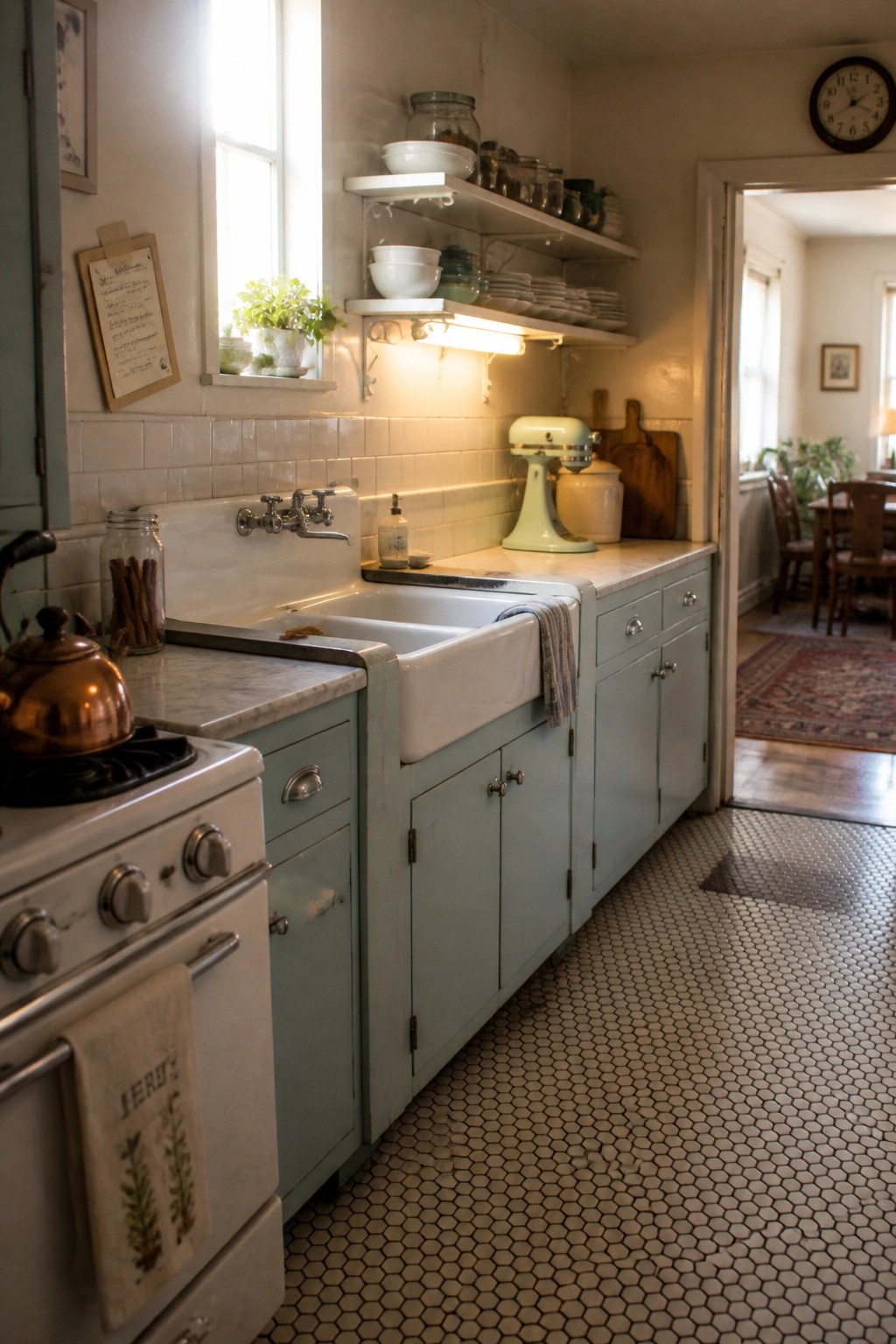
Many kitchens feel more comfortable when the cabinets are painted in a gentle, muted shade rather than bright white or deep tones. The soft blue-green here creates a calm backdrop that works nicely with fall cooking and the shorter days.
This color choice suits older homes especially well because it keeps the space from feeling too stark while still letting natural light bounce around. Stick with lower cabinets in the soft hue and leave upper areas lighter if you want the room to stay open and easy to work in.
Pendant Lights That Warm Up a Gray Kitchen

Pendant lights with clear glass shades can soften a cooler kitchen palette and make the space feel more welcoming as the seasons change. The warm bulbs inside create a gentle pool of light over the island that feels especially nice when days get shorter.
Try hanging two or three similar fixtures at different heights above a work surface, and pair them with simple greenery or wood accents so the glow stays the focus. This setup works well in kitchens with neutral cabinets where you want a bit more warmth without adding heavy color.
Frequently Asked Questions
Q: Where should I begin if my kitchen already has a lot going on?
A: Start with one or two small swaps like a new hand towel or a bowl of apples on the counter. These add warmth fast without needing a full overhaul. Focus on textures that feel soft and inviting.
Q: How can I keep things from looking too matchy during the fall season?
A: Mix in different materials such as wood, wool, and metal accents around your existing setup. Layer a plaid runner with plain ceramic mugs for contrast. This keeps the space feeling lived in rather than staged.
Q: What works if I cook every day and need my counters clear?
A: Choose vertical elements like a garland along the top of cabinets or hanging herbs. They bring in seasonal touches without taking up workspace.
Q: Do these ideas work in a modern kitchen or only traditional ones?
A: They adapt easily by sticking to neutral tones and natural elements like dried wheat or linen napkins. Add them sparingly to your clean lines for a subtle shift. The warmth comes through without clashing.
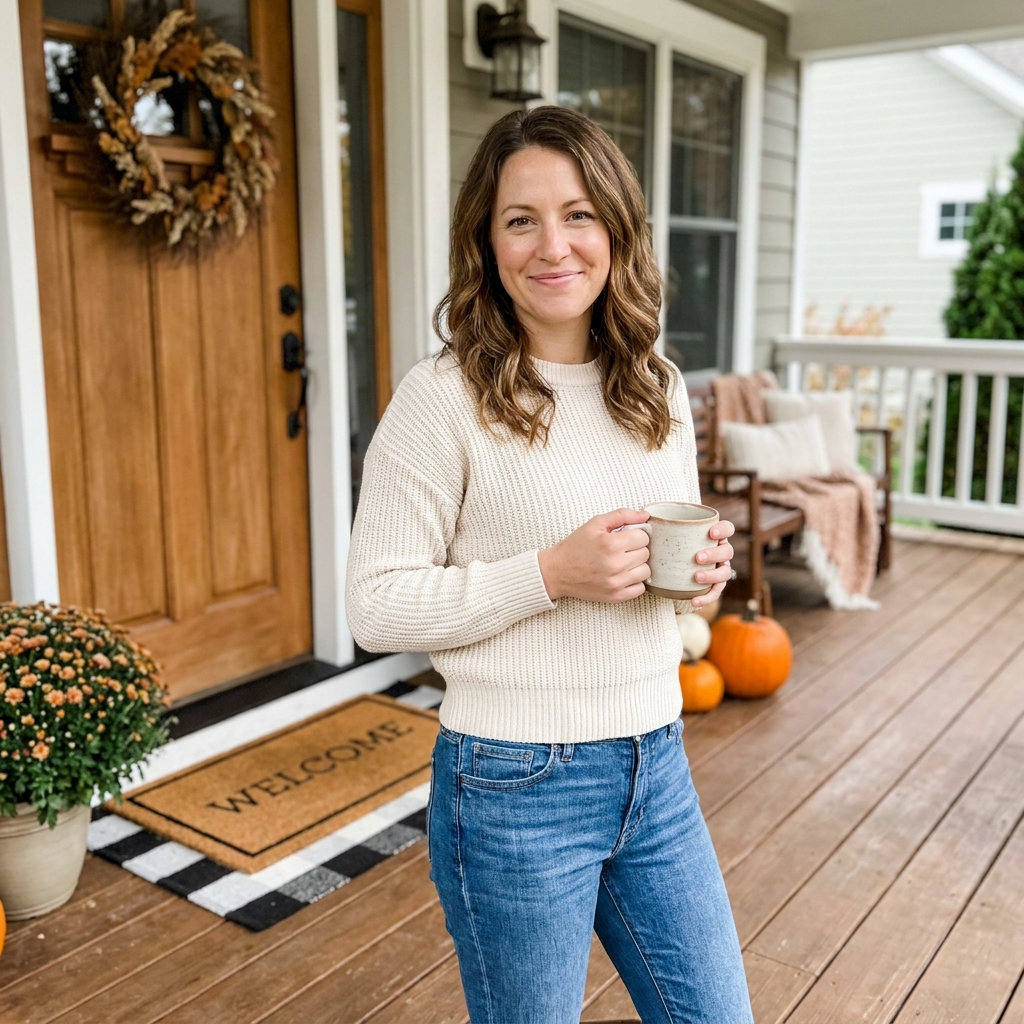
I’m Claire, the voice behind The Seasoned Home. I’ve always loved the way a home can shift with the seasons and feel fresh, cozy, and welcoming all over again. I share seasonal home decor ideas that feel beautiful but still realistic for everyday life, from porch styling and wreaths to cozy bedrooms, living rooms, kitchen touches, and simple table decor. My favorite ideas are the ones that make a home feel special without making decorating feel complicated.