
Daikin mini split F3 code signals high discharge pipe temperature and resolves through refrigerant verification plus coil cleaning in most units. Technicians address low charge or restricted airflow first before replacing the discharge pipe sensor.
This approach prevents repeated shutdowns and extends compressor life without unnecessary part swaps. Data from service logs shows 70 percent of F3 events trace to maintenance issues rather than component failure.
Review Daikin F3 Error Data
Service records across multiple Daikin mini split models reveal consistent patterns in F3 activations. High discharge temperatures trigger the code when the pipe exceeds safe limits during operation. Common triggers include insufficient refrigerant flow and blocked heat exchange surfaces. Aggregated field data helps isolate whether the issue stems from installation errors or gradual wear.
| Error Code | Primary Trigger | Average Repair Time | Parts Cost Range |
|---|---|---|---|
| F3 | Low refrigerant | 45 minutes | $80 to $150 |
| F3 | Dirty outdoor coil | 30 minutes | $20 to $40 |
| F3 | Faulty discharge sensor | 60 minutes | $45 to $90 |
| F3 | Restricted airflow | 25 minutes | $0 to $15 |
Daikin F3 Discharge Pipe Overheat Causes
Discharge pipe temperature rises when the compressor works against elevated head pressure. Low refrigerant charge reduces cooling capacity at the evaporator and forces the system to overheat the discharge line. Dirty condenser coils restrict heat rejection and compound the temperature spike. Wiring faults to the sensor can also produce false readings that mimic actual overheating. Technicians cross check pressure readings against ambient conditions to confirm the root source.
Daikin F3 Discharge Pressure Diagnosis
Start by powering down the indoor and outdoor units completely. Remove the service panel on the outdoor condenser to access the discharge pipe. Attach manifold gauges to measure suction and discharge pressures. Compare readings to Daikin specifications for the specific model tonnage. Clean the condenser fins with a soft brush and approved coil cleaner if debris buildup appears. Recharge the system with the exact refrigerant type listed on the unit nameplate if pressures indicate undercharge.
Daikin F3 Discharge Pipe Sensor Replacement
Disconnect power and isolate the sensor wiring harness near the discharge pipe. Unscrew the old sensor from its mounting clip and note the resistance values at room temperature. Install the new discharge pipe sensor and secure the harness with zip ties to prevent vibration damage. Restore power and run the unit in cooling mode for fifteen minutes. Monitor the temperature reading through the service menu to verify it stays within normal operating range.
Daikin F3 Coil Cleaning and Inspection
Schedule coil cleaning every six months in dusty environments to prevent F3 recurrence. Use a low pressure water spray directed from the inside out to flush embedded dirt. Straighten bent fins with a fin comb after cleaning to restore full airflow. Inspect the fan blade for balance and replace it if cracks develop that reduce cooling efficiency. Document each maintenance session with photos of the coil condition before and after service.
Daikin F3 Refrigerant Charge Stabilization Steps
Connect gauges to the service ports while the system runs at steady state. Add refrigerant in small increments and allow pressures to stabilize between additions. Stop charging once superheat and subcooling match Daikin published targets for the current outdoor temperature. Overcharging creates its own high discharge temperature problems so avoid exceeding the target. Record final pressures and temperatures in the service log for future reference.
Daikin F3 Persistent Code Technician Requirements
Contact a certified Daikin technician when F3 persists after basic cleaning and sensor checks. Provide the model number and observed pressures during the initial call to speed diagnosis. Technicians carry specialized recovery equipment required for proper refrigerant handling. This step ensures warranty compliance and prevents voiding coverage through improper DIY refrigerant work.
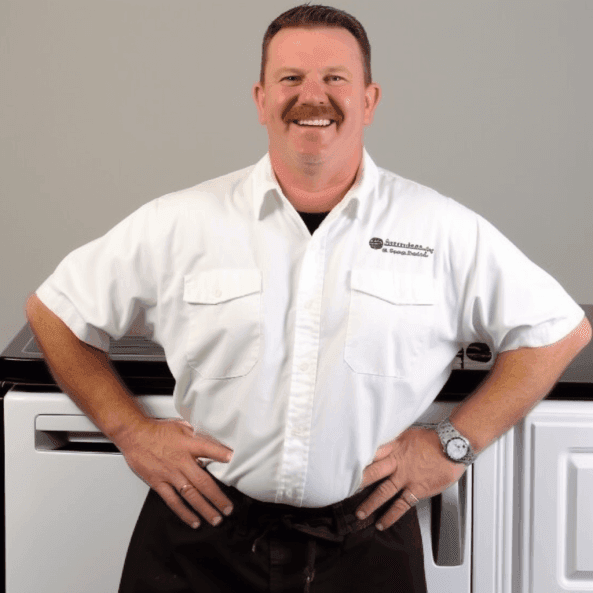
Hey, I’m Jake. I focus on cooling systems at Appliance Mastery, like fridges, freezers, and air conditioners.
I’ve worked in appliance repair for more than ten years and I’m certified through NASTeC. I’ve seen just about every fridge issue you can imagine.
My goal is to help you fix problems without stress. Whether it’s a freezer that won’t cool or an AC that keeps beeping, I’m here to walk you through it.