
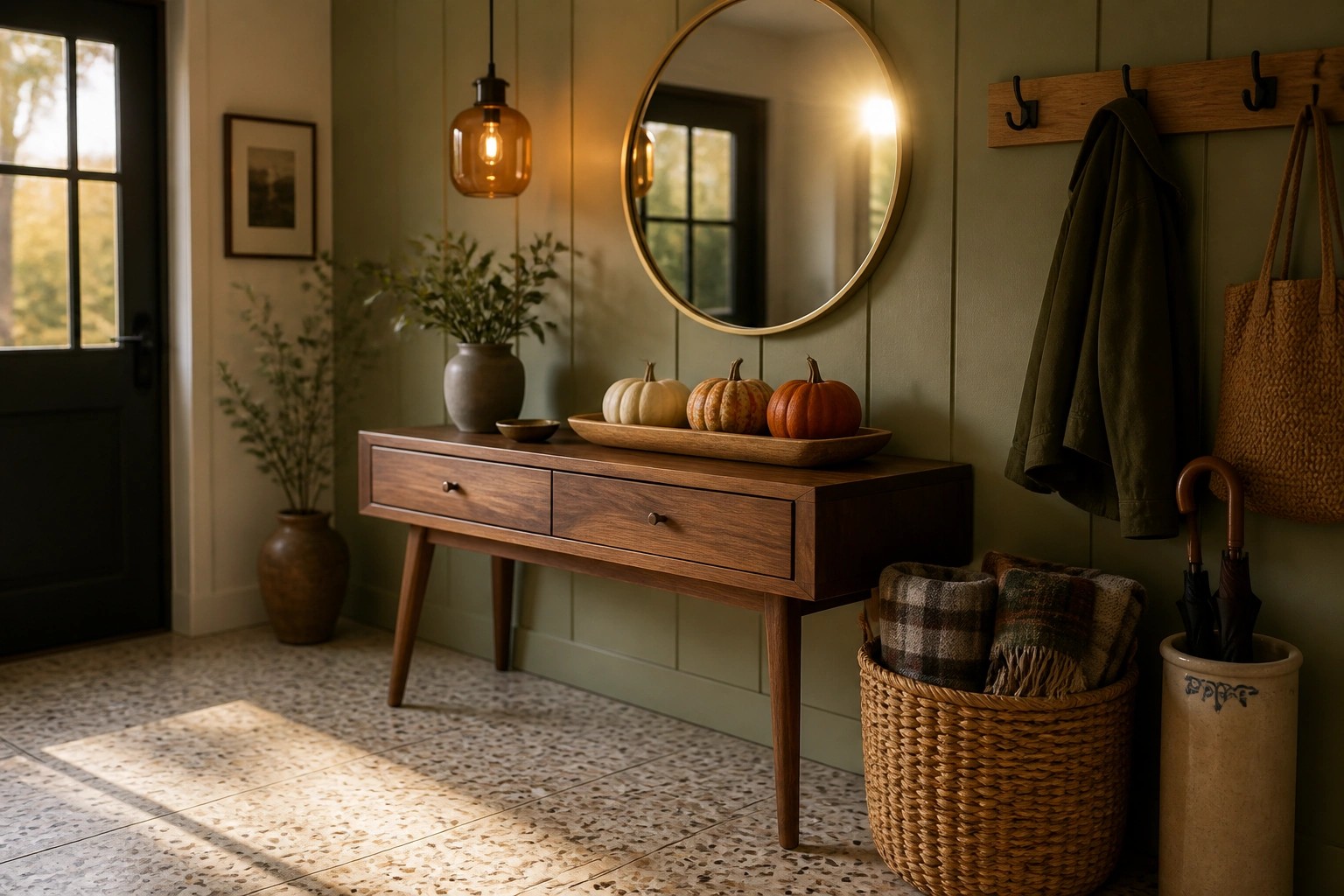
I have always noticed that the entryway is the first place where daily life meets the rest of the house, so it needs to handle shoes, bags, and mail without turning into a bottleneck.
I learned this after rearranging my own space a few times and seeing how much smoother mornings felt once there was actually room to move.
A setup that works has to balance storage that gets used with pieces that keep the area from feeling cramped right at the door.
That balance is harder to get right than it looks in photos, which is why I tend to try small adjustments in stages rather than overhauling everything at once.
Once the layout fits how people really come and go, the whole house starts to feel more settled from the moment you step inside.
Console Tables With Basket Storage
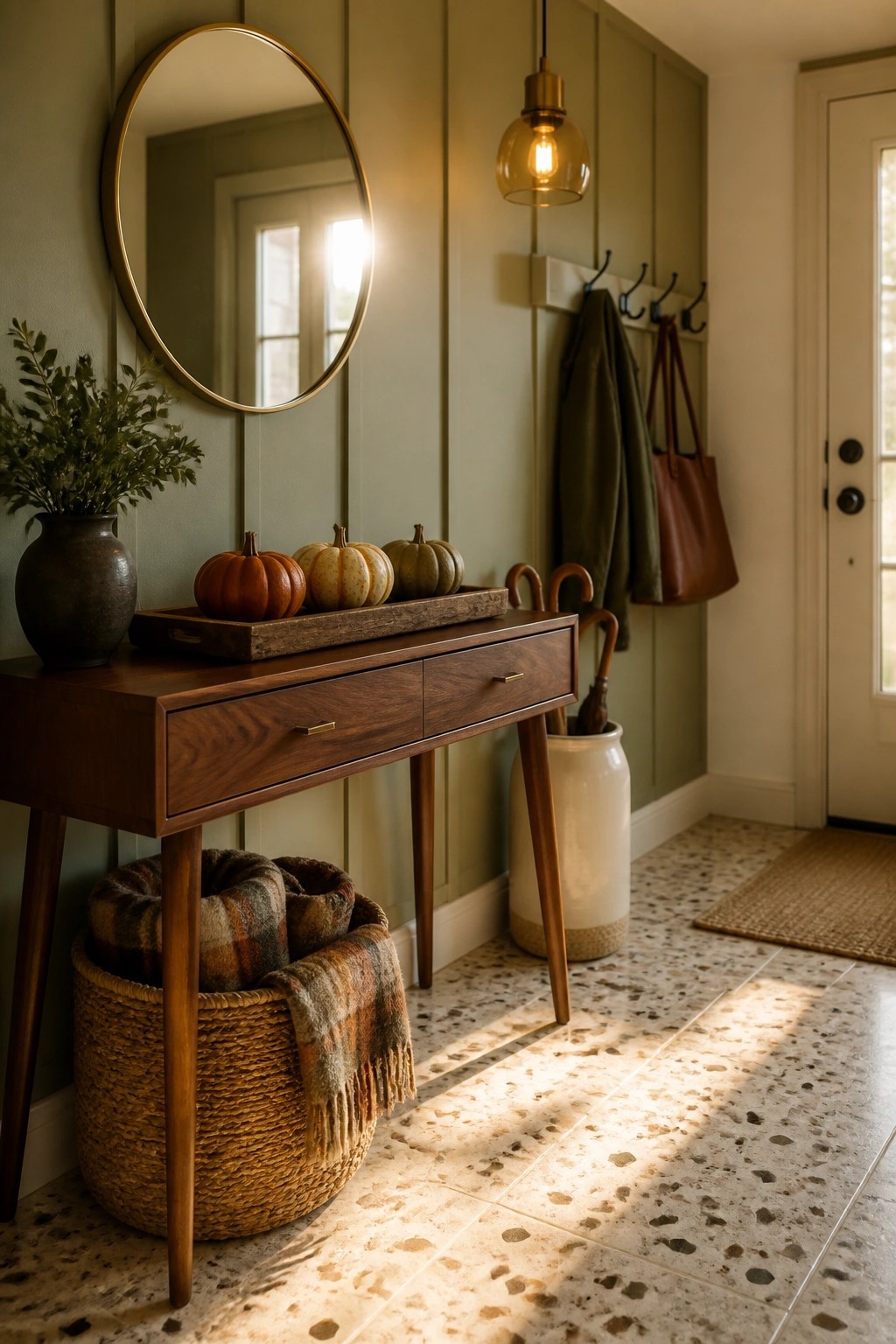
A console table works well in an entry when it includes a simple basket underneath. The basket keeps blankets or scarves handy for cooler days while leaving the top surface clear for keys and small decor.
This setup suits narrow hallways or smaller foyers where floor space stays tight. Choose a basket that fits the table legs without sticking out and swap the contents as the season changes.
Storage Benches With Baskets
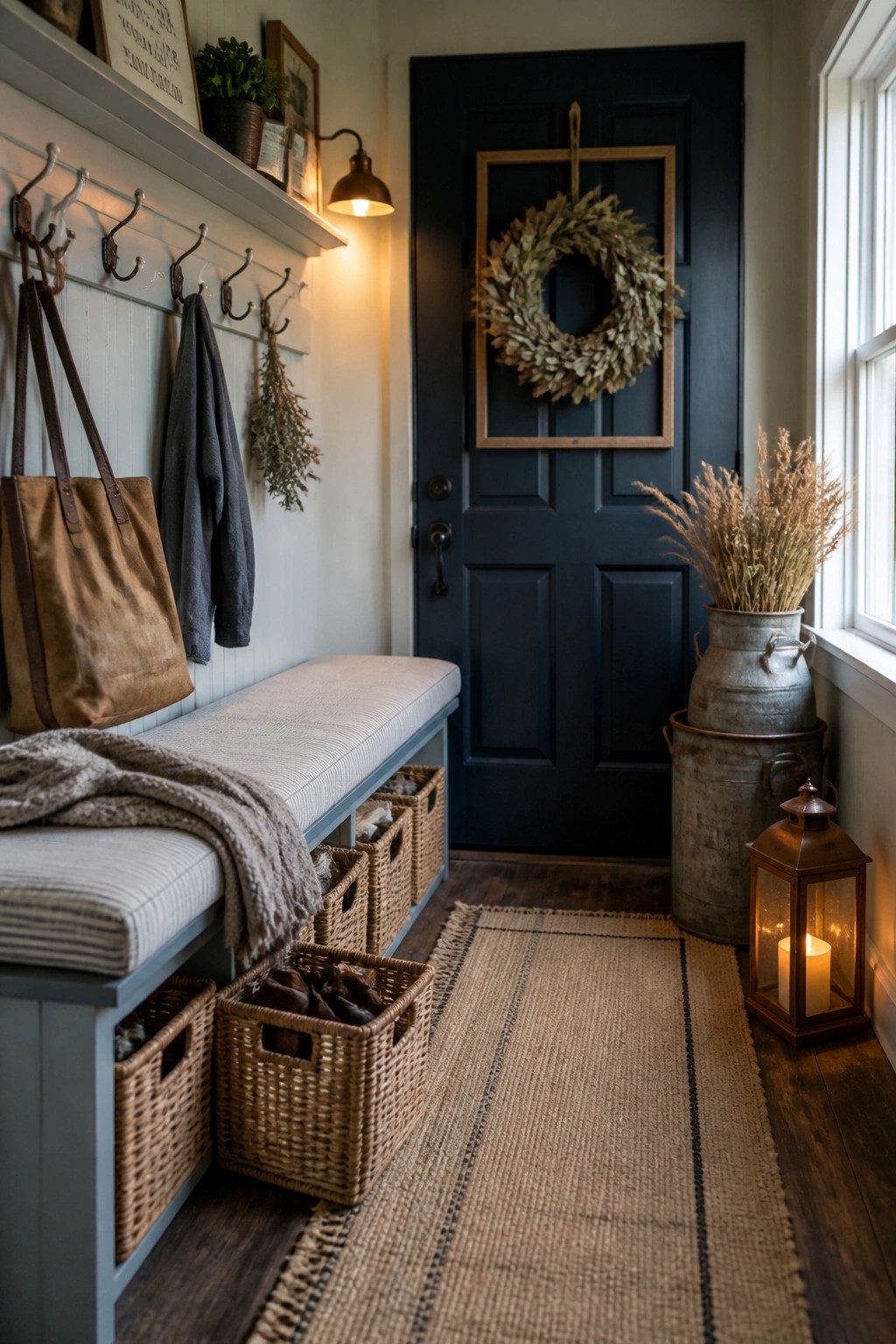
Many entryways end up messy because shoes and bags get dropped right by the door. A bench with baskets tucked underneath gives you both a spot to sit and a simple way to keep those items out of sight.
This setup works best in smaller homes or busy households where you need storage without adding extra furniture. Just slide the baskets in and out as needed and the space stays usable.
Wooden Crates Offer Practical Shoe Storage
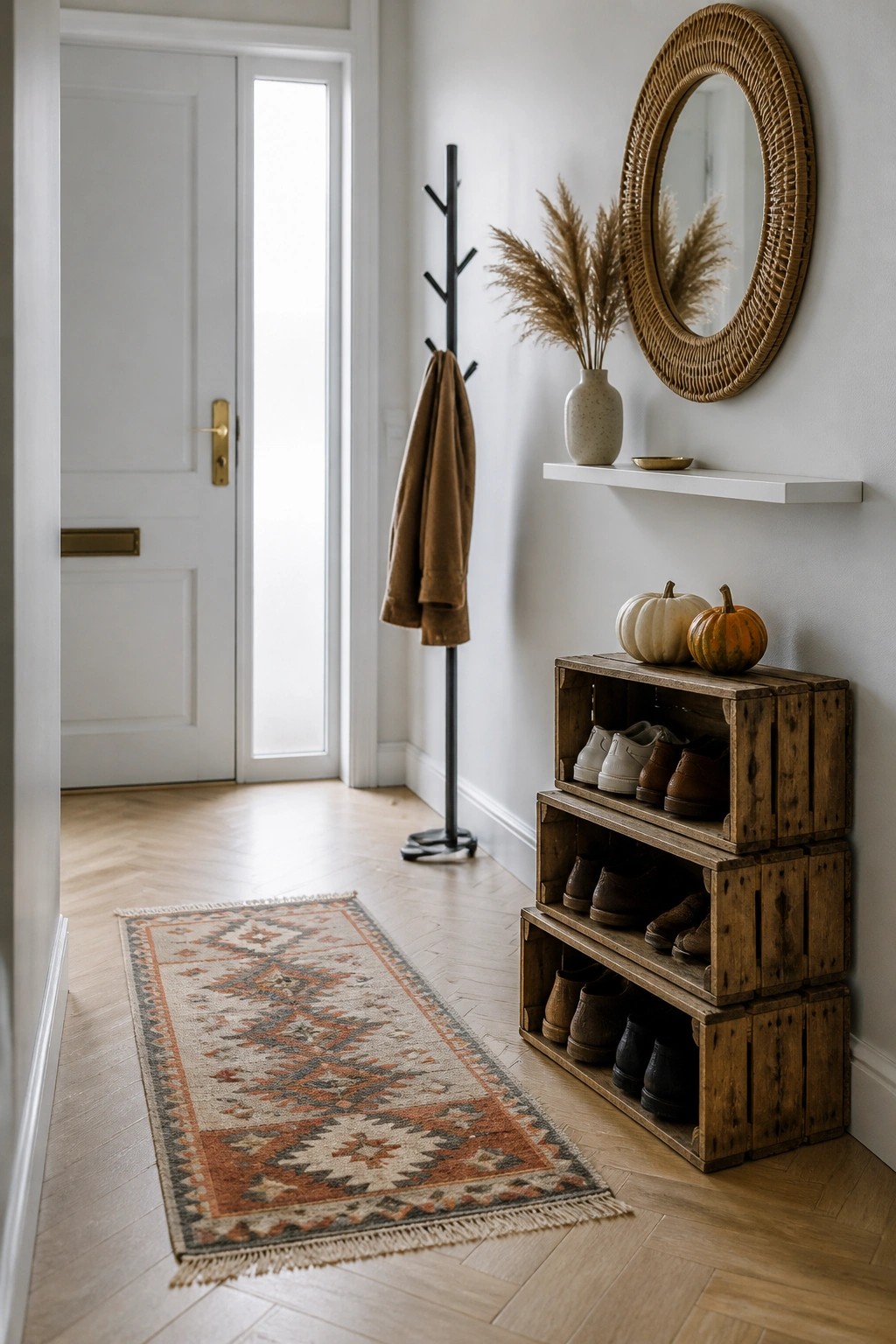
Stacking wooden crates gives you a sturdy way to hold shoes right by the door without needing a big piece of furniture. The open sides let air circulate so shoes dry out faster, and the whole setup stays low enough that it does not block the walkway.
This works best in homes that already lean casual or rustic. Start with two or three matching crates, set them against a wall, and add a small shelf above if you want extra room for keys or mail. Just keep the stack steady and avoid overloading the top level.
Layer Textiles on an Entry Bench
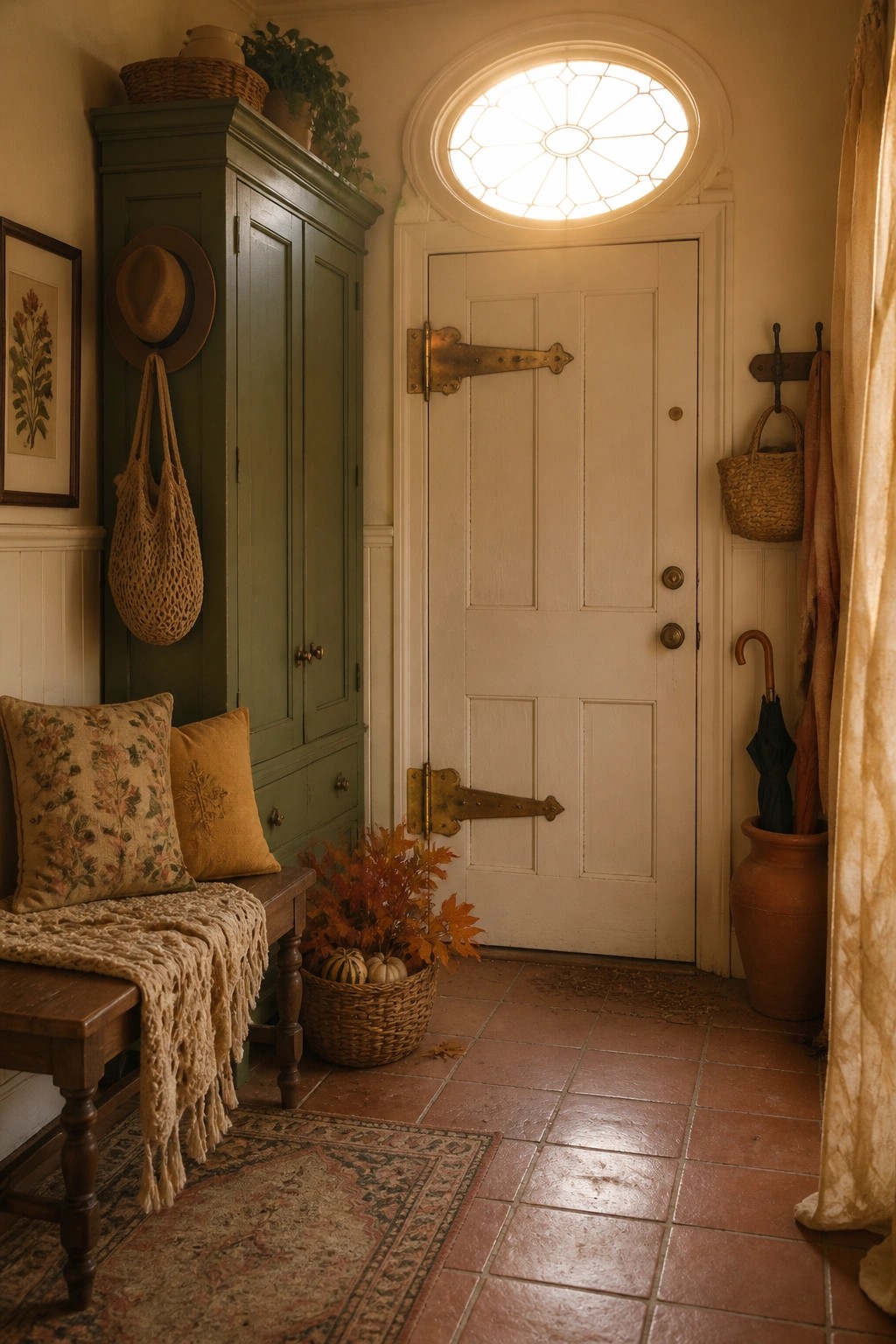
A bench right by the door gives people a place to sit and handle shoes or bags without blocking the walkway. Soft layers like pillows and a throw turn it from a plain seat into something that feels ready for everyday use.
This setup suits smaller entries or homes that need a bit more function without adding furniture that takes up floor space. Choose washable fabrics so they hold up to real traffic and can be swapped with the seasons.
Console Tables With Drawers Keep Entryways Organized
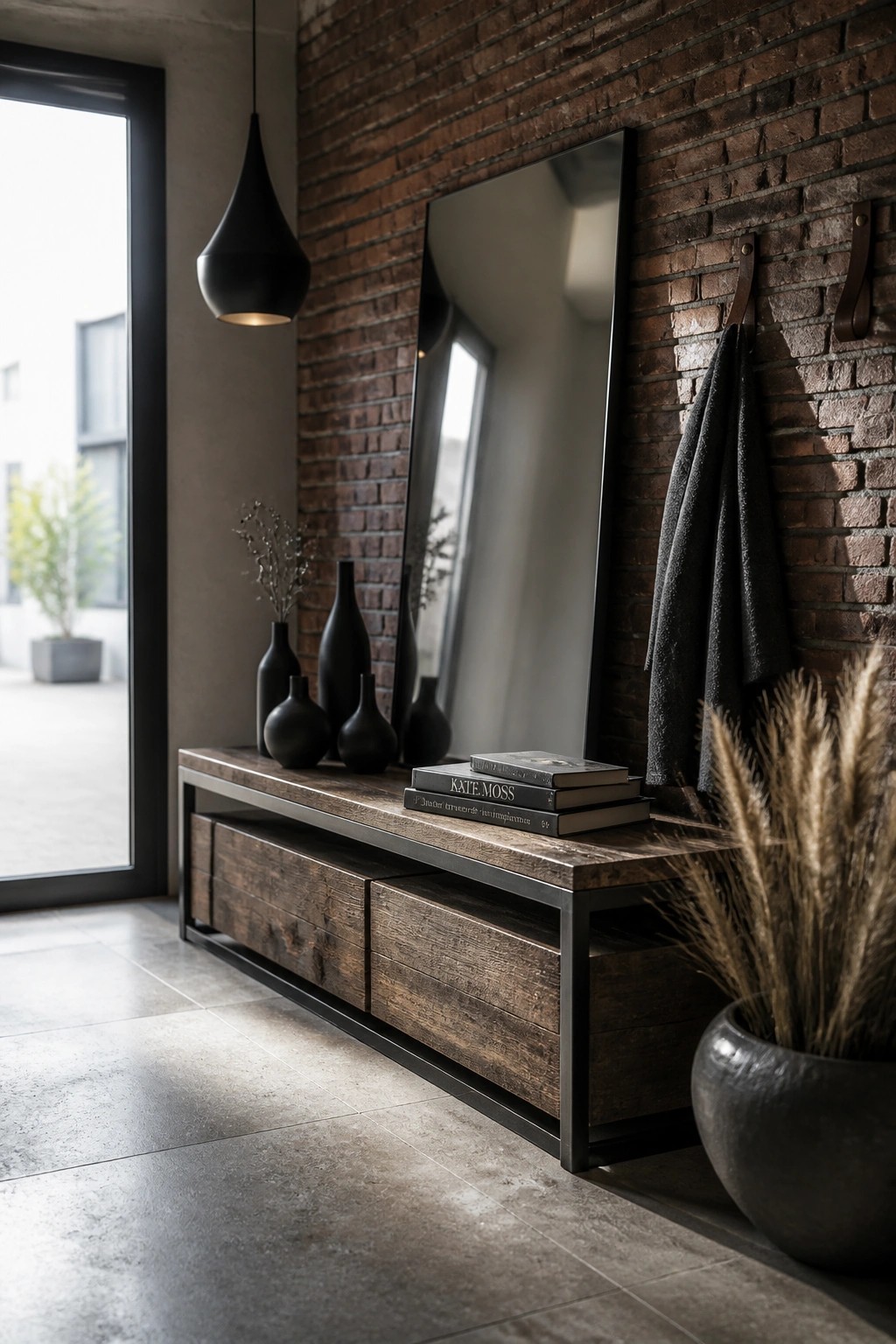
A console table that includes drawers gives you a place to tuck away keys, mail, and other small items that tend to pile up near the door. The low profile keeps the space open while still offering real function.
This works best in homes where the entry opens straight into the main living area. Place it against a side wall, use the top for a few simple pieces, and let the drawers handle daily clutter without needing extra furniture.
Console Tables in the Entry
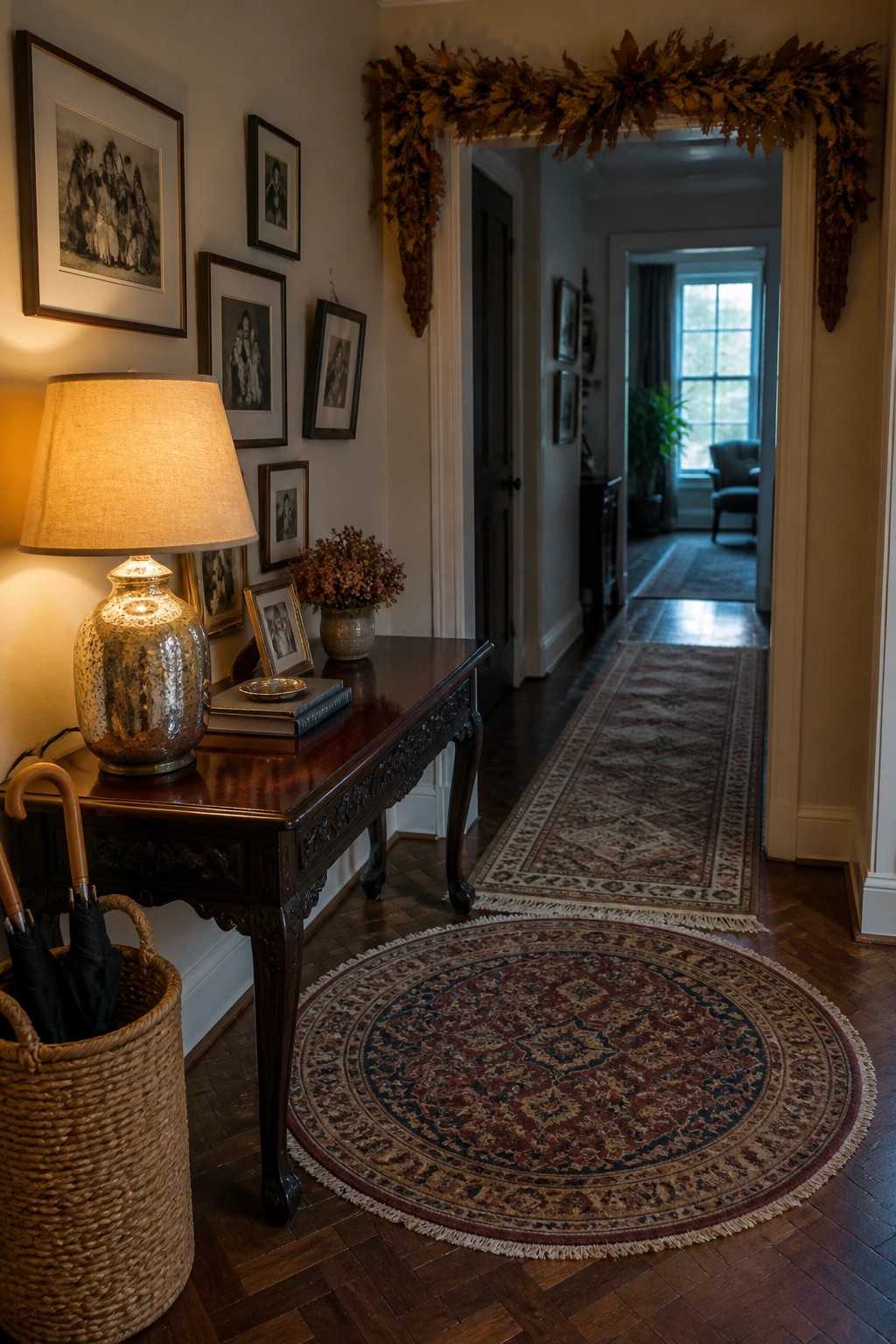
A console table gives an entry a clear spot to land keys, mail, and a few personal touches without taking up much space. It works especially well in narrower hallways where a full cabinet would feel too heavy. The warm light from a single lamp on top helps the area feel lived in right away.
Place the table against the longest wall near the door and keep the surface simple. Add one or two seasonal pieces, like a small wreath or a vase of branches, and leave the rest open so the table still feels useful rather than crowded. This setup suits older homes with wood floors and trim, where the table can pick up the existing tones without competing with them.
Layer Textiles on a Simple Bench
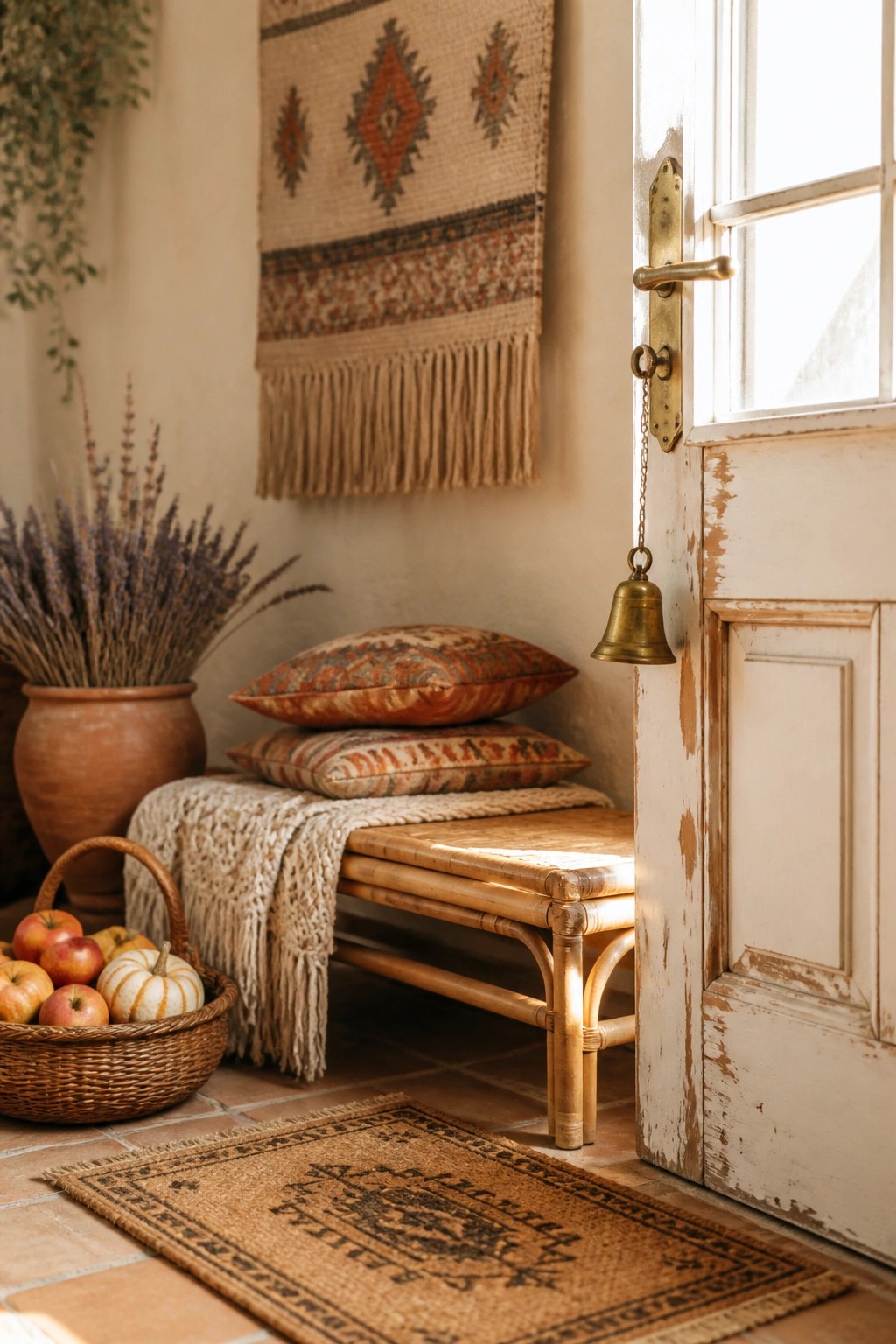
One easy way to warm up an entry is to layer a bench with a few pillows and a throw. The mix of patterns and soft textures makes the spot feel used and inviting right away.
This approach works best in smaller entries where the bench also needs to serve as seating or storage. Stick to earthy tones and add just one or two seasonal pieces nearby so the look stays simple.
A Bench Brings Practical Seating to an Entryway
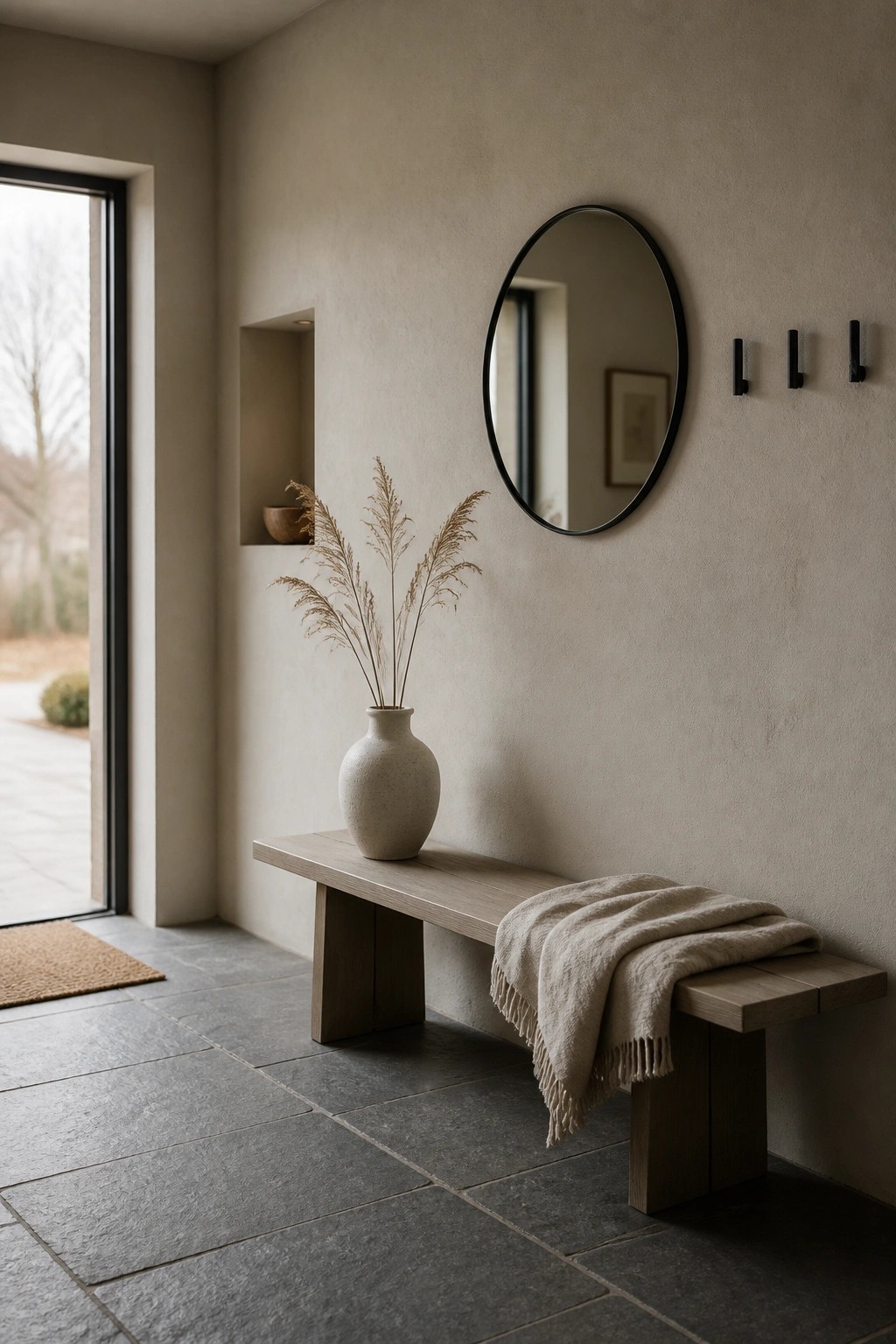
A bench gives people a place to sit while they deal with shoes or bags. It also turns an empty stretch of wall into something useful instead of just decorative.
This setup works best in homes where the entry gets daily traffic. Keep the bench low and simple, then add one or two soft layers like a folded blanket so it feels ready for use without looking cluttered.
A Bench Adds Useful Seating in the Entryway
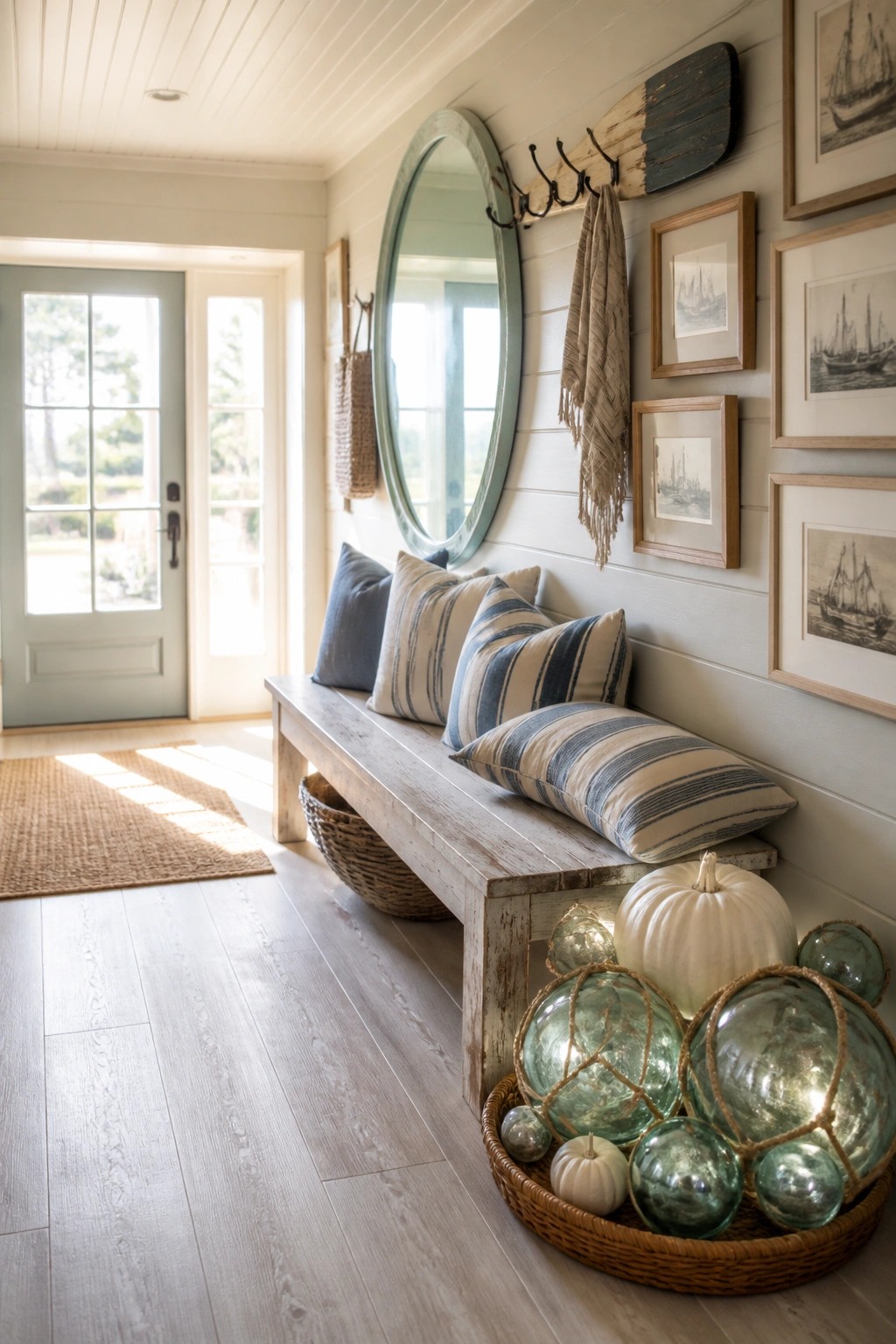
A bench gives people a place to sit while they put on or take off shoes, which makes the space feel more practical right away. It also creates a natural drop zone for bags or mail without crowding the floor.
This idea works best in homes with steady foot traffic or smaller entry areas where a full chair would take up too much room. Keep the bench low and simple, add a couple of pillows for comfort, and leave space underneath for a basket if you need extra storage.
Style An Entry Console With Fall Accents
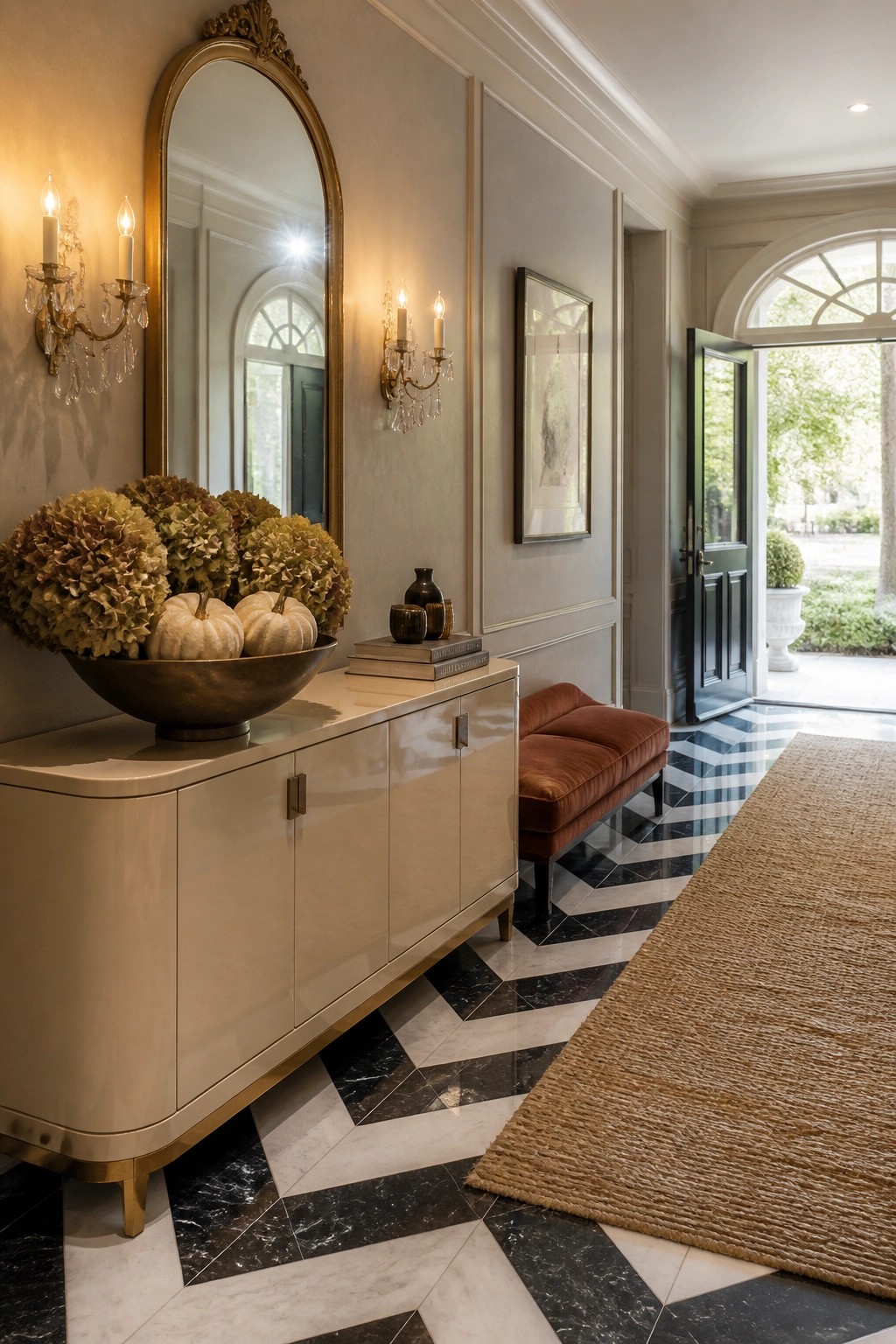
One simple way to give an entry a seasonal feel is to place a large bowl of pumpkins and dried flowers on the console. The warm tones stand out against a lighter table and help the space feel ready for fall without much effort.
This approach works in both small and larger entries. Keep the rest of the table fairly clear so the seasonal pieces stay the main focus, and choose a bowl that fits the scale of your console.
Use a Console Table for Fall Storage
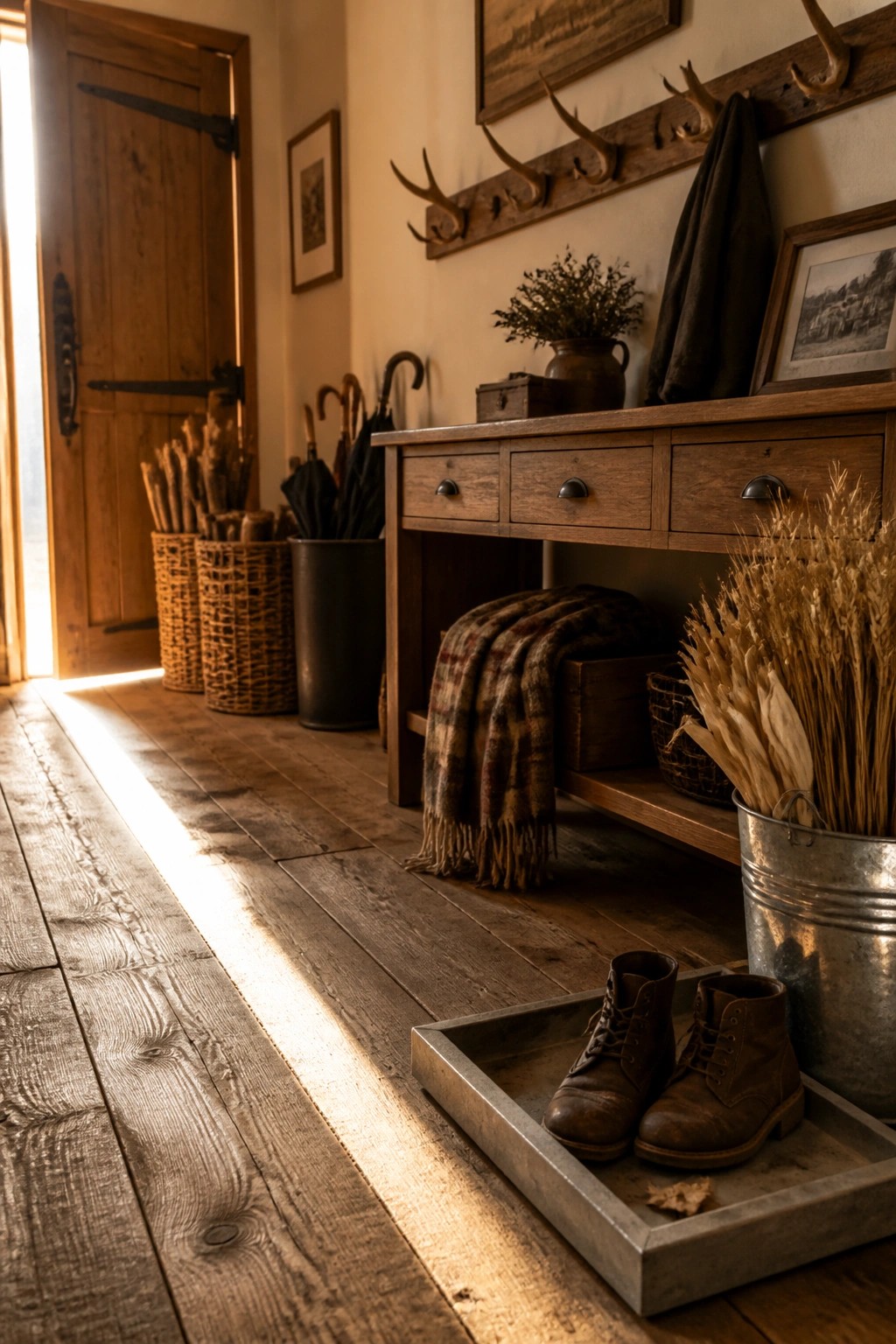
A console table with open space below gives an entryway a place to hold boots, blankets, and baskets without making the floor feel cluttered. It works because it keeps everyday fall items within reach while still leaving room to walk through the space.
This idea fits homes that lean rustic or simple. Keep the lower shelf open rather than adding doors so it stays easy to use, and place the table close to the door so coats and shoes land there first.
A Console Table with Built-In Storage
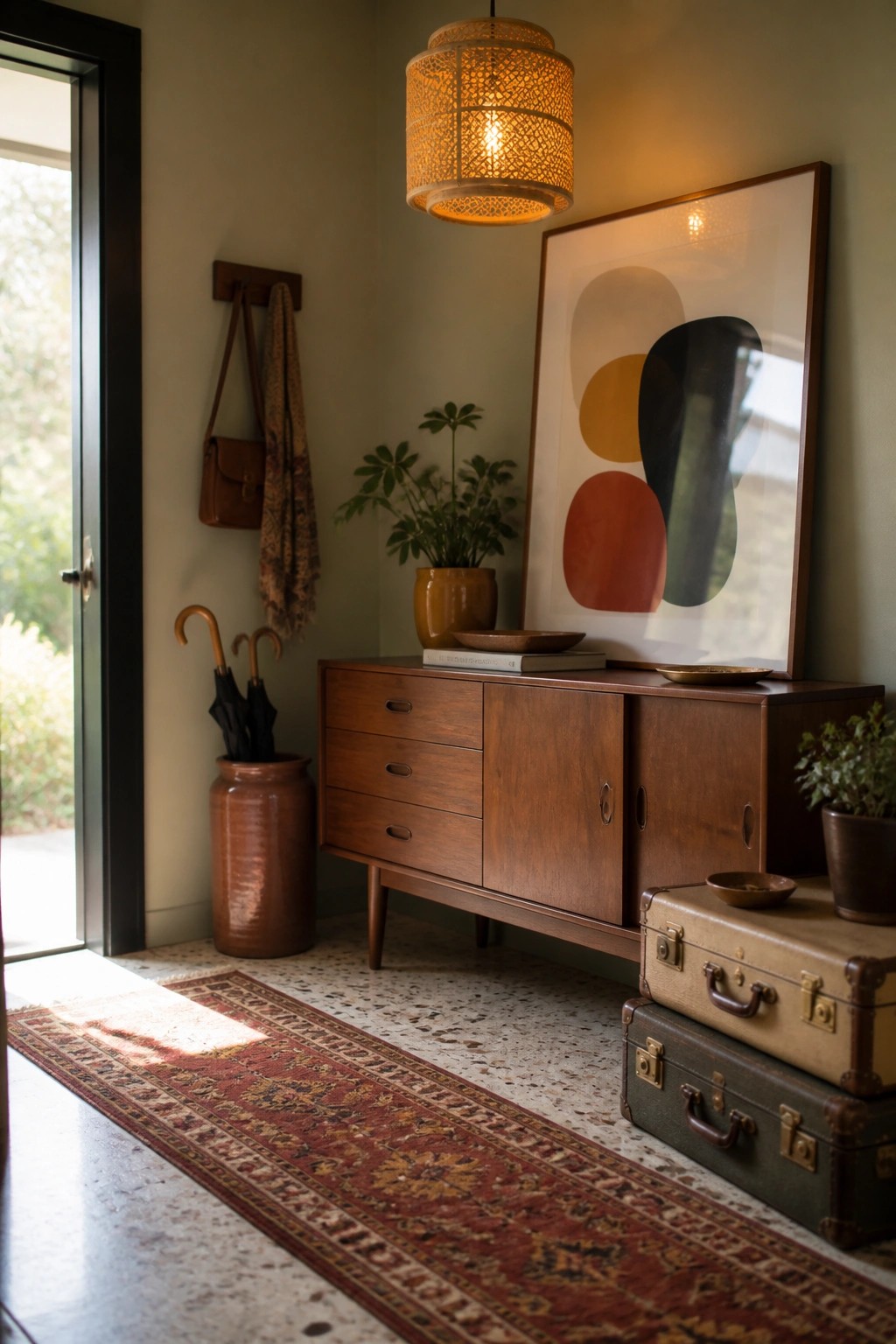
A console table that offers both surface space and hidden storage makes a big difference in an entryway. The drawers and cabinets keep everyday items out of sight while the top stays clear for a few simple pieces like a bowl or plant.
This works best in homes where the front door opens straight into the main living area. Keep the scale in proportion to the room so there is still room to walk past, and choose a finish that blends with nearby wood tones rather than trying to match everything exactly.
A Pegboard Wall Adds Practical Storage to an Entryway
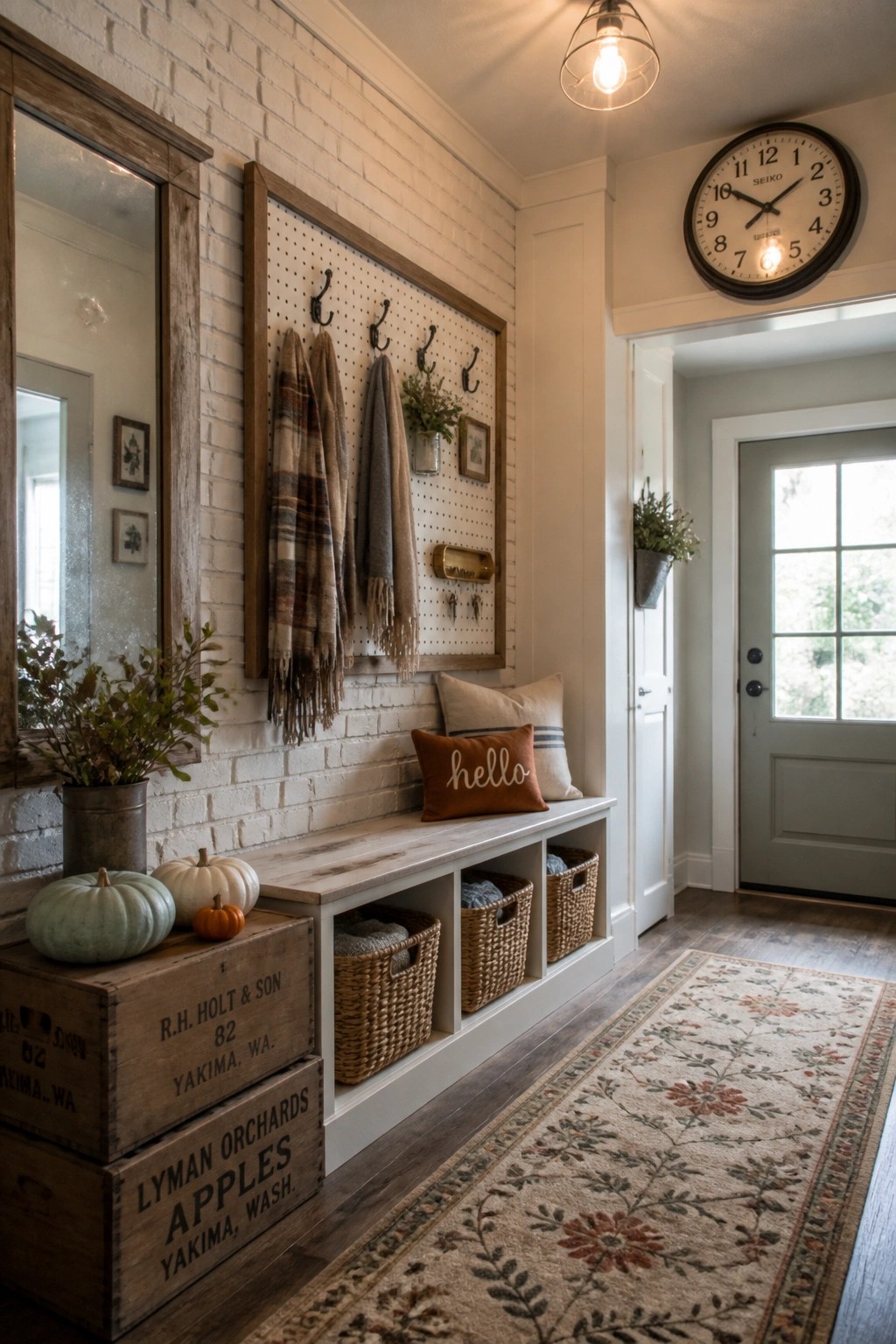
A pegboard mounted above a bench gives you a simple way to hang coats, scarves, and bags without cluttering the floor. It keeps daily items visible and easy to grab while still looking neat.
This setup works well in smaller entries that need extra function. Place baskets underneath for shoes or hats, and adjust the hooks as seasons change. It suits homes where people come and go often.
Stack Vintage Trunks for Entry Storage
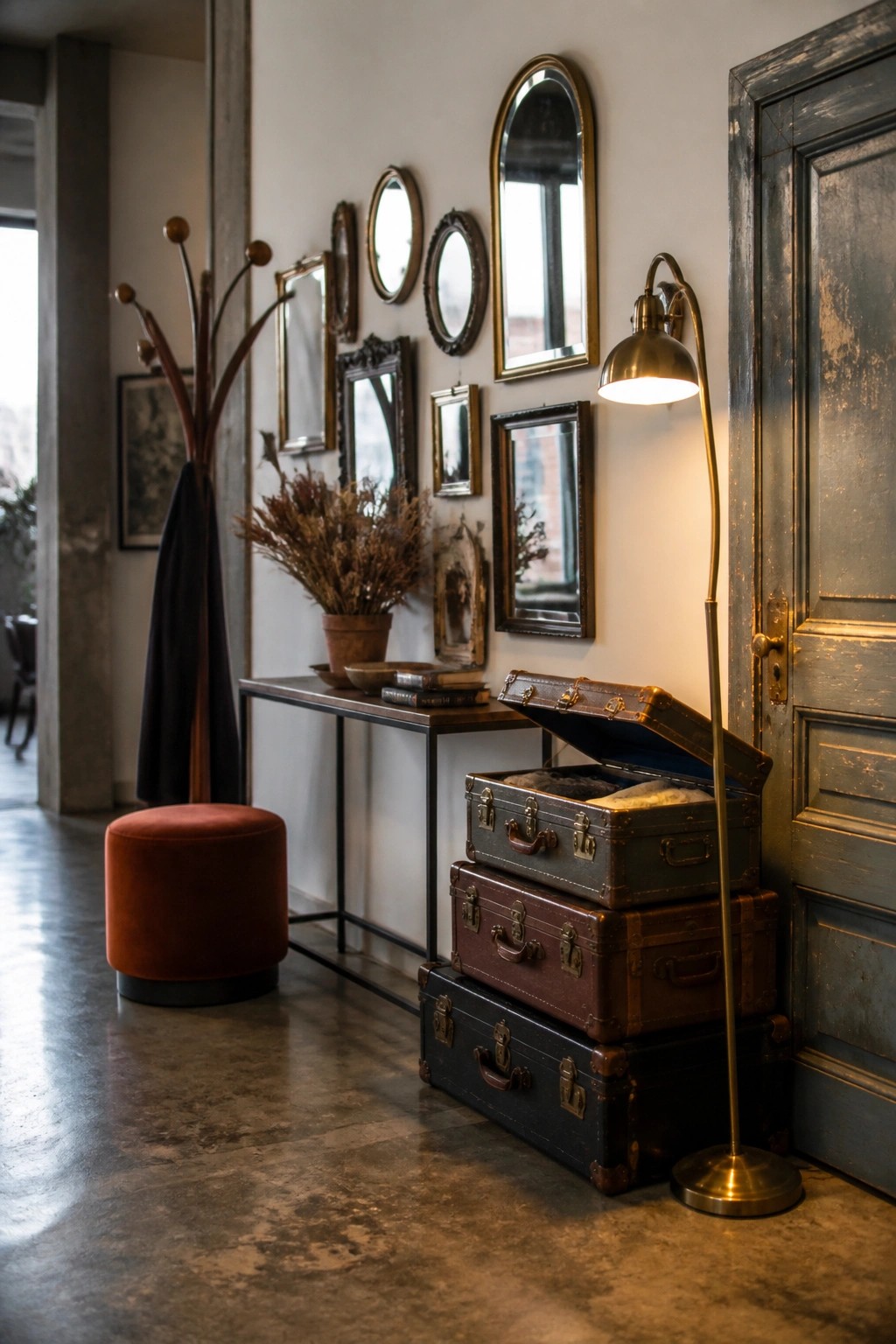
Many entryways feel cluttered when shoes, bags, and coats pile up by the door. Stacking a few old trunks gives you hidden storage without adding another piece of furniture that takes up floor space.
This idea works best in homes that already have a console or narrow table along one wall. Keep the stack no taller than the table height so it does not block walking paths or make the space feel tight.
Use a Floating Bench for Seasonal Entry Styling
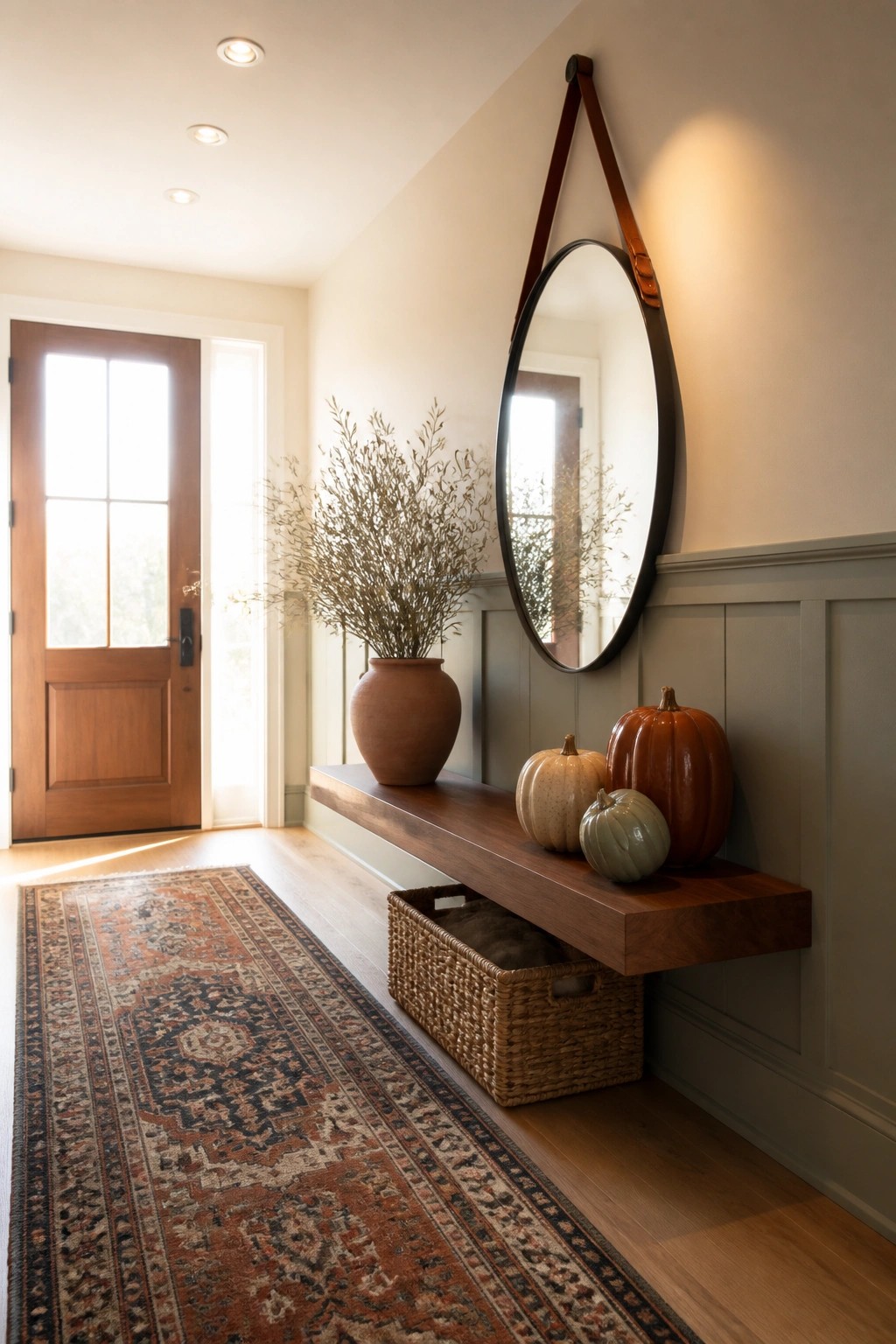
A floating bench gives an entryway a simple place to land without crowding the floor. It works especially well in fall when you want a spot to set bags or add a few seasonal touches like pumpkins and dried stems.
This setup suits narrow hallways or smaller homes where a full console would feel too heavy. Keep the bench low and pair it with a slim basket underneath for shoes or blankets so the space stays tidy through the season.
Floating Shelves for Entryway Storage
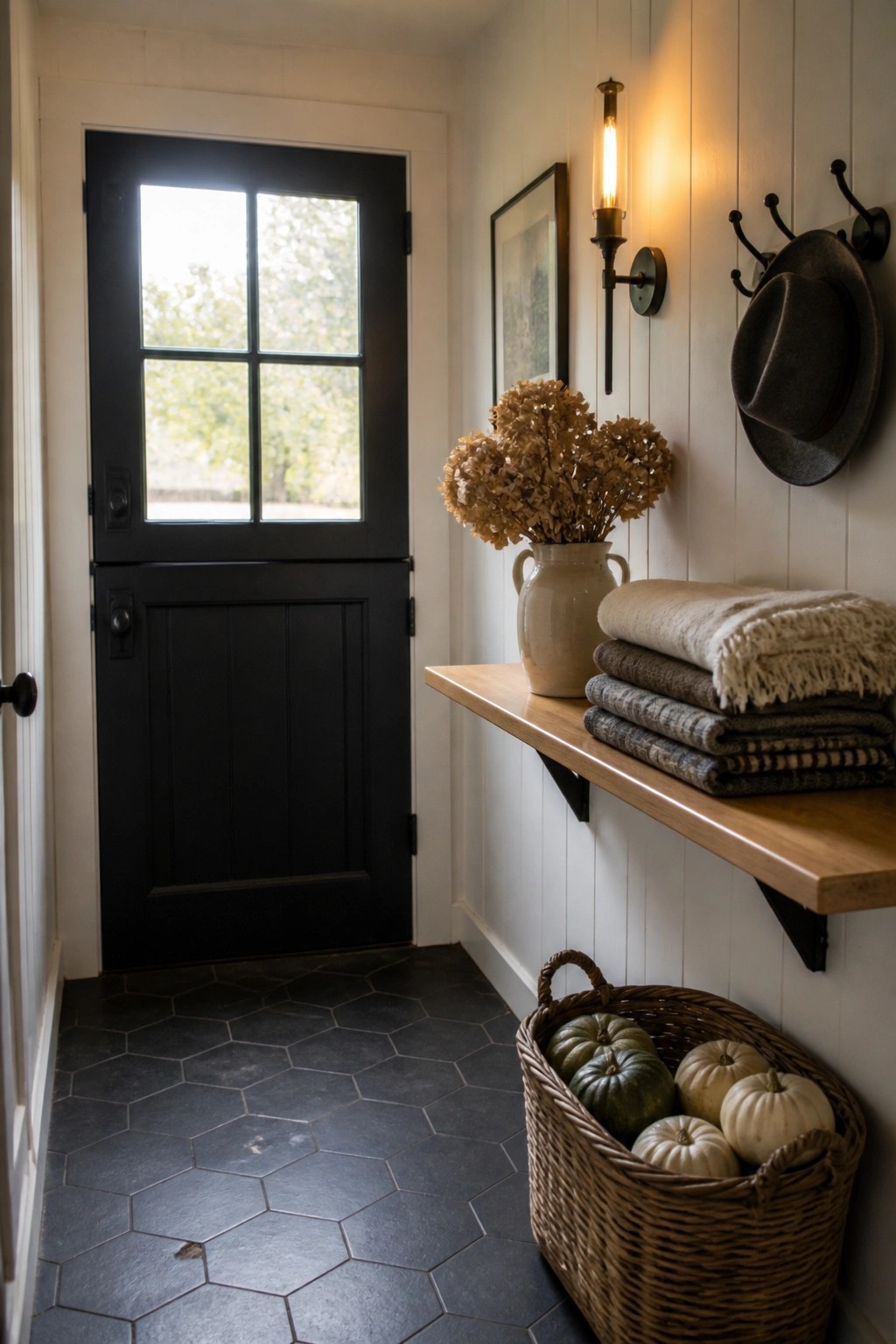
A floating shelf gives an entryway useful storage without crowding the floor. It works especially well in smaller spaces where a full console table would feel too heavy during the busy fall season.
Mount the shelf at a height that feels easy to reach and keep a basket on the floor below for overflow items. This approach suits homes with narrow hallways or simple doorways where you want function without a lot of visual weight.
Add a Bench to Your Entryway
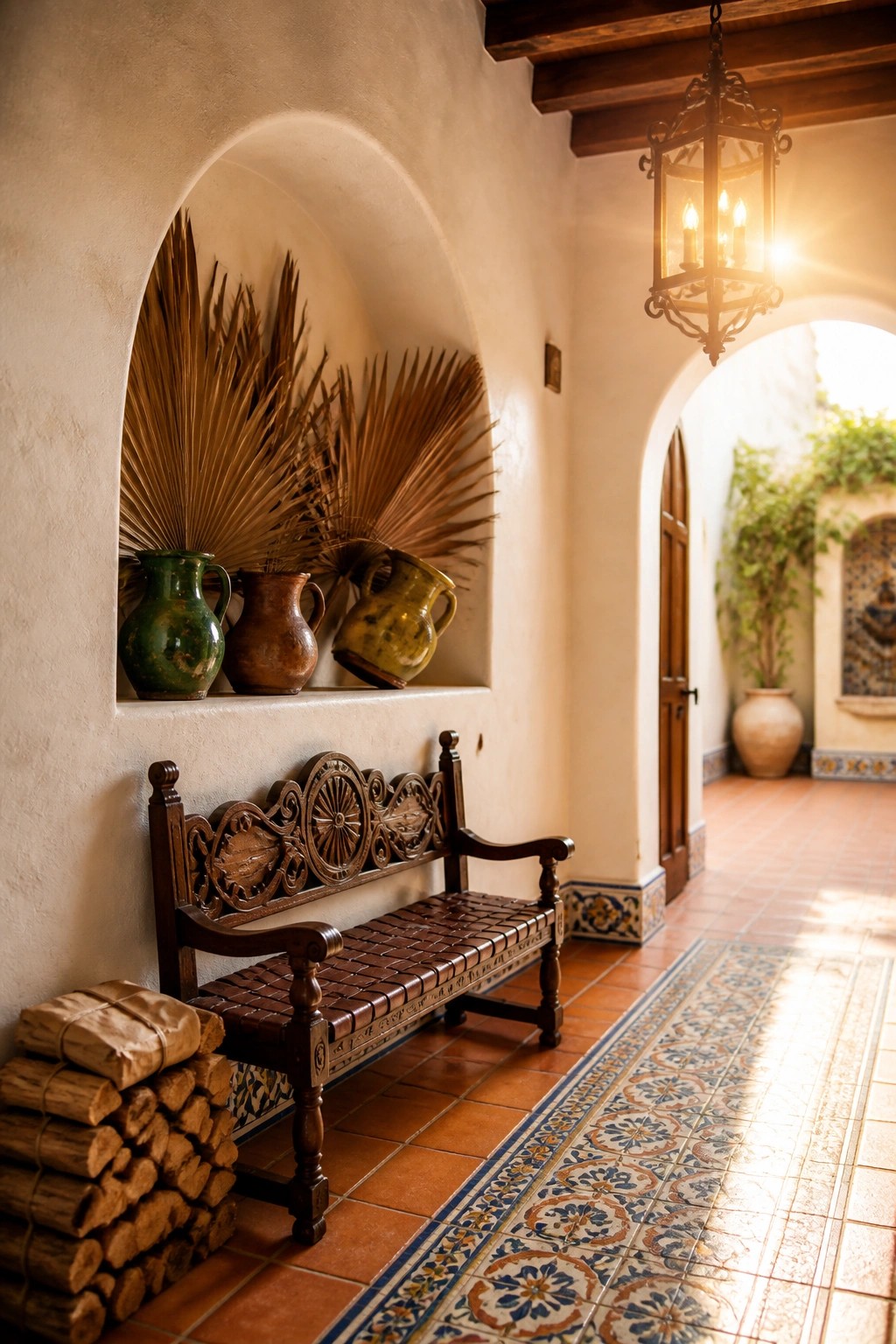
A bench right inside the door gives people a place to sit and take off their shoes without blocking the path. It also makes the space feel more settled and ready for everyday traffic during the busy fall months.
Keep the bench simple and choose one with some storage room underneath for bags or a few bundles of firewood. This setup works best in wider hallways or covered entries where you have a clear stretch of wall.
Add a Dedicated Umbrella Stand
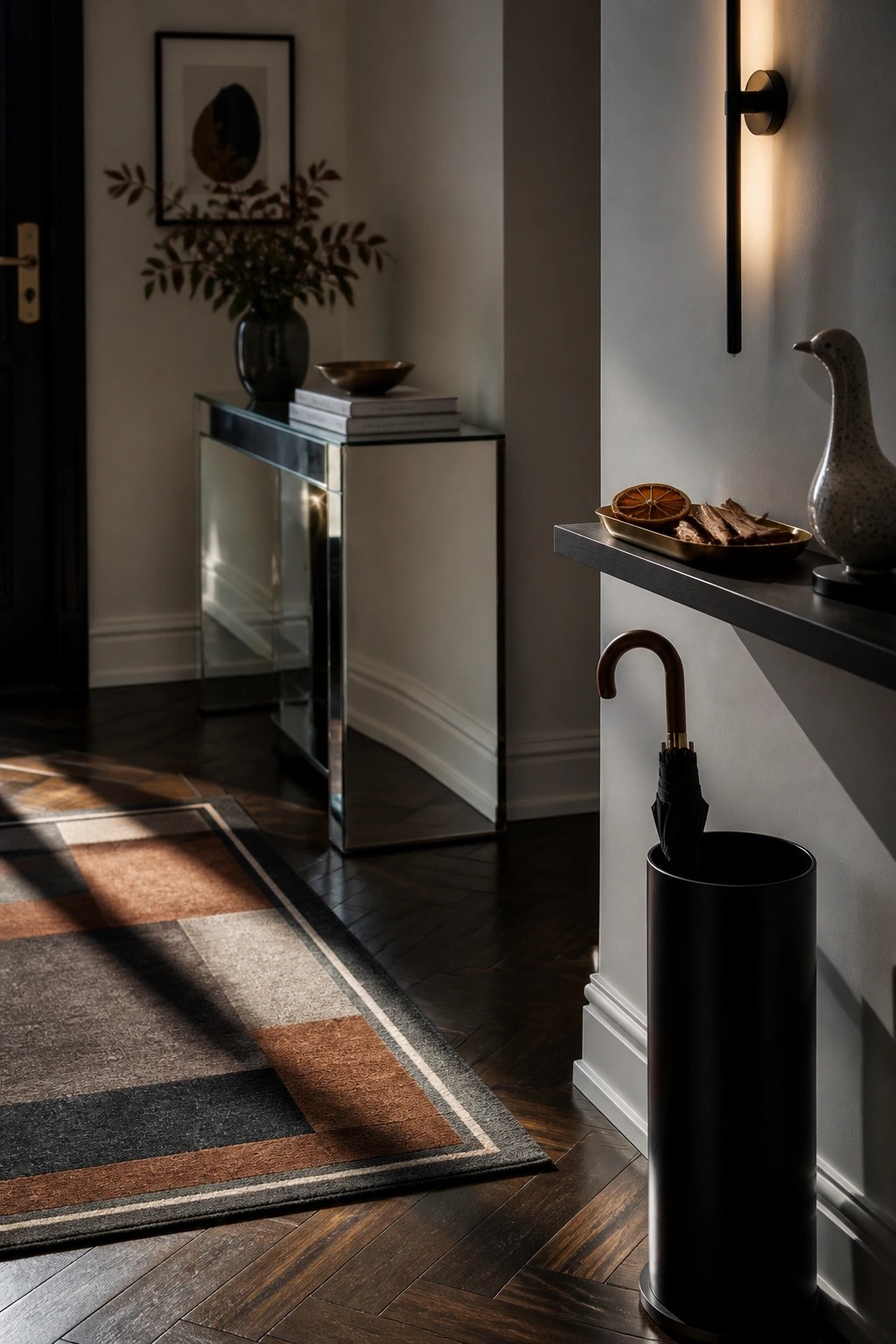
An umbrella stand gives an entryway a clear spot for wet items without creating clutter. It keeps the floor clear on rainy days and adds a simple vertical element that feels purposeful rather than decorative.
This works best in homes with limited entry space or frequent bad weather. Choose a matte or dark finish so it blends with the floor and does not draw attention. Keep it close to the door but out of the main walking path.
Add A Storage Bench To Your Entryway
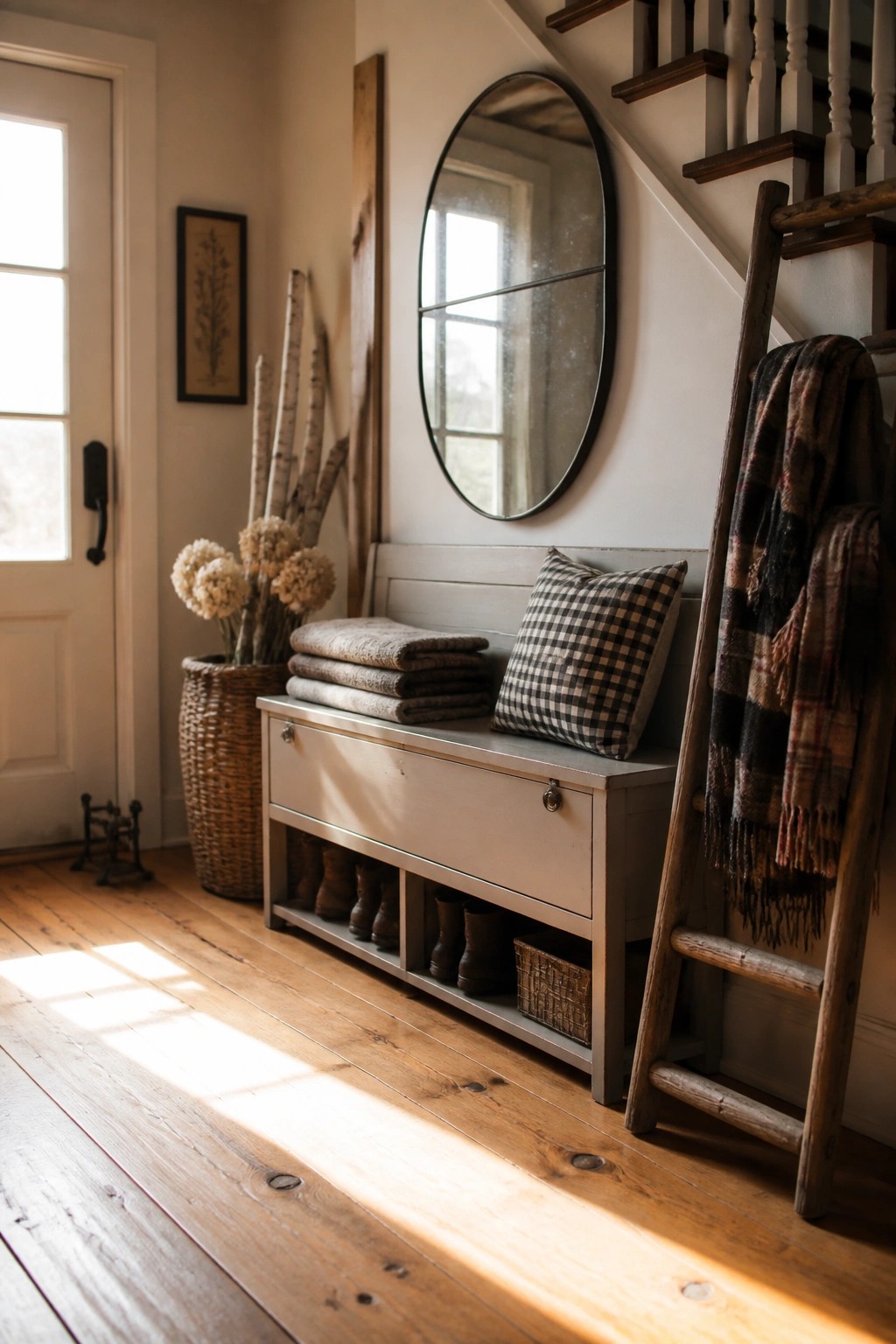
A storage bench gives you a spot to sit while putting on or taking off shoes. It also keeps the area from getting cluttered with boots, baskets, and extra layers that collect near the door.
Set one against a wall with open space below for baskets or shoes. This works best in homes with narrow entries or busy households that need both seating and hidden storage.
A Storage Bench Keeps The Entryway Practical
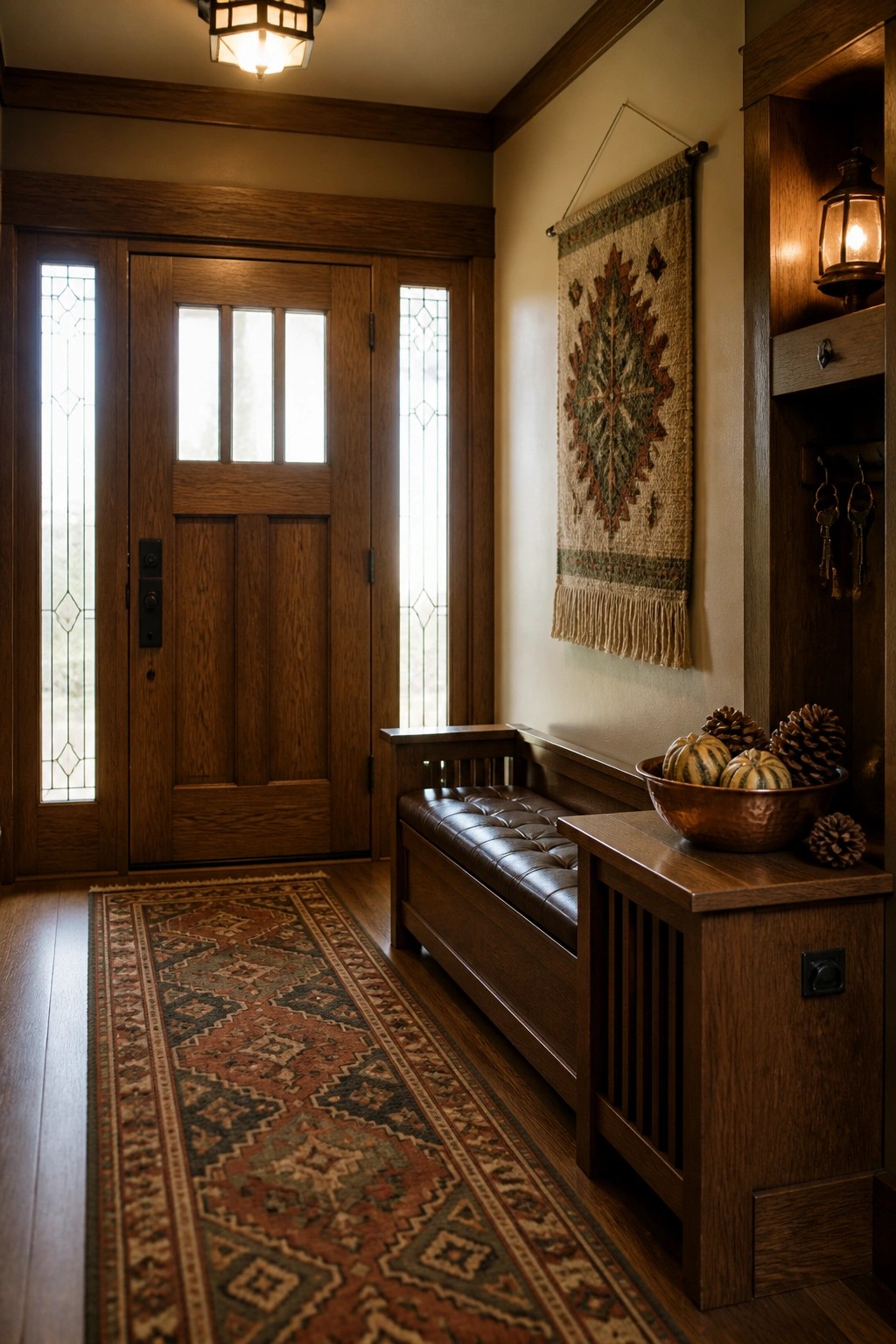
A storage bench gives you a spot to sit while pulling on boots and hides away the usual clutter that piles up near the door. It works well because it turns an often wasted stretch of wall into something useful without taking up much floor space.
Try one in a traditional or craftsman style home where the wood can match the trim and doors. Keep the top clear except for a simple cushion and add a runner in front so the area feels pulled together rather than crowded.
Frequently Asked Questions
Q: What if my entryway is really small? A: Pick just one or two pieces like a doormat and a wreath. Add a couple of pumpkins on the floor if space allows. Leave room to walk through comfortably.
Q: How do I keep things from looking too matchy? A: Mix in a few everyday items you already own. Let the fall pieces stand out against your usual setup. Aim for balance instead of perfection.
Q: What about making it work with pets in the house? A: Go for durable options that won’t tip easily. Set any fragile accents out of the main path. Fabric or wooden pieces tend to hold up better than glass.
Q: Do I need to replace everything when fall ends? A: Keep the base items that work year round and swap only the seasonal accents. Store the fall pieces in a bin until next year. This keeps the effort low while still giving that fresh start each season.
I’m Claire, the voice behind The Seasoned Home. I’ve always loved the way a home can shift with the seasons and feel fresh, cozy, and welcoming all over again. I share seasonal home decor ideas that feel beautiful but still realistic for everyday life, from porch styling and wreaths to cozy bedrooms, living rooms, kitchen touches, and simple table decor. My favorite ideas are the ones that make a home feel special without making decorating feel complicated.