
GE Washer Dryer Combo Fault Code 353 signals a drain pump or pressure sensor malfunction that owners fix by inspecting internal components. Replacing the faulty pump or cleaning the filter assembly eliminates the error without technician visits.
This approach avoids service charges that often exceed two hundred dollars for a simple diagnosis. Owners should gather basic tools before beginning the repair process to ensure efficiency. The following sections detail the exact sequence required for a complete resolution on GE combination units.
GE 353 Drain Pump and Switch Parts
GE combination units require specific replacement parts when fault code 353 appears repeatedly after initial resets. The drain pump assembly and pressure switch represent the two most common failure points in these models. Owners must confirm their exact unit series before ordering to match connector types and voltage ratings. Proper identification prevents delays during the repair sequence.
A supply table organizes the required items for quick procurement.
| Item | Purpose | Quantity |
|---|---|---|
| Drain pump assembly | Replaces failed motor unit | 1 |
| Pressure switch | Restores water level detection | 1 |
| Drain filter screen | Captures debris before pump | 1 |
| Multimeter | Tests electrical continuity | 1 |
| Screwdriver set | Removes access panels | 1 |
GE Washer Dryer Combo Power Isolation Steps
Disconnect the unit from power and water supplies before any internal access occurs. This step protects against electrical shock and flooding during component handling. Place the machine on a stable surface with adequate lighting to inspect connections accurately. Verify that all tools remain dry throughout the procedure to maintain safety standards.
Unplug the power cord from the outlet. Shut off the water inlet valves completely. Position towels around the base to catch residual moisture.
GE 353 Pump Connector Voltage Checks
To diagnose fault code 353 on a GE washer dryer combo, begin with targeted voltage checks at the pump connector. These measurements confirm whether the control board supplies adequate power to the drain pump during operation. Accurate readings isolate electrical faults and prevent unneeded component swaps.
Begin by accessing the lower front panel to reach the drain system. Run a short diagnostic cycle after each component check to monitor code clearance. Document voltage readings at the pump connector to confirm motor operation before full reassembly.
Remove the lower access panel screws. Extract the drain filter and inspect for clogs.
Disconnect the pump wiring harness and test resistance values. Install the new pump if readings fall outside specifications. Reattach all hoses with secure clamps.
Verify GE Model Series Fitment
Different GE combination series use varying pump mounting brackets that affect compatibility. Check the model number plate located inside the door frame before purchasing replacements. Mismatched parts lead to repeated error codes and additional disassembly time. Cross-reference the part diagrams supplied with the unit to confirm connector orientation.
Clear Persistent Drain Blockages
Debris accumulation in the standpipe or external hose often triggers fault code 353 even after pump replacement. Flush the entire drain path with hot water while monitoring flow rate. Repeat the flush if initial drainage remains slow. This action prevents the sensor from registering incomplete cycles.
GE 353 Pressure Switch Continuity Checks
The pressure switch monitors tub water levels and directly influences code 353 activation. Test the switch diaphragm for cracks that allow air leaks. Replace the switch if continuity fails during manual pressure application. Recalibrate by running an empty load cycle after installation.
GE 353 Fault Recurrence Prevention Steps
Regular maintenance of the filter and hose connections reduces future occurrences of this fault. Schedule quarterly inspections of the drain path to maintain consistent performance. Avoid overloading the drum beyond rated capacity to limit strain on the pump motor. These habits extend component life without additional expense.
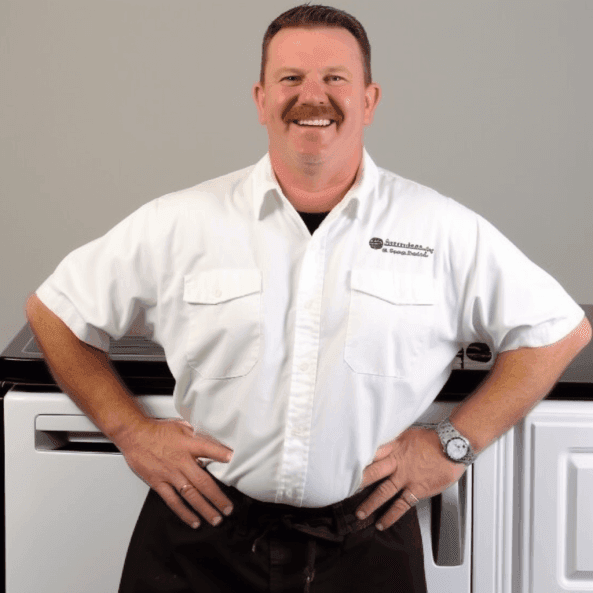
Hey, I’m Jake. I focus on cooling systems at Appliance Mastery, like fridges, freezers, and air conditioners.
I’ve worked in appliance repair for more than ten years and I’m certified through NASTeC. I’ve seen just about every fridge issue you can imagine.
My goal is to help you fix problems without stress. Whether it’s a freezer that won’t cool or an AC that keeps beeping, I’m here to walk you through it.