

Fall gardens work well when the plants I choose match the actual conditions in my yard instead of following every trend.
Over time I have seen how the basic layout of beds and borders affects how easily new seasonal additions fit in.
I test small groupings first before expanding them.
Seasonal plants can bring lasting structure if I pay attention to height and spread from the start.
A few well placed additions often change the feel of the space more than a complete overhaul would.
Line Paths With Potted Mums And Pumpkins
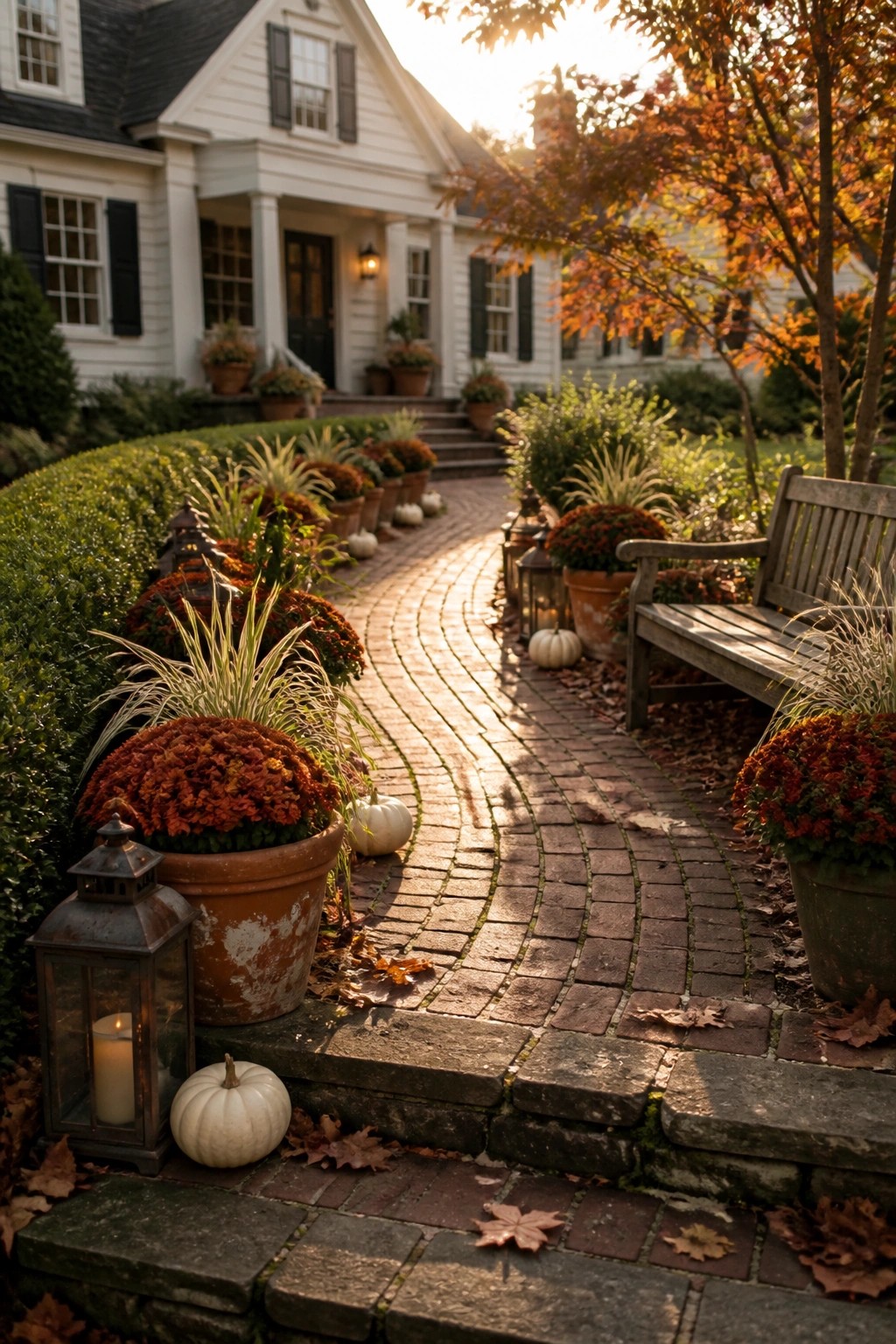
Many people like to bring fall color right up to the walkway. Placing large pots of deep red and orange mums along both sides of a brick path creates a welcoming seasonal border without much effort.
This works especially well on homes with existing hardscaping like curved paths. Choose a mix of mum colors and tuck in a few small white pumpkins at the base for extra texture. It suits most suburban yards and can be swapped out easily once winter arrives.
Hay Bales Create Quick Fall Plant Displays
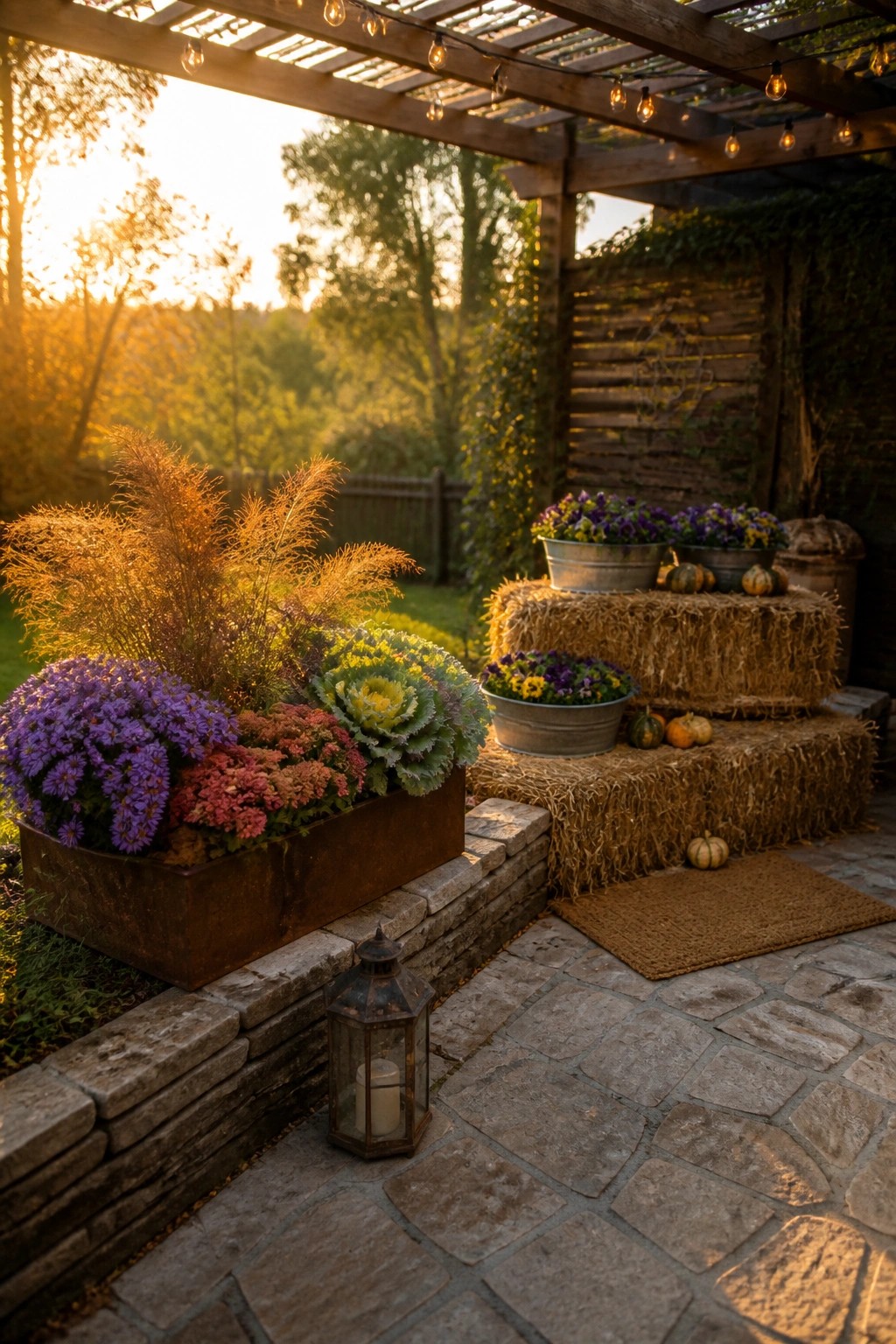
Hay bales give you an easy way to lift up pots and create layers without building anything permanent. They work especially well with seasonal plants like mums, flowering kale, and small pumpkins because the straw adds texture and keeps everything looking casual.
Place two or three bales in a corner of the patio or along a path, then set the pots on top in groups of different heights. This setup suits homes with stone or gravel outdoor areas where you want something temporary that can be taken apart after the season. Just watch for moisture so the bales do not break down too fast.
Layer Seasonal Plants in a Raised Planter
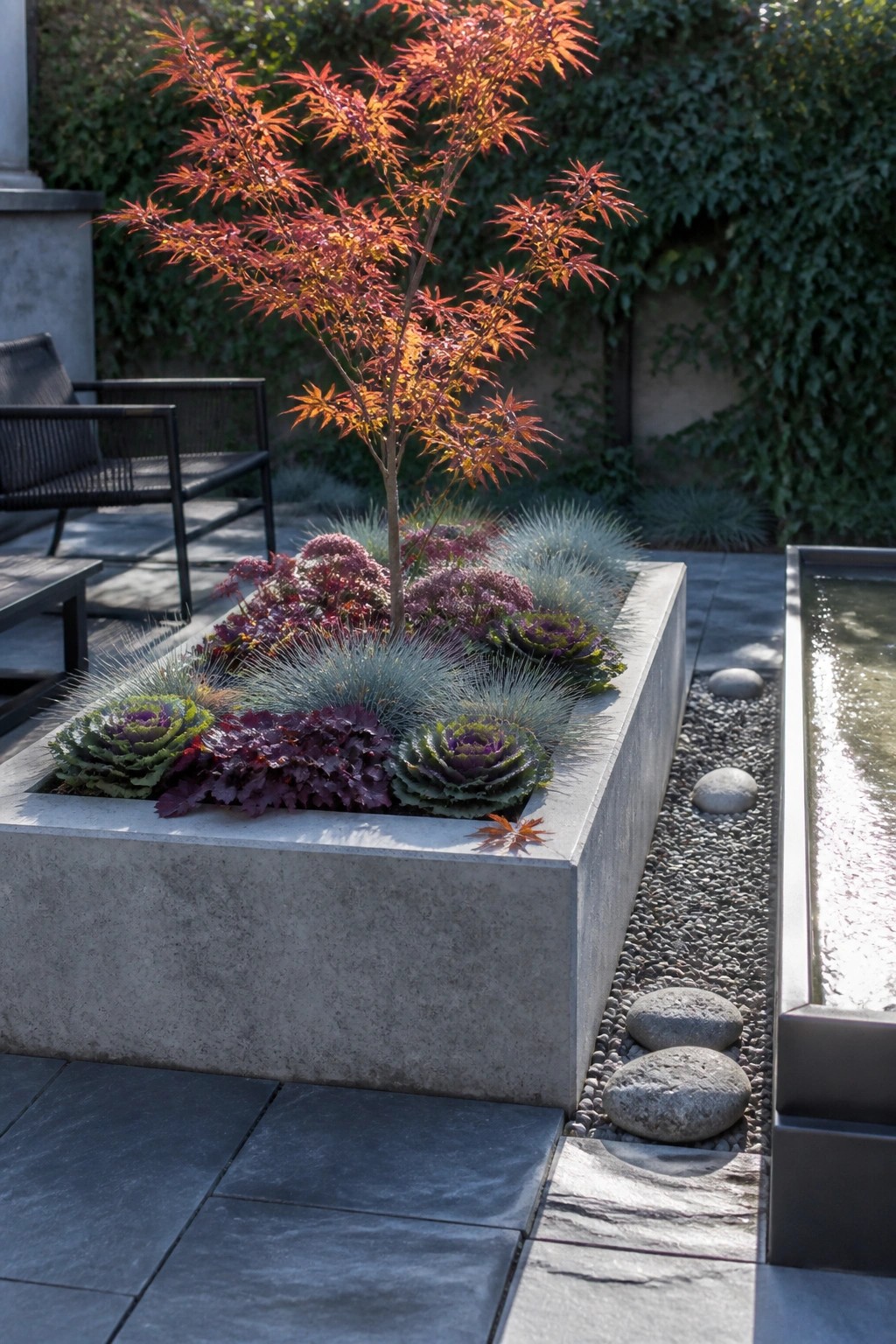
A raised concrete bed gives you a clean way to group fall plants without spreading them across the whole yard. The height makes the display feel intentional, and it keeps the seasonal color contained where you can see it easily from a patio or path.
This setup works best in smaller yards or paved spaces where digging new beds is not practical. Stick to a mix of heights and leaf colors that hold through cooler months, and make sure the bed stays narrow enough to reach across for weeding and watering.
Repurpose A Wheelbarrow As A Seasonal Planter

A wheelbarrow gives you an easy way to add a big burst of fall color without digging new beds. It holds plenty of plants, moves when you need it to, and brings a rustic touch that fits right into a garden setting.
Set it near a path or by a stone wall where the mums and pumpkins catch the light. It works especially well in smaller yards or cottage gardens where you want seasonal displays without committing to permanent planters. Just make sure it has good drainage so the soil stays healthy through the cooler months.
Create A Layered Fall Garden Border
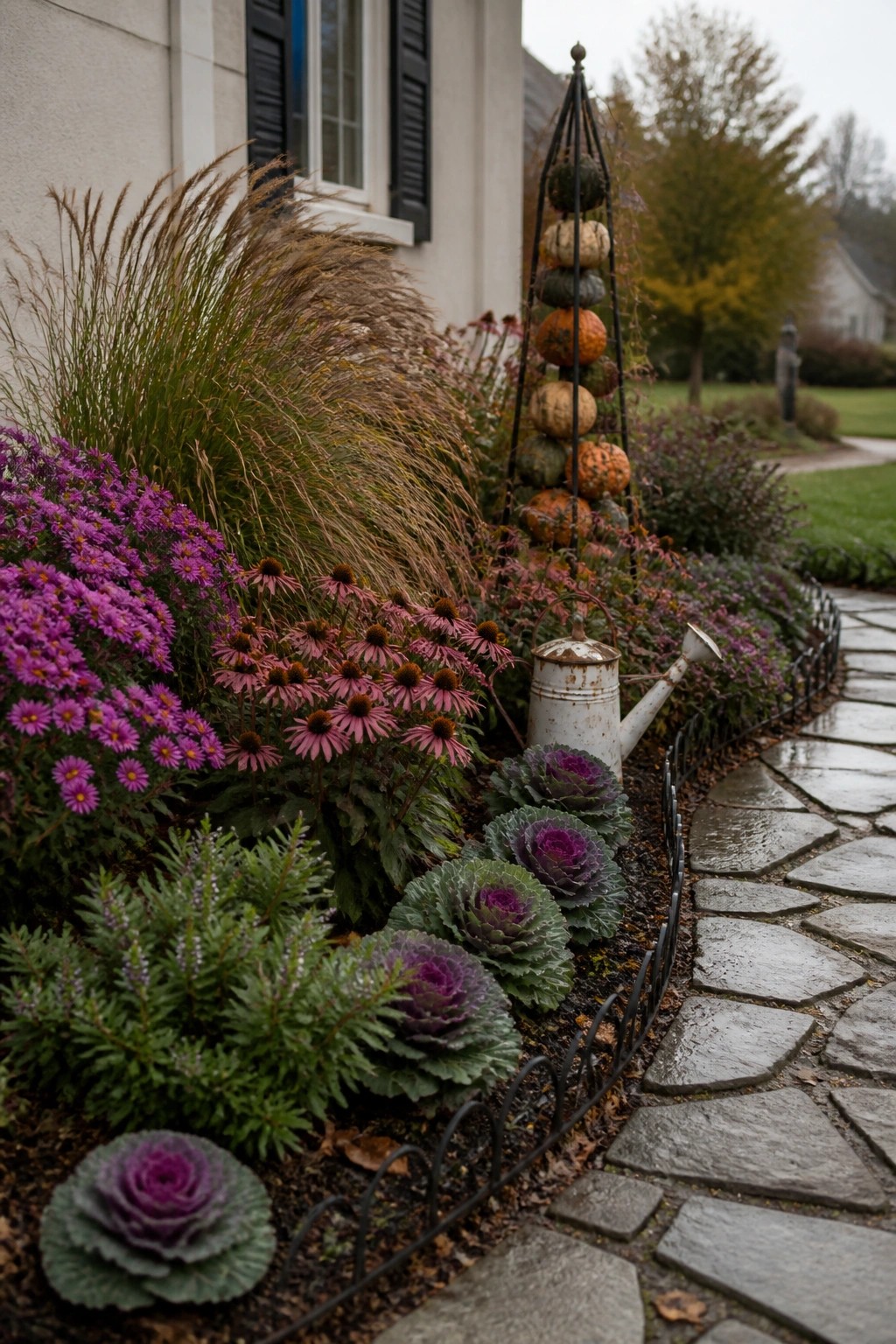
A simple path edge can carry a lot of fall interest when you layer plants with different heights and textures. Ornamental kale at the front, asters and coneflowers through the middle, and taller grasses at the back give the bed depth without looking crowded. The curve of the border and the low metal edging keep everything tidy while the stone path makes the planting feel intentional.
This approach works well along a walkway or foundation where you want color that lasts into cooler weather. Choose plants that handle light frost and repeat a few colors so the bed reads as one piece rather than a collection of singles. Keep the front low so the path stays clear and the view from the house stays open.
Vertical Planters for Narrow Side Yards
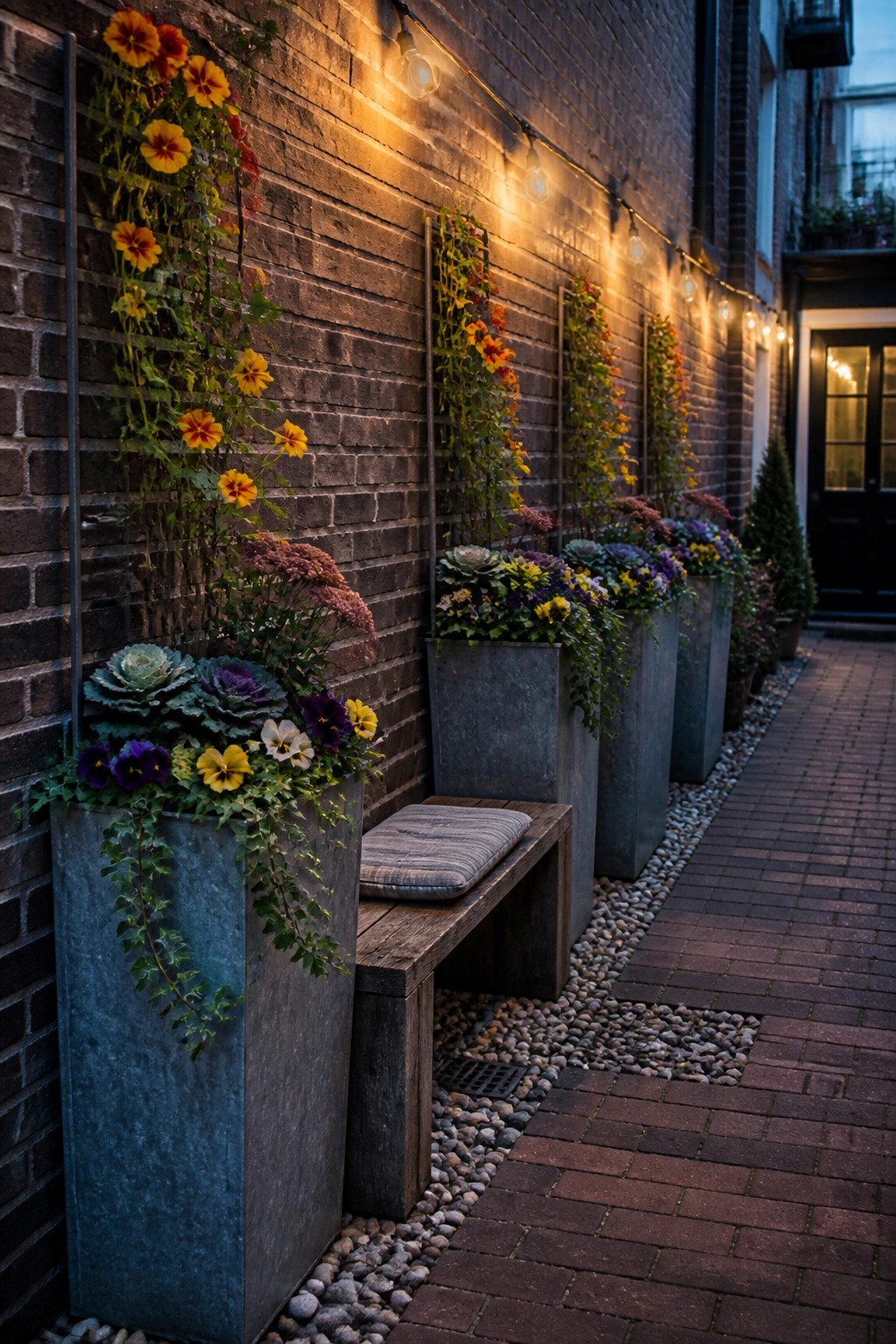
One simple way to add fall color without crowding the ground is to run vertical planters up the wall. Tall containers paired with wall frames let you layer flowers and trailing plants in a space that would otherwise feel flat.
This approach suits homes with tight paths or side yards where width is limited. Stick with cool-season plants like kale, pansies, and mums, and keep the containers uniform so the look stays clean rather than cluttered.
Surround a Fire Pit With Fall Mums
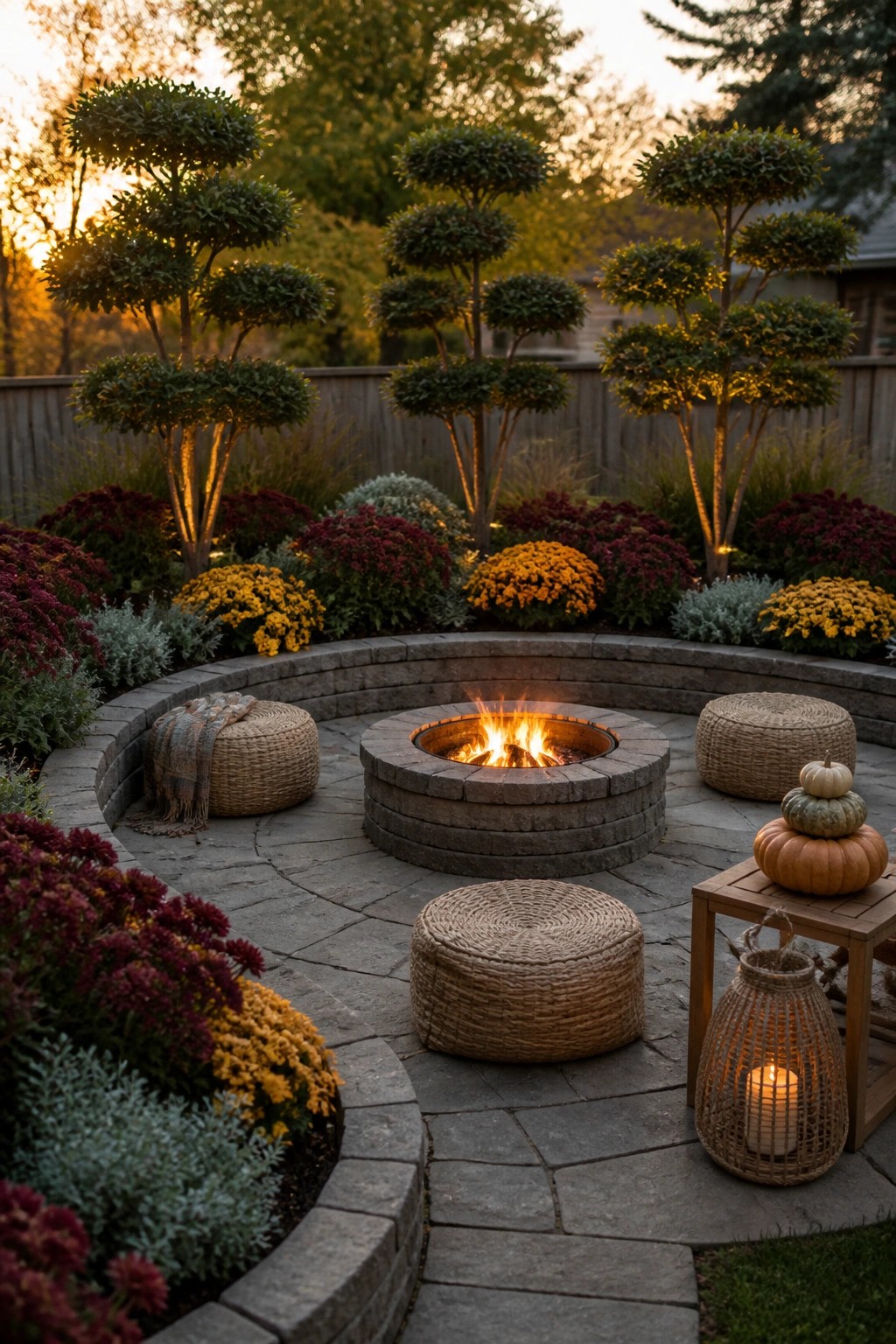
A fire pit gains a lot more seasonal character when you plant mums directly around the edge of the patio. The flowers add color that changes with the season and help the space feel tied to the garden instead of sitting on plain stone.
This works best on smaller patios where the curved plant bed can wrap partway around the seating area. Use a mix of yellow and deep red mums in the front and taller shrubs behind them so the blooms stay visible from the chairs without crowding the walkway.
Plant In A Grid Layout For Seasonal Displays
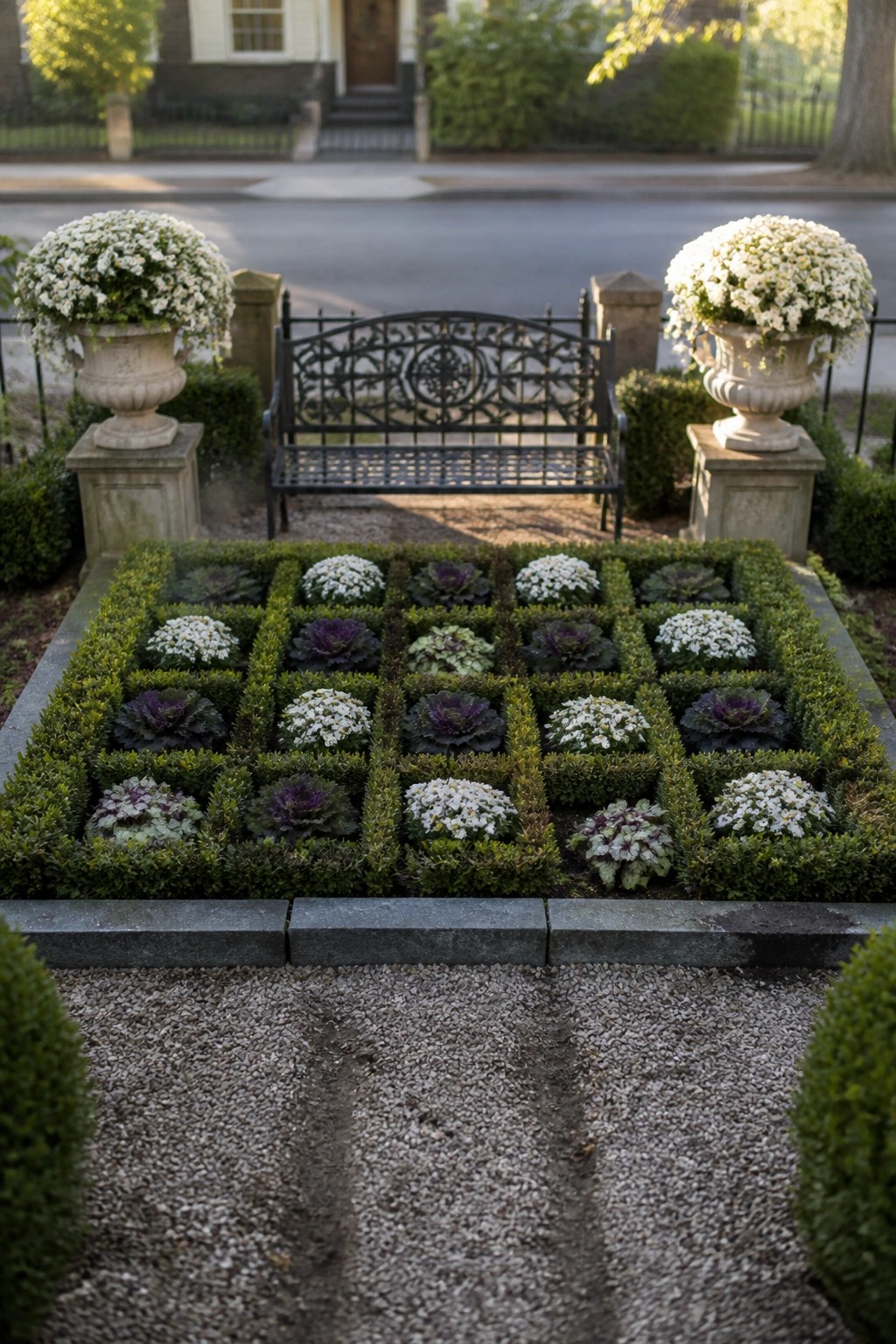
A grid layout gives the garden a clean structure that makes it easy to swap plants as the seasons shift. Low hedges create separate squares that keep different varieties from blending together and turning chaotic.
This approach works best in smaller front beds or side gardens where you want order without a lot of maintenance. Fill the sections with whatever is blooming or colorful at the time, like the mix of white flowers and dark foliage shown here, and trim the hedges to hold the shape.
Line Garden Paths With Low Path Lights
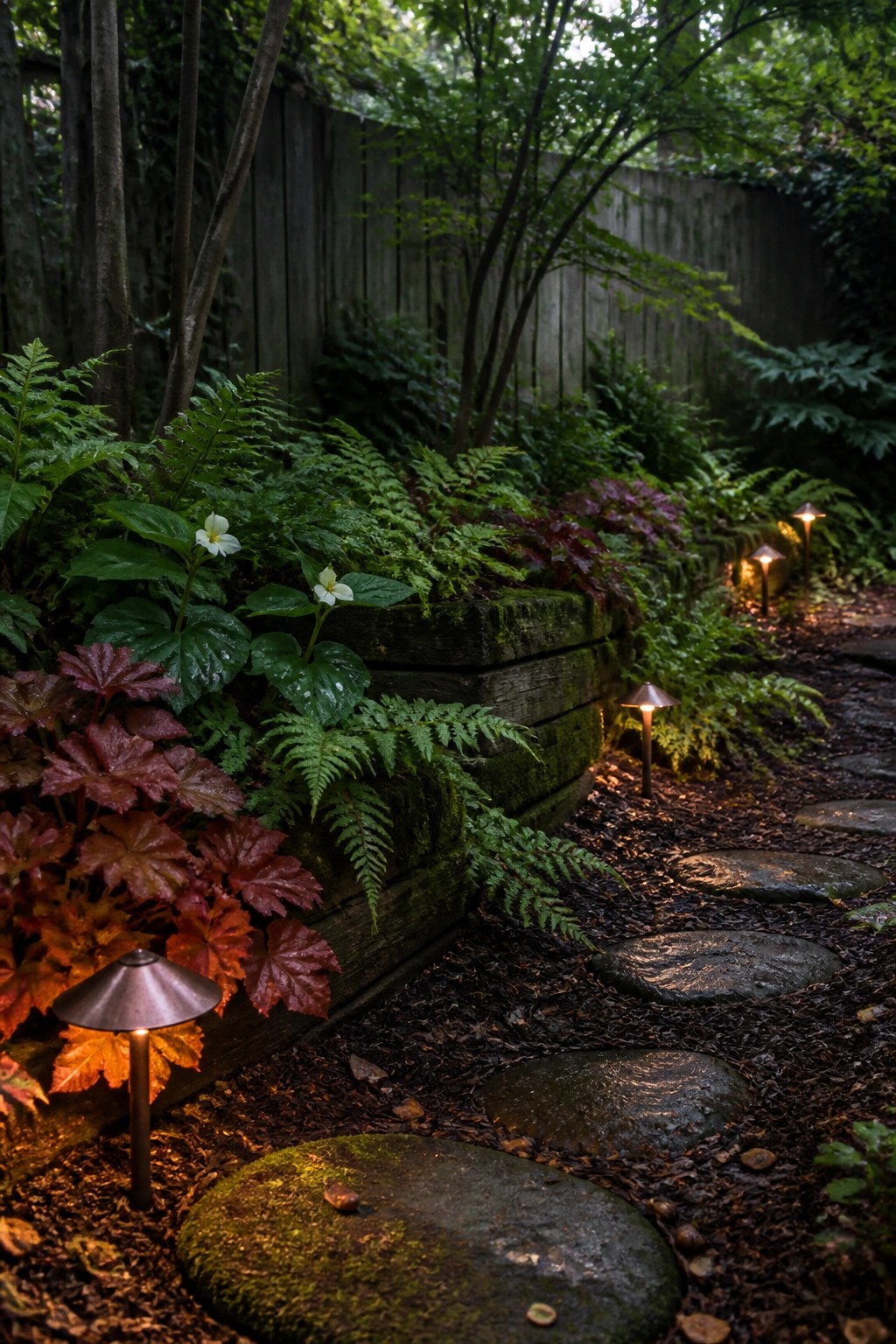
Low path lights give a garden walkway a gentle glow without overpowering the plants around it. They help define the route while letting seasonal foliage stand out as the main feature.
This approach works best in smaller side gardens or wooded edges where you want a natural feel. Space the lights evenly and let ferns or colorful leaves grow close to the path so the light filters through the plants instead of sitting on bare ground.
Raised Planters For Fall Color
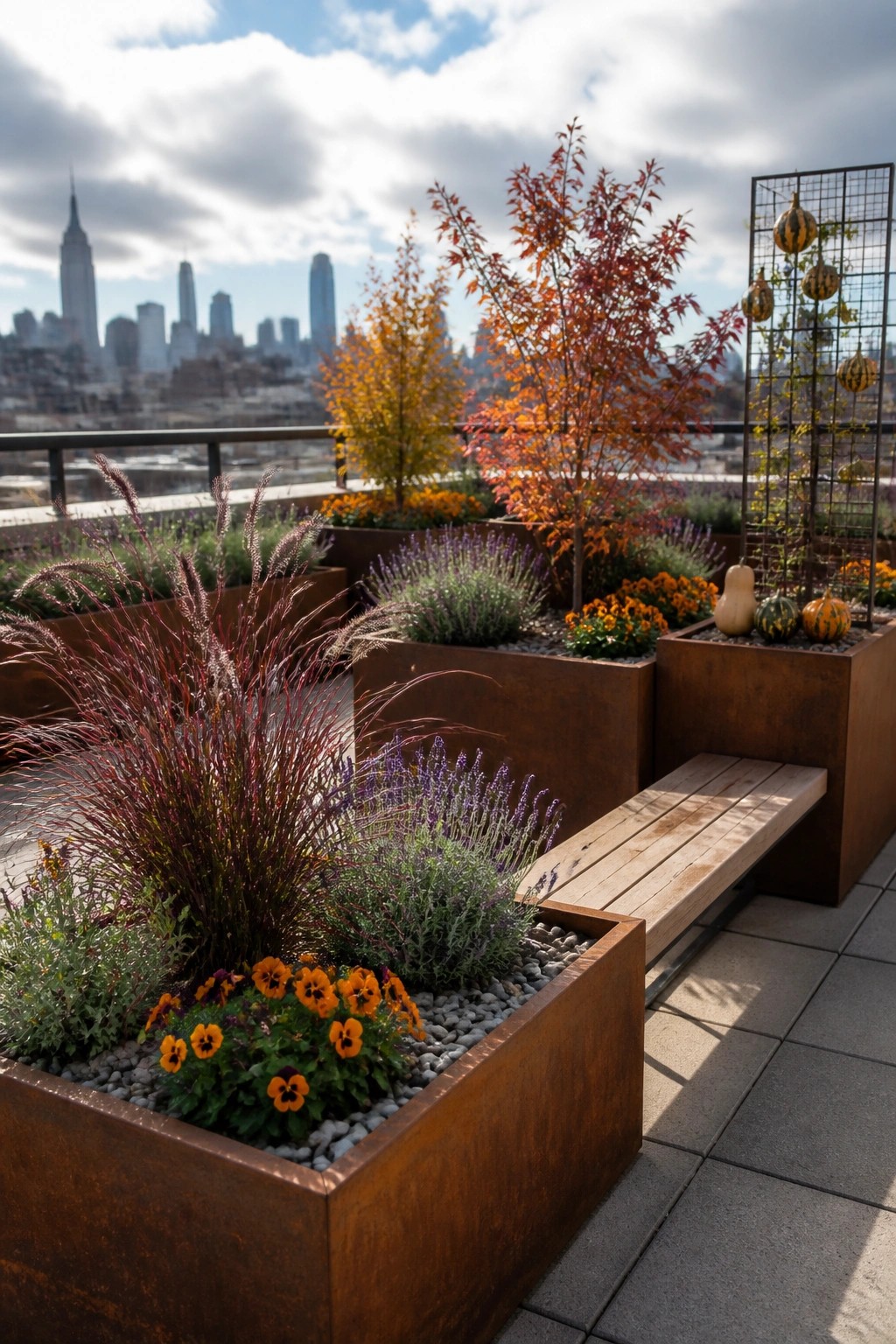
Large metal planters work well for fall because they let you group different plants together in one spot without digging into the ground. The mix of grasses, flowering annuals, and small trees gives height and texture while the gourds add a simple seasonal touch that feels right at home on a terrace.
This setup suits rooftops, balconies, or paved yards where soil is limited. Keep the planters in a sunny spot and choose hardy plants that hold up through cooler weather. Just watch the drainage so water does not collect at the bottom during rain.
Add Seasonal Plants In Large Pots By The Pool
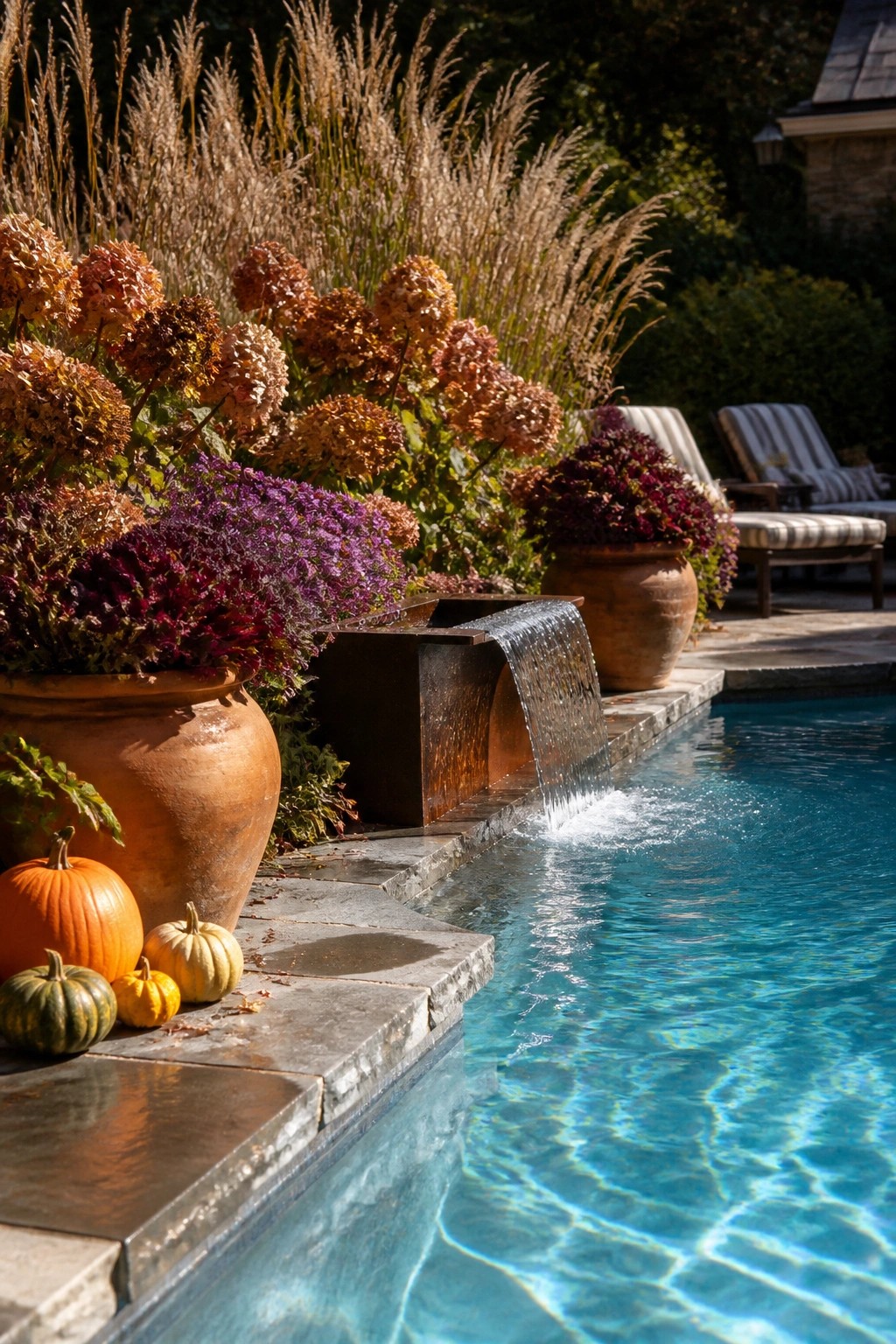
Large pots filled with fall plants give a pool area instant seasonal interest without needing a full garden overhaul. The mix of colorful foliage and small pumpkins in big terracotta containers creates a simple border that feels natural next to the water.
This approach works best on paved pool decks or along the edge of a hardscape where planting beds are limited. Choose pots that can handle weather changes and group a few together so the display feels full rather than scattered.
Frame Entry Steps With Large Seasonal Pots
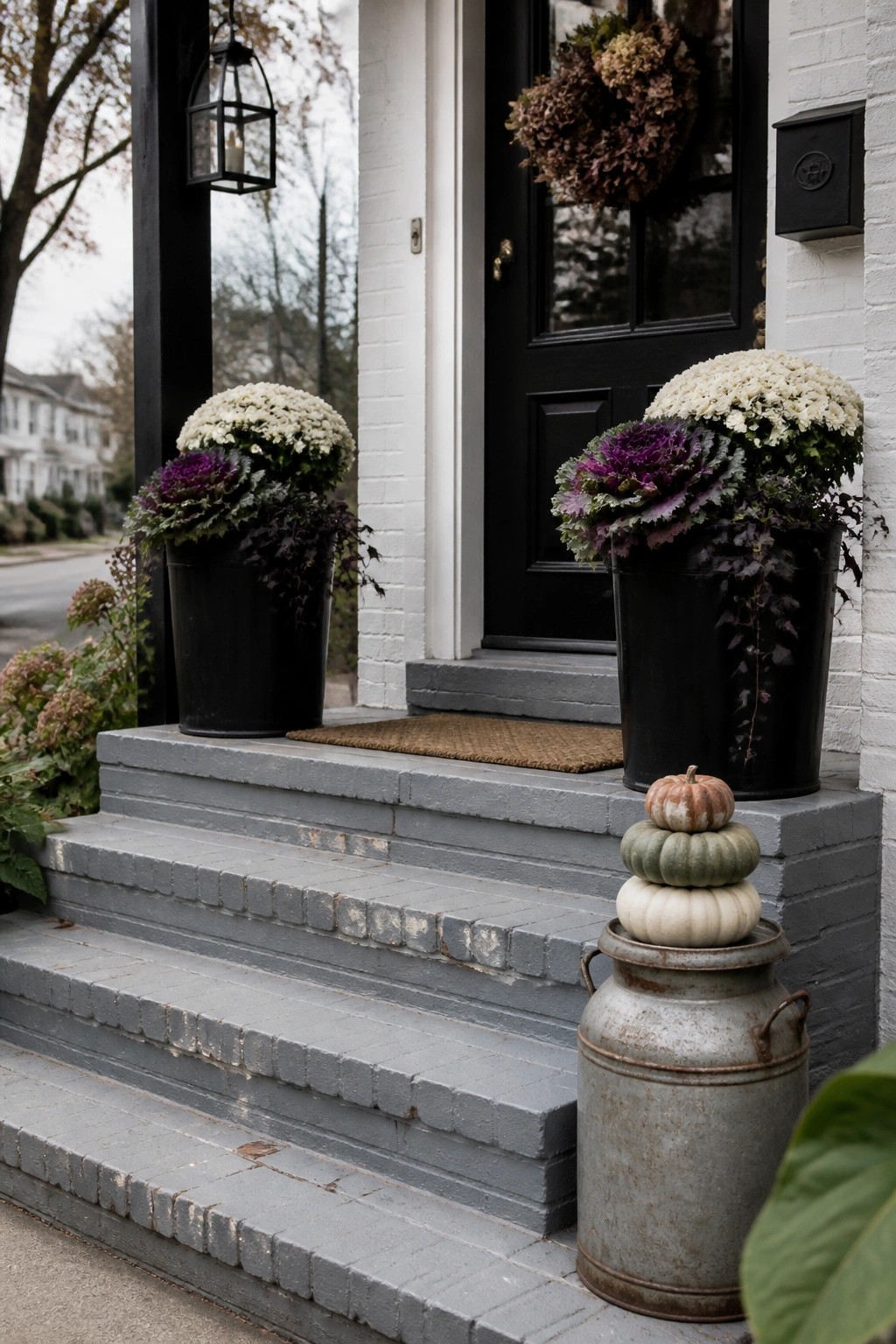
Large containers make it easy to bring strong fall color right up to the door without planting anything new in the ground. The black pots here hold white mums and deep purple kale that stay full and bright through cooler weather, and they sit at just the right height on the steps to greet visitors.
This works best on homes with simple stairs or a small landing where you want quick seasonal change. Choose two matching pots in a dark finish, fill them with one or two plants each, and add a low accent like stacked pumpkins nearby if you like. Keep the pots a bit oversized so the arrangement feels balanced rather than scattered.
Group Potted Plants Around an Outdoor Table

Placing large pots of seasonal plants right next to an outdoor dining table keeps the space feeling connected to the garden. The pots act as movable borders that change with the season and add color without any digging or permanent beds.
This setup works best on gravel or stone patios where you can shift the pots as needed. Mix a few taller grasses with lower blooming plants in similar containers so the arrangement stays balanced and easy to maintain through fall.
Line Paths With Concrete Planters
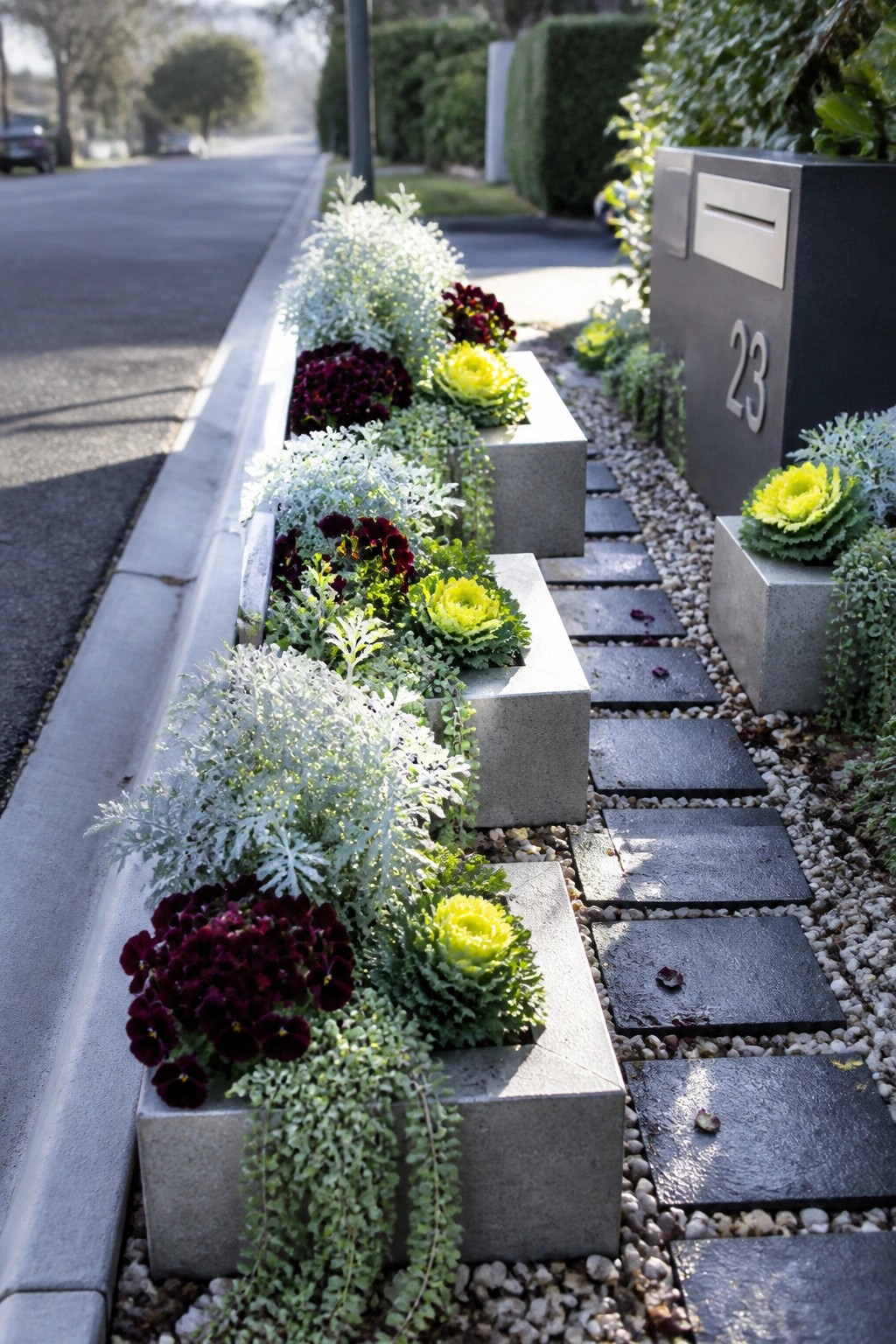
Concrete planters make it easy to add fall color along a walkway without planting directly in the ground. They create a clean edge that stays neat even when the rest of the yard is more casual, and they work well with seasonal plants that peak in cooler months.
Set them in a straight row and fill with hardy choices like ornamental kale and pansies. This approach suits homes with sidewalks or driveways that need a simple border, and the planters can stay in place year after year with very little maintenance.
Raised Beds For Seasonal Plant Displays
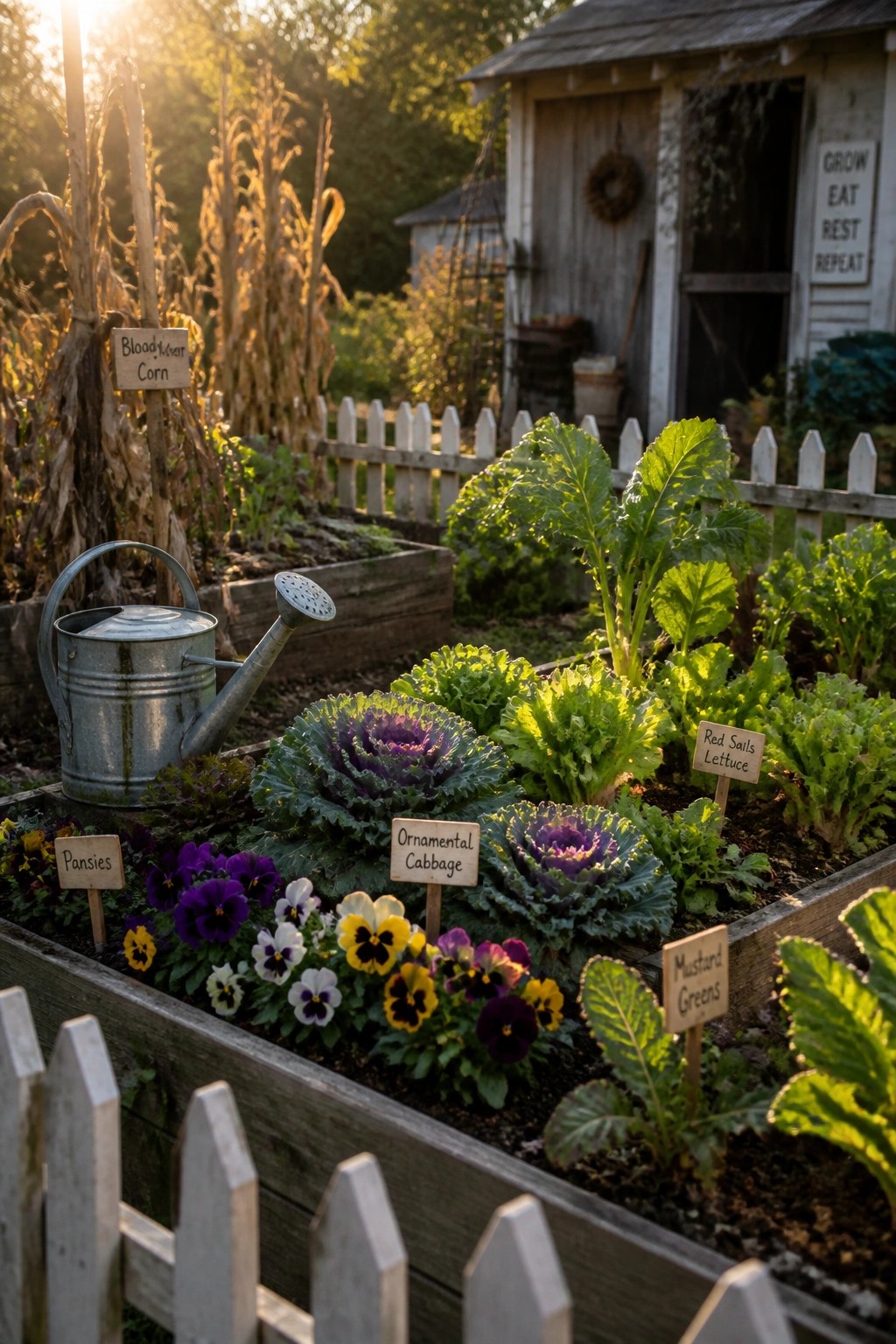
Raised beds give you a simple way to group lots of different plants in one spot without everything running together. They also make it easier to swap things out when the seasons change and keep the soil in good shape year after year.
This works especially well if you like mixing flowers with vegetables or greens. Keep the beds narrow enough to reach across and use simple wooden signs so you can remember what you planted where.
Add Vertical Interest With a Topiary Structure
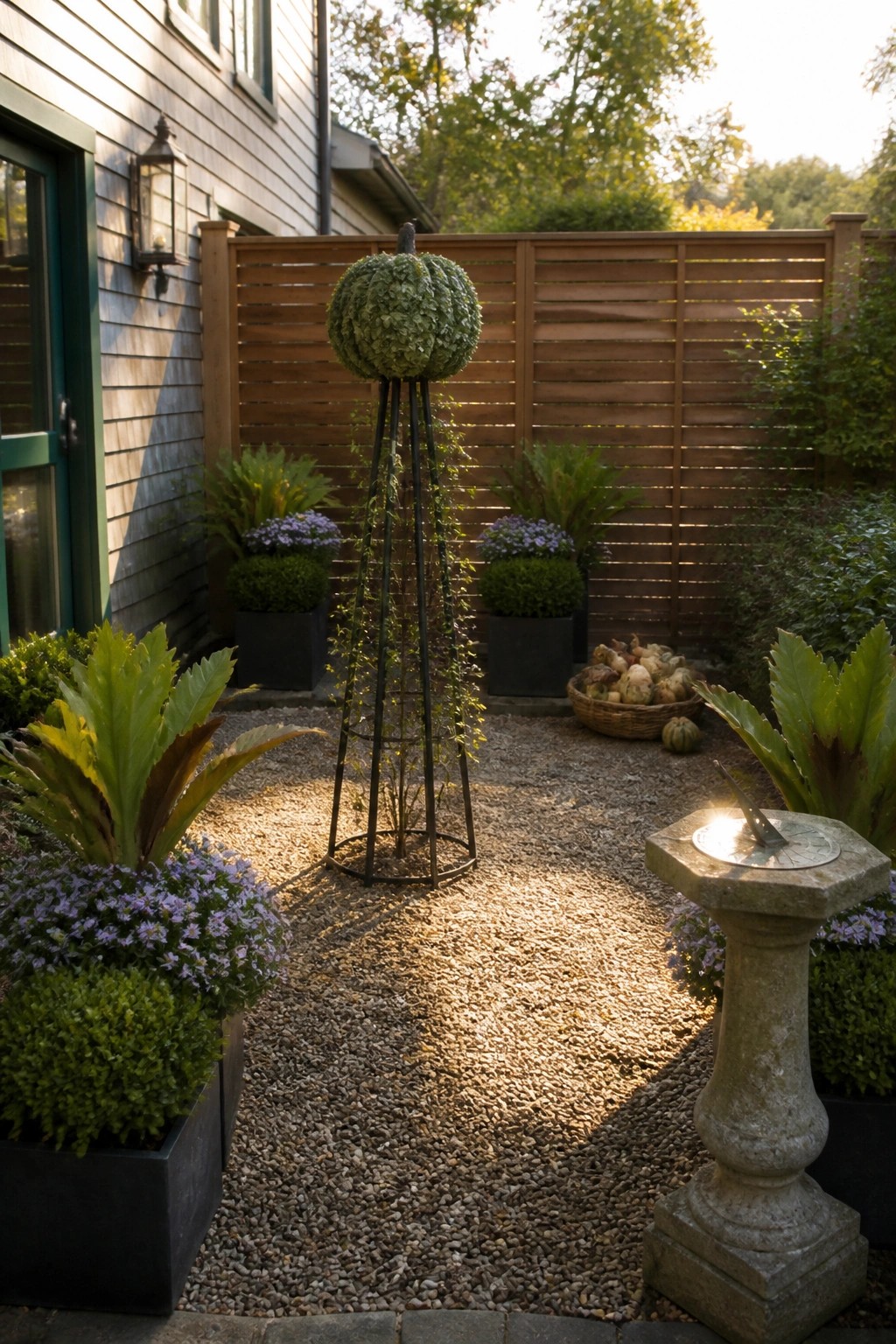
A tall topiary gives a garden an instant focal point without needing a lot of space. The pumpkin shape here works especially well in fall because it brings height and form while still feeling seasonal. Many gardeners like how it stands out against lower plantings and paths.
This approach works best in smaller yards or gravel areas where you want something structured but not permanent. Place it where it can be viewed from the house or main path, and pair it with simple pots and a few harvest accents. Just keep the base planting simple so the topiary stays the star.
Add Layers With Potted Plants On Garden Steps

Placing pots along stone steps is an easy way to bring fall color into a garden without major changes. The mix of purple and yellow blooms adds interest at different heights and makes the path feel more inviting as you walk through.
This approach works best on sloped yards or terraced areas where you can change plants with the seasons. Terracotta pots keep the look simple and let you move things around if light or weather shifts.
Frequently Asked Questions
Q: What plants should I grab first if my yard gets mostly shade in fall?
A: Go for ferns and heuchera in pots. They hold their color without much sun and mix easily with a few pumpkins tucked around the edges. Move the pots as needed when the light shifts.
Q: How often do I need to water seasonal plants once the cooler weather hits?
A: Check the soil every few days instead of sticking to a strict schedule. Fall rains often handle most of the work, but containers dry out faster than ground beds. A quick finger test keeps things simple.
Q: Can I reuse the same fall plants again next year or do I start fresh each season?
A: Many perennials like asters come back on their own if you leave the roots alone. Just cut back the old growth in spring and add fresh mulch. Annuals like ornamental cabbage are easier to replace when they fade.
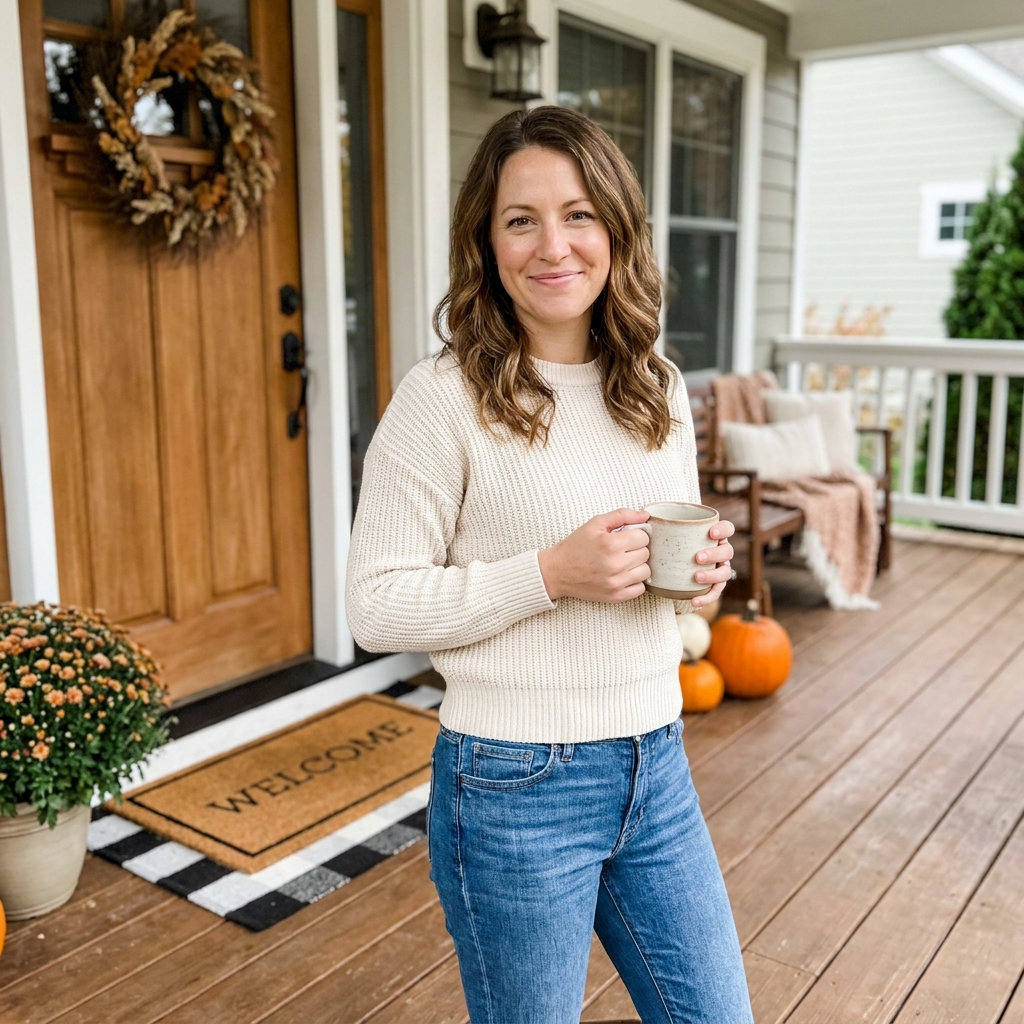
I’m Claire, the voice behind The Seasoned Home. I’ve always loved the way a home can shift with the seasons and feel fresh, cozy, and welcoming all over again. I share seasonal home decor ideas that feel beautiful but still realistic for everyday life, from porch styling and wreaths to cozy bedrooms, living rooms, kitchen touches, and simple table decor. My favorite ideas are the ones that make a home feel special without making decorating feel complicated.