
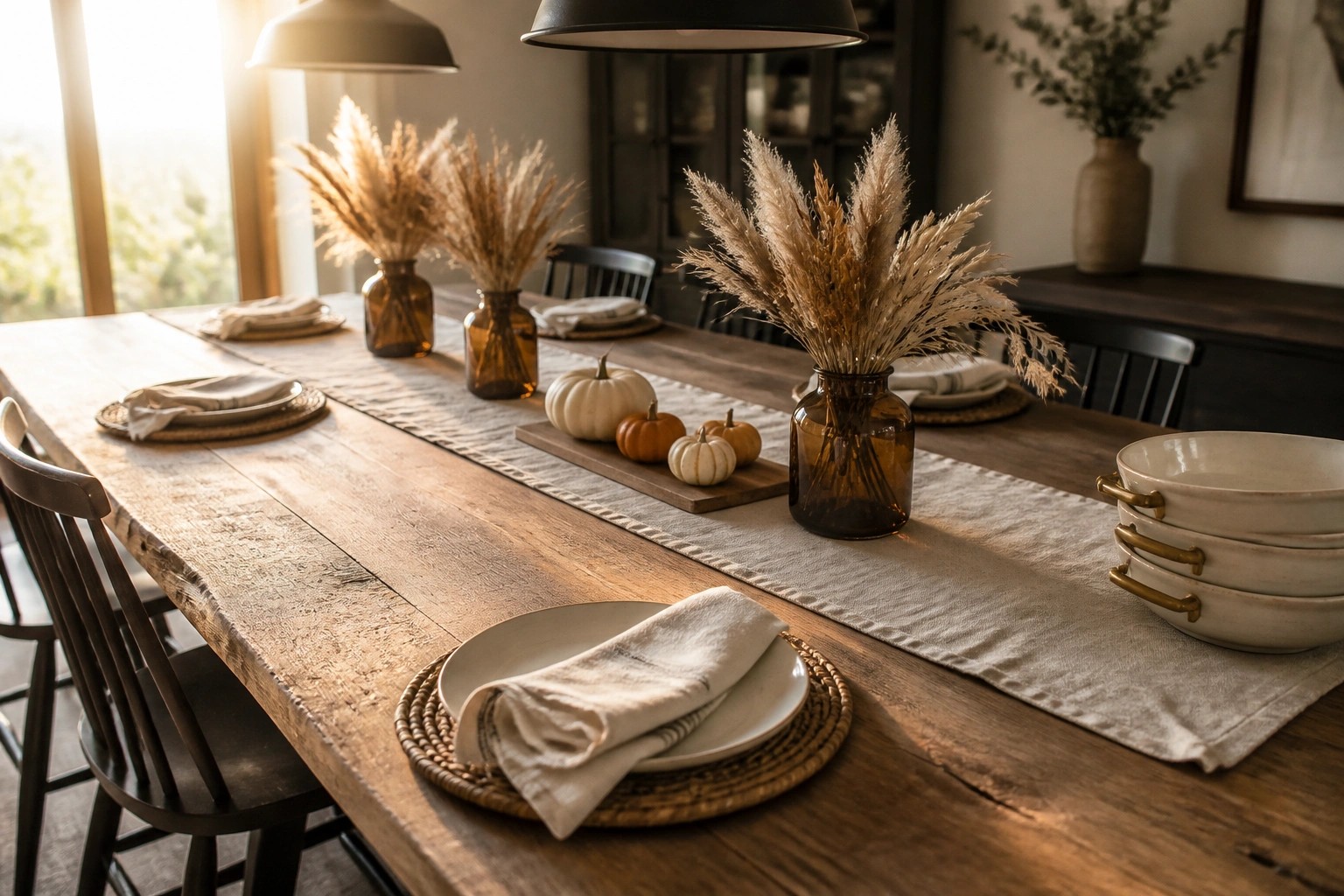
Fall gatherings always bring out my habit of overthinking the table before guests arrive.
I notice how serving dishes end up competing for space with every decorative touch I add and how that shifts the whole feel of the dining room once people sit down.
Space matters more than it seems at first.
Some setups look balanced until the platters come out so I tend to test a few arrangements ahead of time with the actual dishes I plan to use.
Adapting ideas that keep the center clear has changed how smoothly my dinners go when the table needs to work for both looks and real use.
Group Fall Accents Along a Table Runner
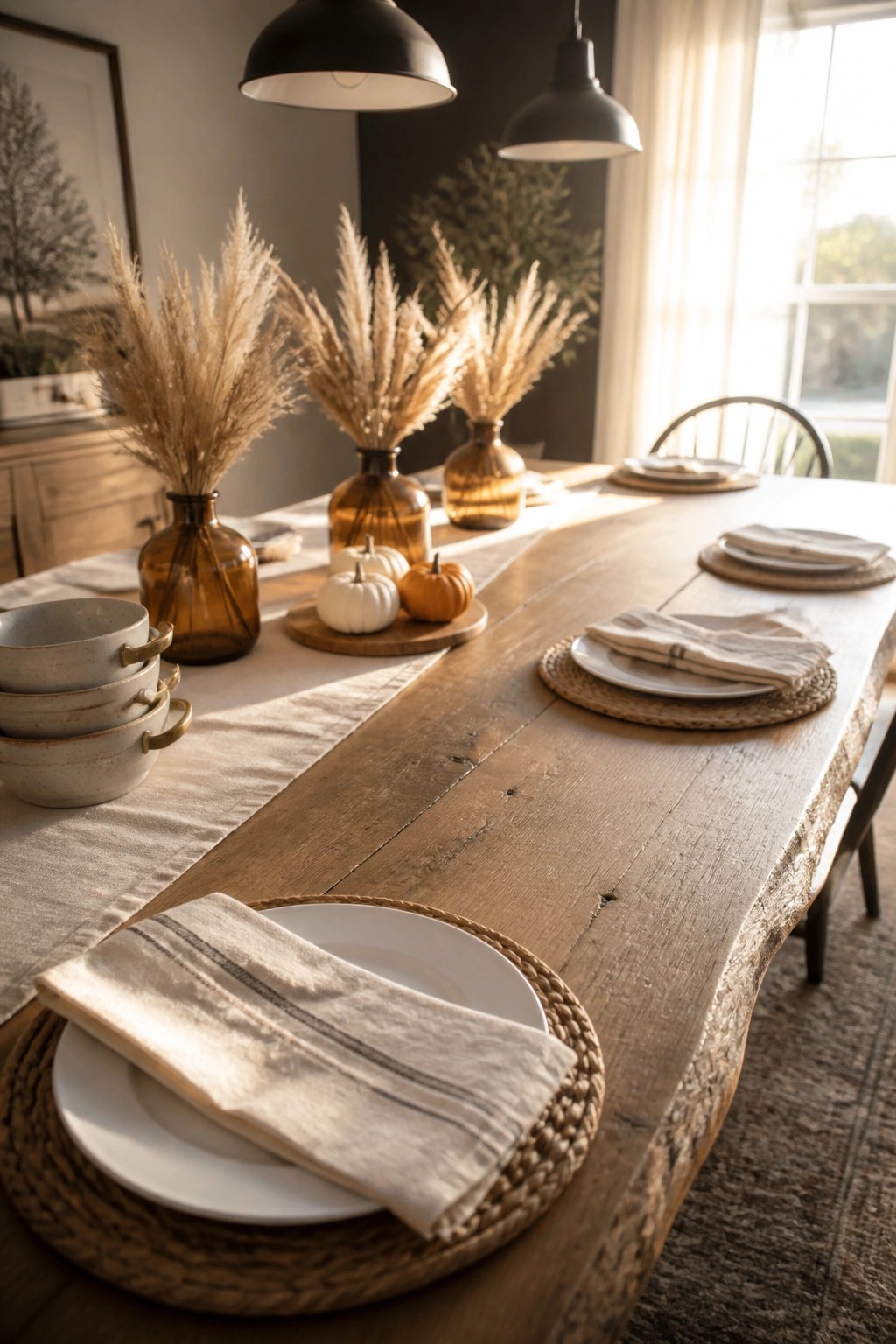
A simple way to bring fall into the dining room is to keep the center decor tight and low. Placing a few small items along a runner leaves the sides open so plates and serving dishes still have room to land.
This approach works best on longer tables that get used for real meals. Stick to one or two kinds of accents so the middle stays contained instead of spreading out and getting in the way.
Use A Narrow Runner For Fall Touches
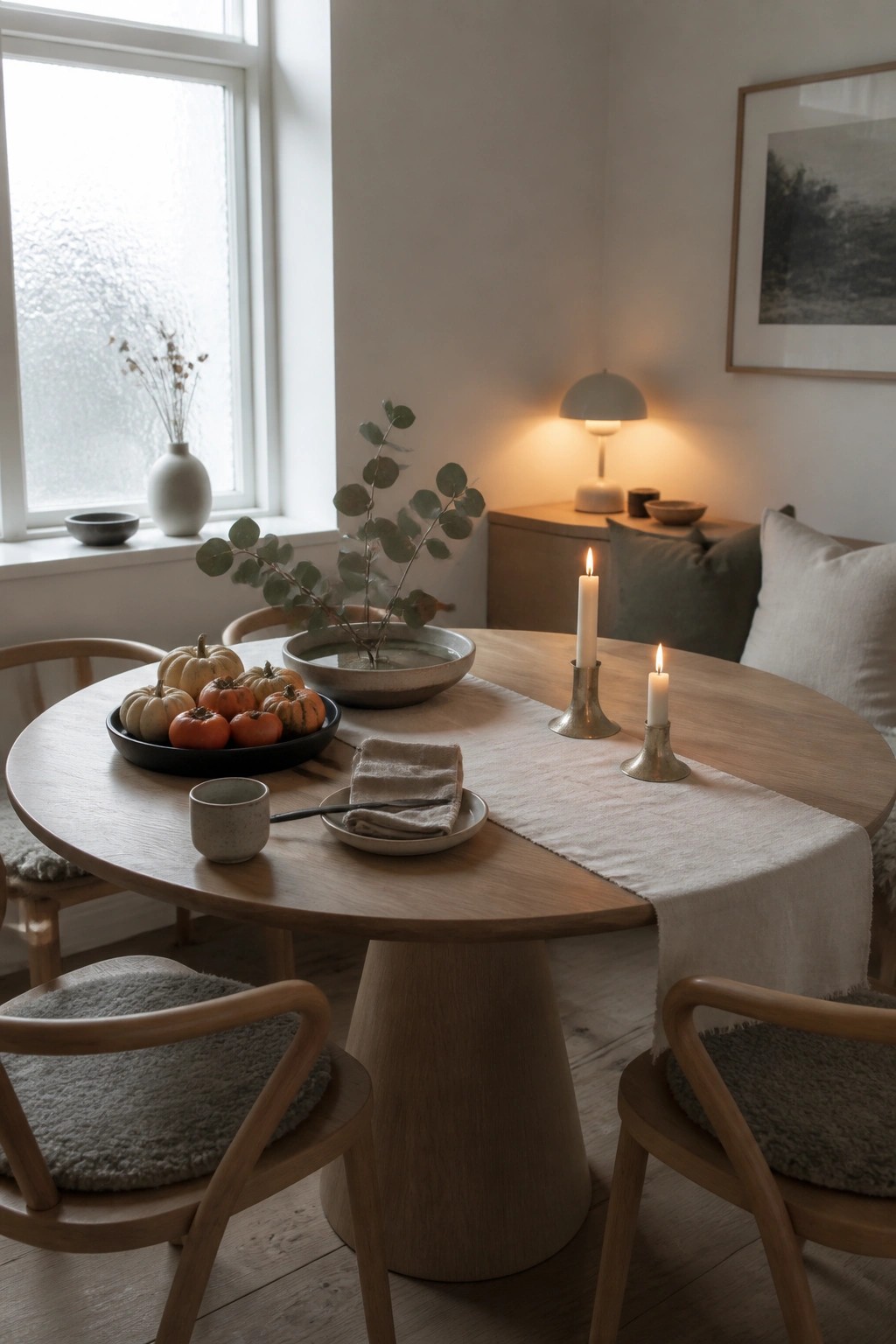
A narrow runner gives the table a bit of seasonal color and texture while leaving most of the surface open for serving dishes. It keeps things simple and practical instead of loading the whole top with decorations.
Keep the runner fairly slim and place just a couple of low items along it, like candles or a small bowl. This works especially well on round tables where space gets tight once food is on the table.
Use A Long Low Container For Fall Decor
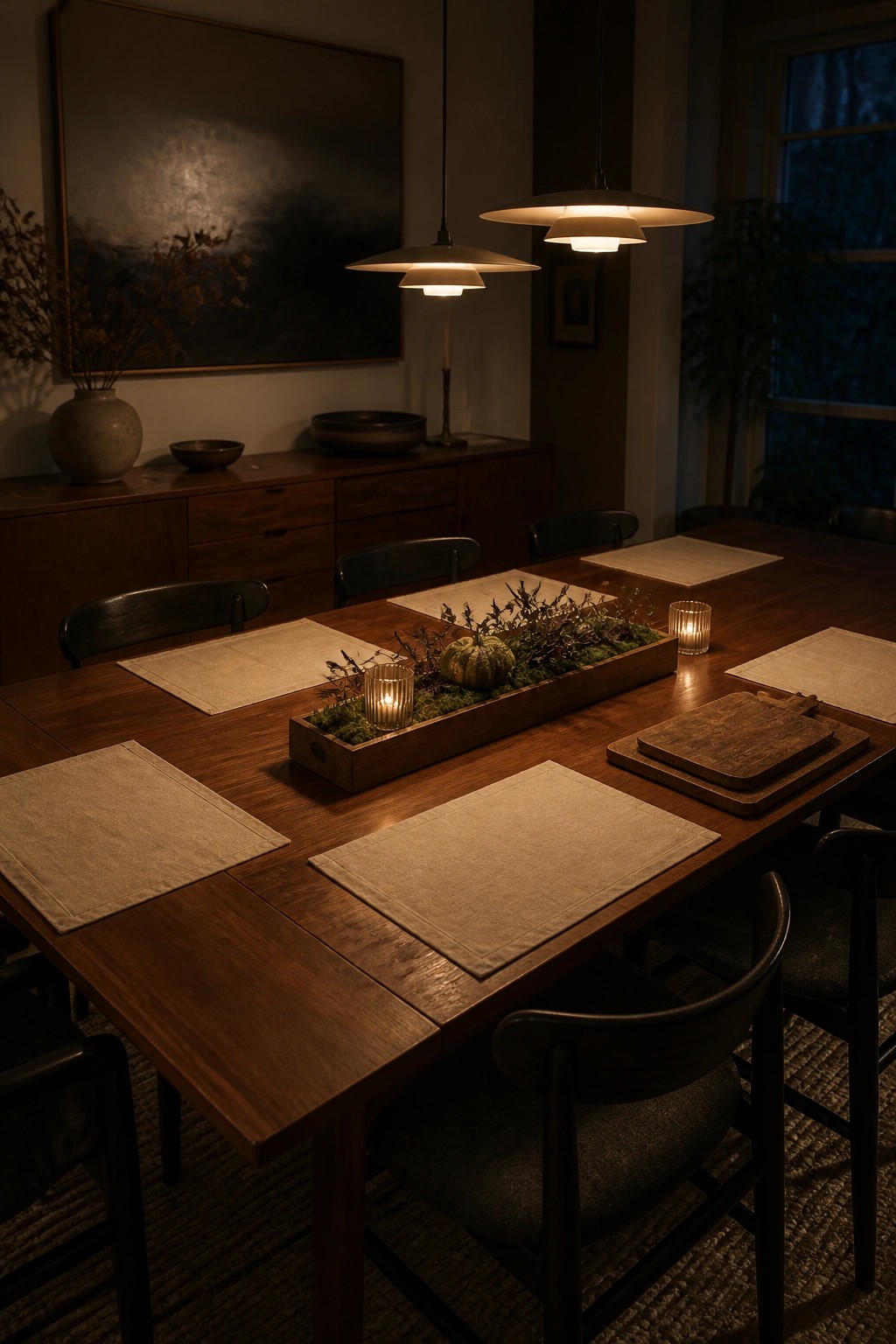
A long wooden box filled with moss and a few small seasonal pieces keeps the center of the table interesting without taking over the surface. It sits low enough that it does not block conversation or sight lines, and the narrow shape leaves open space on both sides for plates and serving dishes.
This works well on a longer table where you want some fall color but still need room to pass food around. Choose a container that is not too wide, add simple natural elements like moss or a single gourd, and place candles inside rather than tall arrangements. It suits homes that host regular meals and need the table to stay practical.
Cluster Fall Snacks on a Wooden Tray
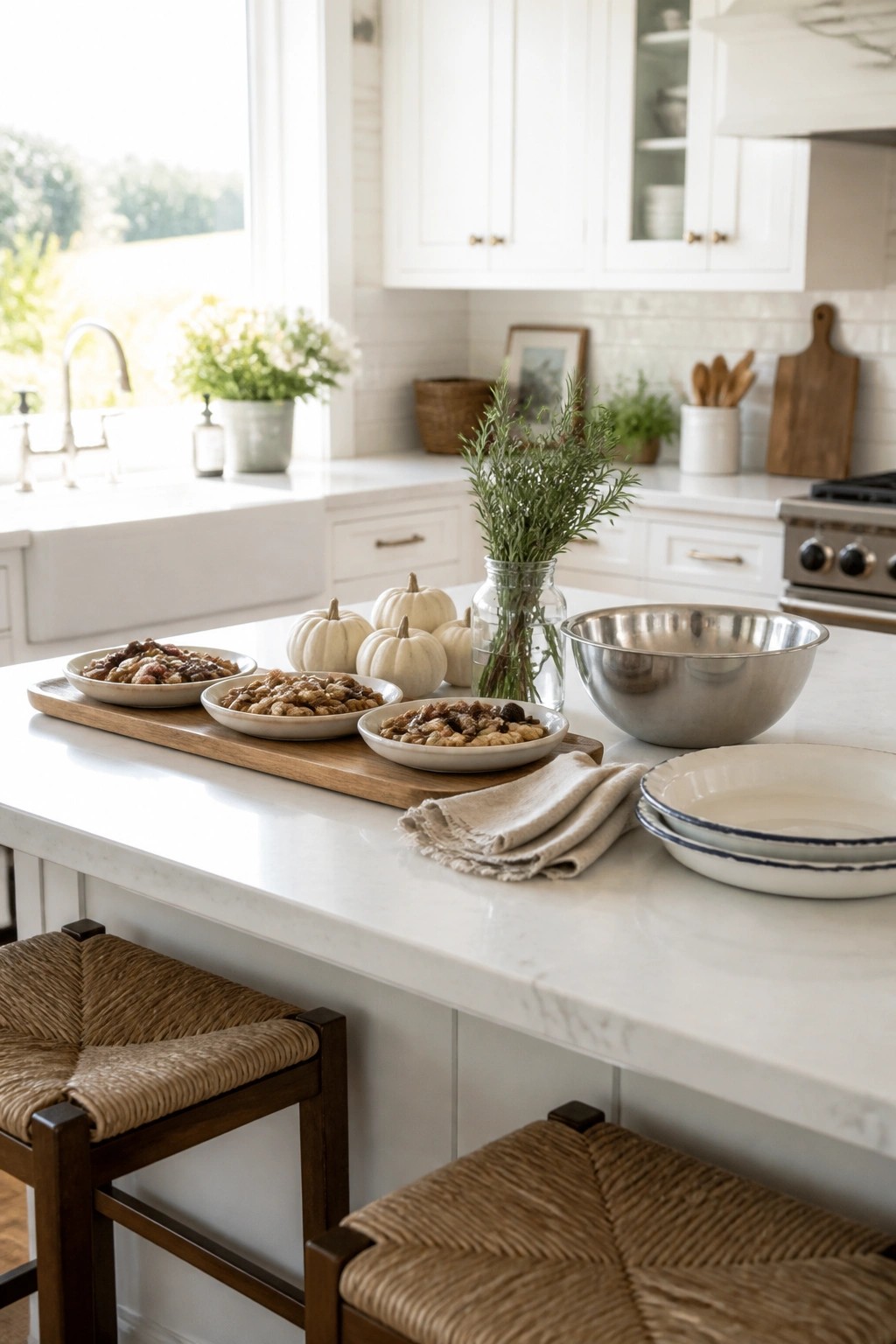
A long wooden tray helps keep smaller bowls and bites together on a kitchen island without spreading them out too far. It adds a bit of structure while still leaving open space around it for larger serving pieces that might come out later.
This works best in kitchens where the island gets used for both prep and casual serving. Keep the tray simple in finish so it does not take over the surface or clash with everyday dishes.
Keep Decor on a Narrow Runner
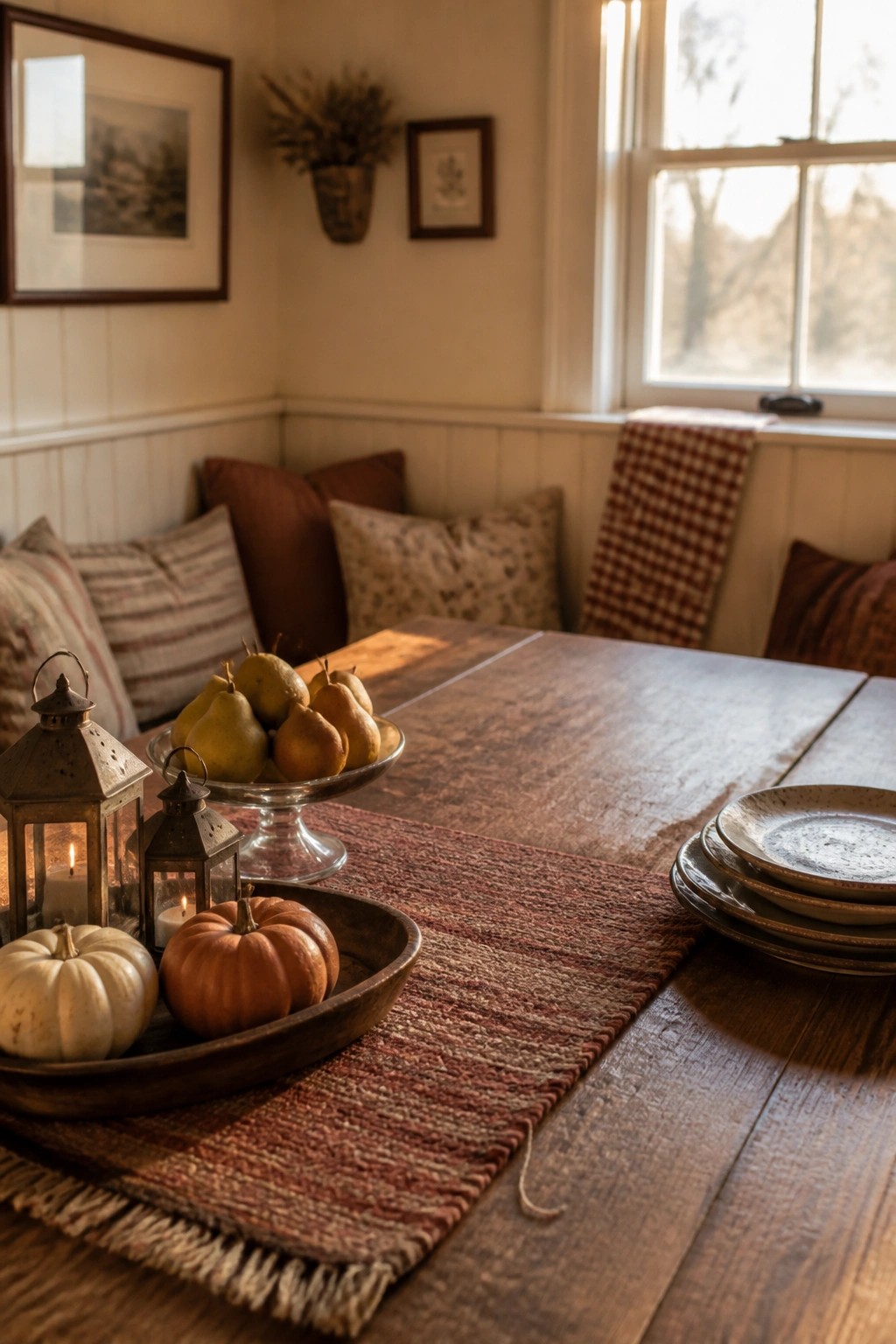
A runner gives fall table decor a clear spot to sit without taking over the whole surface. It holds a few small items like pumpkins or lanterns in one line so the rest of the table stays open for plates and serving dishes.
This setup works well on long wooden tables in dining rooms that see regular use. Keep the items low and grouped toward one end or the middle, then leave plenty of empty space on the sides for bowls and platters during meals.
A Long Low Centerpiece Leaves Room for Serving Dishes
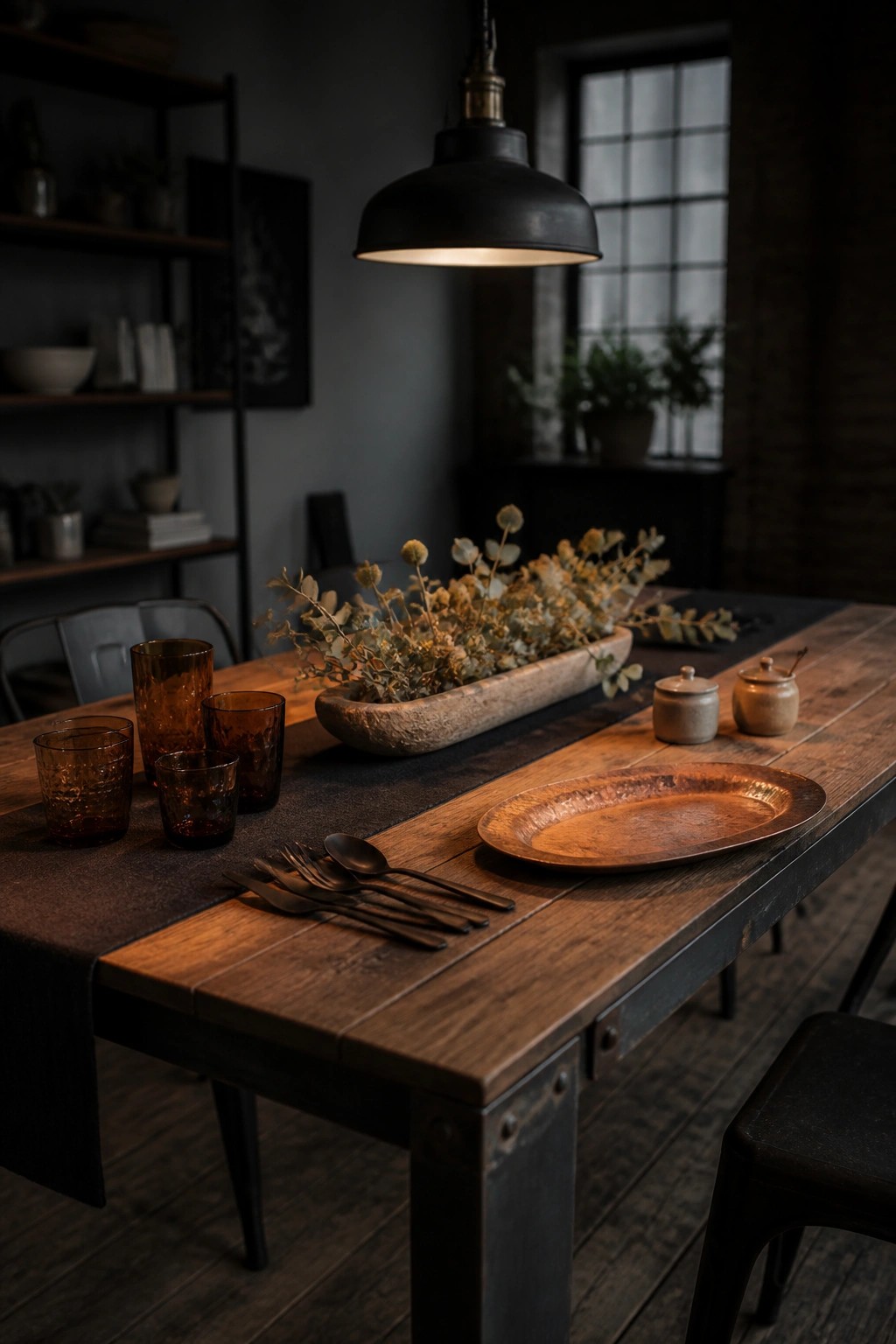
A tall arrangement in the middle of the table often gets moved or knocked when dishes need to go down. A long, narrow wooden trough filled with dried stems keeps the center occupied without taking up width, so plates and serving pieces still fit easily on either side.
This works well on a longer table where you can lay a dark runner first and set the trough right in the middle. It suits homes that already use wood tones and simple metalware, and it stays useful even after the main course is on the table.
Keep Serving Space Open With a Central Runner
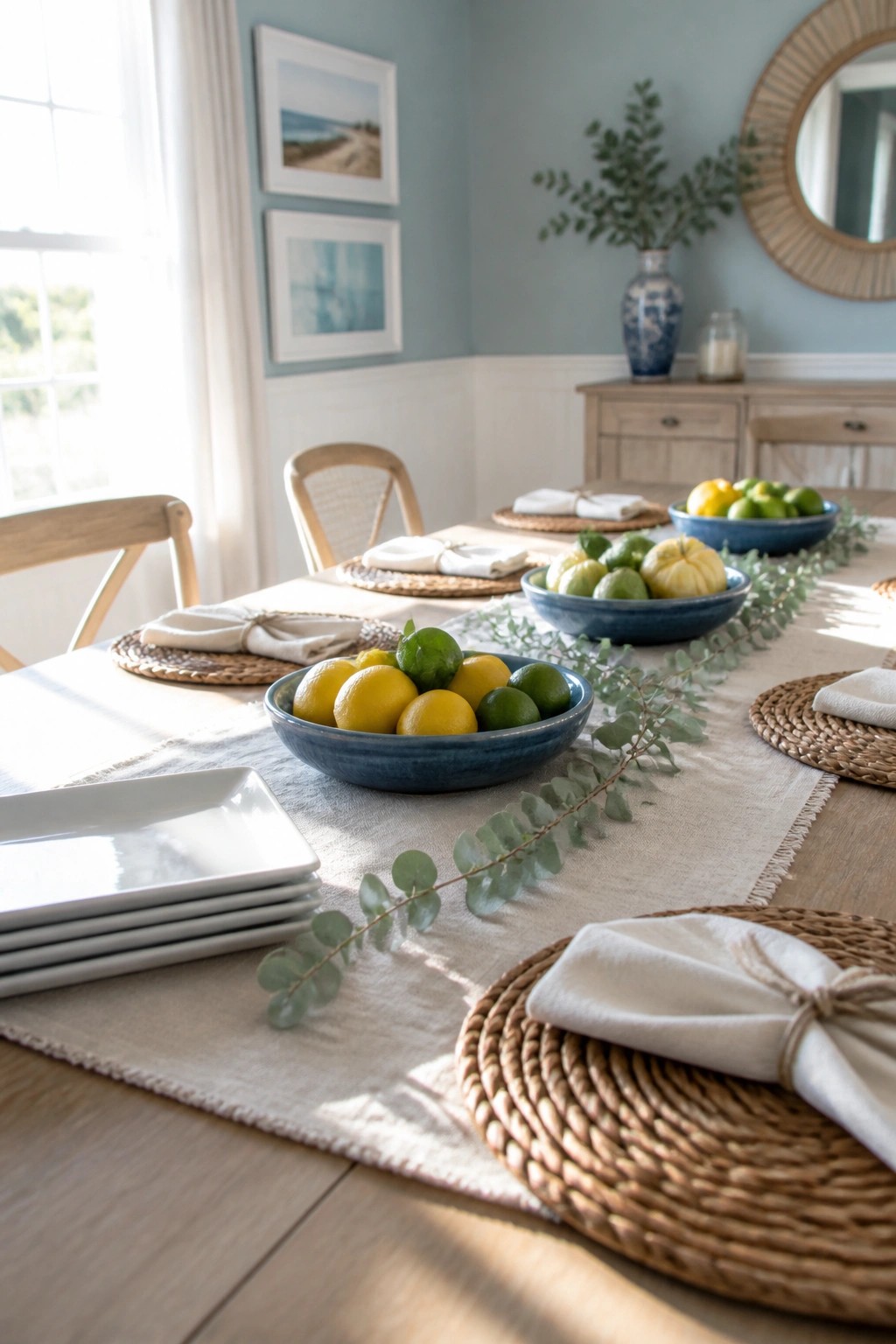
A long runner down the middle gives you room to add color and texture without crowding the table. Bowls of lemons and limes placed along one side of the runner bring in bright fall tones while leaving the rest of the surface clear for dishes and serving platters.
This setup works best on longer tables where you need both decoration and function. Stick to low or narrow pieces so nothing blocks reach across the table, and choose a runner in a neutral fabric that can stay in place through the season.
Narrow Runners Leave Space For Serving Dishes
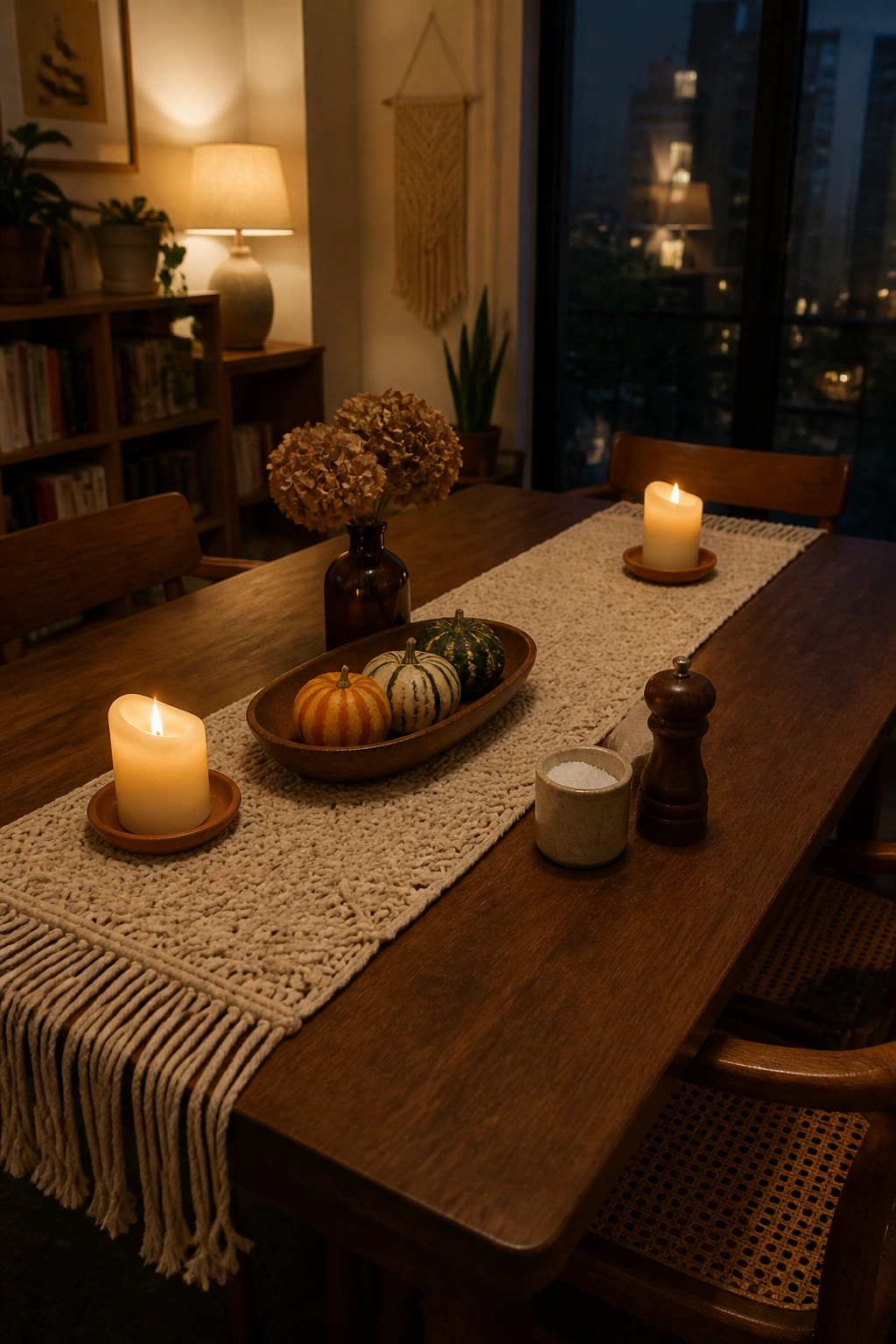
A narrow runner gives the table a finished look without taking over the surface. It lets you add a few small seasonal pieces like candles or little gourds while leaving open areas on both sides for plates and dishes that need to be passed around.
This works best in homes where the dining table gets used for regular meals, not just special occasions. Keep the runner slim and the accents low so nothing blocks the flow when people reach for food.
Cluster Small Accents Along a Runner
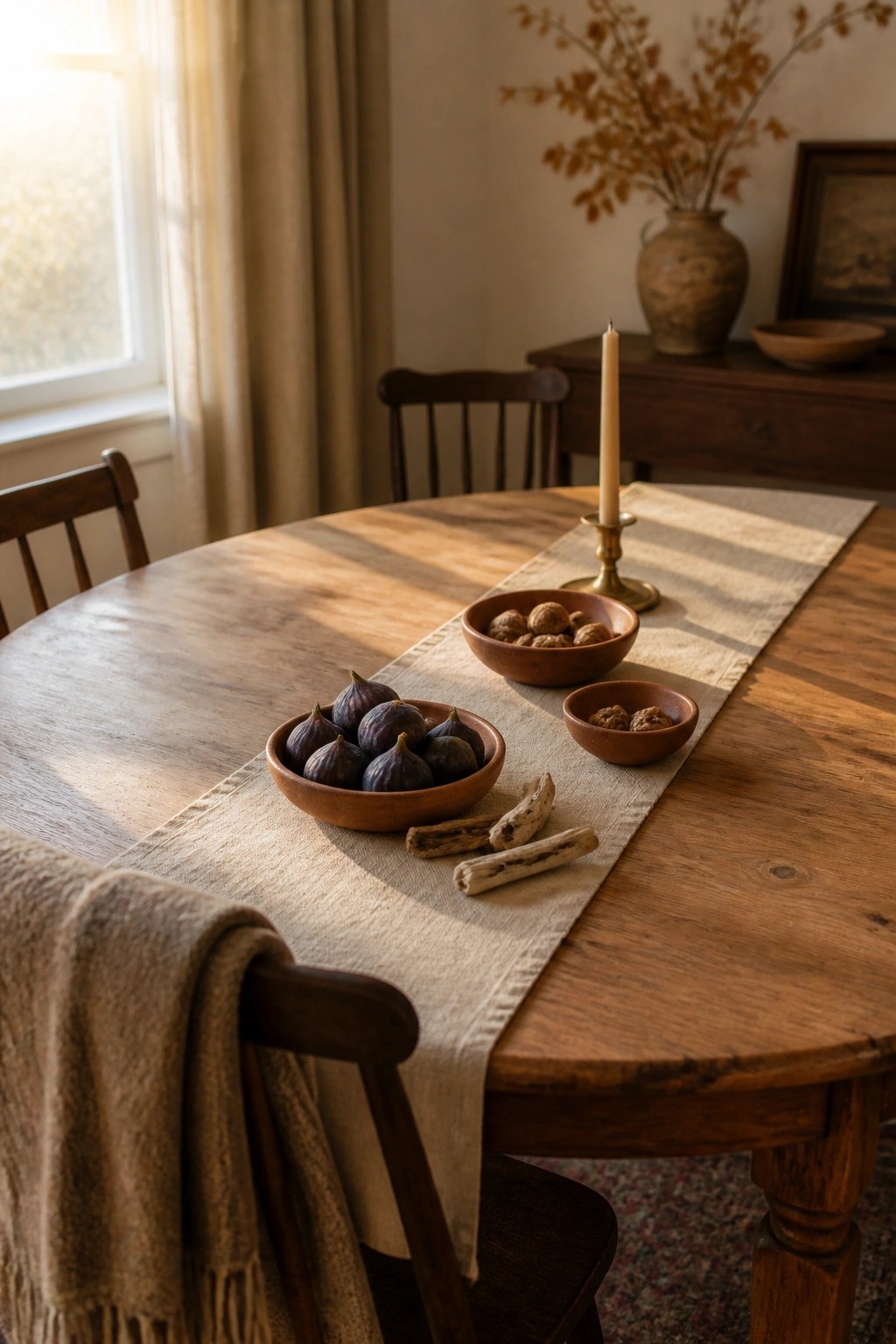
A long runner with just a few small bowls grouped together keeps the rest of the table clear. This setup works because it adds a bit of fall color and texture without spreading items all over the surface. The wood stays visible on both sides, so plates and serving dishes still have room.
This approach suits a larger dining table where meals happen often. Try placing two or three low bowls in the middle section and leaving the ends open. It stays practical even when extra dishes come out during dinner.
A Shallow Tray Leaves Room for Serving
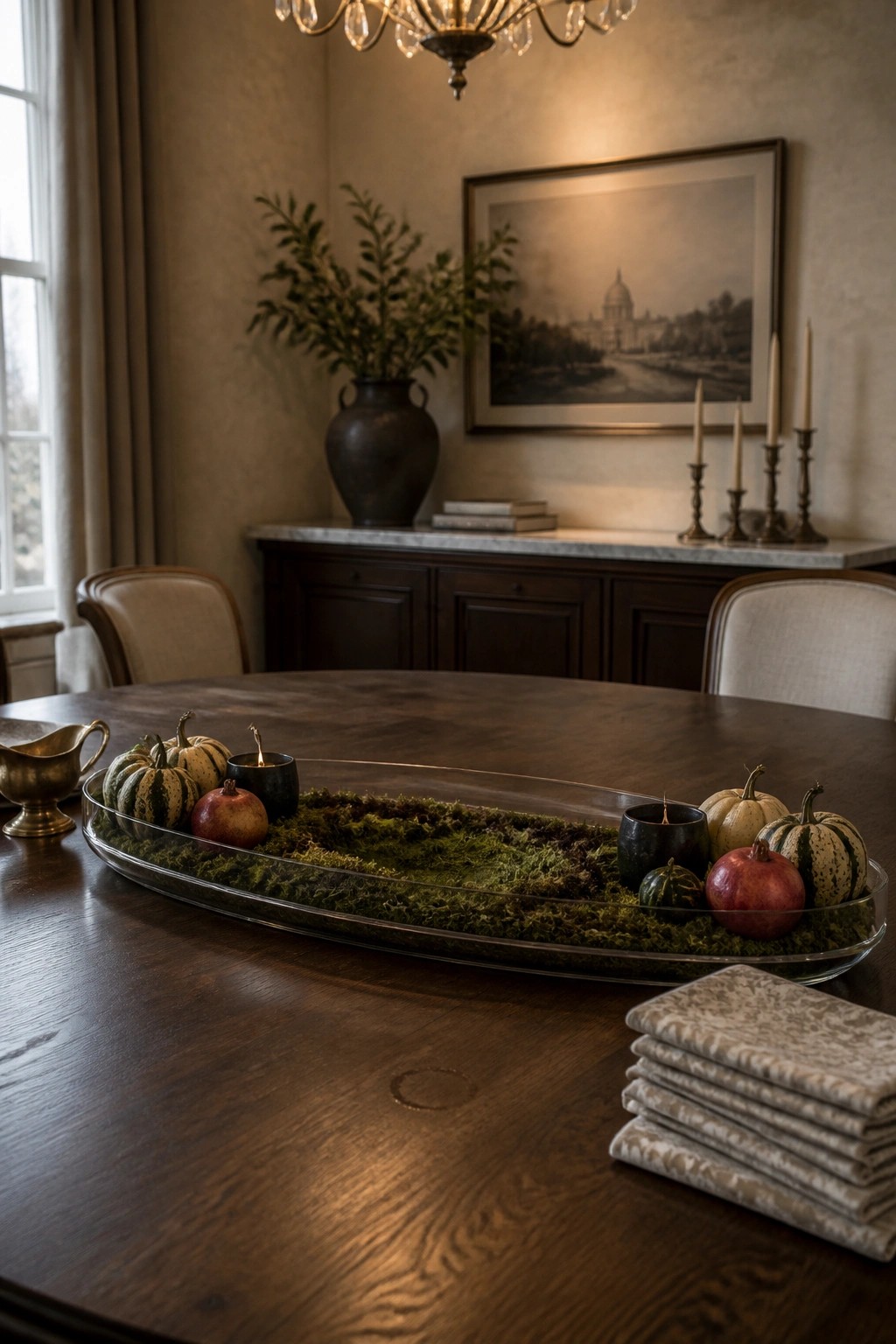
A long, low tray filled with moss and a few small pumpkins works well when you still need space for platters and bowls. It adds seasonal color without building up height that gets in the way during meals.
This setup suits larger dining tables where serving dishes move around often. Keep the tray narrow and the contents low so guests can reach across easily. A clear glass base helps it blend in rather than stand out too much.
Group Fall Accents in One Long Bowl
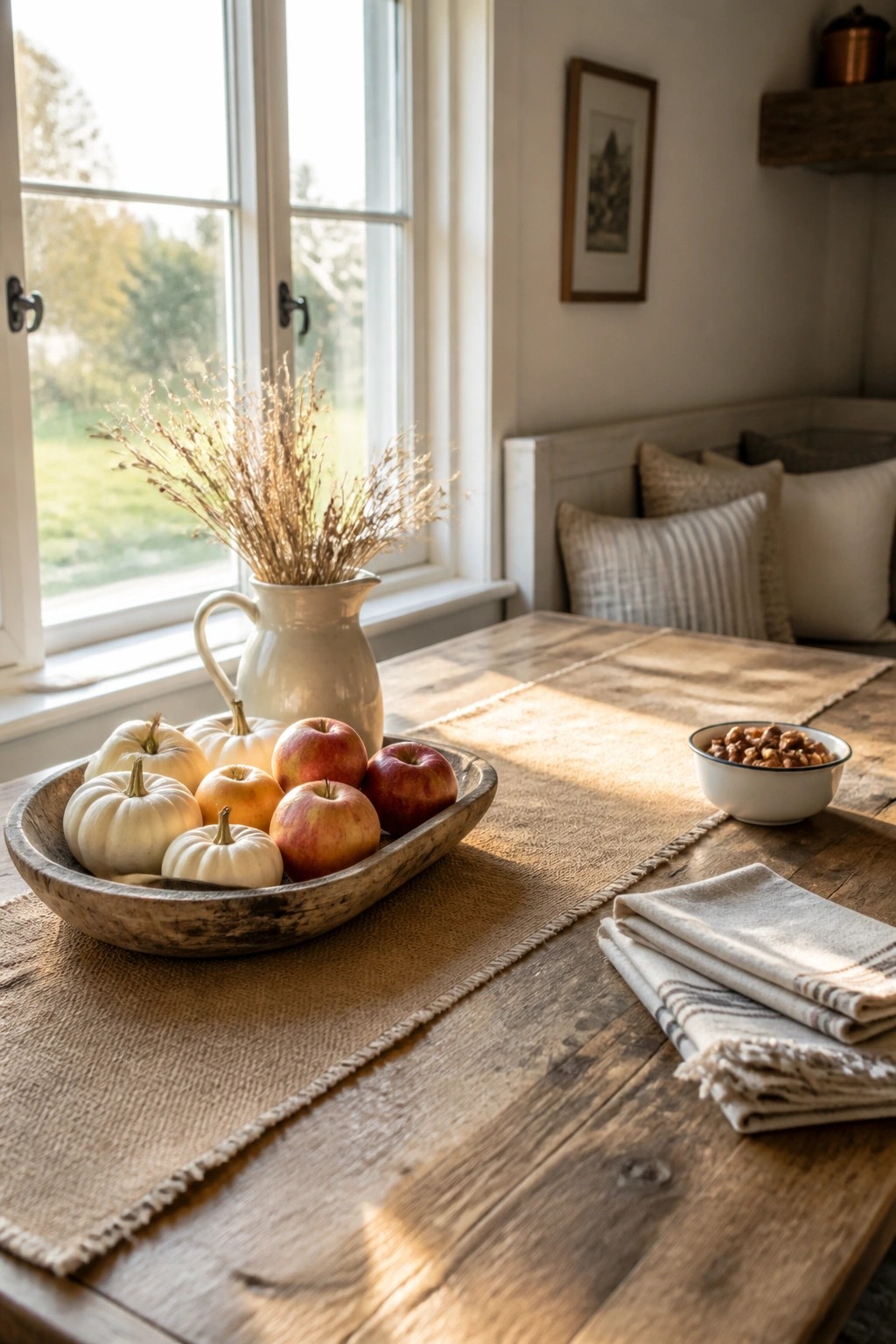
A long wooden bowl makes it easy to add pumpkins and apples without spreading items all over the table. This keeps the surface clear enough for plates and serving dishes while still giving the room a seasonal feel.
The approach works best on dining tables that get used every day. Try a low, narrow container and stick to just two or three types of produce so the setup stays simple and does not get in the way.
Keep Decor on a Narrow Center Runner
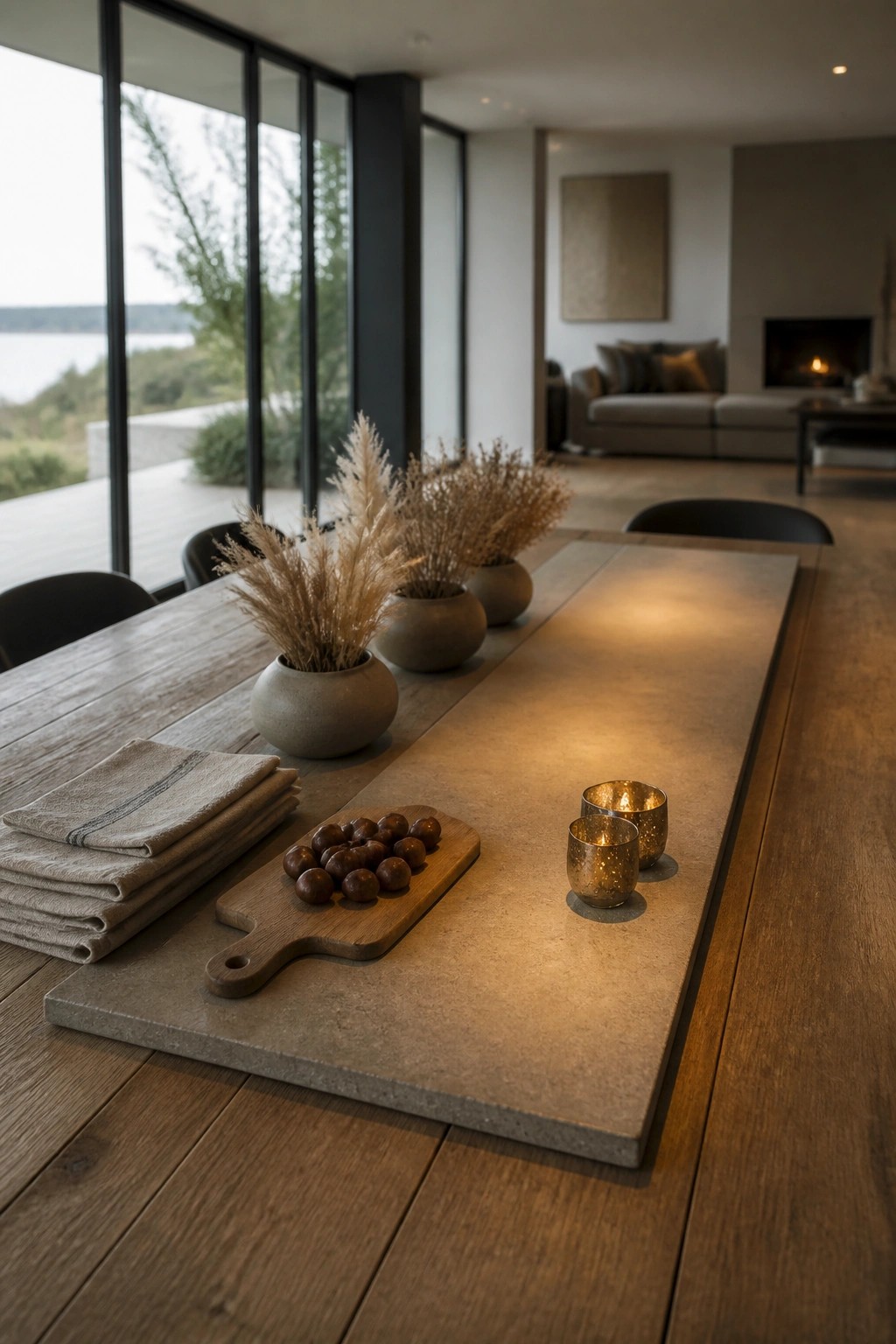
A narrow runner down the middle of the table works well when you want some fall touches without losing space for plates and serving dishes. It keeps the decor contained in one strip so the rest of the table stays clear and usable.
This approach suits long dining tables in open living spaces. Place just a few low items along the runner, such as small pots of dried grass or a simple wooden board with nuts, and leave the sides open for food.
Group Fall Accents Along a Runner
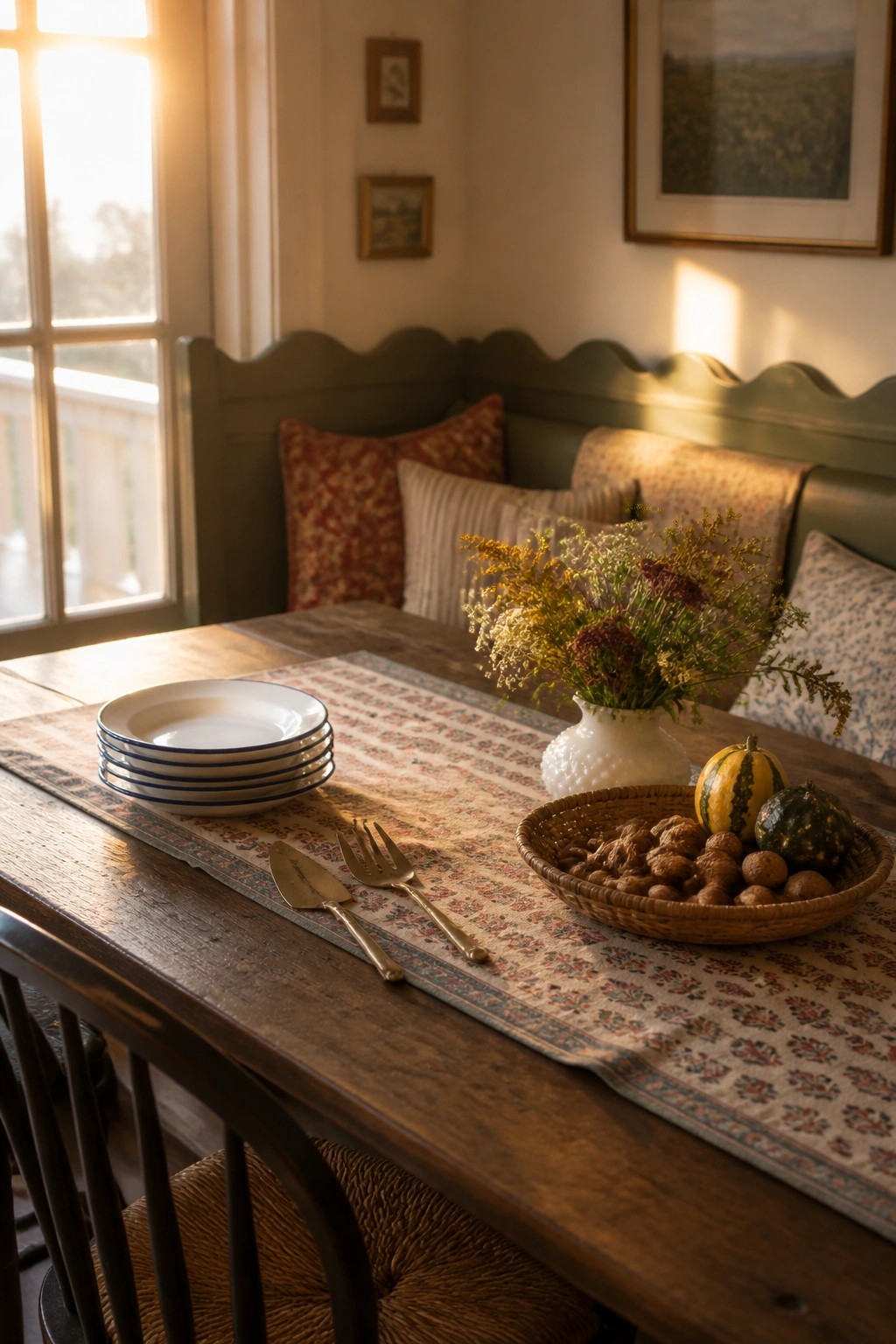
A runner gives you a clear path to add seasonal pieces without spreading them across the whole table. When you keep the accents grouped on one side, the rest of the surface stays open for platters and bowls.
This works especially well on longer tables where people need to reach across. Try a mix of small baskets, a vase, and a few gourds so the look feels full but never crowded. It suits homes that host regular meals and want the decor to stay practical.
A Narrow Runner Leaves Room For Serving Dishes
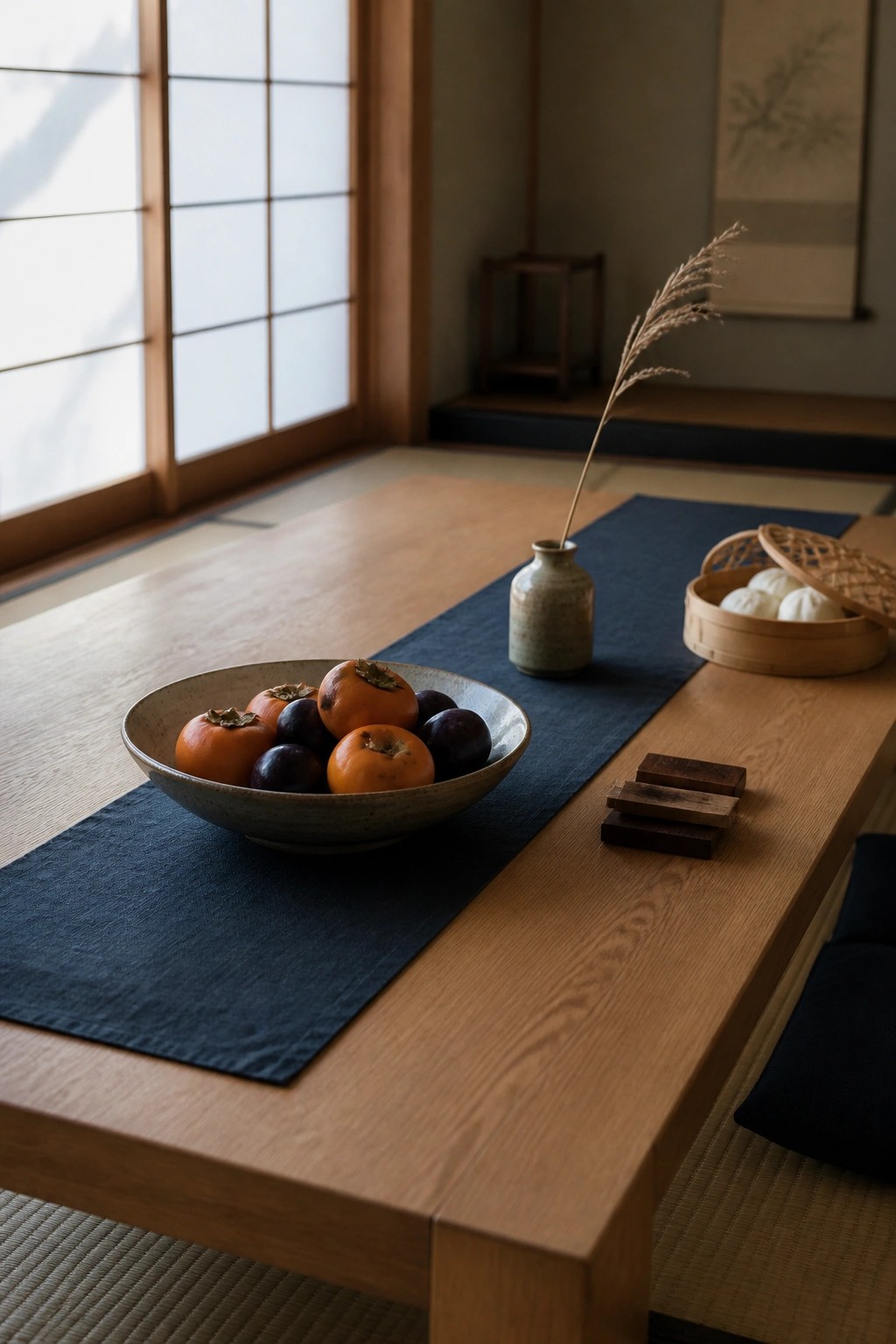
A narrow runner is one of the easiest ways to add fall color to a table without crowding the surface. It gives just enough texture and tone while leaving open space on both sides for plates and shared dishes.
This setup works well on longer tables or in homes that serve meals family style. Keep the rest of the decor minimal, such as one low bowl of seasonal fruit, so the table stays practical for actual use.
Cluster Fall Accents Along The Sides
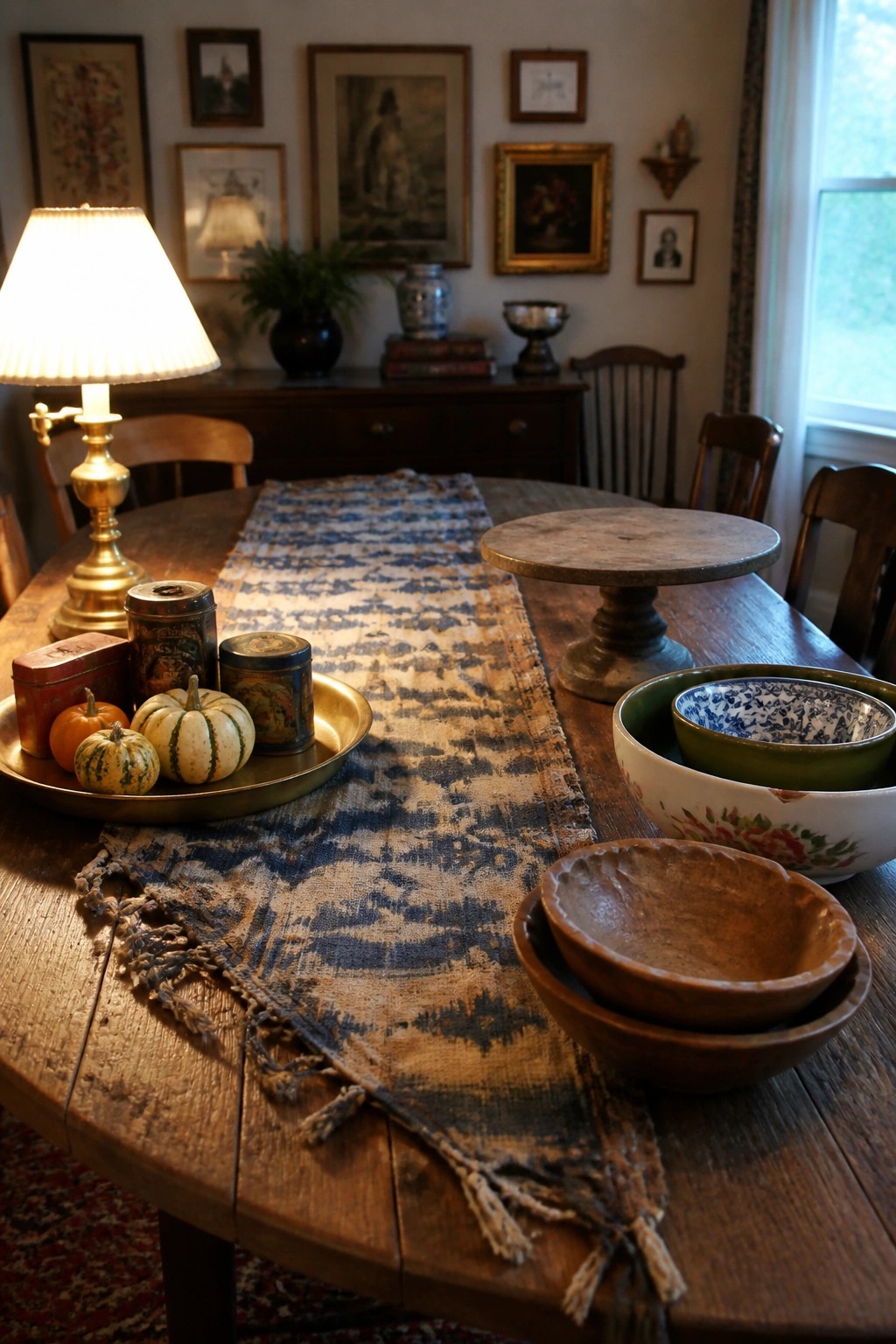
One simple way to keep a table practical during meals is to group your fall pieces on either side instead of spreading them across the whole surface. A runner helps mark that open middle lane so serving dishes have somewhere to land without moving anything out of the way.
This setup works best on longer tables where you still want seasonal color but need room for food. Place smaller items like gourds or tins together on one end and stack bowls or similar pieces on the other so the center stays clear for whatever you are serving.
Keep the Centerpiece Low and Narrow
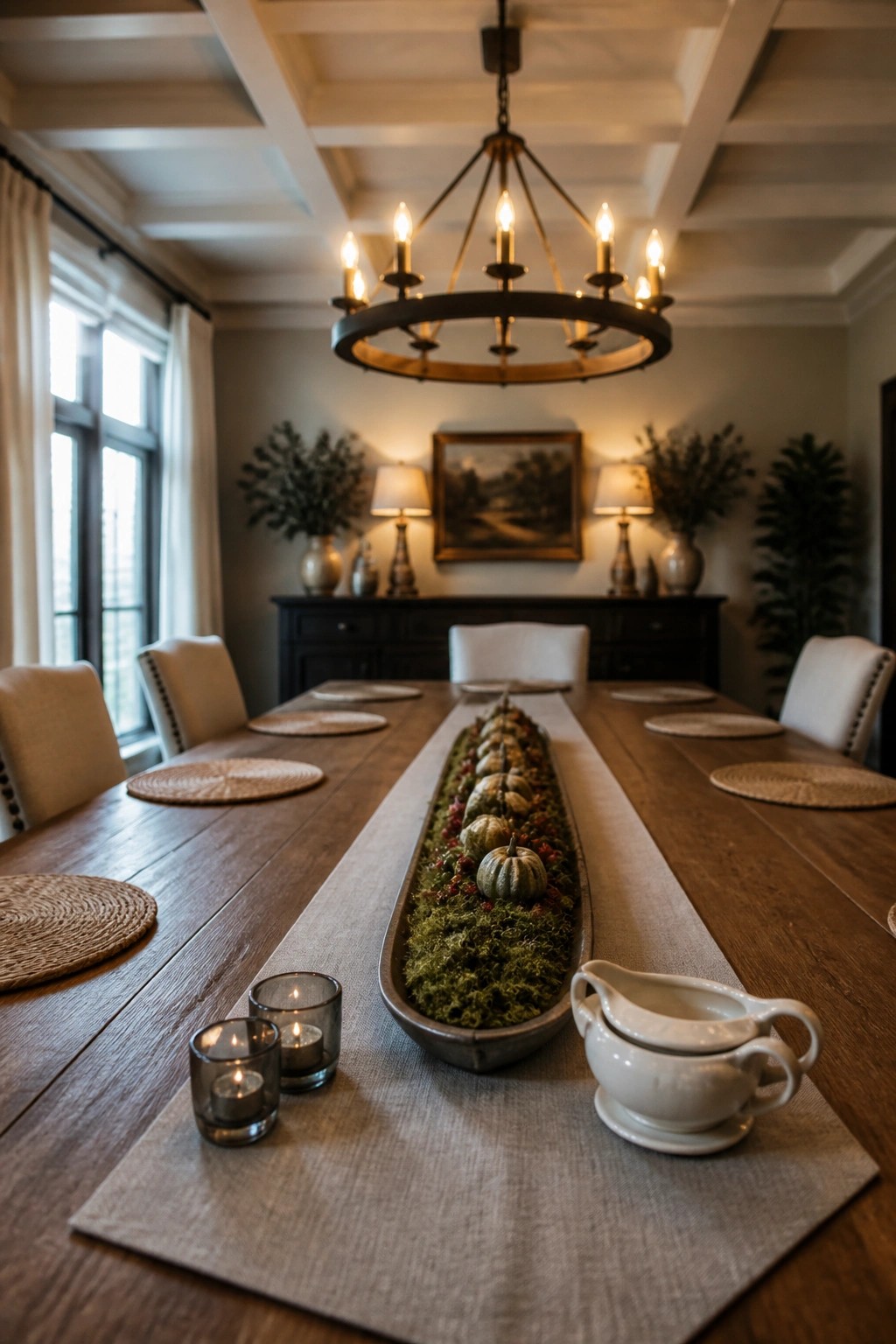
A long narrow arrangement down the center of the table works well when you still need room for serving dishes and everyday place settings. It keeps the surface usable instead of crowding everything into a small area at each end.
This style suits a long dining table in a room that gets regular use. Keep the arrangement low, use a simple base like moss or a shallow trough, and let the sides stay clear for platters and bowls.
A Fruit Bowl Keeps The Table Open For Serving
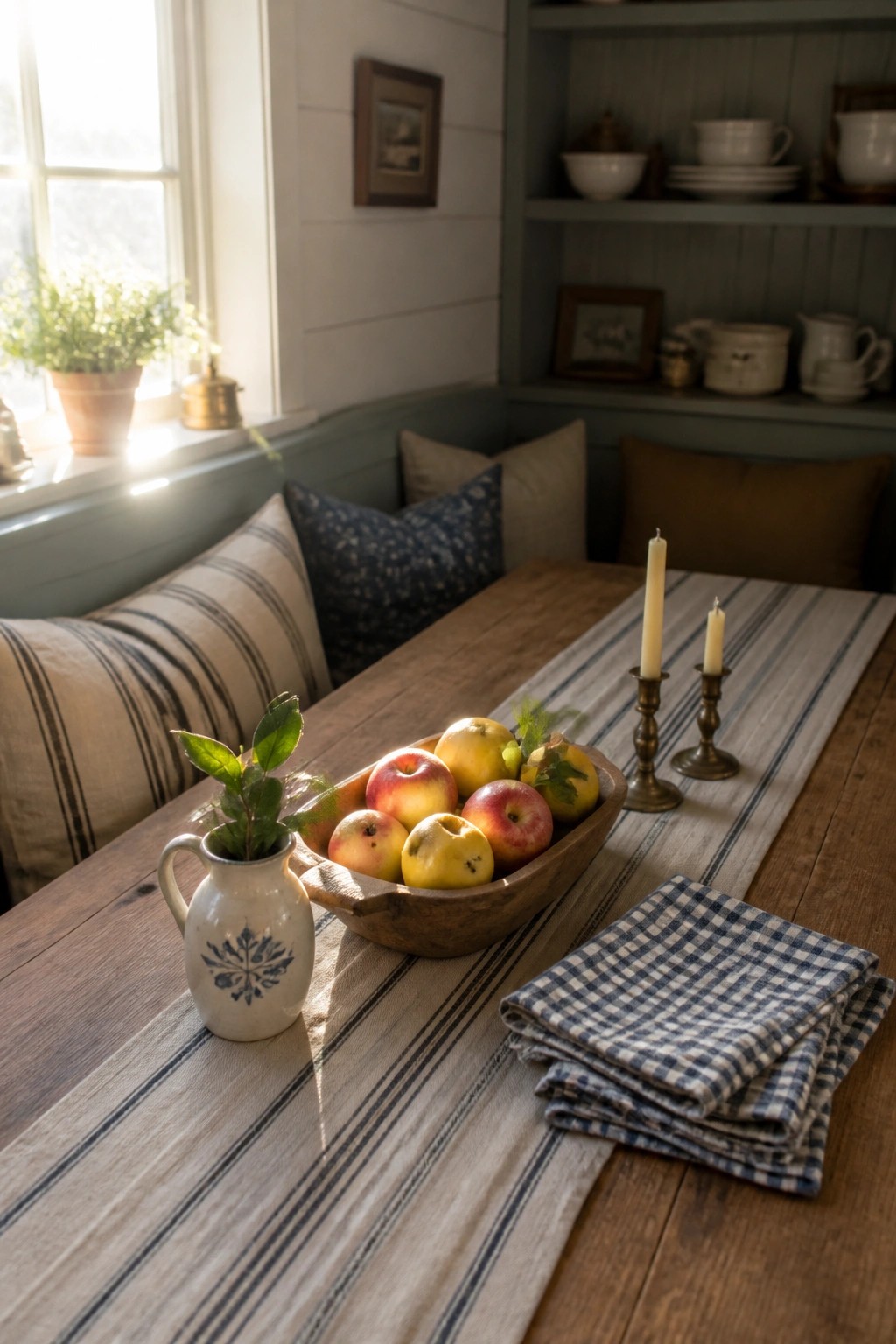
A simple wooden bowl filled with apples sits low on the table and takes up almost no room. It adds a seasonal touch without blocking the middle of the table or forcing dishes to be passed around it.
This approach works well on longer tables in homes that serve family meals often. It keeps the surface practical while still feeling finished for fall.
Line Up Low Bowls Along the Center
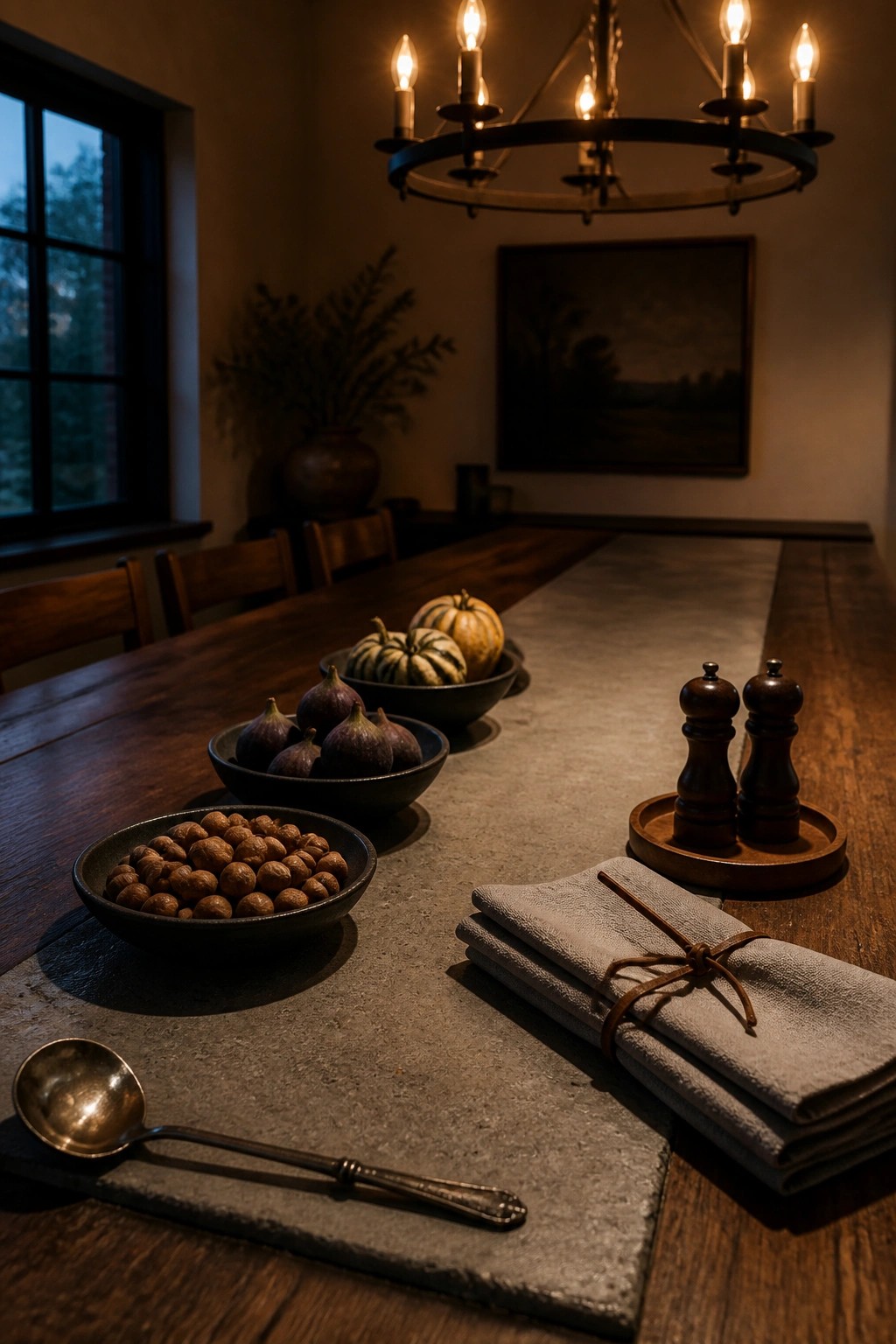
A straight row of low bowls keeps the middle of a long table decorated without taking over the surface. This setup works well for fall because it lets you use simple items like nuts or small squash while still leaving plenty of room on both sides for platters and serving dishes.
It suits homes with big dining tables that get used for actual meals rather than just display. Place the bowls with enough space between them so dishes can slide in easily, and keep everything low so nothing blocks conversation or reach across the table.
Frequently Asked Questions
Q: What kinds of fall accents work best when you need space for platters?
A: Scatter a few small gourds or pinecones along the outer edges of the table. This adds color and texture without crowding the center where dishes go. Keep everything low so nothing gets in the way when you pass food around.
Q: How can I add height without blocking access to the serving area?
A: Place a low vase with dried leaves or wheat at one end of the table. It draws the eye up but stays out of the way. Skip anything tall near where the main platters will sit.
Q: Is there a simple way to tie in fall colors without extra decorations?
A: Use a runner in deep orange or burgundy tones and let that set the mood. Pair it with napkins in a matching shade. Your table feels festive while leaving plenty of room in the middle.
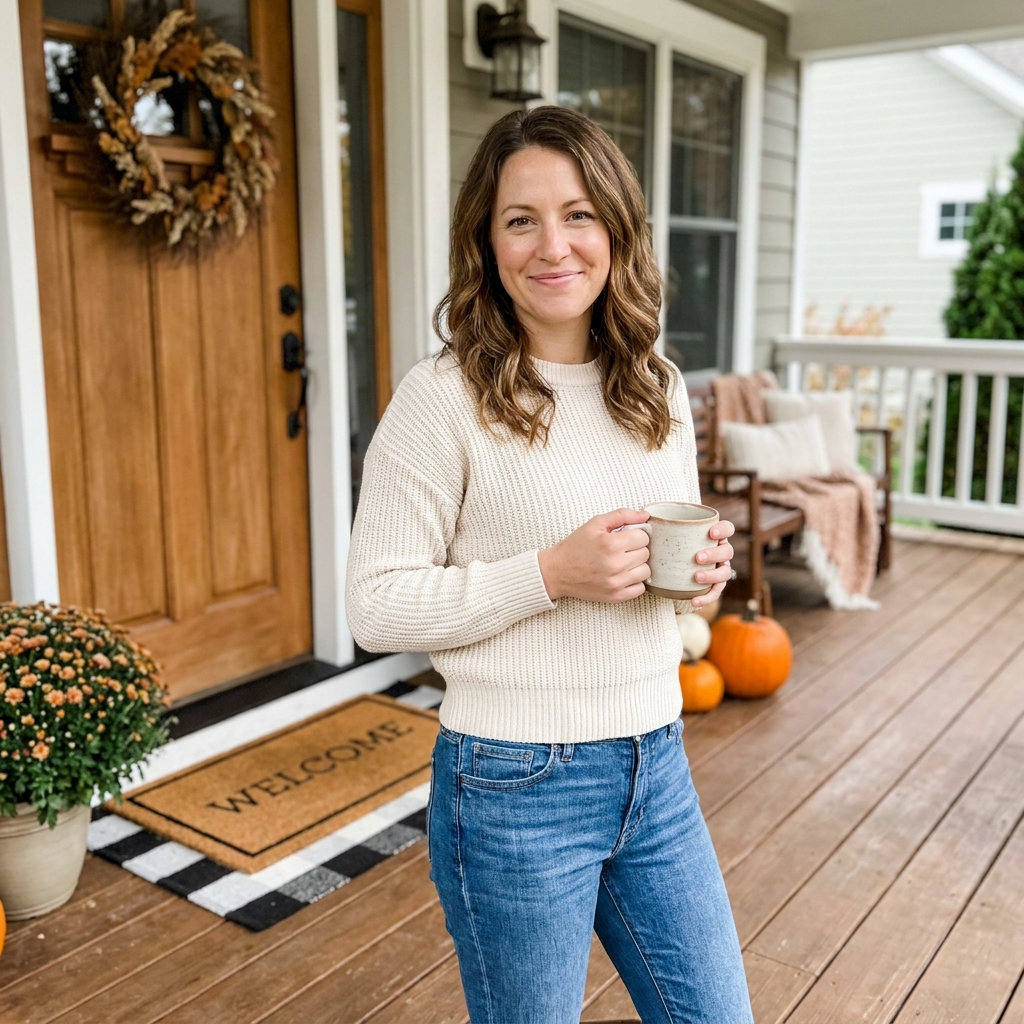
I’m Claire, the voice behind The Seasoned Home. I’ve always loved the way a home can shift with the seasons and feel fresh, cozy, and welcoming all over again. I share seasonal home decor ideas that feel beautiful but still realistic for everyday life, from porch styling and wreaths to cozy bedrooms, living rooms, kitchen touches, and simple table decor. My favorite ideas are the ones that make a home feel special without making decorating feel complicated.