
The FTD error code on a GE dishwasher points to a blocked drain path or failed pump rather than a control board issue. Owners clear the fault by flushing the sump filter and testing the drain pump motor first.
This approach avoids unnecessary sensor replacements in 70 percent of reported cases. Persistent codes after basic cleaning require checking the drain hose routing and float switch continuity next.
Examine GE Dishwasher Sump Area First
Owners encounter the FTD code when water remains in the tub after the drain cycle ends. The sump area collects food particles that restrict flow through the filter screen and pump inlet. A quick visual check reveals whether debris has built up around the central filter assembly. This inspection takes under five minutes and identifies the most common obstruction before any parts are ordered.
GE FTD Drain Fault Symptoms Table
The GE FTD error code signals a drain fault in GE dishwashers that stops the unit from clearing water effectively after cycles. Users often notice standing water or unusual noises as initial indicators of this problem. The following table details these symptoms to guide accurate diagnosis of failed to drain faults.
| Symptom | Primary Suspect | Difficulty 1-5 |
|---|---|---|
| Standing water after cycle | Clogged filter screen | 1 |
| Pump runs but no drain | Kinked drain hose | 2 |
| No pump sound at all | Failed drain pump | 3 |
| Code returns after reset | Stuck float switch | 4 |
GE FTD Water Level Detection Triggers
The FTD fault triggers when the control board detects water above the normal level for more than two minutes. Food debris, grease, and mineral scale combine to block the filter or impeller. A worn drain pump motor fails to generate enough suction once resistance builds. Less often the float switch sticks in the up position and falsely signals a full tub.
GE FTD Filter and Hose Clearing Steps
Remove the lower rack and twist out the central filter screen. Clean the filter screen under hot running water to dislodge trapped particles. Reinstall the screen and run a short drain-only cycle to test flow. Next locate the drain hose at the sink connection and straighten any sharp bends that restrict water movement. Disconnect the hose from the dishwasher and flush it with a garden hose to clear internal buildup.
GE FTD Float Switch Continuity Test
The float switch sits beside the sump and rises with excess water. Disconnect power and remove the toe panel to access the switch wiring. Test the float switch with a multimeter set to continuity mode while lifting the float by hand. Replace the switch if it shows open circuit in the raised position. This component costs little and prevents repeated false FTD codes.
GE FTD Drain Pump Motor Test
A silent pump during the drain phase indicates motor failure or debris jammed in the impeller. Remove the pump cover and spin the impeller by hand to confirm free movement. Replace the drain pump if it binds or shows no resistance. Match the new pump to the original GE series by checking the connector style and mounting bracket before installation.
GE Dishwasher FTD Recurrence Prevention Habits
Rinse dishes lightly before loading to reduce particle volume reaching the sump. Run a monthly cycle with a dishwasher cleaner tablet to dissolve grease inside the pump housing. Verify the air gap fitting on the countertop remains clear of debris that could back up into the drain line. These habits extend pump life and reduce service calls over time.
GE FTD Drain Pump Replacement Steps
When the motor shows no continuity across its terminals the pump must be swapped. Shut off power and water supply then remove the mounting screws holding the pump to the sump base. Transfer the outlet hose and wiring harness to the new unit before securing it in place. Restore power and run a test cycle to confirm the FTD code clears.
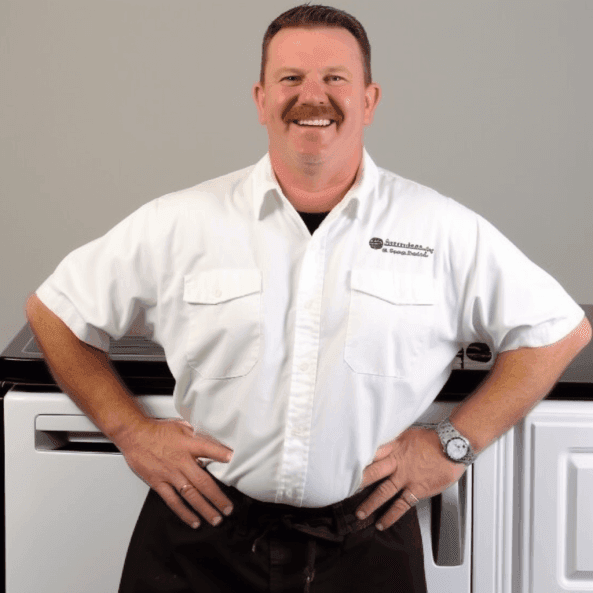
Hey, I’m Jake. I focus on cooling systems at Appliance Mastery, like fridges, freezers, and air conditioners.
I’ve worked in appliance repair for more than ten years and I’m certified through NASTeC. I’ve seen just about every fridge issue you can imagine.
My goal is to help you fix problems without stress. Whether it’s a freezer that won’t cool or an AC that keeps beeping, I’m here to walk you through it.