
Seven laundry setups that support a simpler routine

Useful laundry organization starts with reaching what you need, keeping clear access to the appliances and finishing a load. These seven selected examples are about workflow, not a recommendation to build cabinetry or copy every storage detail.
1. Plan storage around what you can reach
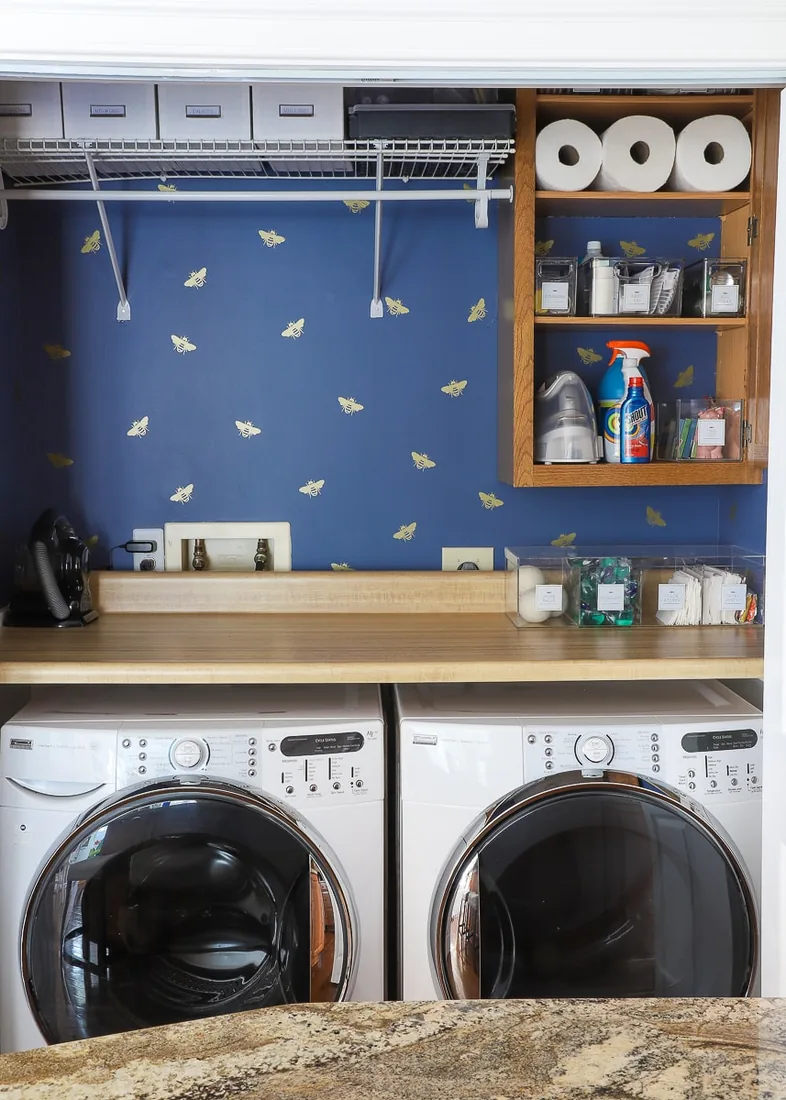
The Homes I Have Made shows a compact closet with high storage and a limited work surface. The useful question is which items you need at ordinary reach, rather than how much can fit above a machine. Borrow that reach-planning idea without stretching over equipment. Keep detergents in their original labeled containers, securely out of children’s reach; do not copy decanted-pod storage.
2. Sort before starting the machines
Megan’s laundry-day post makes the sequence visible: collect, sort, then move suitable loads through the routine. A basket per category can make the next step obvious without promising that one day works for every household. Borrow the sorting step, not unattended or overnight machine operation, and keep each load within the model’s capacity guidance.

3. Notice the reach problem in a garage laundry
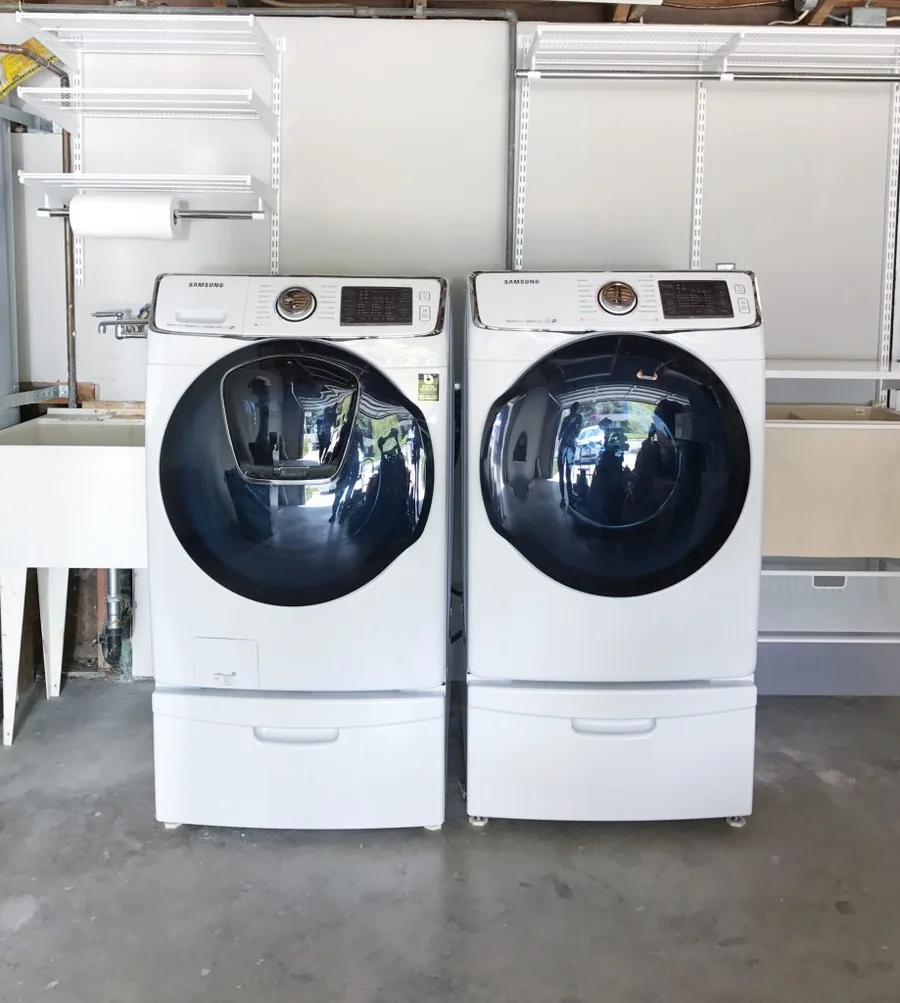
Simply Organized’s project explicitly considers how deep machines and pedestals make overhead shelves difficult to reach. That is the care-related lesson worth keeping: storage should not make controls or routine access harder. The installation work belongs with the right professionals; this example is not a DIY guide to moving appliances or changing connections.
4. Put empty baskets away without blocking access
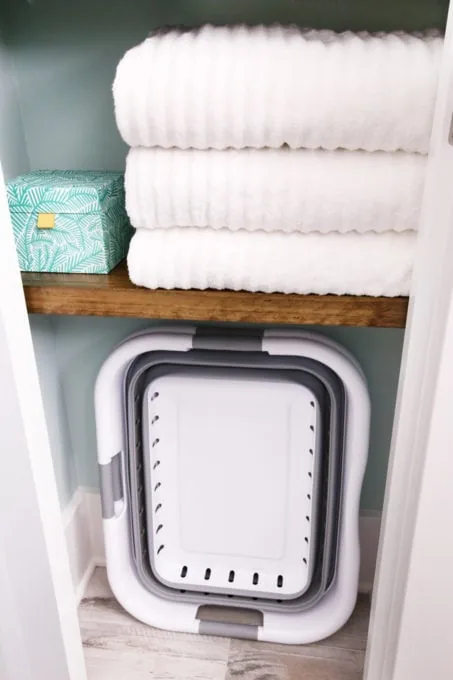
Abby Organizes demonstrates collapsible laundry baskets that can be stored when they are not in use. That is a small workflow change, not a reason to rebuild the room. Choose a storage spot that does not obstruct doors, vents, controls or the route around the machines. A basket should be easy to retrieve without climbing over an appliance.
5. Give routine laundry waste a clear destination
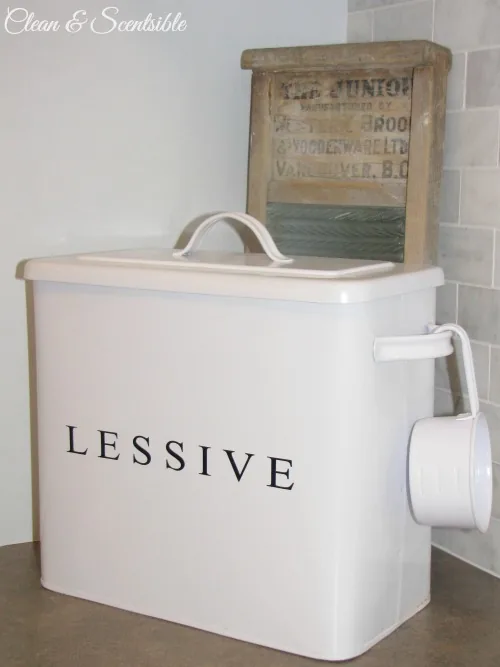
Clean and Scentsible includes a dedicated receptacle for routine laundry waste. A predictable destination can help stop used dryer lint and scraps accumulating on a work surface. Empty it regularly and keep combustible waste away from heat and appliance ventilation. This is a housekeeping detail, not a substitute for the dryer’s specified lint-screen or exhaust care.
6. Choose a pace that ends with putting clothes away
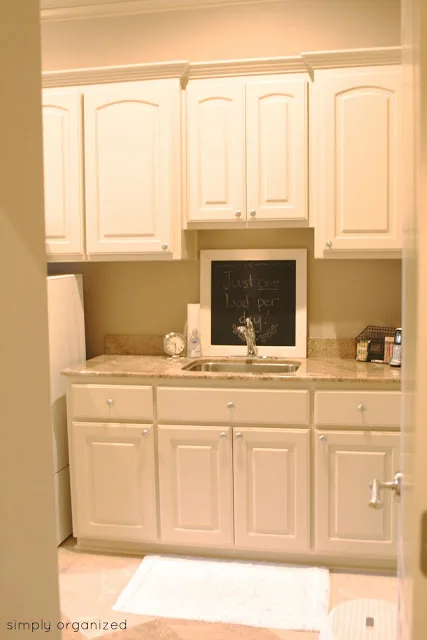
Simply Organized describes a one-load routine that includes folding and returning the clothes, not merely starting the washer. That makes a useful contrast with a batch laundry day: the right pace is one you can safely complete. Keep the transfer basket out of walkways and do not leave a machine running just to preserve a schedule.
7. Use existing cabinets before adding more storage
Jo-Anna’s room-by-room post includes a laundry area where bottles are tucked into existing cabinets. The practical takeaway is to put suitable storage to work before buying another cart. Out of sight does not necessarily mean child-safe: use secure storage, retain original packaging and leave the appliance’s required clearance and controls accessible.
Make the useful detail fit your appliance
Choose the smallest change that solves a real access or record-keeping problem. Follow the exact manual and keep safety information available. A creator’s household arrangement is an example, not evidence that it is suitable for every home.
For a correction or an image-rights concern, use our existing contact form and identify this page, the entry and the original work. We review credible rights-holder requests and can remove or replace an image while retaining useful editorial context.