
Seven fridge and freezer organization ideas worth adapting

A tidy-looking refrigerator is not proof of safe food storage. These selected creator examples make contents easier to see or reach. Keep the FDA temperature and food-handling guidance ahead of any attractive arrangement.
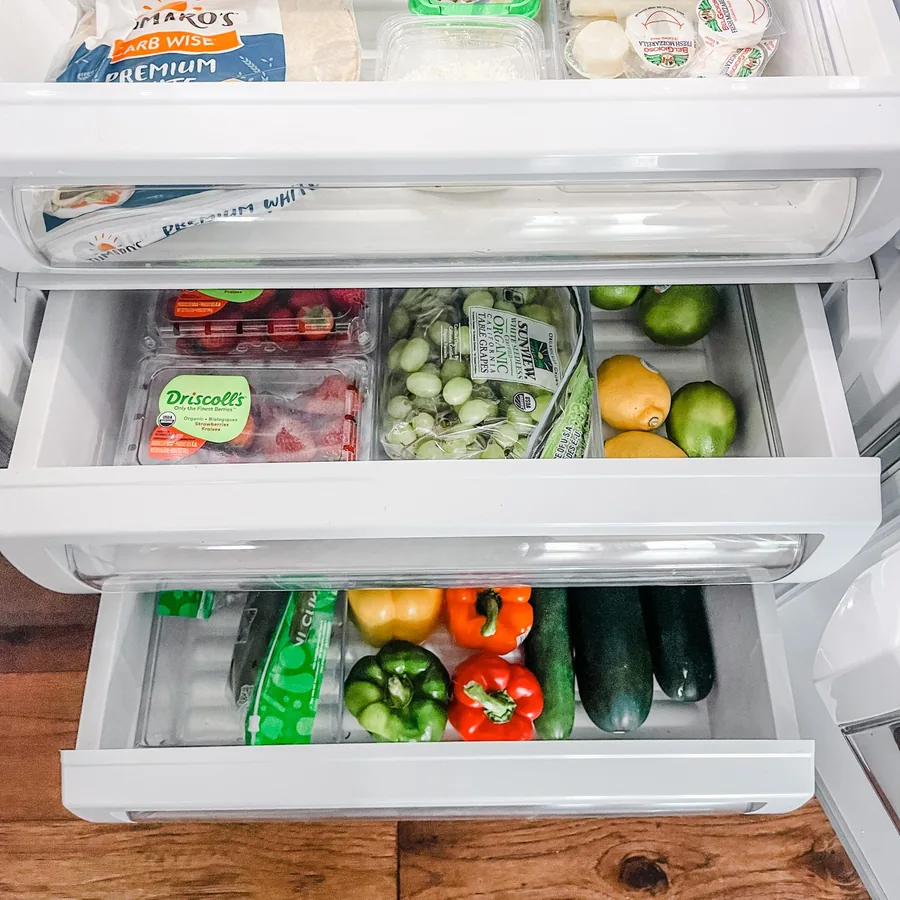
1. Give changing groceries flexible zones
Clean Mama treats refrigerator zones as something that can change as food comes and goes. That is more useful than allocating every centimeter to a permanent container. Keep space for the week’s actual groceries and leftovers, and use the model’s airflow guidance rather than copying the pictured shelf positions. A label does not make a warm area safe.
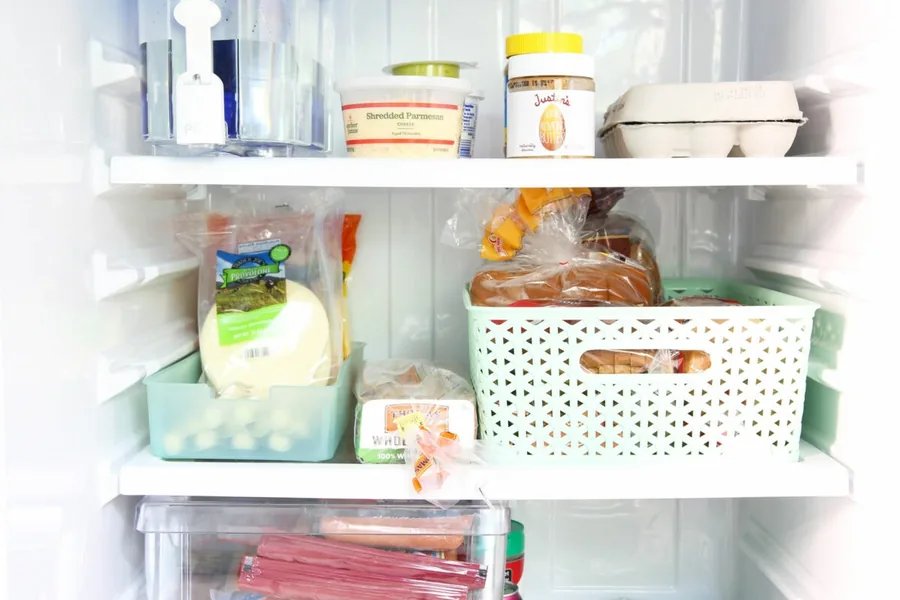
2. Make a small fridge easier to scan
Abby Organizes uses a small refrigerator to show how categories can reduce the hunt for a partly used item. Borrow the visibility principle, but keep original food labels, dates and safe wrapping. Do not combine old and new food merely to reduce the number of containers, and do not pack bins so tightly that airflow is lost.
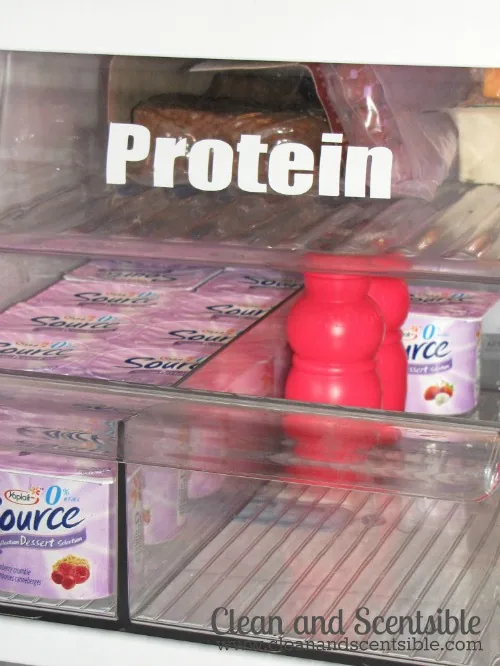
3. Use labels as return-to-here cues
Clean and Scentsible’s label project gives shared spaces a visible category. A useful label tells the next person where something belongs; it is not a substitute for the food’s own use, allergen or date information. Use materials compatible with the appliance surface and leave controls, vents and safety notices untouched. The creator’s printable is available at the original source.
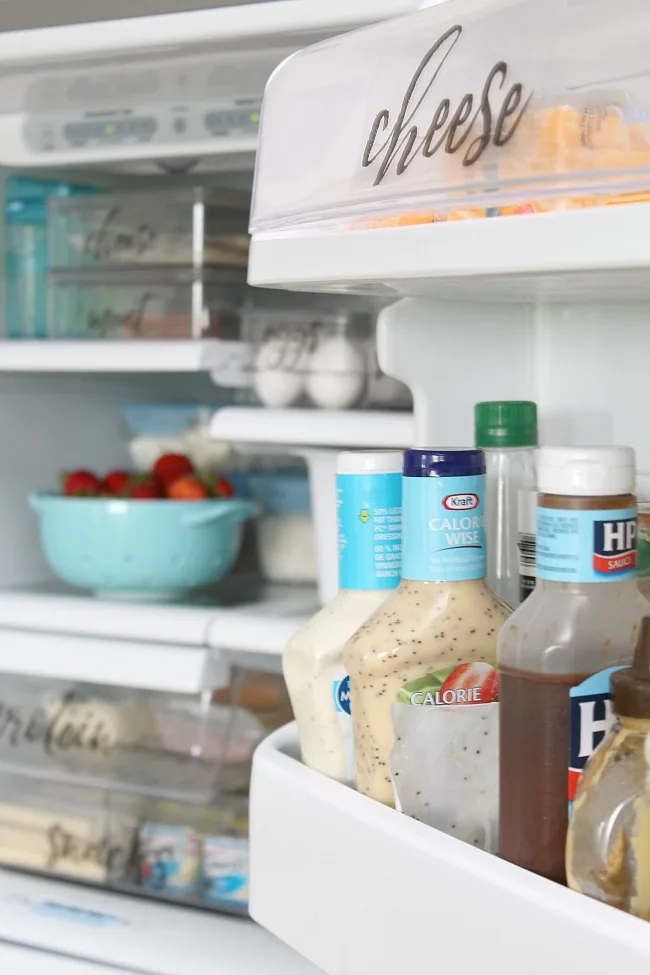
4. Keep a small category together without filling every gap
The same creator’s broader fridge-and-freezer article shows contained categories and a plan for leftovers. One well-chosen container may make a small item easier to retrieve. That does not mean every space needs a bin. Keep food safely covered, retain its identifying information and respect the model’s ventilation requirements rather than treating unused space as a problem.
5. Borrow grouping, not the styled egg display
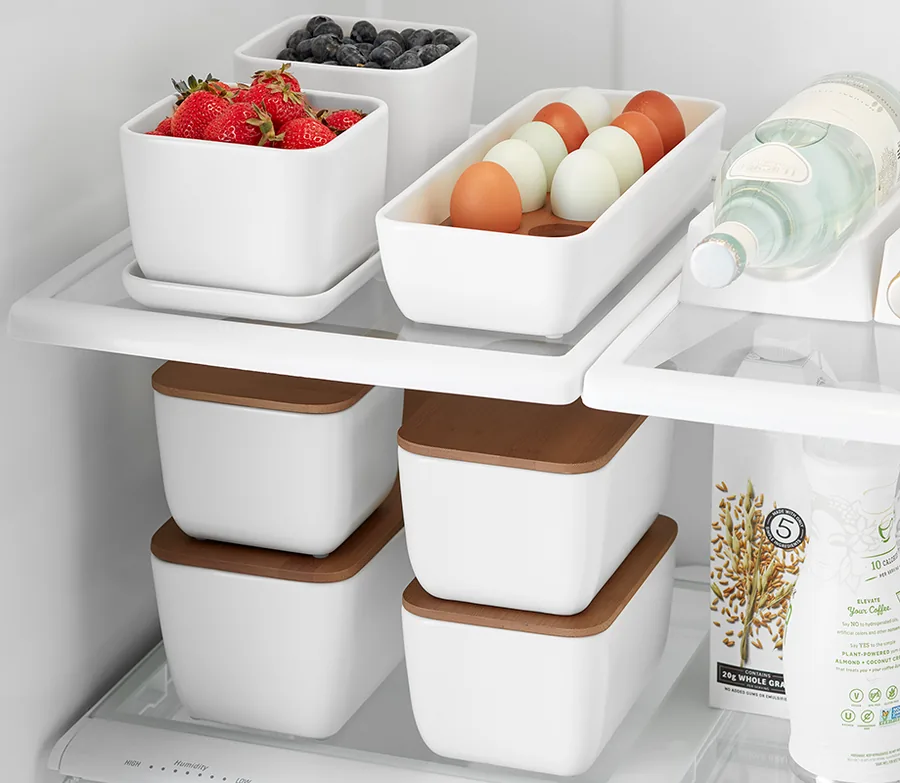
KonMari’s example makes the visual effect of grouping easy to understand. It also offers a detail not to copy: loose eggs displayed outside their original carton. FDA guidance recommends keeping eggs in their carton inside the refrigerator, not in the door. Borrow the category thinking, keep safe original packaging and remember that an opaque box needs a useful label.
6. Pair a quick review with the next grocery shop
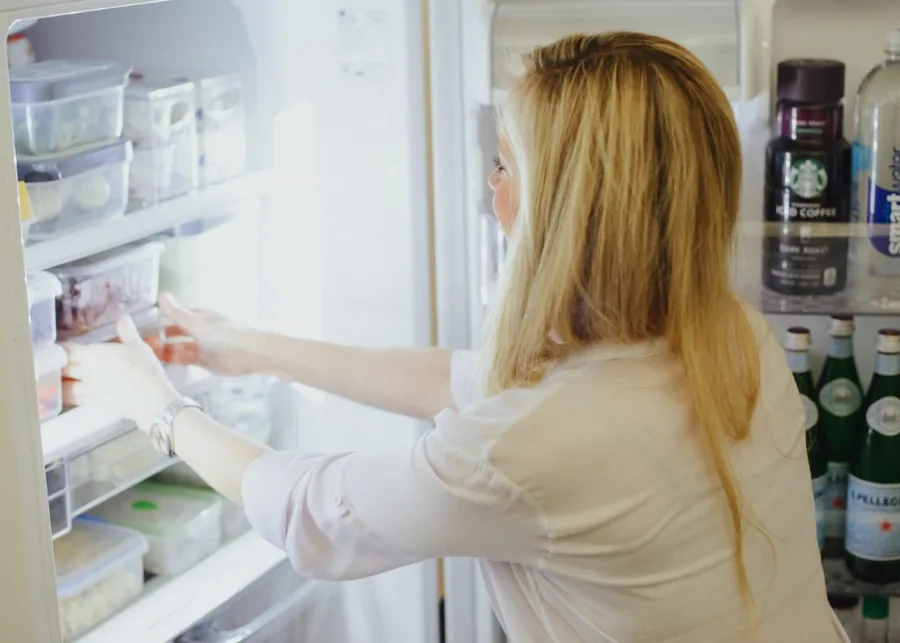
Simply Organized connects refrigerator upkeep with a regular planning moment. The useful idea is checking what is already there before adding more food. Treat this as a reminder to inspect and deal with spills using the manufacturer’s approved method, not as an endorsement of a scented product or a universal cleaning mixture. Protect perishable food while working.
7. Divide a deep freezer drawer so packages stay visible
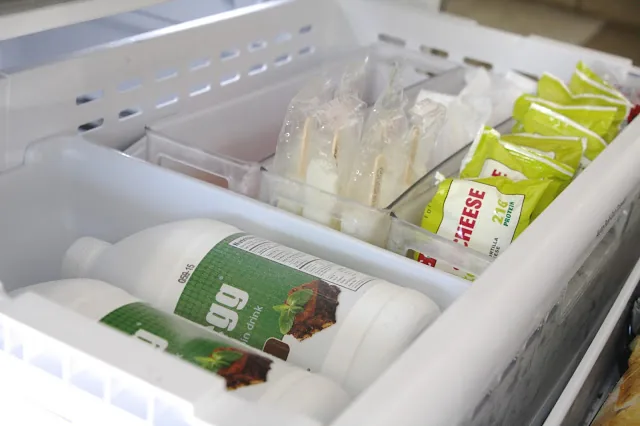
Simply Organized’s freezer-drawer project shows how smaller groups can be easier to reach than one deep pile. Choose containers suitable for the appliance and cold conditions, without forcing drawers or blocking circulation. Retain package cooking directions, allergens and dates; this selection does not endorse discarding the information on outer packaging. Work quickly enough to protect frozen food.
Make the useful detail fit your appliance
Choose the smallest change that solves a real access or record-keeping problem. Follow the exact manual and keep safety information available. A creator’s household arrangement is an example, not evidence that it is suitable for every home.
For a correction or an image-rights concern, use our existing contact form and identify this page, the entry and the original work. We review credible rights-holder requests and can remove or replace an image while retaining useful editorial context.