
A refrigerator-interior care checklist that protects the food

The goal is a clean, usable compartment without leaving perishable food warm while you work.
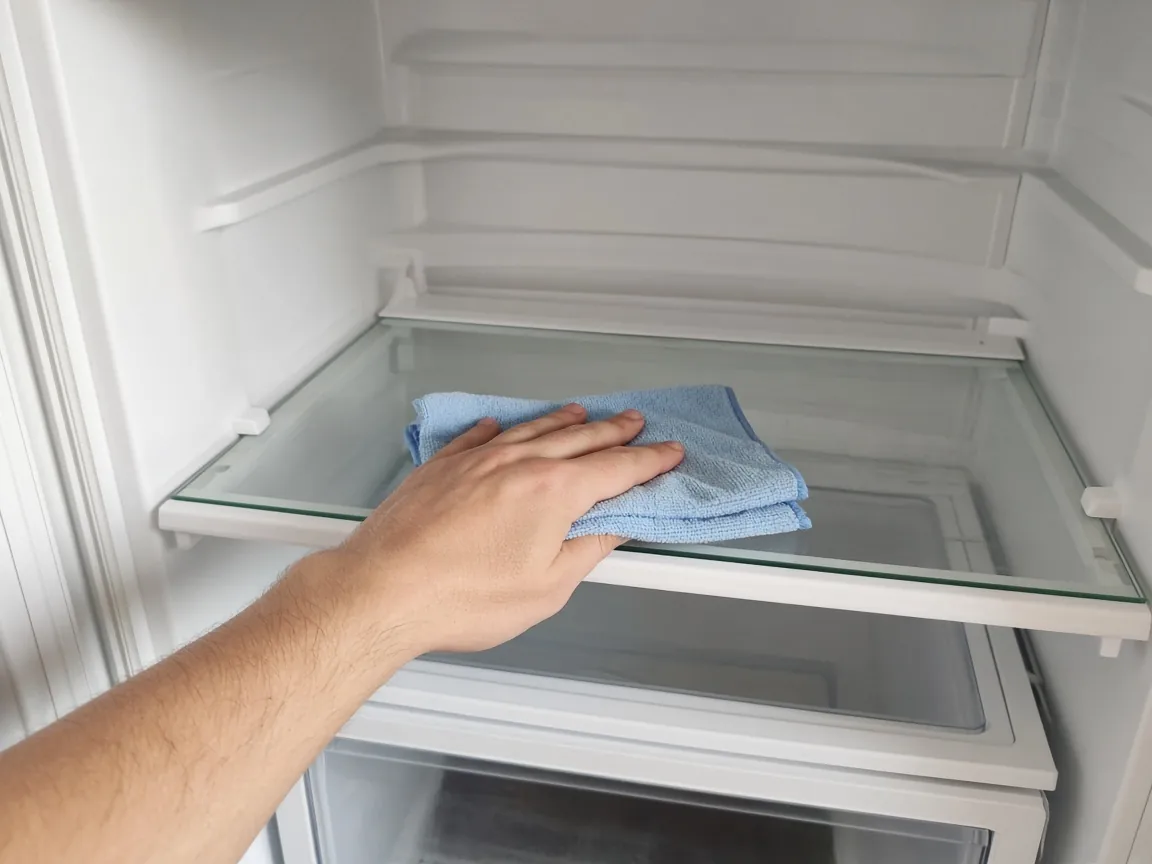
A small-section cleaning checklist
- Read the model’s instructions for shelf materials, approved cleaner and any power-off requirement. Plan a safe cold-storage location for perishables before unloading.
- Work on a manageable section. Check dates, contain leaking packages and separate raw foods from ready-to-eat food. Do not leave perishables warming on a counter throughout a deep clean.
- Wipe fresh spills promptly with the method approved for the surface. Do not mix cleaning chemicals. Avoid forcing a glass shelf or exposing cold glass to a sudden temperature change.
- Dry the cleaned surfaces as instructed. Replace only fully seated shelves and drawers, without covering air vents.
- Return food promptly and check the appliance thermometer. Cleaning does not reset the safe-storage clock for food left warm.
What this checklist deliberately leaves out
Moving a refrigerator, reaching behind it, cleaning coils, removing panels or dealing with refrigerant is not part of this accessible-interior routine. Ask the manufacturer which maintenance tasks are intended for the user and use qualified help when access is unsafe.
The FDA recommends regular cleaning and prompt spill removal. It does not turn one weekly schedule or homemade cleaner into a rule for every surface. Put your model’s actual directions in the maintenance checklist generator.
Before unloading: make the job small enough
Choose one accessible drawer or shelf, not the whole refrigerator by default. Put any perishables you must remove into suitable cold storage first, gather the approved cleaning materials and identify where the part can dry without being dropped. If you cannot keep the food safely cold or handle the part comfortably, postpone that section rather than racing a full unload.
A useful before-and-after record
Before: which section needs attention; where its food will stay cold; what the manual permits.
After: shelf or drawer fully seated; spills removed; packages safely contained; vents clear; thermometer checked.
These are completion checks, not a declaration that food left warm is safe again.
Sources and limits
This is an editorial summary of the guidance below, not a report of hands-on testing. Your exact model’s manual takes precedence for care procedures.