Refrigerator temperature: check the food, not the dial

The useful question is not whether the control says “cold.” It is whether the food is being held at a safe temperature.

The numbers to check
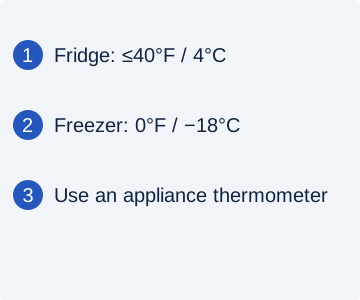
The FDA advises keeping the refrigerator at or below 40°F (4°C) and the freezer at 0°F (−18°C). Those are food-storage temperatures, not a universal dial position. A dial marked 1 to 5 does not identify degrees, and an appliance display may show a setting rather than the temperature beside the food.
Use an appliance thermometer as directed by its instructions. Keep it where you can read it without moving heavy shelves or blocking an air opening. Record the reading and the time; a reading immediately after loading groceries or opening the door repeatedly needs context.
Make room for cold air
Do not pack food so tightly that cold air cannot circulate. Identify vents in the model manual, then keep them unobstructed. Covered containers and a leak-catching tray for raw foods can make spills easier to contain, but bins are not a reason to overfill the compartment.
Check a warm reading without taking the machine apart
Look at accessible settings, whether the door closes normally and whether packaging is preventing closure. Note a recent grocery load, outage or door left open. Follow the manual for the time needed after a setting change; do not promise that every refrigerator settles within the same number of hours.
If temperatures are not being maintained, protect perishable food first and arrange qualified service. Do not remove an electrical cover, force ice off a surface or make refrigerant adjustments.
A cold reading cannot reconstruct yesterday
Food can be unsafe without an unusual smell or appearance. A refrigerator that has cooled again does not prove that food stayed safely cold during an outage. Use time and temperature guidance for the food in question, rather than taste-testing it.
Use the power-outage food-safety FAQ when the supply has been interrupted. Prepare a service-call note if the appliance cannot maintain temperature.
Sources and limits
This is an editorial summary of the guidance below, not a report of hands-on testing. Your exact model’s manual takes precedence for care procedures.