
Seven ways to keep appliance manuals and records findable

The best filing system is the one that lets you find the exact model instructions, purchase record and warranty terms when you need them. These seven creator examples offer different ways to keep that small set of information together.
1. Start with broad categories you recognize
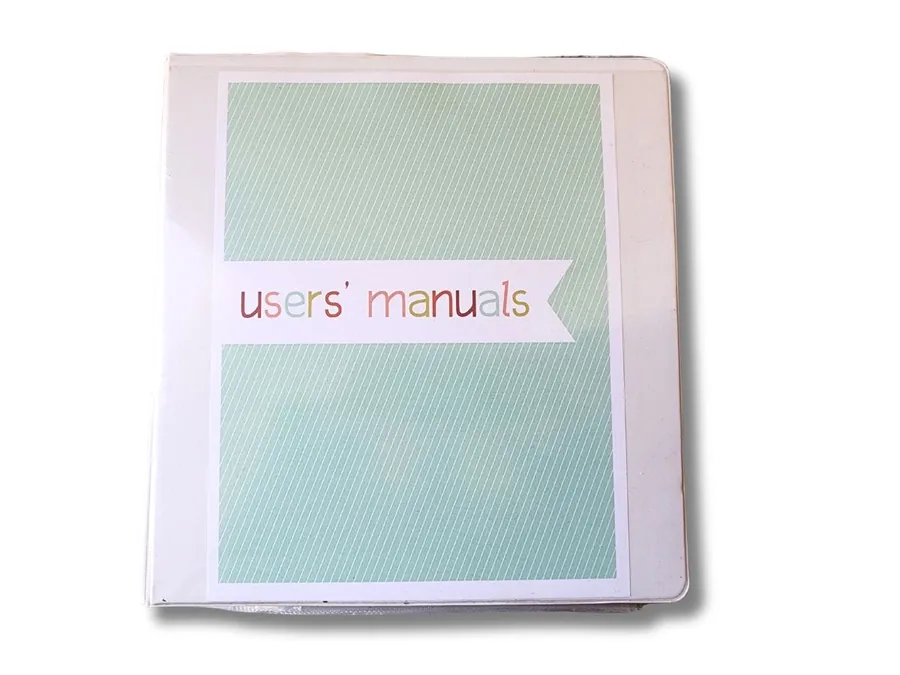
My Frugal Home’s user-manual binder uses broad sections rather than an elaborate index for every page. That can work well for a few appliances: the aim is fast retrieval, not a perfect-looking shelf. Add the exact model and purchase record to your own section. The original source includes its own binder-cover printable; the pictured project is the creator’s work.
2. Keep a manual and its warranty in the same pocket
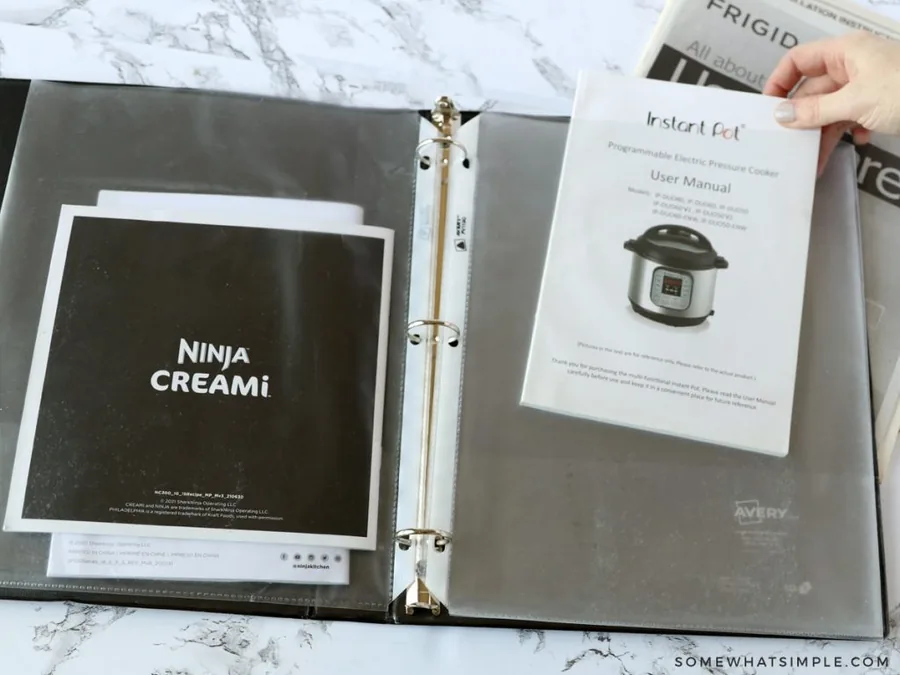
Somewhat Simple Living demonstrates a binder with sleeves for manuals and warranty information. Keeping related documents together helps when a provider asks for the purchase date or the coverage terms. Choose pockets that can safely hold the booklet without spilling, and do not assume that a saved warranty means a particular repair is covered.
3. Review the collection when an appliance leaves
Organized-ish adds the useful habit of revisiting a manual collection as household equipment changes. A page for an appliance you no longer own can make the current one harder to find. Before disposing of paperwork, check whether it should accompany a sale, transfer or warranty record; retain the safety instructions and records you still need.
4. Use closing pockets for small receipts
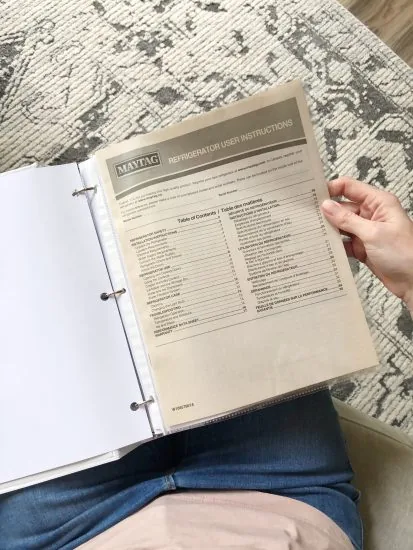
Alejandra Costello compares ordinary sleeves with closing binder pockets that can retain smaller papers. That is particularly useful for a receipt that otherwise drops out of a thick manual. The principle is containment, not a requirement to buy the exact brand. Keep a legible backup of fading purchase records and check the provider’s requirements before discarding originals.

5. A simple reused binder can be enough
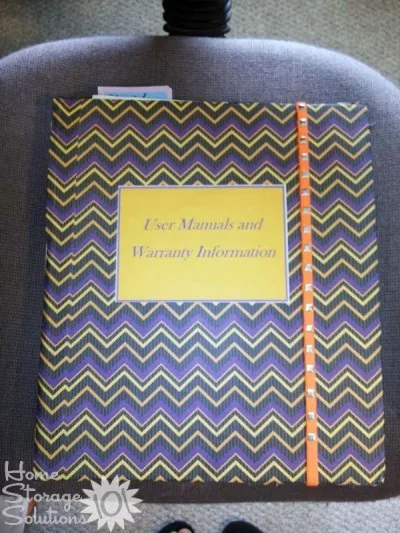
Home Storage Solutions 101 includes a reader example from Leigh using an existing binder. It is a useful reminder that appliance records do not need a custom stationery system. A clearly labeled collection with the right documents beats a decorative binder with missing model details. The original article also discusses file and digital approaches if a binder is not practical.
6. Choose a filing approach that fits the rest of the paperwork
The Homes I Have Made places manuals and warranties within a broader paperwork system. The pictured categories are household files, not an appliance-repair record. Adapt the principle by giving appliance documents an unambiguous location and a consistent model-based name. Keep an official PDF backup if useful, but check it matches the appliance revision before using a procedure.

7. Separate records that stay with the home
What Would Carrie Craft? distinguishes house-related equipment from other purchases in two binders. That can make a future handover easier without assuming every washer or refrigerator stays with a property. Decide what belongs with the equipment you actually have, then keep the model, manuals and service paperwork together. Confirm any transfer arrangements rather than relying on a binder title.

Make the useful detail fit your appliance
Choose the smallest change that solves a real access or record-keeping problem. Follow the exact manual and keep safety information available. A creator’s household arrangement is an example, not evidence that it is suitable for every home.
For a correction or an image-rights concern, use our existing contact form and identify this page, the entry and the original work. We review credible rights-holder requests and can remove or replace an image while retaining useful editorial context.