
Before replacing an HVAC filter, check access and specification

A filter reminder is useful only when it belongs to the equipment you have. Start with safe access and the manufacturer’s requirements.
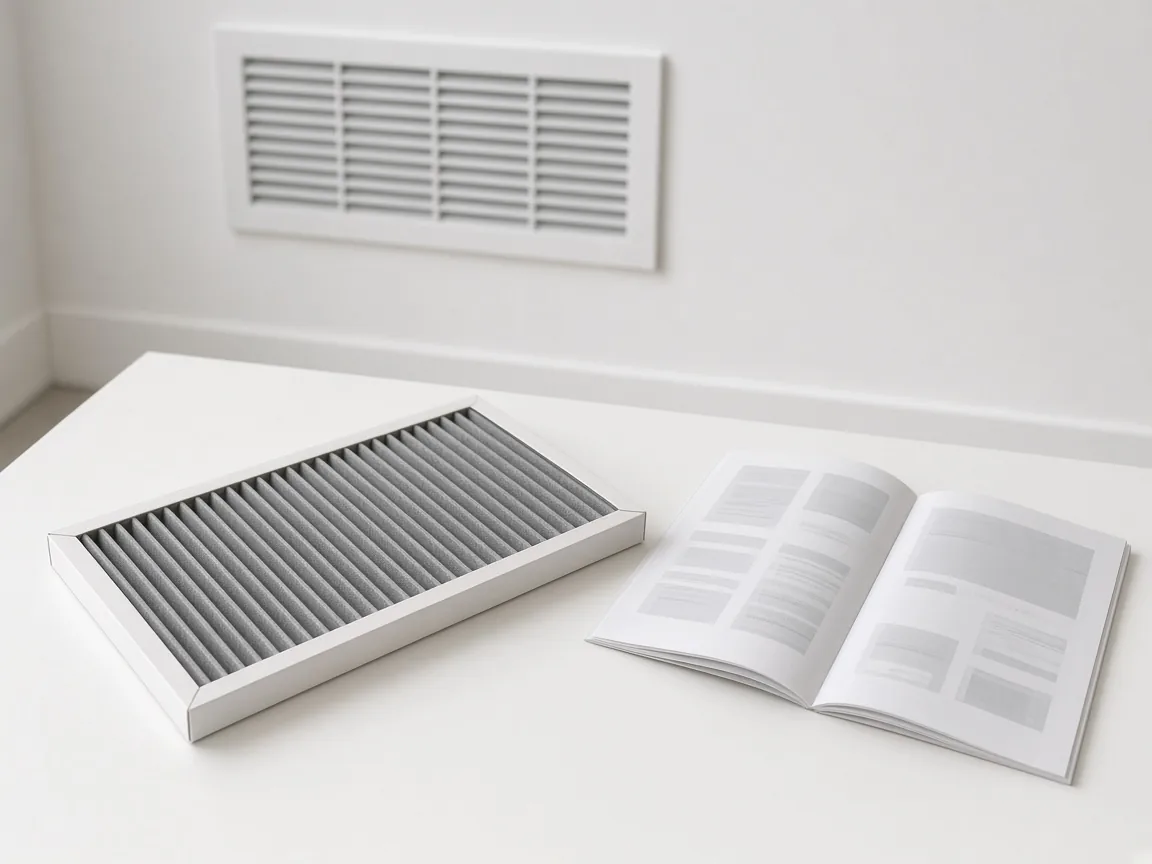
Check what the manufacturer calls user maintenance
Some filters are designed for household replacement or cleaning. Others require access that is unsuitable for a routine home checklist. Find the exact system instructions and identify the location, filter type and safe stopping procedure without removing an equipment panel.
If the filter requires unsafe ladder work, moving heavy equipment or opening a service compartment, arrange qualified help. This guide does not cover combustion chambers, refrigerant circuits, electrical connections or internal blower cleaning.
Match the specification, not just the apparent size
Where the manual permits user access, record the stated filter dimensions, type and airflow direction. Use the specified replacement or cleaning method. Do not wash a disposable filter or install a higher-resistance alternative merely because its marketing sounds better. Ask the equipment manufacturer about compatibility.
Write down the interval actually given
The Department of Energy highlights filter replacement as a useful maintenance step because clogging impairs airflow. It also recommends considering professional attention for components such as coils and heat pumps. That does not establish a single filter interval for every system or home.
Record the interval and any inspection advice in the manual. Household dust, pets, season and use can affect the instructions, but an online checklist cannot calculate the right interval without the manufacturer’s information.
When comfort changes need help
A room that is no longer comfortable is an observation, not a diagnosis of refrigerant or a failed part. Record the thermostat setting, approximate room condition and when the change appeared. Do not bypass a switch or keep resetting a system that trips a protective device.
For a gas smell, carbon-monoxide alarm or suspected combustion problem, leave the affected area and contact local emergency services or the gas emergency provider from a safe location. Do not use this maintenance guide to investigate.
Build a manual-aware reminder or prepare the notes for qualified service.
Sources and limits
This is an editorial summary of the guidance below, not a report of hands-on testing. Your exact model’s manual takes precedence for care procedures.