
Ever wondered why your washer suddenly refuses to drain, leaving your laundry in a soggy mess? Picture this: you load the machine, press start, and wait for the satisfying hum of the spin cycle, only to be met with silence. Frustrating, right? Don’t worry, you’re not alone in this laundry conundrum.
Common Reasons for Draining Issues
Is your washer not draining as it should? Here are some common reasons why this might be happening:
- Clogged Drain Hose: Debris can accumulate in the hose, hindering the flow of water out of the machine.
- Faulty Drain Pump: A malfunctioning pump can prevent water from being pumped out effectively.
- Unbalanced Load: An imbalanced load can lead to issues with the washer draining properly.
- Drain Trap Blockage: The drain trap, designed to catch debris, may be blocked and disrupting drainage.
- Issues with the Lid Switch: If the lid switch is faulty, it can prevent the washer from draining.
Remember, diagnosing the problem is the first step towards resolving it.
Check the Drain Hose
When your washer refuses to drain, one of the common culprits could be a clogged drain hose. It’s essential to ensure the drain hose is free from debris, twists, or kinks that might hinder water flow. To check this:
- Inspect the hose: Look for any visible clogs, bends, or obstructions in the hose.
- Remove the hose: Detach the hose from the washer and sink to check for blockages thoroughly.
- Use a cleaning tool: If there are clogs, gently remove them using a pipe cleaner or a brush.
Remember, a clear drain hose is vital for proper water drainage in your washer.
Recommended Products
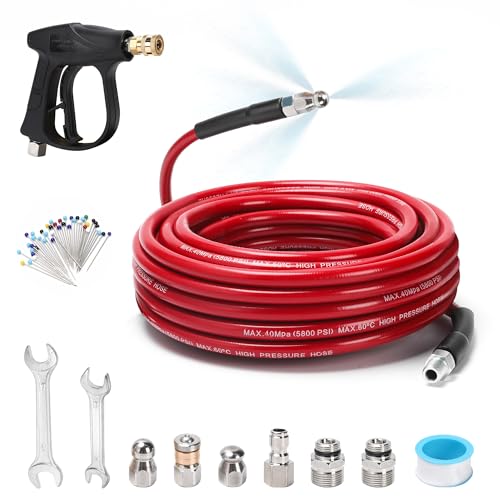
Complete Professional Jetting Kit: Includes everything you need for sewer cleaning: 50 ft sewer jet hose x1; pressure washer gun x1; button nose nozzle x1; rotating nozzle x1; corner sewer nozzle x1; 2 adapters: (1 x M22-15mm male, and 1 x M22-14mm male); 1/4'' quick connect plug x1; wrenches x2; corsage pin box x1; watertight tape x1

Package Includes: You will receive a set of sunroof drain cleaning tools, including a 120 inch sunroof drain brush, two 7 inch cleaning brushes, a 39 inch injector hose, and an 80ml injector. These tools are specially designed for cleaning narrow pipes that are difficult to reach.
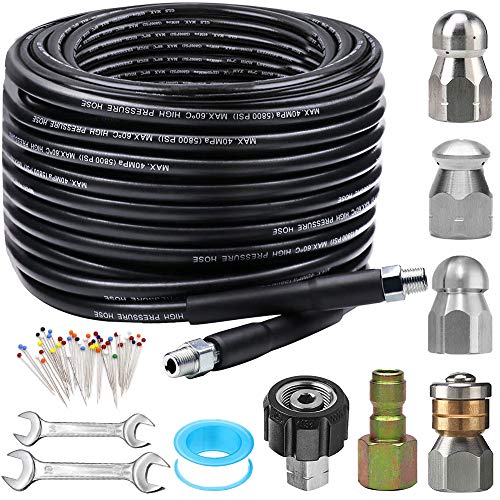
【New Family Set 6 Heads Sewer Jetter Kit】We've included a variety of accessories you might use to make it easy for you to use our sewer jetting kit ! 1 × 100ft sewer jet hose,1 × button nose sewer jet nozzle, orifice 4.0,1 × M22 female to 1/4’’ female NPT coupler,1 × 1/4’’ quick connect plug,1 × rotating sewer jetter nozzle,1 × Side hole sewer jetter nozzle,1 × corner sewer nozzle.1x waterproof tape, 2xspanners, 1x box of pearl corsage pin.
Inspect the Pump for Blockages
When your washer won’t drain properly, the pump could be a culprit. Over time, debris like lint, coins, or small objects can obstruct the pump. In such cases, a quick inspection of the pump can help you identify and resolve the issue easily. Here’s how to do it:
- Locate the pump: It’s typically situated at the back of the washer. Refer to your user manual if unsure.
- Check for blockages: Look for any visible items clogging the pump by removing the pump cover.
- Clear obstructions: Use a flashlight to get a clear view and remove any debris with caution.
- Examine the pump impeller: Ensure it’s able to move freely and isn’t impeded by any foreign objects.
- Reassemble and test: Put everything back together, and run a short cycle to see if the problem is resolved.
Remember, a blocked pump can disrupt the draining process, leading to issues with your washer’s performance. Regular maintenance and checks can prevent such problems and keep your appliance running smoothly.
Recommended Products
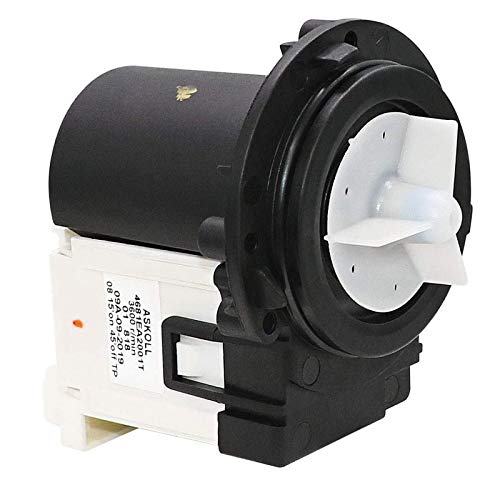
[𝟰𝟲𝟴𝟭𝗘𝗔𝟮𝟬𝟬𝟭𝗧 𝗟𝗚 𝗗𝗥𝗔𝗜𝗡 𝗣𝗨𝗠𝗣 𝗥𝗘𝗣𝗟𝗔𝗖𝗘𝗠𝗘𝗡𝗧]OEM 4681EA2001T M3379-65468 Front load washer drain pump motor rated voltage is 120V-127V 60Hz 85W 1.4A 45L / Min.The AP5328388 lg washer water pump motor consists of a motor component and a filter housing. The detachable filter housing makes it easier to clean the water pump during regular use and maintenance. Additionally, adding a sealing ring can make the water pump operate more smoothly and is quiet when running, which is made of premium quality materialafter many factory inspections OEM 4681EA2001T Original Version lg washing machine drain pump

The GE WH23X27419 Washer Drain Pump is a genuine OEM part,

【1 PACK 3363394 WASHER PUMP】-- 3363394 Kenmore Drain Pump is manufactured for washing machines that do not have belts. It is located in the washing machine drainage system and is used to drain the water from the washing machine.This 3363394 washing machine drain pump has one large and one small port. The large port is 1.6 inches in diameter and the small port is 1.2 inches in diameter. One port connects to the washing tub and the other to the outside of the washing machine for more effective control of the water output
Examine the Lid Switch
When your washer doesn’t drain, a faulty lid switch could be the culprit. The lid switch is a safety feature that prevents the washer from spinning or draining when the lid is open. Here’s how to examine it:
- Locate the lid switch: Usually, it’s found near the door frame.
- Check for damage or wear: Ensure the switch isn’t broken or worn out.
- Test the switch: Use a multimeter to check its continuity. If there’s no continuity, the switch may need replacement.
A malfunctioning lid switch can disrupt the draining process, leading to water accumulation in the washer. Regularly inspecting and maintaining the lid switch can help prevent drainage issues and keep your washer running smoothly without interruptions.
Recommended Products

EASY TO INSTALL - 8318084 | WP8318084 Washer Lid Switch. It is made exactly to fit the most popular Washer (Whirlpool, Kenmore, Maytag, Roper) and replaces part numbers AP6012742, 8318084, WP8318084, WP8318084VP etc.fits models: 11016102500, 11016102501, 11016102502, 11016212500, 11016212501, 1CLSR9434PQ0, 1CLXR7244PT0, 1CWTW5200VQ0, 1CWTW5500SQ0, 1CWTW5590ST0, etc.

MODEL NUMBER: 3949247 Washer Lid Switch. Replaces part numbers 3949237, 3949247, 3949239, 3949240, AP3100003, 547225, AH350434, EA350434, and PS350434.

【Replace】The WH01X27954 washer lid lock Replace WH01X26114, WH01X24114, eg-380843m, 290D1580P001,290D1580P004,290D1580P002,AP6331854,290D1580P003,WH08X31577, AP6331854.
Professional Help and Final Thoughts
If you’ve gone through the troubleshooting steps mentioned in this article and your washer still won’t drain, it might be time to seek professional help. The lid switch is a crucial component that, if malfunctioning, can cause drainage issues. Regularly checking and maintaining the lid switch can help prevent such problems in the future. Remember, a smoothly operating washer is key to keeping your laundry routine hassle-free. Don’t hesitate to reach out to a professional technician if you need further assistance with your washer drainage concerns.
Frequently Asked Questions
Why is examining the lid switch important for washer drainage problems?
Inspecting the lid switch is crucial as it can cause water accumulation if faulty. The switch serves as a safety feature to prevent the washer from spinning or draining with the lid open.
What steps are involved in examining the lid switch?
To check the lid switch, locate it in the washer, visually inspect it for damage, and test its continuity using a multimeter.
Why is regular maintenance of the lid switch recommended?
Routine maintenance helps prevent drainage issues, ensures proper washer functionality, and prolongs the appliance’s lifespan.
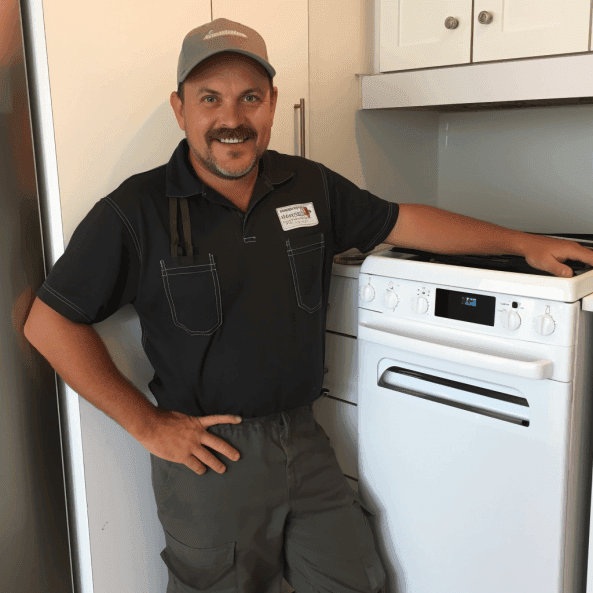
Hi, I’m Charlie, and I cover all things laundry here at Appliance Mastery.
I’ve spent over eight years working on washing machines, dryers, and dishwashers. I also have a degree in mechanical engineering, which helps me understand how these appliances really work.
I try to make every guide clear and practical. If you’re stuck with a noisy dryer or a leaking washer, I’ll help you figure out what’s wrong and how to fix it.